At 14, most kids are finishing up their permanent set, but a few teeth can still be actively erupting. The big ones to watch are second molars (if they haven't fully come in yet), any straggling premolars or canines that were delayed, and the very early stages of wisdom tooth development happening silently below the gumline. By this age, most of the 28 non-wisdom teeth should either already be in or just finishing up, but individual timing varies enough that a tooth or two still coming through at 14 is completely normal. If you are also curious about what teeth grow in at 12, that is a slightly earlier stage where different permanent teeth are typically the ones coming in.
What Teeth Grow In at 14: Molars, Incisors, Wisdom Teeth

Marcus Holloway
13 May 2026
How tooth eruption works at this age
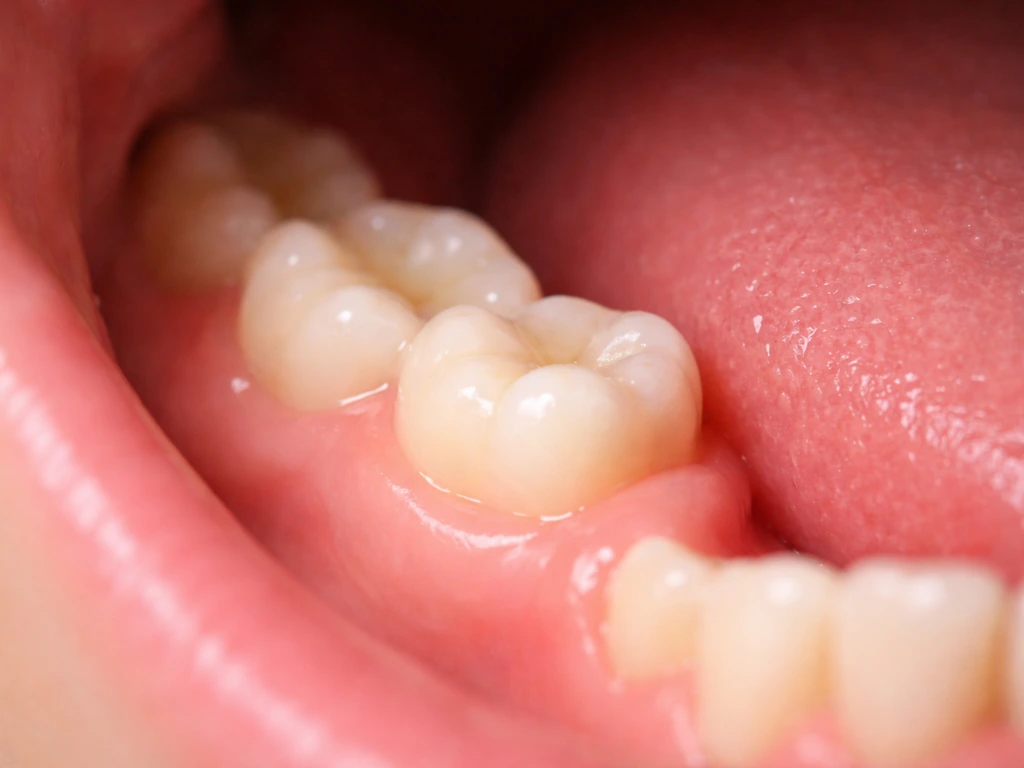
Eruption is an active biological process, not just a tooth passively pushing through gum tissue. The dental follicle (a sac of tissue surrounding the developing tooth) signals the surrounding bone to remodel, creating a path for the tooth to move toward the surface. The crown is usually fully formed before the tooth emerges, but the root continues developing for another year or two after the tooth breaks through the gum. That means you can have a tooth that's visibly in place but still growing its root underneath, which is totally normal at 14.
By mid-adolescence, the primary (baby) teeth are long gone and the permanent set is nearly complete. The question is just whether every tooth has erupted on schedule. Some kids finish earlier, some later, and that range is wide enough that a 13-year-old and a 15-year-old can both be perfectly normal while looking quite different on an X-ray.
Which permanent teeth are still coming in at 14
The most likely teeth still erupting or just recently erupted at 14 are the second molars and, in some kids, the upper second premolars. Here's how the typical timeline plays out for the full permanent set:
| Tooth | Typical Eruption Age | Still possible at 14? |
|---|---|---|
| Central incisors | 6–8 years | No, should be long in |
| Lateral incisors | 7–9 years | No, should be long in |
| Canines (lower) | 9–10 years | Rarely, if delayed |
| Canines (upper) | 11–12 years | Possibly, if on the later end |
| First premolars | 10–12 years | Rarely, if delayed |
| Second premolars | 11–13 years (upper); 11–12 years (lower) | Yes, still possible |
| First molars | 6–7 years | No, should be long in |
| Second molars | 11–13 years (upper); 11–13 years (lower) | Yes, very plausible |
| Third molars (wisdom teeth) | 17–25 years typically | Developing but not usually erupting yet |
So realistically, if you're 14 and something is coming through your gums, it's most likely a second molar or upper second premolar finishing up. Those are the teeth most commonly still in progress in the early teen years. Upper canines occasionally run a little late too, especially if there was crowding that pushed them off their usual path. MouthHealthy notes that the standard eruption range for permanent canines (upper) is commonly cited as about 9 to 12 years, with many eruption-time tables placing canines broadly in early to mid adolescence Upper canines occasionally run a little late too, especially if there was crowding that pushed them off their usual path..
Variations that change the picture: braces, missing teeth, and late eruption
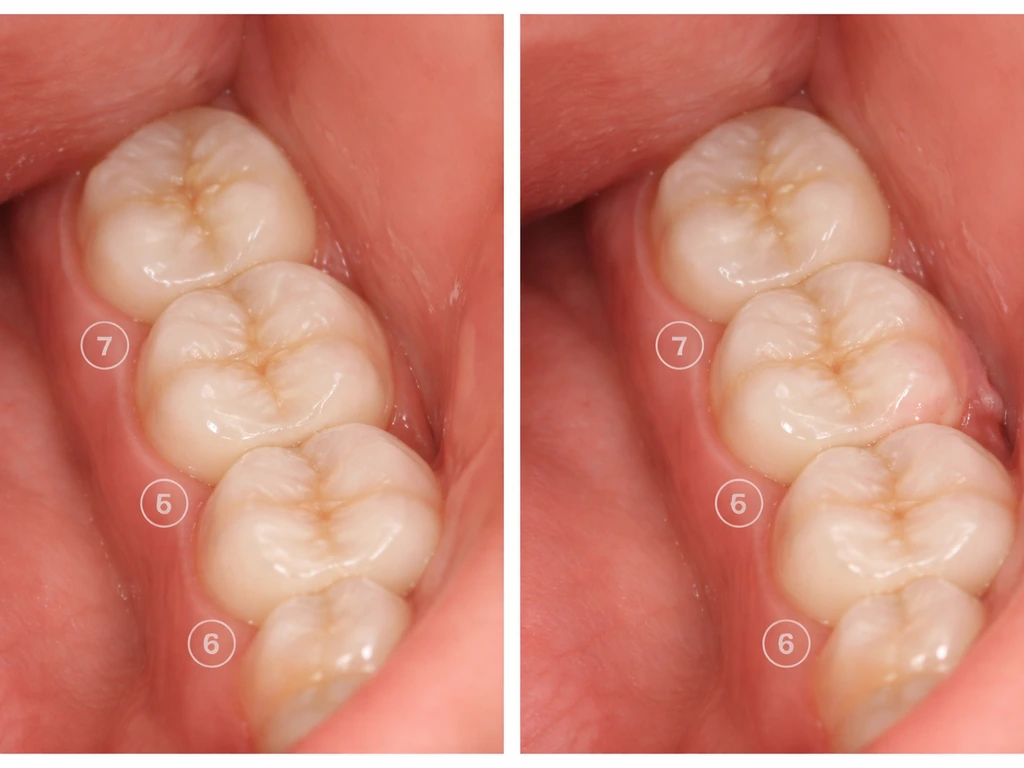
Not every 14-year-old's mouth follows the textbook timeline, and several things can shift what's happening at this age. If someone is in orthodontic treatment, the whole eruption sequence can look different. Braces create space that encourages teeth to move, and sometimes a tooth that seemed stuck will finally erupt once there's room for it. Conversely, crowding can slow or redirect a tooth that's trying to come in.
Delayed eruption is also a real thing. A tooth germ (the developing tooth bud) can be present in the jaw, perfectly healthy, but simply emerge later than average. If your dentist did X-rays and the tooth is there, just slow, watchful waiting is usually the approach. If a tooth appears absent on X-ray, that's a different situation entirely, pointing toward either impaction or congenital absence.
Congenitally missing permanent teeth, a condition called hypodontia, affect a small but meaningful percentage of people. The most commonly absent tooth (excluding wisdom teeth) is the upper lateral incisor. If a permanent tooth never had a tooth germ to begin with, it simply won't erupt, ever. That's one area where people sometimes wonder whether the tooth can "grow in" later or somehow regenerate, and the honest answer is no, it can't. If you are wondering whether can teeth grow at age 13, the key point is that teeth can erupt later, but they do not regenerate after they are fully absent. But there are good restorative solutions, which we'll cover below.
Wisdom teeth at 14: what's actually happening
Wisdom teeth (third molars) are almost certainly not erupting through the gums at 14. That said, they are actively developing below the surface. Third molars typically don't break through the gumline until the late teens or early 20s, with full maturation occurring around age 24 in most people. Around age 14 is actually when the third molar tooth buds are just getting started in their development cycle.
One useful data point: roughly 50% of third molar root formation is typically complete around age 16, meaning at 14 the roots are barely started. So while a dentist might spot wisdom tooth buds on a panoramic X-ray at 14, those teeth are nowhere near ready to erupt. If a 14-year-old is experiencing pain in the very back of the jaw, wisdom teeth aren't usually the culprit yet. It's more likely a second molar coming in, decay, or an unrelated jaw issue.
What X-rays at this age can tell you is whether the wisdom teeth are positioned well or already showing signs of a problematic angle. Early detection of potential impaction is genuinely useful because it gives more time and options for planning. About 37% of people have at least one impacted third molar, making this a very common issue that's worth monitoring early even if nothing needs to be done yet.
Normal eruption vs. something worth calling the dentist about
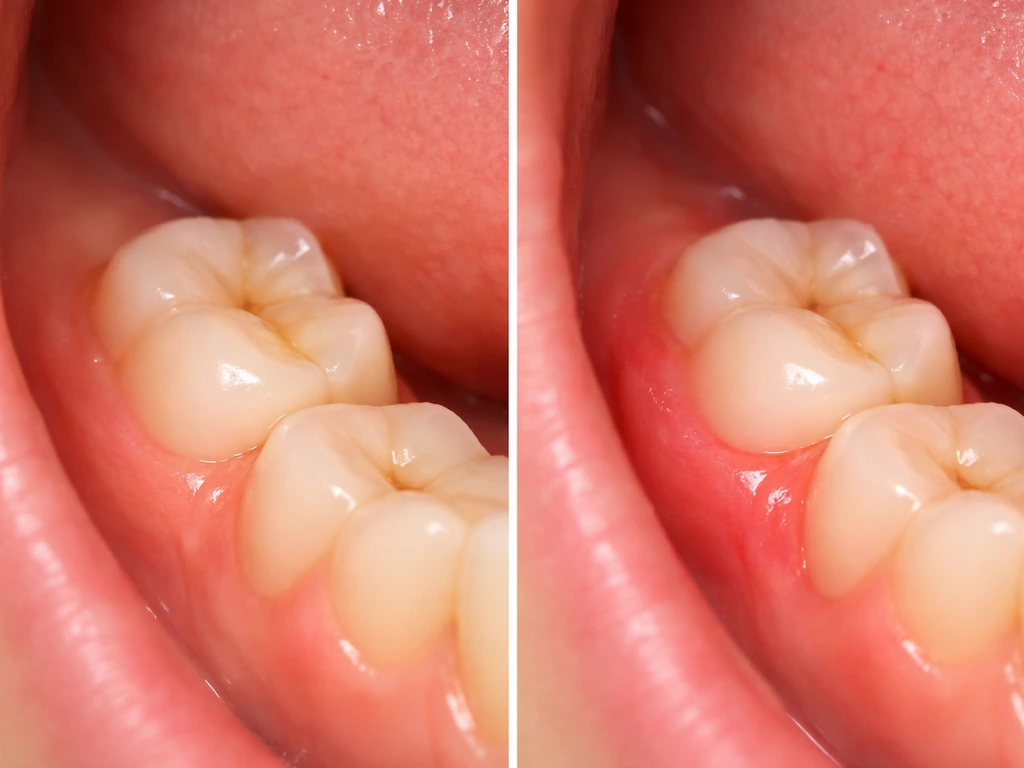
Some mild soreness and sensitivity when a tooth is erupting is normal. The gum tissue has to break open, and that's not comfortable. But there are signs that cross from "normal" into "this needs a look."
Signs that are pretty normal
- Mild tenderness or pressure in the back of the mouth when a second molar is coming in
- Slight gum puffiness directly over an erupting tooth
- Sensitivity to temperature or chewing pressure on a newly erupted tooth (it often settles within a few weeks)
- Feeling that the bite is slightly off as a new tooth settles into position
Signs that warrant a dentist visit
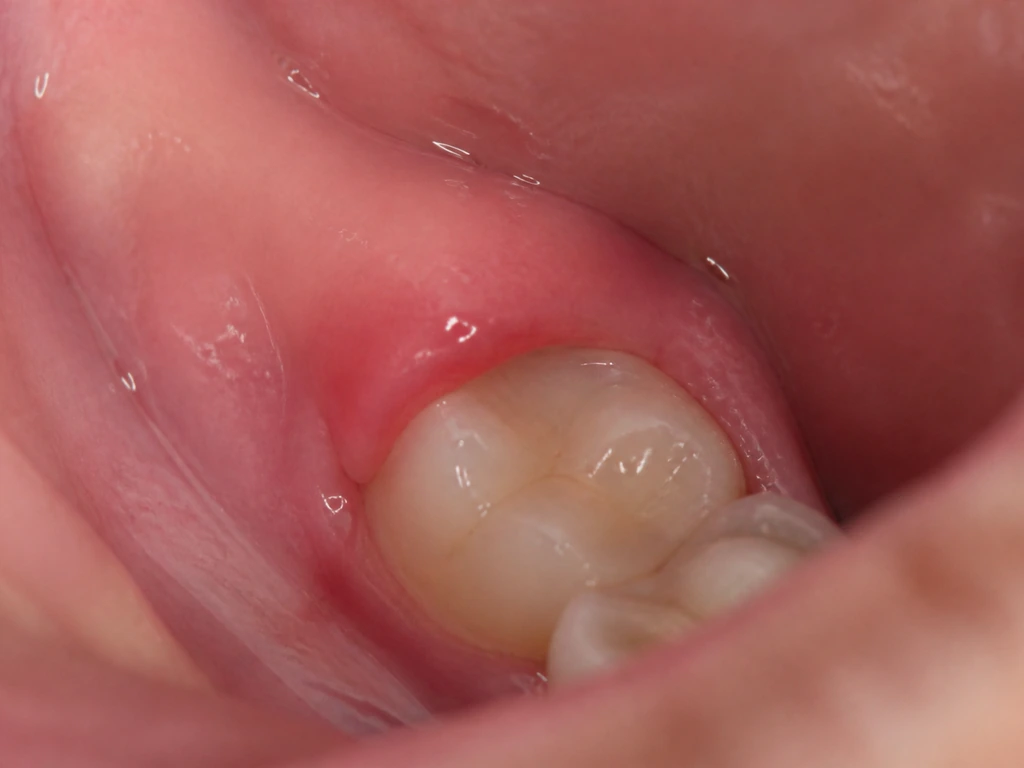
- Persistent swelling that spreads beyond the immediate gum area
- Fever or feeling generally unwell alongside dental pain
- Bad taste or pus in the mouth near an erupting tooth (this can indicate pericoronitis, an infection of the gum flap around a partially erupted tooth)
- Difficulty opening the mouth fully or swallowing
- A tooth that was erupting and then stopped and seems stuck
- Severe pain that doesn't settle with over-the-counter pain relief
- Visible crowding where an incoming tooth is pushing existing teeth out of alignment significantly
Pericoronitis is worth mentioning specifically because it can occur around any partially erupted tooth, not just wisdom teeth. It happens when a flap of gum tissue sits over part of the tooth's crown and traps bacteria. In mild cases it just causes tenderness and bad breath. In more severe cases it produces pus, facial swelling, and even limited mouth opening. If any of those advanced symptoms show up, that's a same-day or next-day dentist call, not a wait-and-see situation.
Can teeth, gums, or enamel actually regrow at 14? The real answer
This is where a lot of people have misconceptions, and it's worth being direct about what biology actually allows. Erupting new teeth at 14 is normal development, not regrowth. But true regeneration of a lost or damaged permanent tooth? That's not something the human body can do.
Enamel is the clearest example. Once the cells that form enamel (ameloblasts) finish their job and the tooth erupts, they're gone. Enamel has no living cells left in it after formation, which means it cannot regenerate bulk structure if it's lost to decay, erosion, or injury. Fluoride and certain minerals can help remineralize the very surface of enamel at an early stage of damage, which is genuinely useful, but that's a far cry from regrowing enamel. The structure itself doesn't come back.
The same principle applies to a missing tooth. If a permanent tooth is knocked out, congenitally absent, or extracted, the body doesn't replace it with a new one. Humans have only two sets of teeth: primary (baby) and permanent. Once the permanent set is in, that's it, biologically speaking. There's no third set waiting. So at 14, if someone is missing a permanent tooth, the treatment path is restorative, not regenerative.
Gum tissue can heal and reattach to some degree after injury or treatment, which is genuinely regenerative in a limited sense, but it doesn't produce new tooth structure. Research into tooth regeneration is ongoing (stem cell and bioengineering approaches are being studied), but none of that is available as a clinical treatment today.
What can actually be done for missing or damaged teeth at 14
The good news is that restorative dentistry has excellent options. For a missing tooth in a teenager, the approach depends on timing and the specific tooth. Options typically discussed include:
- Orthodontic space closure: moving adjacent teeth into the gap using braces or aligners
- A temporary partial denture or flipper to maintain space and appearance while the jaw finishes growing
- A dental implant (usually after jaw growth is complete, which for most teens means waiting until 17–18 or later)
- A dental bridge or resin-bonded bridge as a more permanent interim option
- For damaged but present teeth: composite resin bonding, dental crowns, or fillings depending on how much structure is lost
The right choice depends on which tooth is missing, how much space is available, and whether orthodontic treatment is already in progress. A dentist and orthodontist working together usually gives the best outcome for teenagers with missing or damaged permanent teeth.
What to do right now: practical next steps
If you're a parent or a 14-year-old wondering whether what's happening in the mouth is normal, here's the practical checklist.
Self-check you can do at home
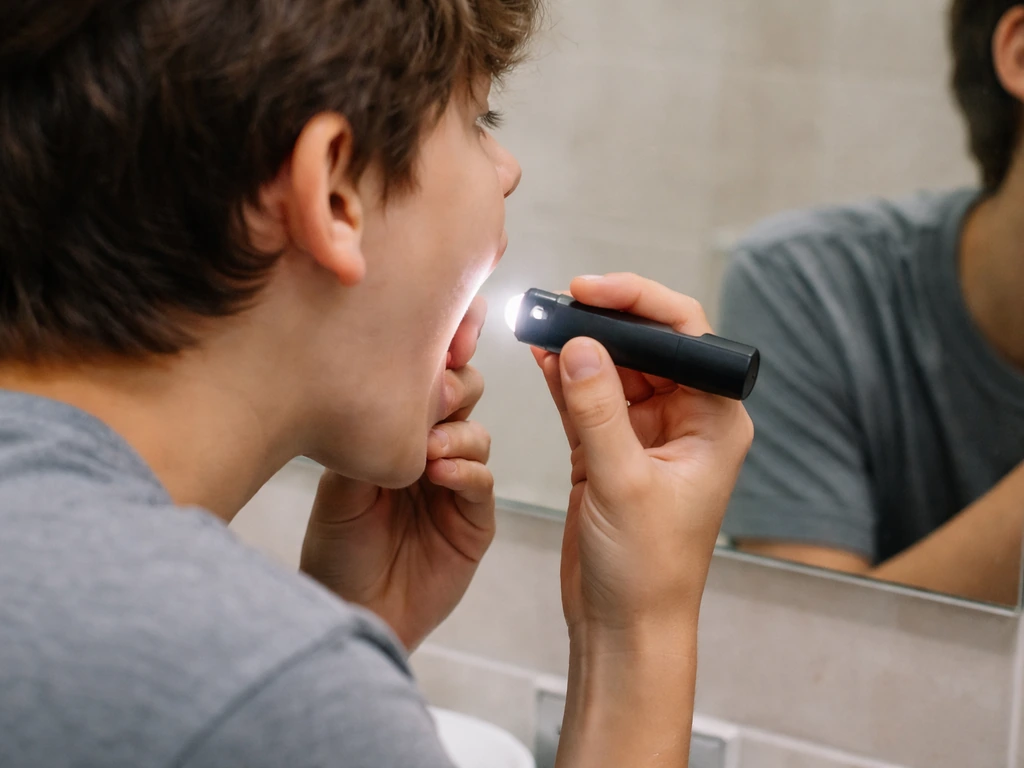
- Look at the back corners of the mouth with a flashlight. If you see a tooth partially through the gum with no signs of redness, swelling, or pus, that's likely a second molar doing its thing normally.
- Note whether any pain is localized (just one spot) or more diffuse, and whether it's getting better or worse over a few days.
- Check if the new tooth feels like it's pushing existing teeth noticeably. Some minor crowding adjustment is normal but significant shifting is worth flagging.
- Count the visible permanent teeth. By 14, most people should have close to 28 permanent teeth (not counting wisdom teeth). If the count seems off, X-rays will clarify things.
When to get a dentist or orthodontist involved
For routine confirmation that eruption is on track, a regular dental checkup with a panoramic X-ray is the standard move. The X-ray shows all developing teeth, their positions, root formation stages, and any impaction concerns in one image. If orthodontic treatment is already happening, the orthodontist is probably already monitoring this. If not, age 14 is a completely reasonable time for an orthodontic evaluation if it hasn't happened yet.
If there's active pain, swelling, fever, or a bad taste in the mouth near an erupting tooth, don't wait for the next routine checkup. Call the dental office and describe the symptoms. Those signs can indicate infection that needs prompt treatment. The dentist will likely examine the area, possibly take a targeted X-ray, and determine whether the issue is pericoronitis, decay, impaction-related pressure, or something else entirely.
At 14, the dental picture is almost complete but not quite finished. Most of what's still erupting at this age is the last wave of the permanent set coming in, and for the vast majority of teens it goes smoothly. The key is knowing which signs are normal discomfort and which ones need a professional look. When in doubt, a quick dentist check is always the right call, and an X-ray at this age gives a clear roadmap of everything that's still in progress below the surface.
FAQ
If I only have one tooth still coming in at 14, is that ever abnormal?
Yes, it can be normal, but it depends on what’s missing versus what’s delayed. If the tooth looks present on the gumline but is slow to erupt, that often fits delayed eruption. If the tooth appears absent on a panoramic X-ray, that suggests impaction or congenital absence, which needs a different plan than “wait and see.”
How can I tell the difference between normal erupting soreness and a developing infection?
Normal eruption discomfort is usually mild, short-lived, and improves day by day. Infection signs are worsening pain, spreading redness, fever, pus or bad taste, swollen lymph nodes, or trouble opening your mouth. Those warrant a same-day or next-day dental call, especially if the pain is near a partially erupted tooth.
Do braces always speed up eruption, or can they make things worse temporarily?
Braces often help by creating space and guiding eruption, but there can be short-term discomfort and slower progress if the tooth meets resistance or if the bite mechanics increase pressure in that area. If a tooth seems stuck longer than expected, orthodontists may add attachments, change archwire sequence, or use targeted imaging to reassess eruption path.
Should I avoid hard foods if I’m in the middle of an erupting tooth at 14?
Temporarily, yes. If a tooth is partially erupted or the gum is tender, very hard, crunchy foods can irritate the area and increase inflammation. Softer options for a week or two can reduce swelling while the gum tissue settles.
Is an X-ray at 14 always necessary to know what teeth are coming in?
Not always. If eruption seems straightforward and symptoms are mild, many dentists can monitor clinically. X-rays are especially useful if you have pain in one spot, a tooth that seems absent, crowding issues, orthodontic concerns, or any suspicion of impaction or abnormal root development.
What does it mean if a second molar is “there” on X-ray but not showing yet?
That usually indicates the tooth germ is developing and positioned in the jaw but hasn’t moved far enough into the eruptive path to break through. Dentists often monitor root development and angulation on the panoramic film to decide whether observation is enough or whether the tooth needs orthodontic guidance.
If wisdom teeth aren’t erupting at 14, why can they still hurt?
Wisdom tooth buds are usually just starting and are less likely to be the source of gumline pain. Back-of-jaw pain at 14 is more commonly related to pressure from another molar erupting, tooth decay, gum inflammation, or muscle/jaw issues. A dentist can localize the cause with an exam and possibly a targeted X-ray.
Can a tooth that is “missing” on X-ray be brought in later without a restorative option?
Sometimes, but only if the tooth exists in the jaw and is delayed or impacted. If a tooth germ never formed (congenital absence), it cannot erupt later because there is no tooth to bring into position. That’s why X-rays matter: they distinguish “hidden and movable” from “not present.”
What are common signs that a partially erupted tooth needs urgent attention?
Seek prompt care if symptoms suggest pericoronitis or another infection: worsening pain, swelling over the gum flap, pus, bad taste that doesn’t improve, fever, or increasing difficulty opening your mouth. Waiting through multiple days can increase the risk of spreading infection.
What can I do at home for mild soreness from an erupting tooth?
Support the gum tissue and reduce irritation. Gentle warm salt-water rinses can help with tenderness, and over-the-counter pain relief may be appropriate if you can safely take it. Avoid aggressively poking the gum flap, and call the dentist if symptoms worsen or persist beyond about a week.
If a permanent tooth is missing at 14, when is the “right” time to start planning treatment?
Planning is usually beneficial as soon as the diagnosis is clear from imaging, because timing affects options. Space management, orthodontics, and the growth stage of the jaw can change what works best. Even if definitive treatment is later, an early consult helps prevent drifting of neighboring teeth.
Next Articles

What Teeth Grow In at 12: Timing, Signs, and Next Steps
Teeth eruption at 12: which permanent teeth come in, signs it is on track, and what cannot regrow vs options
Do Milk Teeth Grow Back? Timelines, What to Do, Red Flags
Learn if milk teeth regrow, typical timelines for permanent teeth, what to do after loss or injury, and red flags.
Can Milk Teeth Grow Twice? Replacement vs True Regrowth
Can milk teeth grow twice? Learn why baby teeth usually only get replaced, not regrown, and what to do if one falls out