
No, a tooth cannot grow in your ear. Human tooth development is hardwired to happen in the jaw, and there is no biological mechanism that causes a tooth to form or erupt inside the ear canal or middle ear under normal circumstances. That said, there are real, documented medical conditions involving tooth-like structures near the ear region, and those are absolutely worth knowing about.
Can a Tooth Grow in Your Ear? What’s Real and Why

Marcus Holloway
6 May 2026
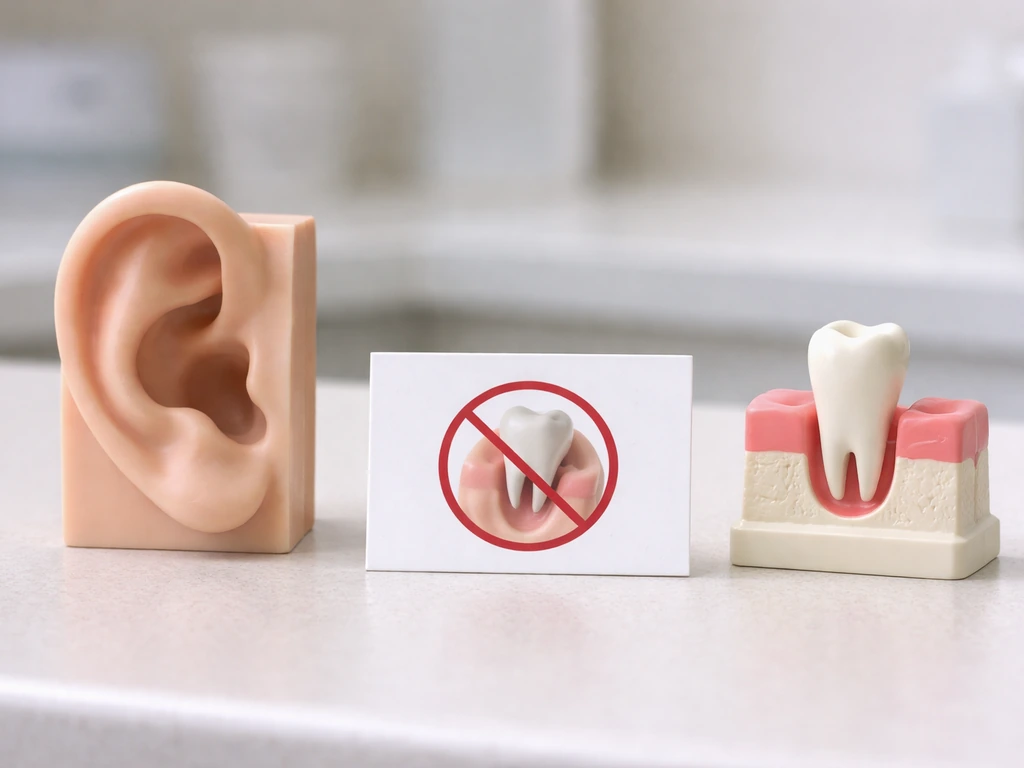
Why people think this happens
Most people who land on this question are not actually finding teeth sprouting from their ear canal. What usually happens is one of three things: they read a bizarre case report online, they felt something hard and strange near their jaw or ear and assumed the worst, or they heard a story that got exaggerated in retelling. The internet has a way of turning extremely rare medical oddities into apparent common occurrences.
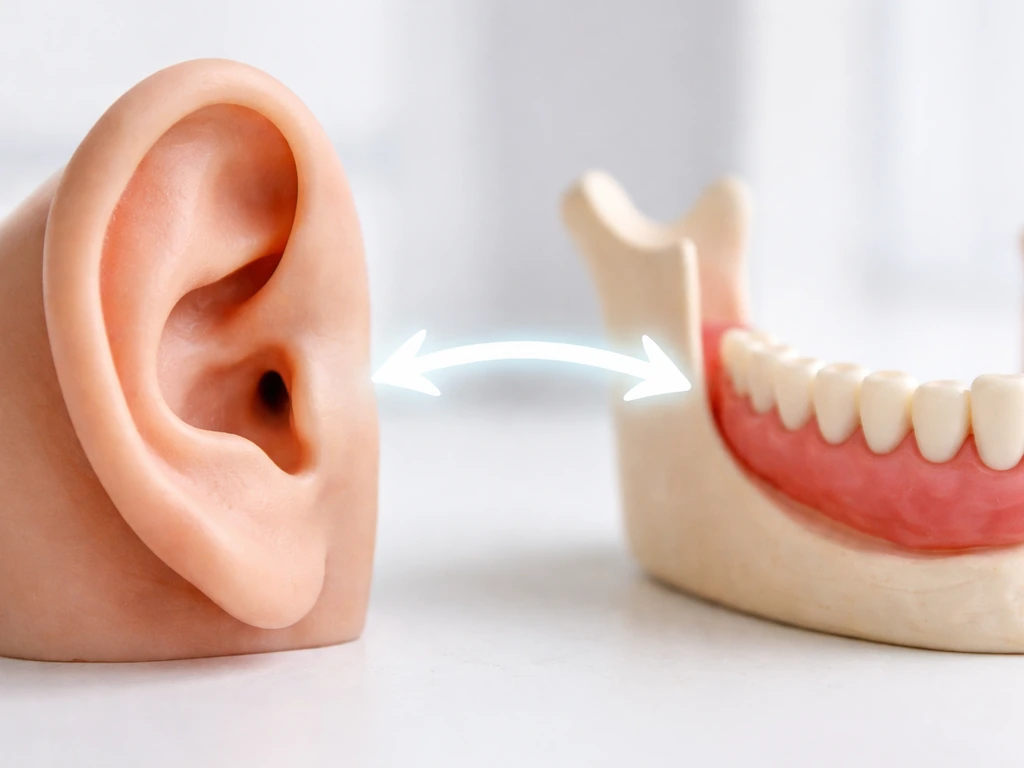
There is also genuine confusion about how close the ear is to the jaw joint and the back teeth. The temporomandibular joint (TMJ) sits right in front of your ear canal. Wisdom teeth (third molars) erupt at the very back of the jaw, and when impacted, they can cause pain that radiates toward the ear. It is easy to feel earache and assume something dental is happening inside the ear itself. Add in some swelling near the jawline and you have a recipe for dramatic self-diagnosis.
The folklore around ectopic teeth, meaning teeth that form or erupt in the wrong location, does have a real scientific basis. Ectopic teeth have been documented in the nose, the roof of the mouth, and even the throat in rare cases. So the idea that a tooth could show up somewhere unexpected is not pure fantasy. But the ear is a different story, and the distinction matters.
What can actually happen near the ear
While a true tooth does not grow in the ear, there are legitimate conditions involving the ear region that involve tooth-like or odontogenic (tooth-forming) tissue. These are rare, but they are real, and they explain where some of the case reports come from.
Odontomas near the ear
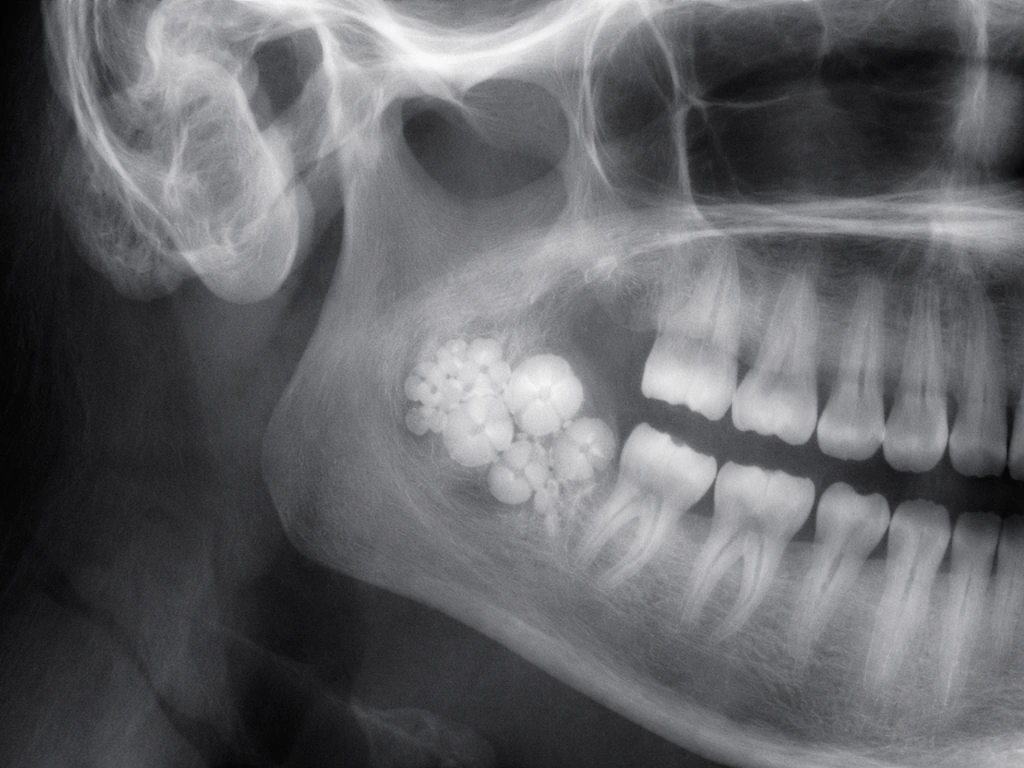
An odontoma is a benign, slow-growing tumor made up of the same cells that normally form teeth. It can contain enamel, dentin, and cementum, and on an X-ray it looks strikingly like a cluster of small, malformed teeth or calcified masses. Published case reports describe odontomas found in the temporal bone and the middle ear, with the first documented middle ear odontoma appearing in the medical literature in 1975. That case involved conductive hearing loss, episodic pain, and recurrent upper respiratory infections. Imaging showed an opacified middle ear cavity with tooth-like areas of calcification. So while this is not a tooth growing in your ear in any conventional sense, it is a tooth-forming lesion that ended up in the wrong place during development. These are exceedingly rare.
Impacted or ectopic teeth near the ear region
Impacted wisdom teeth are by far the most common reason someone ends up at a dentist or ENT complaining of ear-area tooth pain. When a third molar gets stuck in the jaw and cannot erupt properly, it creates pressure, inflammation, and referred pain that can feel like it is coming from the ear. The tooth is still in the jaw, but the nerve pathways involved make it feel otherwise. Ectopic teeth, ones that develop in unusual positions, have been documented in the nasal cavity after trauma, in the maxillary sinus, and in a few other craniofacial locations, but confirmed ectopic teeth within the ear canal itself remain extraordinarily rare in the published literature. Ectopic tooth development can occur due to disturbances during odontogenesis, with reported cases of ectopic teeth in the maxillary sinus Ectopic teeth, ones that develop in unusual positions.
Cysts and other hard masses
Cholesteatoma is a cyst-like growth that can develop in the middle ear and mastoid bone. It is not odontogenic at all, but it is firm, it grows, and it can show up on imaging as a mass near where someone might imagine a tooth to be. Jaw cysts (dentigerous cysts, odontogenic keratocysts) near the back of the jaw can also extend close enough to the ear region that patients feel them as ear pressure or pain. Healthline describes dentigerous cysts as odontogenic fluid-filled lesions associated with impacted teeth and emphasizes the importance of evaluation Jaw cysts (dentigerous cysts, odontogenic keratocysts) near the back of the jaw. None of these are teeth, but they require evaluation and often treatment.
How doctors figure out what is actually going on
If you have ear pain, a sensation of something hard near your ear, hearing changes, or swelling in that area, both dentists and ENT specialists have clear tools for getting to the bottom of it. This is one of those situations where the two specialties genuinely overlap, and you might end up seeing both.
- Clinical history: Your doctor will ask when the symptoms started, whether you have had recent dental problems or trauma, whether you have pain with chewing, jaw clicking, or hearing changes.
- Physical exam: A dentist checks for impacted teeth, jaw swelling, and signs of cysts or infection. An ENT uses an otoscope to look inside the ear canal and can check the eardrum and middle ear directly.
- Dental and panoramic X-rays: A panoramic X-ray gives a full view of all the teeth, jaw, and surrounding bone in one image. It is often the first step and can reveal impacted teeth, cysts, or calcified masses near the jaw and ear region.
- CT scan: When something unusual shows up on X-ray, or when the symptoms point to the middle ear or temporal bone, a CT scan gives much higher detail. CT is how middle ear odontomas and other rare lesions near the ear are typically identified, as they show characteristic calcified areas that look tooth-like.
- Pathology: If a lesion is removed surgically, a sample goes to a pathologist who examines the tissue under a microscope. This is the definitive way to confirm whether something is truly odontogenic (tooth-forming) tissue, a cyst, a cholesteatoma, or something else entirely.
When to get care and what counts as urgent
Most of the time, ear pain linked to dental issues is uncomfortable but not a same-day emergency. Impacted wisdom teeth, TMJ issues, and jaw cysts can typically be evaluated at a scheduled dental or ENT appointment within a few days to a couple of weeks. That said, some symptoms should push you to seek care faster.
| Symptom | How urgent | Where to go |
|---|---|---|
| Ear pain with no fever, gradual onset | Schedule within 1-2 weeks | Dentist or ENT |
| Ear pain alongside jaw pain or difficulty opening mouth | Schedule soon, within a few days | Dentist first, then ENT if needed |
| Swelling near the jaw or below the ear, mild | See a dentist within 1-2 days | Dentist |
| Sudden hearing loss or significant hearing change | Urgent, within 24-48 hours | ENT or urgent care |
| Rapidly spreading jaw or neck swelling, difficulty swallowing or breathing | Emergency, go now | Emergency room immediately |
| High fever plus jaw/ear swelling and pain | Emergency, go now | Emergency room immediately |
Rapidly spreading swelling from a dental infection can extend into the neck and throat and become life-threatening. If you have swelling that is growing fast, difficulty swallowing, or any trouble breathing alongside jaw and ear symptoms, do not wait for a dental appointment. Go to the emergency room.
The bigger picture: can teeth or enamel regenerate anywhere?
Since this site is focused on tooth regeneration questions, it is worth connecting this topic to the broader biology. The short answer is that adult humans do not regenerate teeth. Once your 32 adult teeth are in (or not, in the case of congenitally missing teeth), that is your permanent set. Enamel is the hardest substance your body makes, but once it wears away or is destroyed, your body cannot produce new enamel to replace it. Dentin has limited reparative ability, meaning the pulp inside a tooth can lay down small amounts of secondary or tertiary dentin in response to damage, but this is not regrowth in any meaningful sense.
Children are the exception within normal tooth development. Baby teeth fall out and adult teeth replace them, but this is a one-time programmed process. There is no third set waiting in reserve. Once an adult tooth is lost, the dental follicle (the tissue sac that would guide tooth development) is gone, and nothing signals a new tooth to form in that space. This is why dental implants, bridges, and dentures exist.
As for ectopic teeth forming in unexpected locations, the biology behind those rare events is not a regeneration story. They are developmental errors, cases where odontogenic cells that were supposed to form teeth in the jaw ended up in the wrong location during fetal development or after significant trauma. That is fundamentally different from regrowing a tooth you lost. Researchers are actively studying tooth regeneration in animals (some species like sharks and mice can regrow teeth), and there is early-stage human research on activating dormant tooth-forming genes, but none of this is available as a clinical treatment yet.
The ear question fits neatly into this framework. It also explains why people ask, “can teeth grow out of your toes,” and why such a thing would not be expected under normal human biology The ear question fits neatly into this framework.. The reason a tooth cannot grow in your ear is the same reason a tooth cannot grow back after you lose one as an adult: the specific developmental cells and signaling pathways required to form a tooth are not present in the ear canal, and in adults they are no longer active even in the jaw. A rare odontoma near the ear is a remnant of those cells going astray during development, not a sign that tooth regrowth is happening spontaneously.
What to do if you think something is wrong near your ear
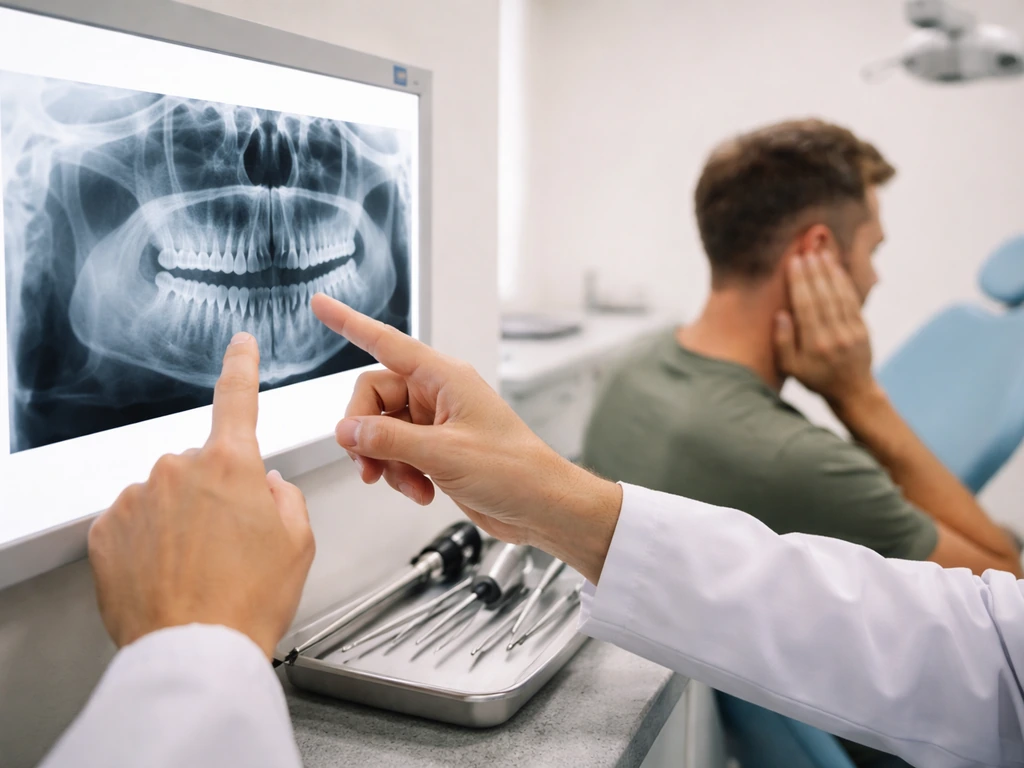
If you felt something hard near your ear, have unexplained ear pain, or noticed pressure or hearing changes alongside jaw discomfort, here is a practical sequence to follow.
- Start with your dentist. A panoramic X-ray can rule out impacted teeth, jaw cysts, and other dental causes quickly and affordably. This is almost always the right first step unless your symptoms are clearly ear-only.
- See an ENT if ear symptoms dominate. If you have hearing loss, fluid in the ear, or a visible mass inside the ear canal, an ENT is the specialist for that. They can order a CT of the temporal bone if something unusual is suspected.
- Do not self-diagnose from a case report. The middle ear odontoma cases in the literature are genuinely rare and described in specialized journals for a reason. Reading one and assuming that is what you have is like reading about a rare shark attack and assuming that explains your leg pain.
- Follow up on imaging findings. If an X-ray or CT shows something calcified or unusual, ask specifically what it is and whether you need a referral to an oral and maxillofacial surgeon or head and neck specialist.
- Take infection symptoms seriously. Swelling, fever, and severe pain near the jaw and ear together can signal a dental abscess spreading. That needs same-day or emergency evaluation, not a wait-and-see approach.
Similar questions about teeth appearing in unusual places, like in the nose or throat, follow the same basic principle: ectopic odontogenic tissue is biologically possible in rare circumstances during development, but it is not the same as a tooth growing or regrowing where it does not belong. If you are wondering about teeth or tooth-like growths in the throat, the key idea is that tooth-forming tissue can be misplaced during development, but true tooth growth where it does not belong is not something that happens spontaneously. If you are curious about those related cases, the pattern of how doctors investigate and treat them is very much the same as what is described here.
FAQ
If it is not a real tooth, why does it feel like there is something hard in or near my ear?
Rarely, tooth-forming lesions in the head and neck can show up near the ear region on imaging, but most people feeling a “hard thing” near the ear are actually dealing with jaw bone issues, inflamed wisdom tooth tissue, lymph nodes, or TMJ-related soreness. If the spot is tender or changes in size, get examined rather than assuming it is an odontoma.
How can I tell whether my ear pain is dental (jaw/TMJ) versus an actual ear problem?
Ear symptoms that often point to a dental or jaw source include pain that worsens when you chew, tenderness at the back molar area, jaw clicking or locking, and a history of impacted wisdom teeth. ENT and dental exams can help separate ear canal and middle ear problems from referred pain.
What are the most common mistakes people make when trying to figure out if a tooth is causing ear pain?
One common pitfall is self-diagnosing from photos or online case stories. Another is assuming that because pain is near the ear, the problem must be inside the ear canal. Many “earache” sensations originate from the TMJ, posterior teeth, or nearby jaw cysts that refer pain to the ear area.
What types of tests or imaging are typically used to rule out ear conditions versus tooth-forming lesions?
If your main symptom is hearing change or persistent ear fullness, ask whether you need an ear-focused evaluation such as an otoscopic exam and audiology testing, alongside dental assessment for wisdom teeth or TMJ. Imaging choices vary, but the goal is to determine whether the issue is middle ear, mastoid, or jaw-related.
When should ear-area pain linked to the jaw be treated as an emergency?
Seek urgent care if you have rapidly worsening facial or jaw swelling, fever, spreading redness, difficulty opening your mouth, trouble swallowing, or any breathing difficulty. These can signal a serious spread from a dental infection into deeper neck spaces and should not wait for a routine dental appointment.
What should I do in the meantime if I think a wisdom tooth or jaw issue is causing my ear symptoms?
If you suspect a tooth-related cause, pain control and tracking can help while you arrange care. Note what triggers the pain (chewing, mouth opening), whether you have bad taste or drainage, and whether symptoms improve or worsen over 24 to 48 hours. Avoid heat if swelling is spreading quickly, and do not try to cut or drain anything at home.
If my symptoms keep coming back, could it still be something like an odontoma or cyst, not just an infection?
A true odontogenic lesion like an odontoma is unusual, so if symptoms are recurrent, worsening, or associated with hearing changes, doctors may recommend imaging to clarify the source. Don’t assume it is an infection if the problem keeps returning, because cysts and other growths can mimic infection and cause persistent pressure.
Can a new tooth-like bump appear near my ear or jaw in adulthood, and what could it actually be?
Adult tooth regrowth is not a realistic expectation, so a “new tooth” sensation is more likely to be inflammation, nerve pain, or an imaging-visible calcified structure rather than something sprouting spontaneously. If anything looks new to your mouth or face, an exam can determine whether it is tissue swelling, bone, or a lesion.
Next Articles
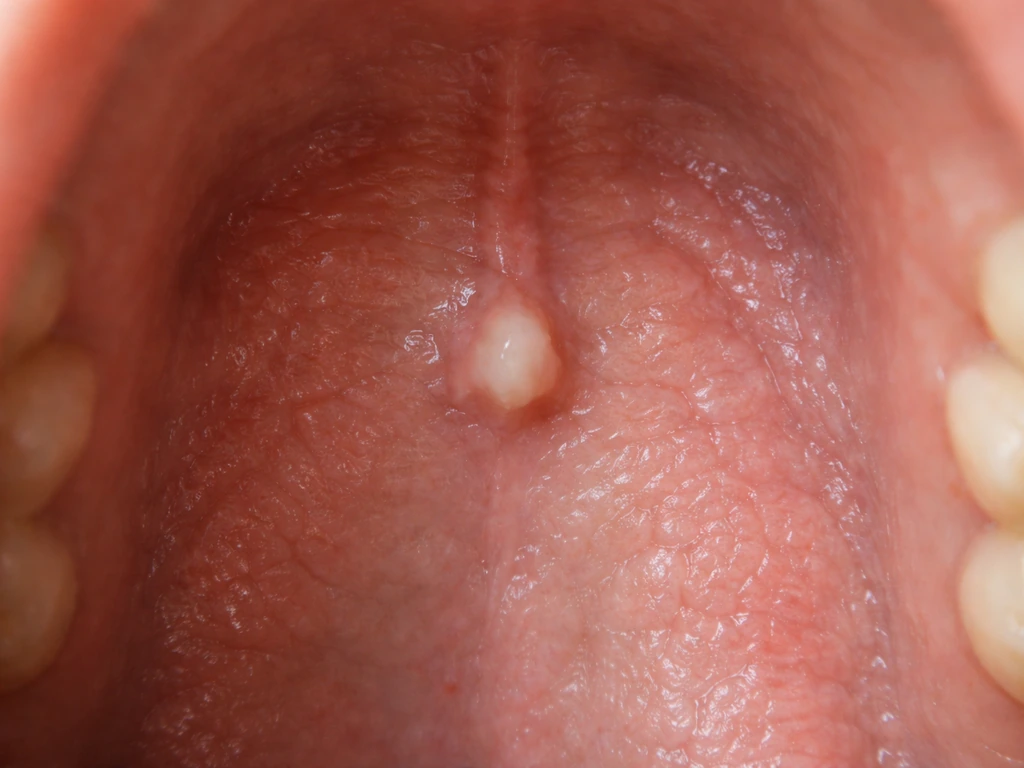
Can Teeth Grow in the Roof of Your Mouth? What to Know
Can teeth form on the palate? Learn what tooth-like bumps mean, true extra teeth vs cysts, and next steps to get checked
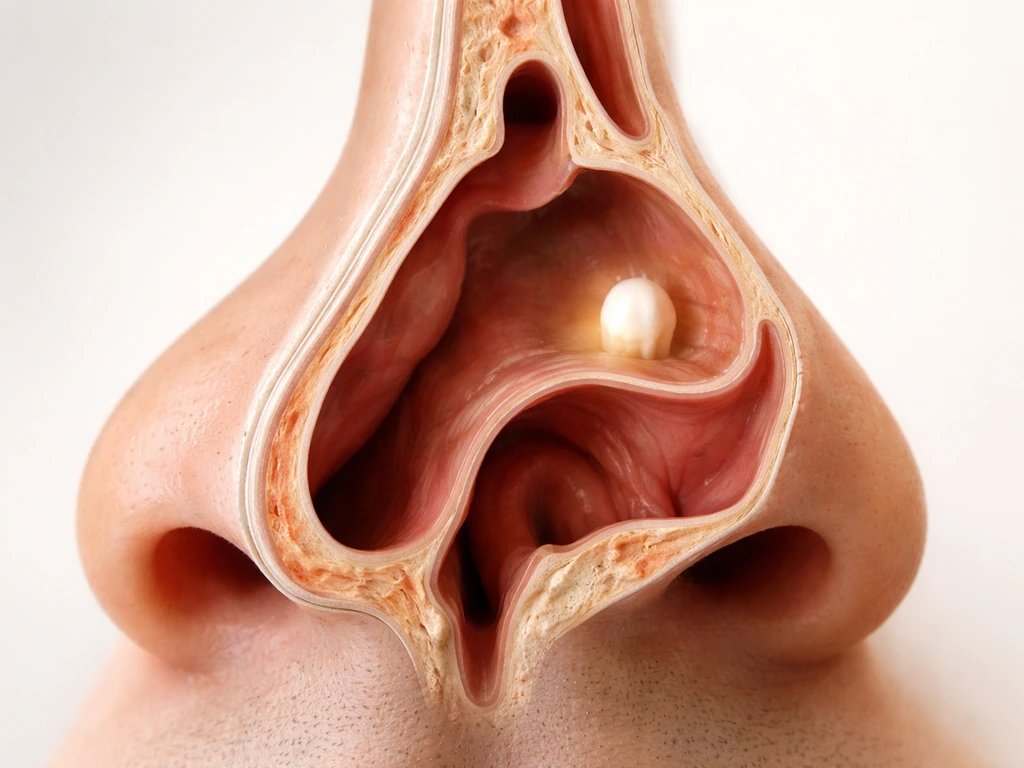
Can a Tooth Grow in Your Nose? What’s Possible and Next Steps
Can a tooth grow in your nose? Learn what’s possible, what it likely is, and next steps for ENT and dental care.
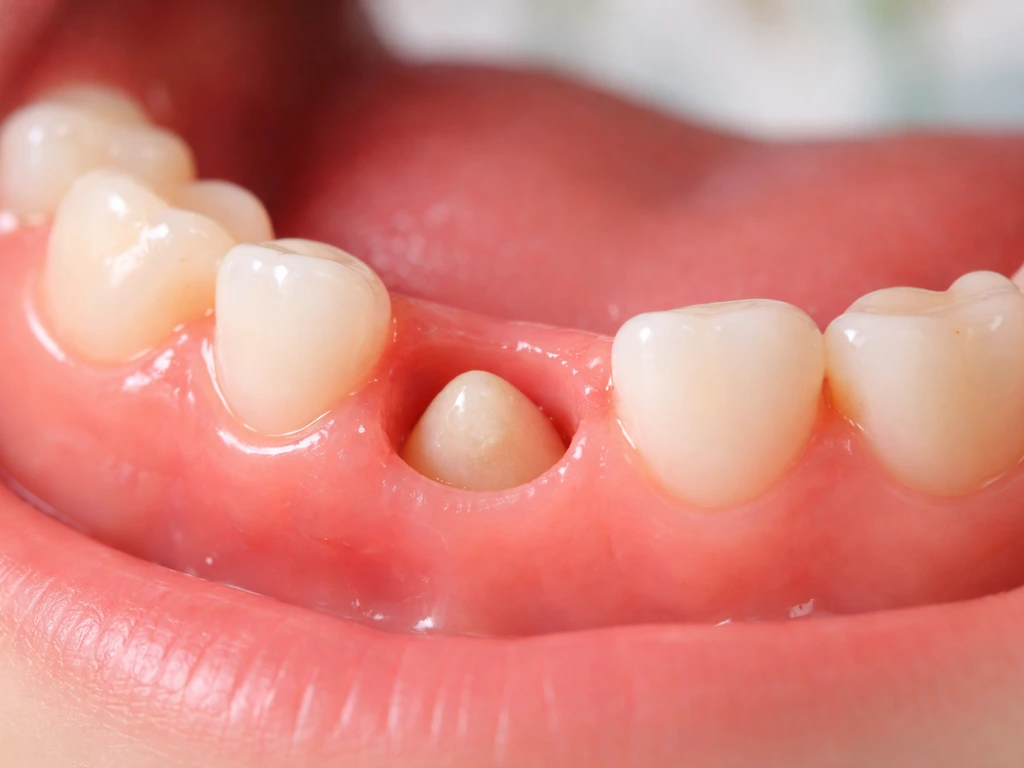
Do Milk Teeth Grow Back? Timelines, What to Do, Red Flags
Learn if milk teeth regrow, typical timelines for permanent teeth, what to do after loss or injury, and red flags.