What you're seeing is almost certainly not a tooth growing on top of another tooth in any sci-fi sense. The most likely explanation is a supernumerary (extra) tooth erupting alongside a normal one, a permanent tooth coming in before the baby tooth has fallen out, or an impacted tooth pushing through at a weird angle. These kinds of extra teeth are among the weird places teeth can grow, so imaging is the key to figuring out what you are actually seeing supernumerary (extra) teeth. These are real, fixable dental situations, and most of them need a dentist visit and an X-ray to sort out, not panic.
Teeth That Grow on Top of Teeth: Causes and What to Do

Marcus Holloway
13 May 2026
What it usually means when you see a tooth growing on top of another
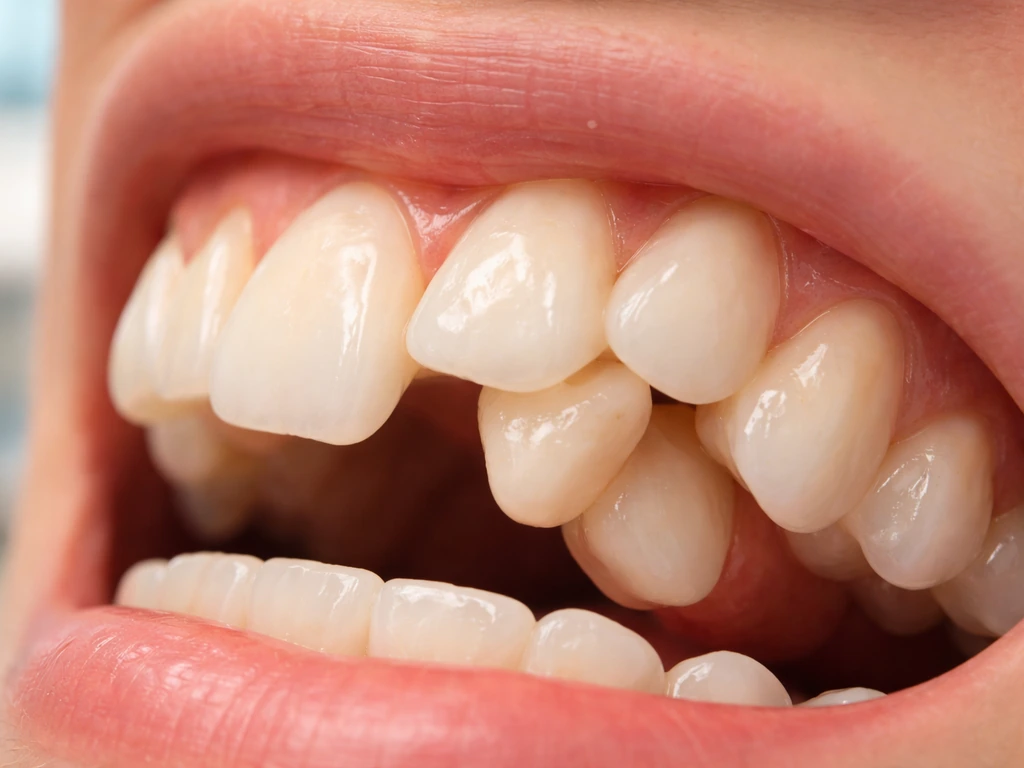
When someone describes a tooth growing on top of another, they usually mean one of a few things: a second tooth is visibly erupting right next to or just behind an existing one, a tooth looks doubled or fused, or a tooth is coming in at such a bad angle that it sits partially over a neighbor. None of these are situations where existing enamel or root structure is physically sprouting new tissue. What's actually happening is an extra tooth bud formed and is erupting, or a tooth that was stuck below the gumline is finally pushing through in the wrong spot.
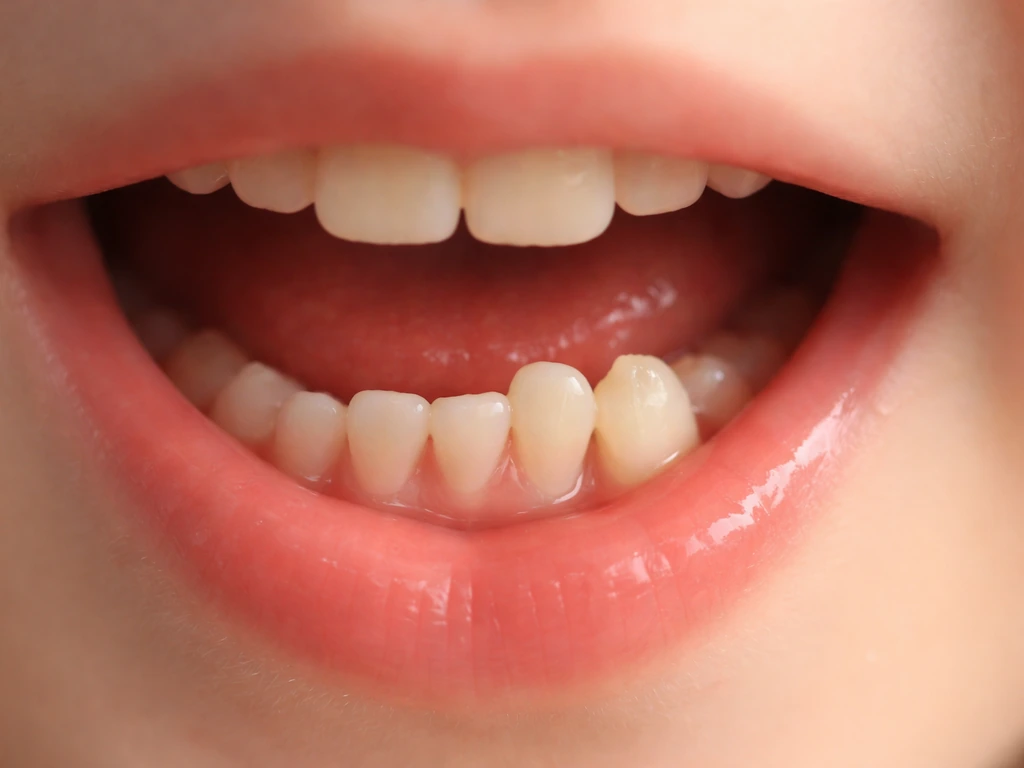
A very common version of this in kids is the 'shark teeth' scenario: a permanent tooth erupts directly behind a baby tooth that hasn't fallen out yet, creating a double row. In adults, a wisdom tooth erupting at an angle can appear to crowd or push over a second molar, giving the impression of overlapping growth. In rarer cases, an extra tooth (supernumerary tooth) erupts right in the middle of the arch, sitting visibly in front of or overlapping a permanent tooth.
The most common causes: what's actually going on biologically
Supernumerary teeth (including mesiodens)
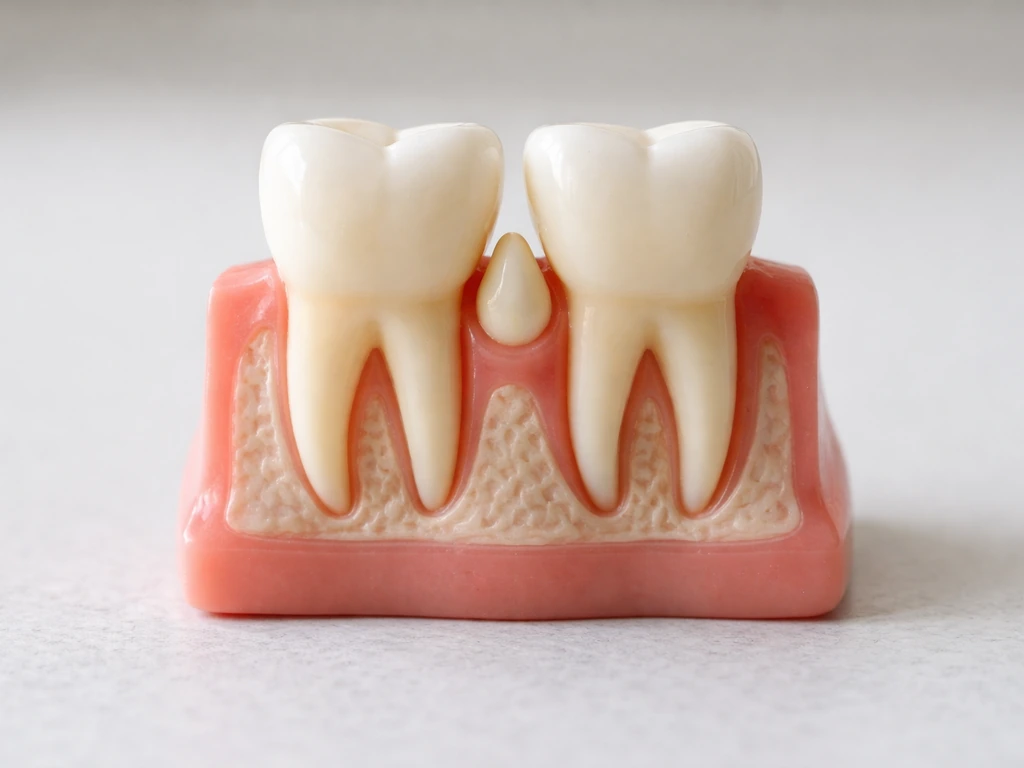
A supernumerary tooth is simply an extra tooth that formed from an additional tooth bud during development. The most common type is called a mesiodens, which appears between the two upper front teeth. In a case series of 200 mesiodens, complications were found in nearly 20% of cases, including delayed eruption of the permanent central incisor in 6% of patients, rotation or displacement in about 2.5%, and dentigerous cyst formation (a fluid-filled sac around the extra tooth) in 11%. When a mesiodens erupts, it can look startlingly like a small tooth growing out of the gum on top of or between normal teeth. Supernumerary teeth can appear anywhere in the arch but are most common in the front upper jaw.
Tooth fusion and gemination
Fusion happens when two separate tooth buds join together during development, creating one wide, double-looking tooth. Gemination happens when a single tooth bud tries to divide into two teeth but doesn't fully split, resulting in a single root with a crown that looks like two teeth fused at the surface. From the outside, both conditions can look like one tooth is sitting on top of or merging into another. Neither is a tooth 'growing back.' It's a quirk that happened before the tooth ever erupted.
Eruption and impaction problems
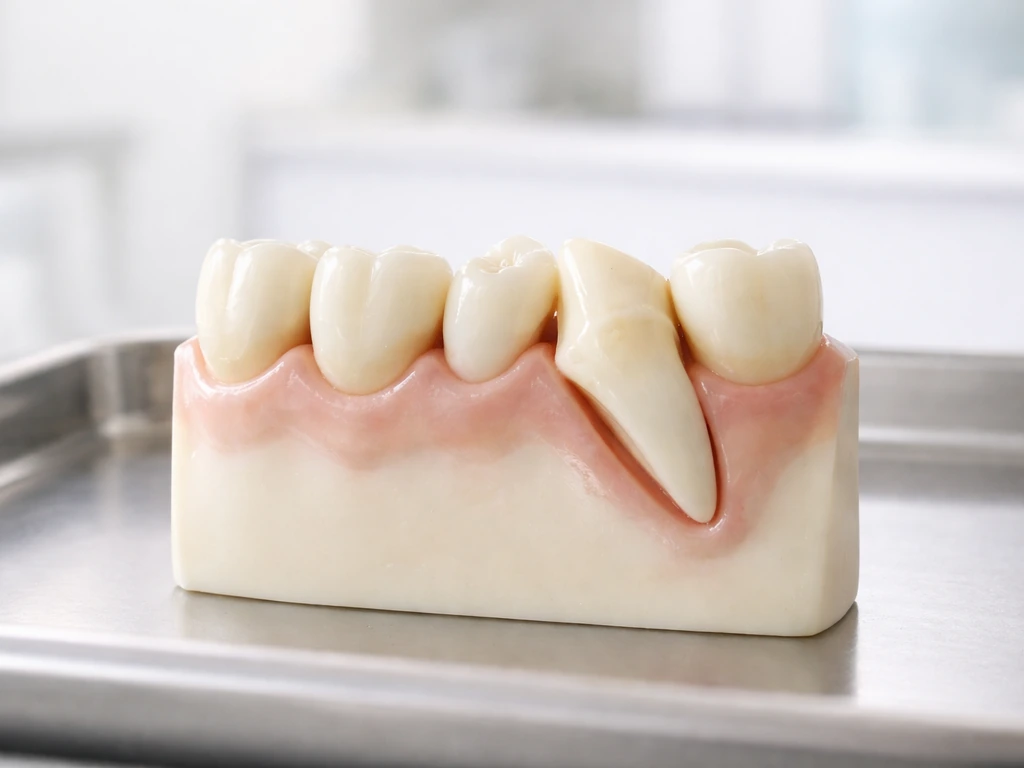
Sometimes a tooth gets stuck (impacted) and eventually erupts in the wrong direction or at an ectopic angle. This is especially common with upper canines and wisdom teeth. An ectopically erupting tooth can push sideways against a neighbor, resorb its root, or erupt through the gumline in a spot that makes it look like it's growing on top of an existing tooth. On 2D X-rays, impacted teeth can also appear to overlap existing teeth even when they're actually positioned in front of or behind them, which is why dentists sometimes use the SLOB rule (Same Lingual, Opposite Buccal) to figure out the actual position of an overlapping object using angled radiographs.
How this plays out at different ages
Young children (ages 5-8): the classic double row
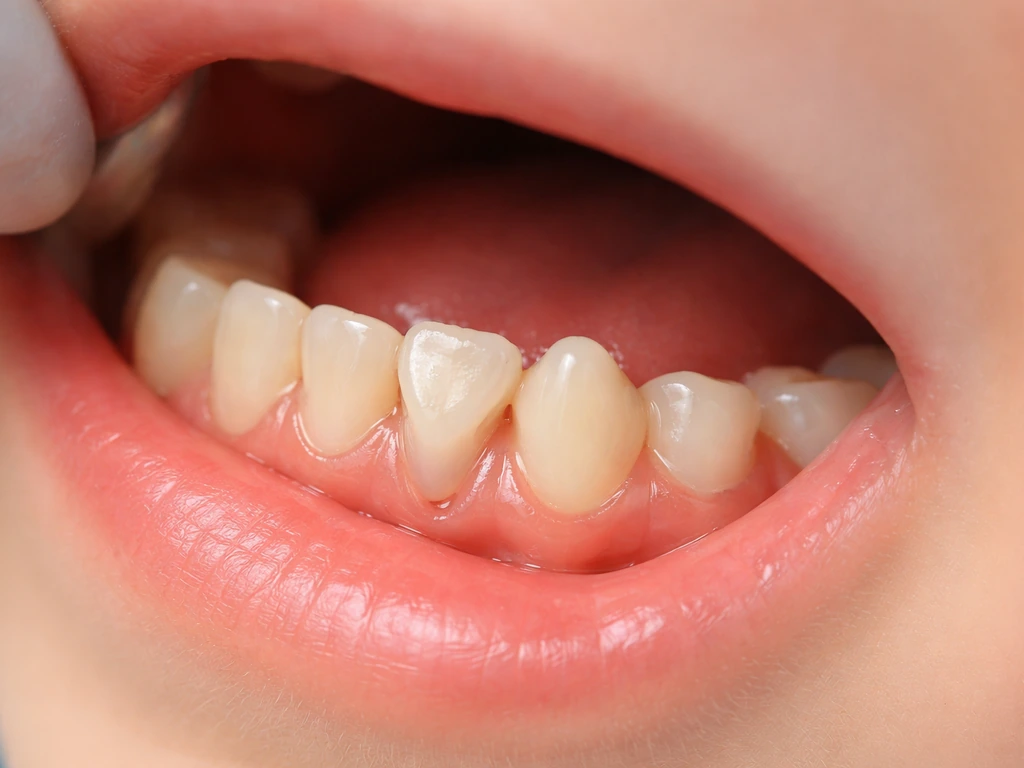
The most common 'teeth on top of teeth' scenario in young kids is simply a permanent tooth erupting before the baby tooth has loosened enough to fall out. This typically happens with lower front teeth around age 6. The permanent tooth pushes through behind the baby tooth, creating a double row often called 'shark teeth.' This is usually harmless and self-resolving if the baby tooth is already loose. If the baby tooth isn't budging and the permanent tooth is significantly displaced, a pediatric dentist may remove the baby tooth to guide the permanent tooth into place. Supernumerary teeth also tend to show up first in this age range, particularly mesiodens in the upper front area.
Preteens and teens (ages 10-17): crowding, canines, and orthodontic concerns
In this age group, impacted or ectopically erupting upper canines are a major culprit. Upper canines are the last front teeth to erupt (typically around ages 11-13), and they have long roots and a complex eruption path. When they go off course, they can erupt buccally (toward the cheek) or palatally (toward the roof of the mouth) and look like they're growing over the lateral incisor. Research confirms that impacted premaxillary supernumerary teeth can cause displacement, rotation, and failure of eruption of permanent incisors, which is exactly the kind of scenario that brings worried parents and teens into the dentist's office saying 'there's a tooth growing on top of another tooth.' Orthodontic treatment in this age group is highly effective because the jaw is still growing.
Adults (ages 18+): wisdom teeth and late eruption events
In adults, wisdom teeth are the most common reason someone feels like a new tooth is erupting. Third molars typically emerge between ages 17 and 25, but eruption can happen later, even into the early 30s. When a wisdom tooth partially erupts at an angle, it can press against the second molar and feel or look like something is pushing through on top of an existing tooth. Adults can also occasionally see late supernumerary teeth erupt, though this is less common. In adults with significant crowding, teeth can also shift over time so that one tooth begins to sit higher or at an angle relative to its neighbor, which can mimic the appearance of new tooth growth.
Symptoms that mean you should call a dentist soon
Some of these situations are urgent; others are purely cosmetic and can wait a few weeks. Here's what to watch for:
- Pain or pressure in the area, especially if it's getting worse over days rather than better
- Swelling in the gum or jaw near the tooth in question
- Visible tooth erupting in an obviously wrong position (behind, above, or at a sharp angle to another tooth)
- A baby tooth that is not at all loose despite a new tooth erupting next to or behind it
- Numbness, tingling, or a persistent bad taste (can indicate infection or a cyst forming around an impacted tooth)
- Bite changes: you notice your teeth no longer meet the way they used to, or chewing feels different
- Any erupting structure in an adult who has not recently had wisdom teeth erupt (could be a late supernumerary, cyst, or rare odontogenic tumor)
The last point is worth emphasizing: in adults, new 'tooth-like' eruptions that weren't expected are not normal and warrant prompt evaluation. An impacted supernumerary tooth that goes undetected for years can develop a dentigerous cyst, and roughly 11% of mesiodens cases in one study were associated with cyst formation. That's a complication you don't want to discover late.
How dentists diagnose what's actually happening
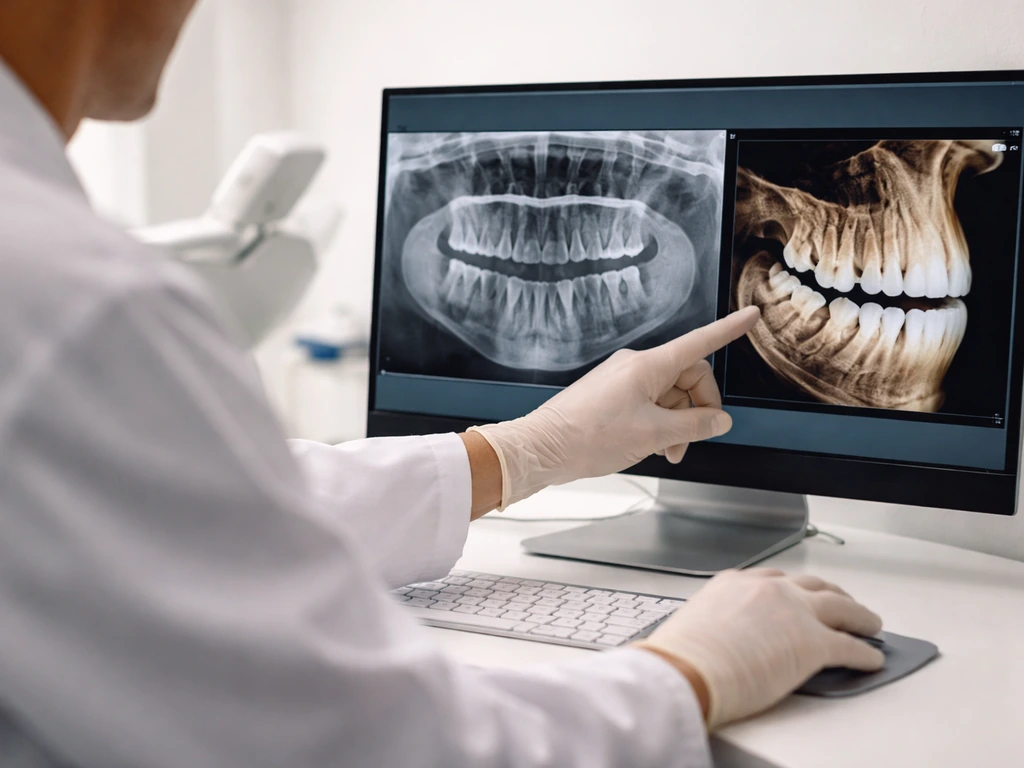
A dentist will start with a visual clinical exam, feeling along the gumline and checking bite alignment, but the real answers almost always come from imaging. A panoramic X-ray (the one where the machine rotates around your head) shows the full arch and is usually the first image taken. It lets the dentist count teeth, spot impacted or supernumerary teeth, check root development, and look for cysts or bone abnormalities.
When more detail is needed, especially for surgical planning or to figure out exactly where an impacted tooth sits in three dimensions, a CBCT (cone beam computed tomography) scan is used. This produces a 3D image of the jaw and is particularly useful for mapping the position of impacted canines or supernumerary teeth relative to adjacent roots. On a flat 2D X-ray, two teeth can appear to overlap even when one is completely in front of the other, which is why the 3D view (or at minimum a second angled 2D X-ray using the SLOB rule) is often needed to understand the true spatial relationship before any surgical approach.
In children, the dentist is also tracking root development and eruption timelines. Early detection of a supernumerary tooth or impacted canine before it causes root resorption in adjacent teeth makes treatment much simpler and the outcome much better.
Treatment options: from watchful waiting to surgery
| Situation | Typical approach | Surgery needed? |
|---|---|---|
| Baby tooth not lost, permanent tooth erupting behind it | Extraction of retained baby tooth; permanent tooth usually self-corrects | Minor (simple extraction) |
| Supernumerary tooth (mesiodens) fully erupted | Extraction of extra tooth; orthodontics if crowding resulted | Minor to moderate |
| Supernumerary tooth impacted below gumline | Surgical removal; monitor for cyst formation | Yes |
| Ectopically erupting canine in a teen | Surgical exposure + orthodontic traction to guide tooth into arch | Yes (expose and bond) |
| Partially impacted or angled wisdom tooth | Monitor if no symptoms; extraction if pain, infection, or resorption of adjacent tooth | Often yes |
| Tooth fusion or gemination | Cosmetic shaping, crown, or extraction depending on function and crowding | Rarely |
| Eruption crowding causing overlap (adult) | Orthodontic treatment; extraction if severe crowding | Not usually |
Watchful waiting is genuinely appropriate in some cases: a baby tooth about to fall out on its own, a wisdom tooth that is fully erupted and not causing resorption or infection, or a small supernumerary tooth in a young child when surgical timing is being optimized. But 'wait and see' should always be supervised with regular X-ray monitoring, not just ignored. The complications from undetected supernumerary teeth (root resorption, cysts, failure of adjacent teeth to erupt) are almost always more complicated to treat the longer they're left unchecked.
For teens with ectopically erupting canines, the combination of surgical exposure and orthodontic traction is highly effective. The surgeon exposes the crown of the impacted tooth and bonds a small bracket to it; the orthodontist then uses a wire to gradually guide the tooth into its correct position in the arch. The earlier this is done (ideally while the canine root is still forming), the better the long-term prognosis for the tooth.
Can teeth actually regrow on top of existing teeth? The honest answer
No. In general, teeth only develop from tooth-forming tissues in the jaw, so they are not expected to grow in other body areas teeth grow in other parts of the body. Human teeth do not regrow on top of existing teeth. Adults have two sets of teeth: primary (baby) and permanent. Once the permanent teeth are in place, no third set naturally forms in healthy individuals. Enamel, the outer layer of a tooth, cannot regenerate once it's been lost, and roots do not spontaneously regrow after being damaged. If someone claims their mouth has a disease where teeth grow everywhere, that is a very different (and usually medical-genetic) situation from a single overlapping-looking eruption like this. What looks like a tooth 'growing on top of another' is always one of the structural or developmental situations described above, not new biological growth from existing tooth tissue. If you are worried about a tooth growing under another tooth, a dentist can use X-rays to see whether it is an extra tooth, fusion or an eruption/impaction issue.
There is active research into dental regeneration, including studies on whether certain signaling molecules could stimulate dormant tooth bud cells to produce new teeth. Some animal models have shown limited promise. But as of right now, none of this applies to the tooth growing on top of another tooth you're looking at in the mirror. That is a real physical tooth (or structure) with its own separate origin, and it needs clinical evaluation, not regeneration.
It's also worth noting that what sometimes gets described as a 'tooth growing back' is usually one of two things: an impacted tooth finally erupting after years of being stuck (so it feels new, but the tooth bud was always there), or a supernumerary tooth appearing in adulthood after a long period of being buried in the bone. Neither is regrowth in any biological sense. The tooth simply hadn't broken through the gum yet.
What to do right now if you're seeing this
- Don't wait months to see if it resolves on its own, especially in an adult. Book a dentist appointment this week.
- Take a clear photo of the area with your phone so you have a reference to show the dentist at your appointment.
- If you're a parent and the child is under 10, a pediatric dentist is a good first call. If your child is 10 or older with a visibly displaced canine, ask specifically about a referral for orthodontic evaluation at the same time.
- Ask for a panoramic X-ray at minimum. If you're told everything looks fine without any imaging, push for the X-ray. You cannot see impacted or supernumerary teeth without it.
- If there's pain, swelling, or visible gum inflammation, treat it as more urgent and try to be seen within 24-48 hours.
- If a cyst or impacted tooth is identified, ask specifically about the timeline for treatment. Delays matter: cysts grow, and adjacent root resorption can become irreversible if an impacted tooth presses against a neighbor for too long.
The good news is that the vast majority of 'teeth growing on top of teeth' situations are completely treatable, and when caught early, most people come out of it with a full, well-aligned smile. The biology is working against nothing here. You just need the right diagnosis first.
FAQ
When is it safe to wait and watch this instead of seeing a dentist right away?
Yes, but only in specific situations. If the baby tooth is already loose and the new tooth is coming in behind it, gentle monitoring is reasonable. If the “extra” tooth-like bump is not mobile, is displacing the permanent tooth, or you notice pain, swelling, bad taste, or the gum is getting red, you should book a dental visit rather than waiting.
What should I do at home, and what should I avoid doing before I’m seen?
It is usually better to avoid self-directed imaging or poking the area. A dentist may start with a panoramic X-ray, then add angled 2D images or a CBCT only if the overlap is confusing or if surgery is being considered. Trying to “check mobility” with repeated pressure can irritate the gum and worsen discomfort without clarifying what the tooth actually is.
How can I tell whether this is fusion/gemination versus an extra tooth?
Fusion and gemination look similar from the outside, so you cannot reliably tell them apart by appearance alone. Clinically and on imaging, dentists look for patterns like whether there are one or two distinct teeth structures and whether the roots form in a single piece or separate units. That distinction matters because it changes orthodontic and restoration planning.
Why can a normal X-ray make the overlap look worse or misleading?
A flat 2D X-ray can make an impacted tooth appear to “overlap” another even when it is positioned in front or behind. If the diagnosis will affect whether teeth need surgery or orthodontics, CBCT or additional angled 2D films are often used to map the true 3D position relative to neighboring roots.
Does pain or lack of pain tell me how serious this is?
Pain alone is not a perfect indicator of severity. Some ectopic or impacted teeth erupt with minimal symptoms, while others cause localized gum soreness or pressure. What matters more are functional signs (bite changes), infection signs (swelling, fever, drainage), and whether adjacent roots show damage on imaging.
What if I have braces (or I just finished orthodontics) and noticed a tooth popping up on top of another?
If you have braces or recently had orthodontic treatment, overlap can still be caused by eruption timing or an impacted tooth, but it should not be ignored. Contact your orthodontist because an extra tooth, ectopic canine, or delayed eruption can change treatment mechanics and may require a different plan or additional imaging.
If my dentist recommends “wait and see,” what follow-up schedule is typical and why?
Yes, you should expect follow-up. Even when watchful waiting is chosen, dentists typically schedule repeat exams and sometimes repeat X-rays to confirm eruption progress and check for complications like root resorption or cysts.
Is a “new” tooth coming in during adulthood always urgent?
If a tooth-like bump appears in an adult and is not consistent with the expected eruption pattern, prompt evaluation is important. Late supernumerary teeth are uncommon, but when “new” eruption is seen, dentists rule out impaction, cystic change, and root involvement before planning cosmetic or orthodontic choices.
What questions should I ask my dentist to make sure I get the right diagnosis and plan?
Do not assume a tooth-like structure is just a harmless extra bump. Ask your dentist whether the goal is to monitor, remove, or guide eruption, and whether an angled film or CBCT is needed. In cases involving an extra tooth or impacted canine, early clarification can prevent longer, more complex treatment later.
Next Articles
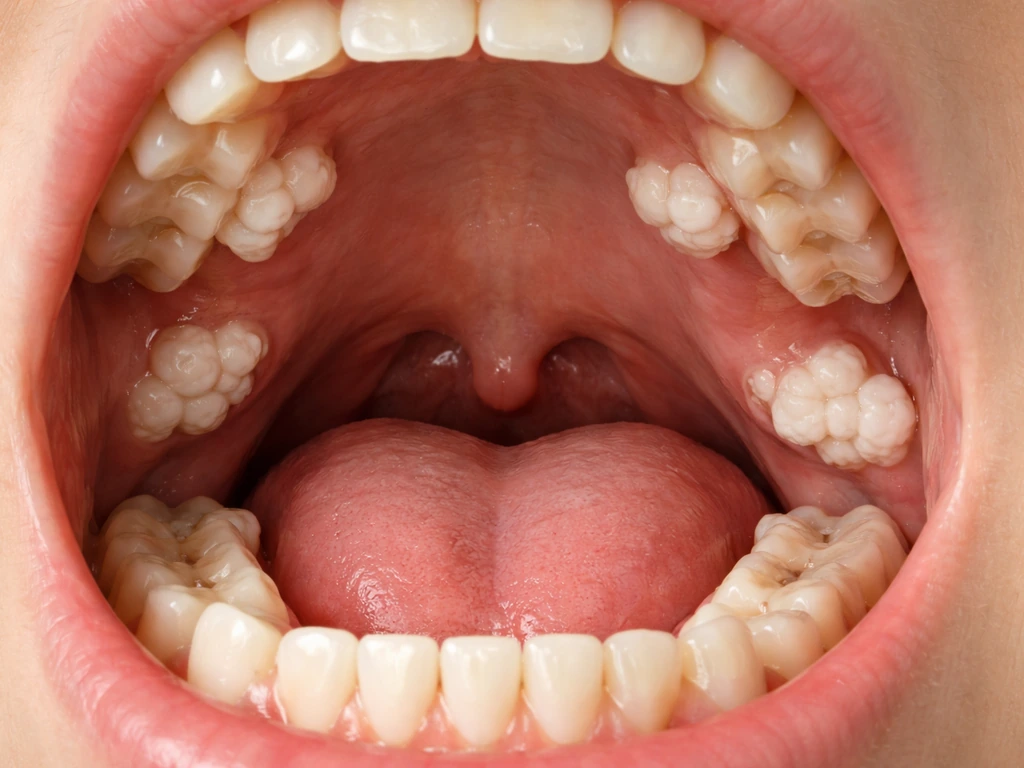
Disease Where Teeth Grow Everywhere: Causes, Diagnosis, Treatment
Learn why teeth-like growth can appear everywhere, how it’s diagnosed with imaging, and what treatments are possible vs
Can Teeth Grow in Other Parts of the Body? What’s Real
Teeth can’t grow anywhere on your body, but true odontogenesis occurs only in specific tissues and sites.
Do Milk Teeth Grow Back? Timelines, What to Do, Red Flags
Learn if milk teeth regrow, typical timelines for permanent teeth, what to do after loss or injury, and red flags.