
No, wisdom teeth do not grow in at the same time, at least not in the way most people expect. Some people get all four within a year or two of each other, while others have one pop through at 18 and another not show up until their mid-twenties. Upper and lower wisdom teeth typically erupt on different timelines, and left vs. right can be off by weeks or even months. This is all completely normal, and it has nothing to do with regrowth or anything unusual happening in your mouth. What you're seeing is just the natural, often messy, variability in how the last four teeth in your mouth decide to show up.
Do Wisdom Teeth Grow at the Same Time? Eruption Timeline

Marcus Holloway
12 Apr 2026
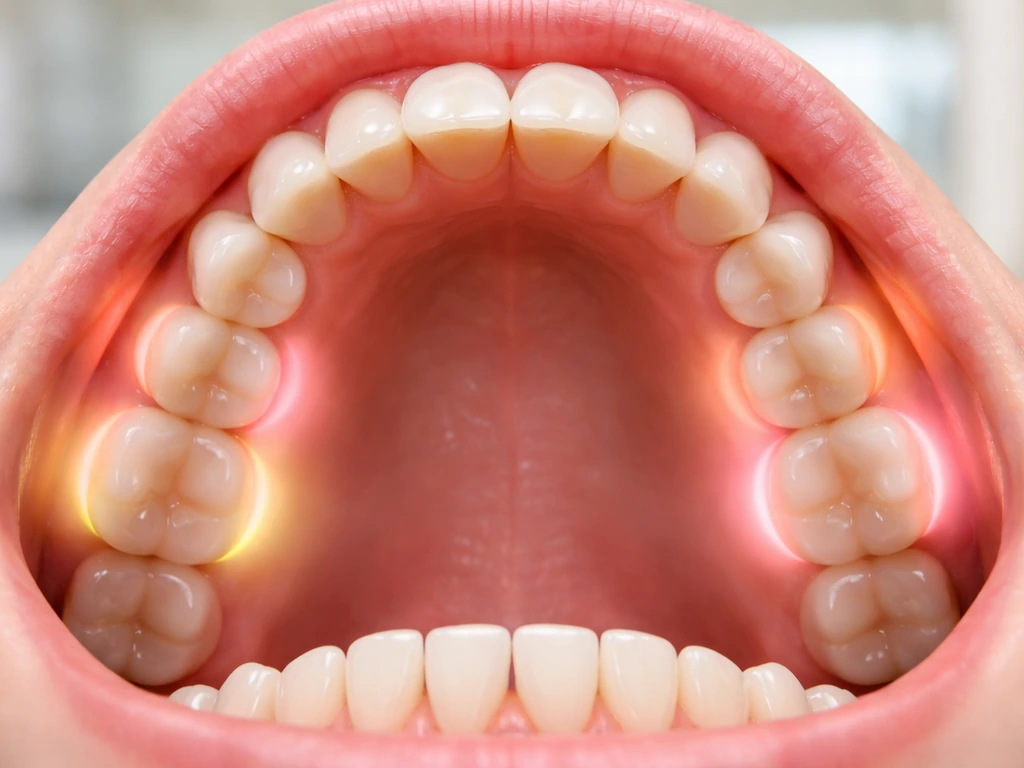
Typical wisdom tooth eruption timing

Wisdom teeth, technically called third molars, are the last teeth to develop and erupt. According to the American Association of Oral and Maxillofacial Surgeons (AAOMS), the standard window is ages 17 to 25. The ADA puts third molar eruption at 17 to 21 years for upper teeth specifically, while clinical sources like the MSD Manual widen that to 17 to 25 across all four.
Peer-reviewed research published in PMC confirms that same range: most wisdom teeth erupt between 17 and 25 years of age. A 2023/2024-era study in PMC used dental panoramic radiographs to provide German, age-stratified reference data on mandibular third molar complete-eruption ages within roughly 15. 04 to 25. 99 years [age-stratified panoramic radiographs reference data for mandibular third molar complete eruption in German populations](https://pmc.
ncbi. nlm. nih. gov/articles/PMC11084084/).
That eight-year window already tells you something important: there's enormous individual variation baked into normal development. One person might have all four wisdom teeth through the gumline by 19. Another might still be waiting on one at 24. Both scenarios fall within perfectly normal limits. A panoramic study tracking alveolar emergence found that the minimum age eruption can begin ranges from the mid-teens, with some individuals showing first signs as early as 14 or 15, while others don't start until 18 or later. So if your wisdom teeth seem behind schedule compared to a friend's, that comparison isn't very useful.
Do all wisdom teeth erupt at the same time? Upper vs. lower, left vs. right
The short answer: usually not. Upper and lower third molars behave differently. Clinical research tracking eruption rates and duration has found that upper third molars and lower third molars follow different clinical eruption patterns, and these differences vary further by sex. In plain terms, your top wisdom teeth and bottom wisdom teeth are not on the same schedule, and neither side is wrong for being earlier or later.
Left vs. right is a slightly different story. Research published in Scientific Reports in 2025 found that about 87% of males and 83% of females show reasonably similar maturation levels between the right and left third molars, meaning the bilateral development is correlated but not perfectly synchronized.
Meanwhile, a PubMed-indexed study on bilateral eruption timing found that contralateral tooth pairs (meaning the same tooth on opposite sides) tend to erupt within a few months of each other, but that this gap gets wider for teeth that appear later in development. Since wisdom teeth are the last to erupt, they show some of the greatest bilateral timing differences.
So even if your left lower wisdom tooth breaks through in January, your right lower wisdom tooth might not follow until spring or summer, or possibly a year later.
If you're wondering whether wisdom teeth even appear symmetrically, it helps to understand that wisdom teeth growing on both sides of the mouth is common but not universal, since some people develop fewer than four third molars due to genetics.
Can two wisdom teeth grow in at the same time?
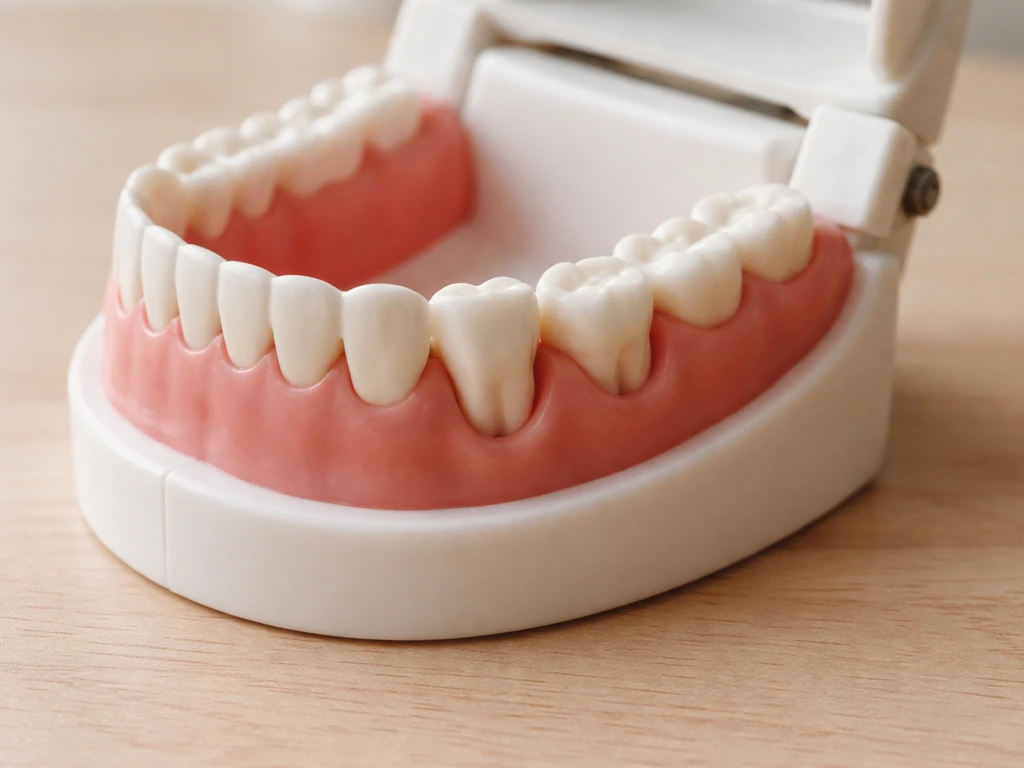
Yes, absolutely. Having two wisdom teeth erupt in the same general period, say within weeks or a few months of each other, is one of the most common patterns. You might feel soreness in the back of your mouth on both sides at once, or notice swelling in two areas. This doesn't mean anything is wrong. It just means your third molars happen to be on a similar developmental schedule. If you want to understand this in more detail, including what it feels like and what to watch for, two wisdom teeth coming in at the same time is a real and manageable situation.
What's worth knowing is that overlapping eruption doesn't make either tooth more problematic on its own. The concern isn't how many are erupting at once, it's how they're positioned and whether they have room to come in properly. Two wisdom teeth erupting at the same time, both with clear paths, is far less worrying than one wisdom tooth erupting at an angle into the tooth in front of it.
Why wisdom teeth may come in one at a time
Despite the bilateral correlation in development, plenty of people experience wisdom teeth that seem to arrive in a scattered sequence. One lower tooth comes in at 18, then nothing for a year, then an upper tooth at 20, and maybe the fourth never fully erupts. This staggered pattern often comes down to the specific anatomy and position of each individual tooth underground, not some systemic issue with your health or development.
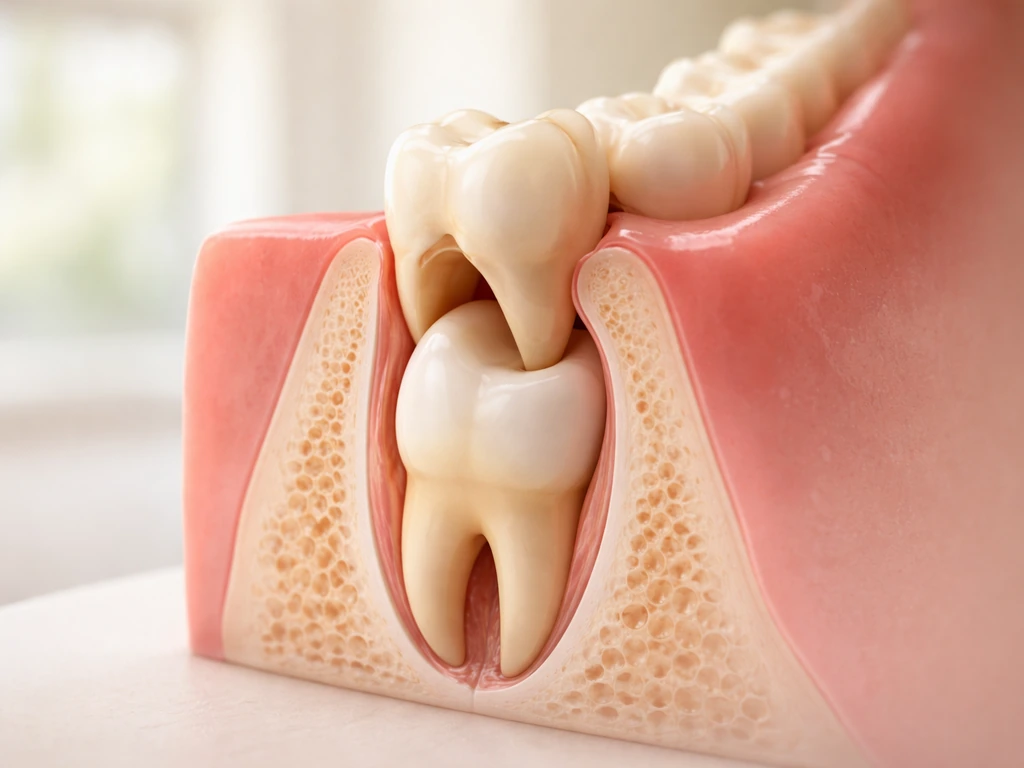
Impacted or partially erupted teeth are the most common reason one wisdom tooth lags behind the others. The MSD Manual consumer version notes that impaction is common for wisdom teeth, partly because they are the last permanent teeth to come in and the jaw often lacks enough room [Impacted or partially erupted teeth are the most common reason one wisdom tooth lags behind the others. ](https://www. msdmanuals.
com/en-au/home/mouth-and-dental-disorders/tooth-disorders/impacted-teeth). If a tooth is angled toward the adjacent molar, it may push through gum tissue very slowly or not at all. A tooth that's fully impacted might never erupt at the gumline even while the other three come in normally. This is worth knowing because how wisdom teeth grow out of the gum depends heavily on their angle and available space, factors that differ from tooth to tooth even within the same mouth.
What affects the timing: age, genetics, jaw space, and impaction
Several factors push and pull on wisdom tooth eruption timing, and most of them are things you were born with rather than something you can control.
- Age and individual development: The 17-to-25 window is wide on purpose. Where you fall in that range is largely determined by your own biological clock, not a medical problem.
- Genetics: The number of wisdom teeth you develop, their root shape, and how fast they mature are all partly inherited. Some people genetically never develop all four, and some families tend toward earlier or later eruption across generations.
- Jaw size and available space: Smaller jaws leave less room for third molars to erupt cleanly. When there isn't enough space, a tooth may erupt partially, get stuck against the second molar, or stay below the gumline entirely.
- Angulation and impaction: A tooth that develops at a horizontal or angled position (mesioangular, distoangular, or horizontal impaction) is more likely to erupt slowly or not at all. These are the teeth most likely to cause problems and most commonly referred for extraction.
- Sex differences: Clinical research on eruption rates has found that eruption duration and rate differ between males and females for third molars, contributing to timing variability across the population.
One thing worth clearing up: wisdom tooth eruption is straightforward tooth development, not regrowth. This site covers a lot of ground on whether teeth can regenerate after loss, but wisdom teeth appearing in your late teens or twenties is not a regeneration event. These teeth were developing underground for years before they ever broke through the surface. If a wisdom tooth is removed, it does not grow back. What you're watching happen at 18 or 22 is just the final chapter of tooth development that started years earlier, not new tissue forming from scratch.
What to do if your eruption timing seems off
Symptoms that tell you something is happening
Normal wisdom tooth eruption comes with some predictable discomfort: mild aching at the back of the jaw, some tenderness in the gum, and occasional pressure. These symptoms are typically short-lived. Research has found that acute pericoronitis, an infection of the gum tissue around a partially erupted wisdom tooth, usually runs its course in about 3 to 4 days when associated with normal eruption.
The Cleveland Clinic describes pericoronitis as occurring when a tooth is still partially trapped under gum tissue, creating a flap where bacteria and debris collect. Symptoms include pain, swelling of the gum and face, a bad taste in the mouth, and in more serious cases, restricted mouth opening. This is different from the routine soreness of a tooth pushing through healthy tissue.
Part of the concern with partial eruption is that the gum flap (called an operculum) creates an environment where bacteria accumulate easily. Columbia University's dental patient resources describe this as the core mechanism behind pericoronitis: the partially erupted tooth leaves a gap between the gum tissue and the tooth crown, and that gap is very difficult to clean. Knowing this helps explain why a wisdom tooth that's 90% in can sometimes cause more ongoing trouble than one that's fully impacted and completely buried.
It's also worth understanding what happens structurally as the tooth tries to come through. Wisdom teeth growing into the cheek is a real complication that can occur when teeth erupt in the wrong direction, causing soft tissue irritation that goes well beyond typical eruption soreness.
When to call a dentist
NHS guidance is pretty direct on this: if symptoms are severe, don't wait for a routine check-up. Get an urgent appointment. Mild soreness that comes and goes over a few days is one thing, but swelling that spreads to your face, difficulty opening your mouth, fever, or pain that's getting worse rather than better are reasons to call today. AAOMS recommends periodic radiographs and clinical monitoring even for wisdom teeth that aren't actively causing symptoms, because problems can develop slowly and silently, especially around impacted teeth.
What a dentist will look for and what happens next
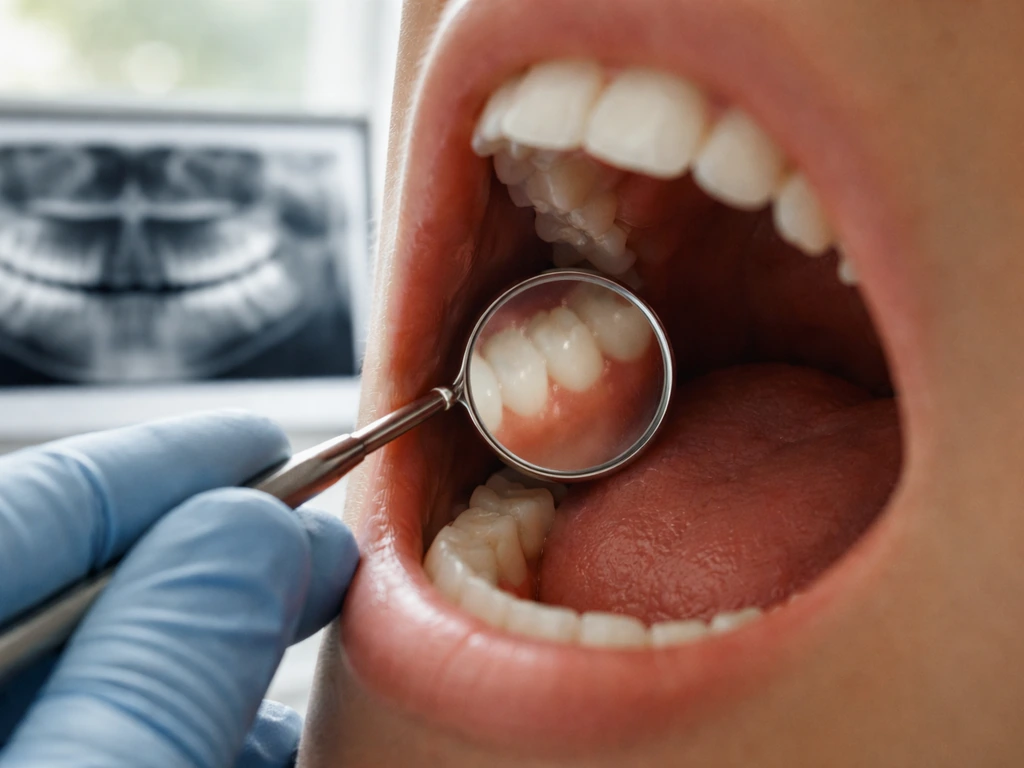
When you go in, your dentist will typically do a clinical exam of the tissue and take a panoramic X-ray to see what's happening below the gumline. This is how they determine each tooth's angle, depth, root development, and proximity to adjacent teeth or nerves. These are not things you can assess from symptoms alone, which is why the X-ray is so important.
After that, there are generally two paths: watch and wait, or referral for extraction. NHS guidance notes that impacted wisdom teeth that aren't causing any problems usually don't need to be removed. NICE clinical guidance states that surgical removal should be limited to cases with evidence of actual pathology, such as decay, abscess, cyst formation, or damage to adjacent teeth. So if your wisdom tooth is erupting slowly and not causing problems, monitoring is a completely valid approach. If there's an active infection, recurrent pericoronitis, or structural risk to neighboring teeth, extraction becomes the more likely recommendation. The timing of eruption itself is less important to that decision than the presence or absence of complications.
| Situation | Typical next step | Urgency |
|---|---|---|
| Mild soreness, tooth visibly emerging, no swelling | Monitor at home, mention at next check-up | Low |
| Recurring pain around a partially erupted tooth | Schedule a dental exam and panoramic X-ray | Moderate |
| Swelling, bad taste, restricted mouth opening | Call dentist promptly, may need urgent appointment | High |
| Fever, spreading swelling to face or neck | Seek urgent dental or medical care today | Urgent |
| Asymptomatic impacted tooth found on X-ray | Periodic monitoring with radiographs | Low, ongoing |
The bottom line: wisdom teeth erupting one at a time, two at a time, or in a scattered sequence over several years is all within the range of normal. Your job is to pay attention to the difference between routine eruption discomfort and symptoms that suggest infection or impaction complications. When in doubt, a quick call to your dentist and a set of X-rays will give you far more useful information than trying to read your symptoms alone.
FAQ
If one wisdom tooth erupts much later than the others, should I worry?
Not necessarily. Even if one wisdom tooth erupts weeks or months after the others, the key issue is whether it is partially erupted or impacted and how it is positioned. A delayed break through can be normal, but if pain keeps recurring or the gum keeps flaring, it may be pericoronitis rather than “late eruption.”
Can I predict which wisdom tooth will come in first?
Usually, no. Wisdom teeth do not erupt in a fixed order you can predict from friends’ timing. The exact sequence often reflects each tooth’s angle and how much space exists in your jaw, plus whether it is impacted on one side. Your dentist checks this with a panoramic X-ray, not by symptom timing.
How do I tell normal wisdom tooth soreness from something more serious?
If your symptoms are mild and improving, it often fits with normal eruption. But persistent, worsening, or repeatedly returning symptoms (especially swelling, bad taste, fever, or trouble opening your mouth) are a reason to seek urgent care. Those patterns suggest infection around a partially erupted tooth, which can happen even if eruption is “slow.”
Does erupting two wisdom teeth at the same time mean my case will be worse?
Two wisdom teeth coming in close together does not automatically make it more dangerous. Dentists focus more on alignment and space. Two teeth can erupt around the same time and still be well-positioned, while a single tooth that erupts at an angle can cause damage or ongoing gum inflammation.
Can a wisdom tooth cause problems even if it never fully comes through the gum?
Yes. A tooth that is fully impacted or almost fully buried can cause problems without fully breaking through, because bacteria can still get trapped around the gum tissue covering it. That means “no gum bump yet” does not guarantee everything is fine, which is why clinicians use X-rays and monitoring.
What if the pain keeps coming back in the same place?
Ongoing symptoms that keep returning, or pain that improves then comes back in the same area, are common triggers for re-evaluation. Chronic or recurrent pericoronitis may need a targeted plan (irrigation, improved cleaning, short-term medication, or discussion of removal), rather than just waiting for the eruption to finish.
What happens if my wisdom tooth is still trapped but I have symptoms?
If a wisdom tooth is not yet at the gumline, you still can get guidance. Typical options include observation with periodic checks if it is not causing pathology, but if imaging shows decay, a cyst, damage to the second molar, or repeated infections, earlier intervention may be recommended even before full eruption.
Is there anything I can do to make wisdom teeth erupt faster?
Trying to “speed it up” is usually ineffective and can worsen irritation. Eruption timing depends on development and positioning. The practical next step is to manage discomfort safely and get an exam, so your dentist can confirm whether you are dealing with normal pressure, a gum flap, or impaction.
If I am within the typical age range, when should I still seek urgent care?
Because the decision hinges on imaging and complications, not just how long you have had symptoms, you should base urgency on red flags. Severe swelling, fever, difficulty opening your mouth, or pain that is escalating should prompt urgent dental or medical care, even if you are within the “normal” eruption age range.
Does having pericoronitis before make future eruptions more likely to cause problems?
Yes. If you have a history of pericoronitis, you may be more likely to have recurrence with further partial eruption or cleaning difficulty. Tell your dentist about prior episodes, and ask whether your current tooth is partially erupted or impacted, because the management plan can differ.
Next Articles
Do Milk Teeth Grow Back? Timelines, What to Do, Red Flags
Learn if milk teeth regrow, typical timelines for permanent teeth, what to do after loss or injury, and red flags.
Can Milk Teeth Grow Twice? Replacement vs True Regrowth
Can milk teeth grow twice? Learn why baby teeth usually only get replaced, not regrown, and what to do if one falls out
Why Do Teeth Only Grow Twice? Baby vs Permanent Explained
Why humans have only baby and permanent teeth: eruption timeline, limits of enamel regrowth, and common exceptions to kn