
Yes, sharks absolutely grow their teeth back. Not once, not twice, but continuously throughout their entire lives. This is one of those rare cases where the popular belief is actually true, and the biology behind it is even more impressive than most people realize. But before you start wondering whether sharks have some secret healing superpower that humans are missing out on, it's worth understanding exactly what's happening and why it's fundamentally different from how human teeth work.
Do Sharks Teeth Grow Back? How Often and How Fast

Marcus Holloway
6 Apr 2026
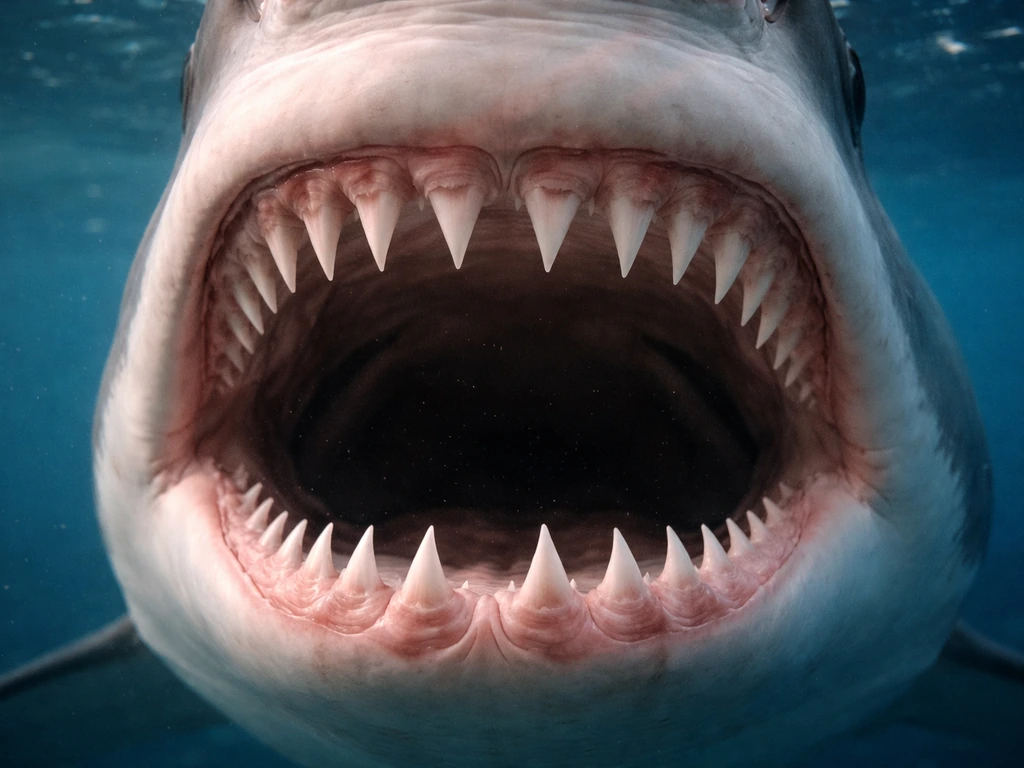
Do sharks really replace their teeth?
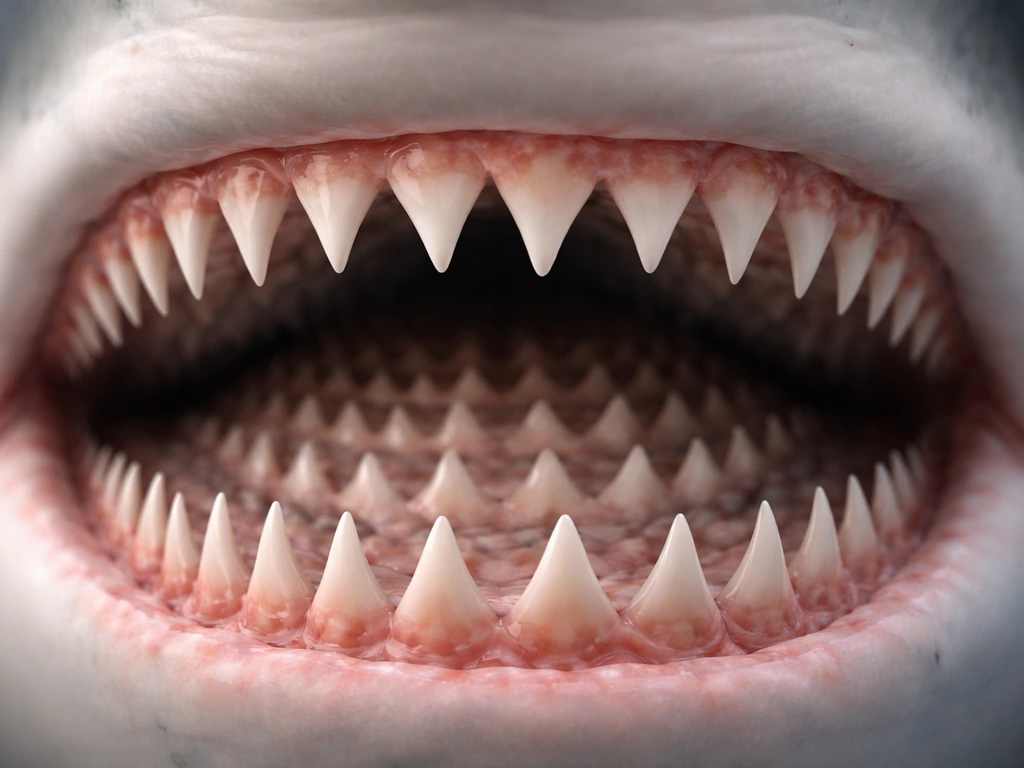
Yes, sharks replace their teeth constantly and reliably. This isn't a myth or an exaggeration. Scientists describe sharks as having a conveyor-belt-like tooth replacement system, where new teeth are always forming in rows behind the ones currently in use. When a tooth is lost, damaged, or simply worn down, a replacement tooth moves forward to take its place. This process happens throughout the shark's entire life, from birth to old age, without stopping.
The key to this ability lies in a structure called the dental lamina, a band of specialized tissue inside the shark's jaw that acts as a kind of tooth factory. Research published in Scientific Reports found that the dental lamina contains stem and progenitor cells that remain active across the shark's lifetime, continuously producing new tooth generations.
In catsharks, slow cycling cells in the continuous dental lamina provide new evidence supporting the presence of tooth-forming stem cells that sustain lifelong replacement [dental lamina contains stem and progenitor cells that remain active across the shark's lifetime](https://pubmed. ncbi. nlm. nih.
gov/26988117/). These aren't cells that switch on after injury; they're always on. That distinction matters a lot when you compare sharks to humans later in this article.
How shark teeth grow back: the replacement cycle explained simply
Shark teeth are arranged in rows. Most sharks have between 5 and 15 rows of teeth at any given time, though only the front row or two are actively being used for biting and gripping prey. The rows behind are replacement teeth at various stages of development, slowly moving forward on a schedule.
Research on catsharks (Scyliorhinus canicula) showed that this replacement timing isn't random. It's precisely sequential within each tooth family, meaning the teeth in each vertical column of the jaw follow a strict schedule. One tooth in a family doesn't replace itself on a whim; it replaces itself as part of a coordinated, organized biological rhythm. Think of it less like a wound healing and more like a factory assembly line running on a tight calendar.
When a tooth at the front is shed, the next tooth in the row slides or rotates forward into position. The dental lamina then begins forming a new replacement at the back of the queue. The whole system runs forward continuously, which is why sharks grow new teeth throughout their lives without interruption. There's no healing involved in the way humans think of healing. There's just constant, systematic production.
How fast do shark teeth grow back: factors that change the timing
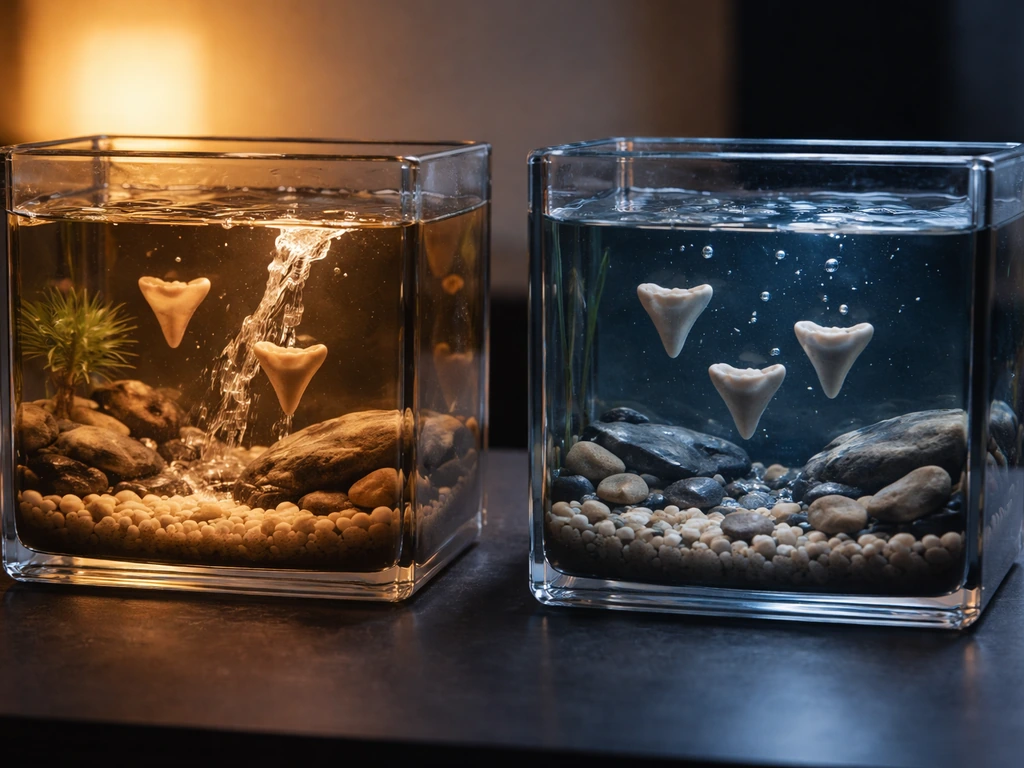
On average, most sharks replace individual teeth every one to two weeks. Some species cycle through teeth faster, some slower. Warmer water temperatures tend to accelerate the process because metabolic rates are higher. Younger sharks also tend to replace teeth faster than older ones, since their growth rate and metabolic activity are elevated.
Diet and feeding frequency play a role too. Sharks that feed aggressively and frequently put more mechanical stress on their front teeth, which may accelerate the wear and loss of those teeth and, in turn, push replacements into position sooner. Species that crush hard prey, like shellfish or crustaceans, may also experience different replacement rates compared to species that eat soft-bodied fish.
In some documented cases, sharks under optimal conditions have replaced individual teeth in as little as 8 to 10 days. In cooler waters or older animals, the same process might take three to four weeks. The system itself is always active; it just runs at different speeds depending on the animal's biology and environment.
How many times can shark teeth grow back over a lifetime?
This is where the numbers get genuinely staggering. Over the course of a shark's life, the total number of teeth produced can run into the tens of thousands. A great white shark, which can live 70 years or more, may produce 20,000 to 30,000 teeth during its lifetime. Smaller, shorter-lived species produce fewer, but the counts are still remarkable by any standard.
There's no documented upper limit on how many replacement cycles a healthy shark can go through. As long as the dental lamina is functioning and the shark is alive, the replacement cycle continues. This is what scientists mean when they describe sharks as having "multiple tooth generations" permitted by their tooth-forming stem cell populations throughout development and aging. It's not a finite reserve being used up; it's an ongoing production system.
What affects the replacement rate: species, diet, age, and tooth type
Not all shark teeth are equal, and not all sharks replace at the same pace. Here's a breakdown of the main factors:
| Factor | Effect on Replacement Rate | Example |
|---|---|---|
| Species | Major variation; some replace weekly, others monthly | Bull sharks replace faster than nurse sharks |
| Age | Younger sharks replace teeth faster | Juvenile great whites cycle faster than mature adults |
| Water temperature | Warmer water speeds up metabolism and growth | Tropical species generally replace faster than cold-water species |
| Diet / prey type | Hard prey accelerates wear and loss | Horn sharks eating mollusks vs. open-water sharks eating fish |
| Tooth position | Front teeth (used for biting) wear and shed faster than rear teeth | Working row teeth lost more frequently than developing rows |
It's also worth noting that different tooth shapes serve different functions. Many sharks have narrow, pointed teeth for gripping and tearing, while others have flatter, more rounded teeth for crushing. The mechanical demands on each tooth type affect how quickly it wears out and needs replacement. The dental lamina doesn't care what shape the tooth is; it produces what that species' genetics program it to produce.
What shark tooth regrowth means compared to human teeth and enamel limits
Here's where a lot of people get confused, especially when they come across articles about teeth and what can and can't regenerate. Shark tooth replacement sounds incredible, and it is, but it's not the same thing as regenerating or healing a tooth. It's replacement, not repair. The old tooth doesn't heal or strengthen itself. It gets discarded and a brand-new tooth takes its place.
Humans have a completely different system. We get two sets of teeth: baby teeth, which fall out during childhood, and permanent adult teeth, which are the final set. Once a permanent tooth is lost, no biological mechanism in the human body produces a third one. Enamel, the hard outer layer of human teeth, has an even stricter limit. It cannot regenerate at all. Enamel-forming cells (ameloblasts) are lost after the tooth erupts. If you chip enamel or develop a cavity that destroys enamel structure, your body cannot rebuild it the way it rebuilds bone. That's a permanent loss, and no supplement, oil pulling routine, or internet remedy changes that biological fact.
Some people search for information on animals with interesting teeth in hopes of finding parallels to human dental regeneration. For example, dogs can grow new teeth as puppies when they transition from deciduous to adult teeth, similar to humans, but adult dogs don't regenerate lost permanent teeth either. The shark system, driven by an always-active dental lamina with stem cell populations, simply has no equivalent in humans. Our dental lamina essentially shuts down after our adult teeth develop. Researchers are actively studying the shark model to understand whether those stem cell mechanisms could theoretically be activated in humans, but that science is not anywhere close to clinical application.
Other animals and how they compare
The animal kingdom has a surprisingly wide range of approaches to tooth replacement and growth. Horse teeth continue to grow throughout much of their lives, but this is a different mechanism: their teeth are hypsodont (very tall-crowned) and erupt slowly over decades rather than being replaced like shark teeth. Squirrels' teeth continue to grow in the sense that their incisors are open-rooted and grow continuously to compensate for constant gnawing wear, which is yet another distinct biological system. And in a more extreme example of what happens when tooth growth goes wrong, rats' teeth growing into their brain is a documented consequence of overgrown incisors when they're not worn down properly, illustrating just how dangerous unchecked tooth growth can be.
Sharks sit in their own category: true polyphyodonts, meaning animals with multiple successive sets of teeth. Humans are diphyodonts, meaning we get two sets and that's it. The gap between those two systems is biologically enormous.
How to interpret shark teeth you find (and myths to avoid)
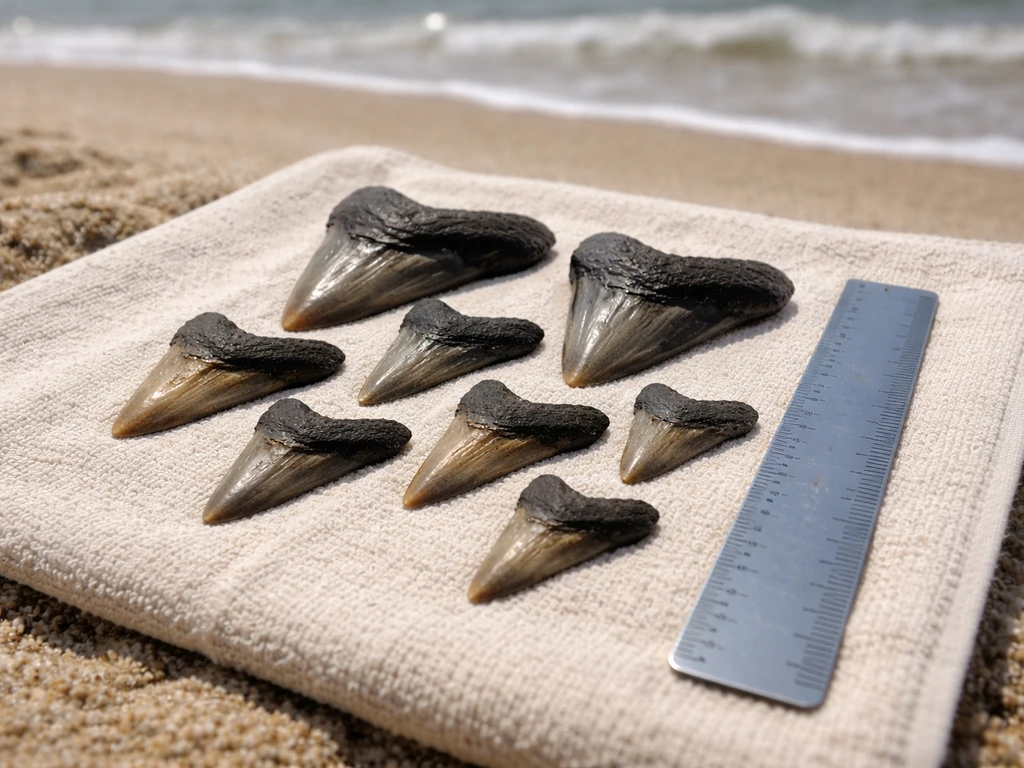
If you've found a shark tooth on a beach or in a fossil collection, here's what it actually tells you, and what it doesn't.
- A single shed tooth doesn't mean the shark was injured or distressed. Sharks shed teeth routinely as part of the normal replacement cycle. Finding a tooth just means a replacement was in progress.
- Black fossilized shark teeth are not rare teeth from a unique species. Shark teeth fossilize readily precisely because sharks produce so many of them. The black color comes from mineralization over thousands of years, not from any special property of the tooth itself.
- A very worn or damaged tooth doesn't indicate the shark was struggling to survive. Worn teeth are simply nearing the end of their working cycle before being shed and replaced.
- Shark teeth don't 'fall out' the way a human tooth falls out from disease or trauma. The shedding is programmed and intentional as part of the conveyor-belt system.
- Finding multiple teeth from the same location doesn't mean a shark died there. A single shark can shed hundreds of teeth in one area over weeks of regular activity.
One myth that keeps circulating is that sharks can 'feel' when their teeth are about to fall out and eat less around those times. There's no credible evidence for this. The replacement process is passive and continuous; the shark doesn't experience it the way a child experiences a wobbly baby tooth.
Another common misconception is that shark tooth replacement proves teeth can 'heal themselves' if given the right environment. This is where the comparison to human dental biology matters most. Shark replacement is not healing. It's manufacturing. A brand-new tooth is built from scratch, not a repaired version of the old one. If you've read anything suggesting that humans can stimulate a similar process through diet or dental products, that claim is not supported by current science. Human enamel does not regenerate, and no third set of teeth is waiting in reserve. If you're concerned about tooth loss or enamel damage, the right next step is talking to a dentist, not looking for biological workarounds that don't exist in our species.
Sharks are genuinely remarkable in this respect, but the lesson they offer for human dental health is mostly a reminder of what we don't have. Protect the teeth you've got, because unlike a shark, you're not getting a replacement shipped from the back row.
FAQ
Do sharks grow new teeth if they lose one from the front row?
Yes. When a front tooth is lost, the next tooth in that row advances into the working position, and the dental lamina starts forming a new replacement at the back. The process is continuous, so the system does not require the shark to “reset” or heal first.
How long does it take a lost shark tooth to be replaced in real life?
It varies by species, age, and water temperature, but typical replacement is about one to two weeks. Some cases can be faster (roughly 8 to 10 days) under favorable conditions, while cooler environments or older sharks can take around three to four weeks.
Do all shark species replace teeth at the same rate?
No. Different species have different metabolic rates and tooth use patterns, which changes how quickly teeth wear out and how often replacements move forward. Even within a species, younger sharks generally replace teeth faster than older individuals.
Are shark teeth “repaired,” or are they replaced with totally new teeth?
They are replaced. The old tooth is shed and discarded, and a brand-new tooth forms from developing tissue behind it. This matters because it is not the same as enamel or tissue “healing,” even though the outcome (a tooth again) looks similar from the outside.
If shark teeth are constantly growing, do they ever run out of teeth?
For healthy sharks, there is no known lifetime “end” to replacement. The dental lamina continues producing new tooth generations as long as the shark remains alive and the tissue is functioning.
Do sharks replace every tooth at once when one falls out?
No. Replacement is coordinated within tooth families, meaning each vertical column of teeth follows its own sequential schedule. In practice, the tooth that becomes exposed triggers a shift forward in that local row, while other teeth continue on their own timetable.
Why are some shark teeth found missing or worn, even though they replace constantly?
Because teeth replacement is continuous but not instantaneous. A tooth can be absent, broken, or heavily worn for days to weeks before the next tooth fully occupies the biting position, and collection conditions on the beach or in sediment can also break or remove teeth after the fact.
Does warmer water always make sharks replace teeth faster?
Generally yes, warmer water increases metabolic activity, which can speed up the replacement process. However, individual factors like feeding intensity and the mechanical demands on specific tooth shapes can also strongly influence how quickly usable teeth are replaced.
Do shark teeth keep the same shape after replacement?
They’re designed for the species and the tooth location. If that tooth family is built to be narrow and pointed for gripping, replacements will match that genetic and developmental program, even though wear may make older teeth look different than newly formed ones.
Can humans use shark tooth replacement biology to regrow enamel or lost adult teeth?
No. Shark replacement is built into their lifelong dental lamina system and is not comparable to human tooth biology. In humans, enamel does not regenerate, and permanent teeth do not generate a third set once adult teeth are established.
Is there any situation in humans where teeth can regrow after loss?
Humans may sometimes develop additional teeth or orthodontic changes, but this is not true regrowth of lost permanent teeth or enamel. If you have significant tooth loss or enamel damage, the practical next step is evaluation by a dentist to determine options like restoration, crowns, implants, or other treatments.
If a shark loses teeth repeatedly, does it suffer reduced feeding ability?
They usually maintain function because replacements occur fast enough and the working teeth are not totally dependent on any single tooth. Still, heavy wear or frequent loss can temporarily reduce efficiency until the next teeth advance.
Are shark teeth useful for estimating a shark’s age?
Not reliably. While replacement continues through life and counts of teeth produced can be large, beach-found teeth do not preserve the detailed replacement timeline needed for age estimation. Other methods, like size and species-specific growth studies, are more practical.
Next Articles
Do Milk Teeth Grow Back? Timelines, What to Do, Red Flags
Learn if milk teeth regrow, typical timelines for permanent teeth, what to do after loss or injury, and red flags.
Can Milk Teeth Grow Twice? Replacement vs True Regrowth
Can milk teeth grow twice? Learn why baby teeth usually only get replaced, not regrown, and what to do if one falls out
Why Do Teeth Only Grow Twice? Baby vs Permanent Explained
Why humans have only baby and permanent teeth: eruption timeline, limits of enamel regrowth, and common exceptions to kn