A tooth cannot truly grow brand-new underneath an existing one. Your body doesn't regenerate teeth after your permanent set comes in. What looks like a tooth growing under or behind another tooth is almost always an existing tooth that was already there, just buried, blocked, or taking an unexpected path to the surface. That's a completely different thing from actual regrowth, and understanding the difference tells you exactly how worried to be and what to do next.
Can a Tooth Grow Under Another Tooth? What It Means

Marcus Holloway
14 May 2026
How tooth eruption works (and why teeth seem to appear out of nowhere)
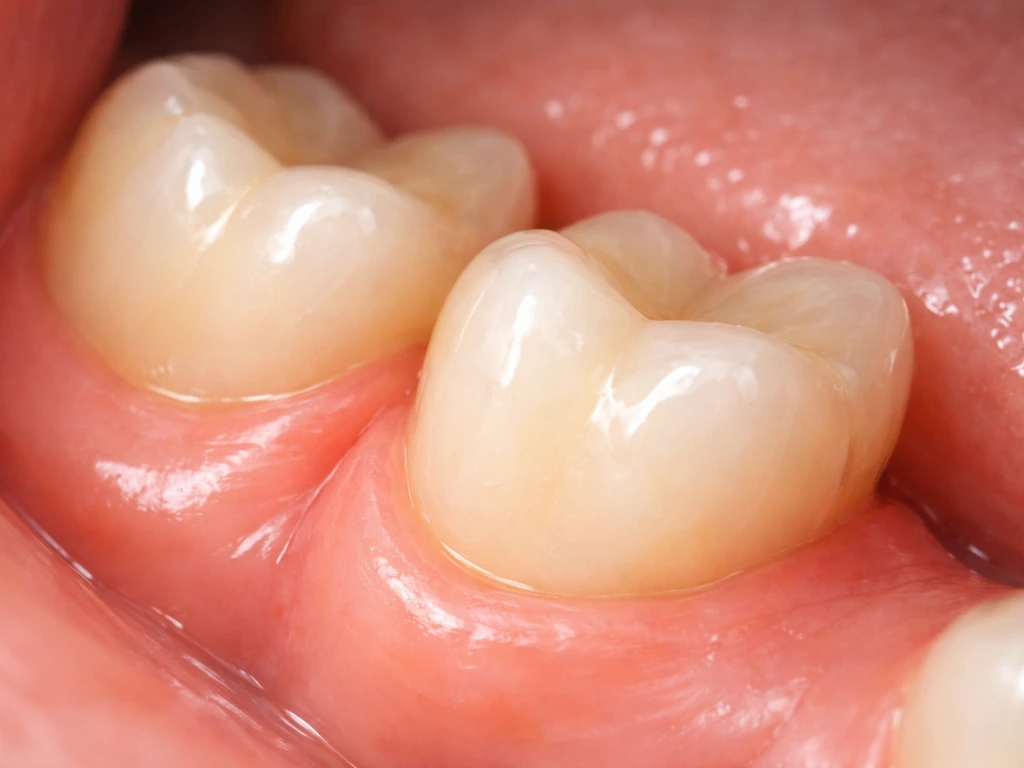
Every tooth you'll ever have was already mapped out before you were born. Research from dental embryology confirms that virtually all permanent tooth buds, with the exception of the second and third molars (wisdom teeth), have started development in utero. They sit in the jaw, maturing in a precise sequence, and erupt when nothing is blocking their path. Eruption isn't growth in the regeneration sense. It's more like a tooth that was always there finally reaching the surface.
This is why it can look so dramatic when a tooth appears. A child's mouth looks normal, then suddenly there's a tooth poking through in an unexpected spot. Or an adult notices something hard pushing at the gum behind a back molar. The tooth didn't grow there overnight. It was developing below the surface for years, and it finally ran out of room or found a gap to push through. That's the mechanism behind nearly every case of what people describe as a tooth growing under another tooth.
Wisdom teeth: the most common culprits
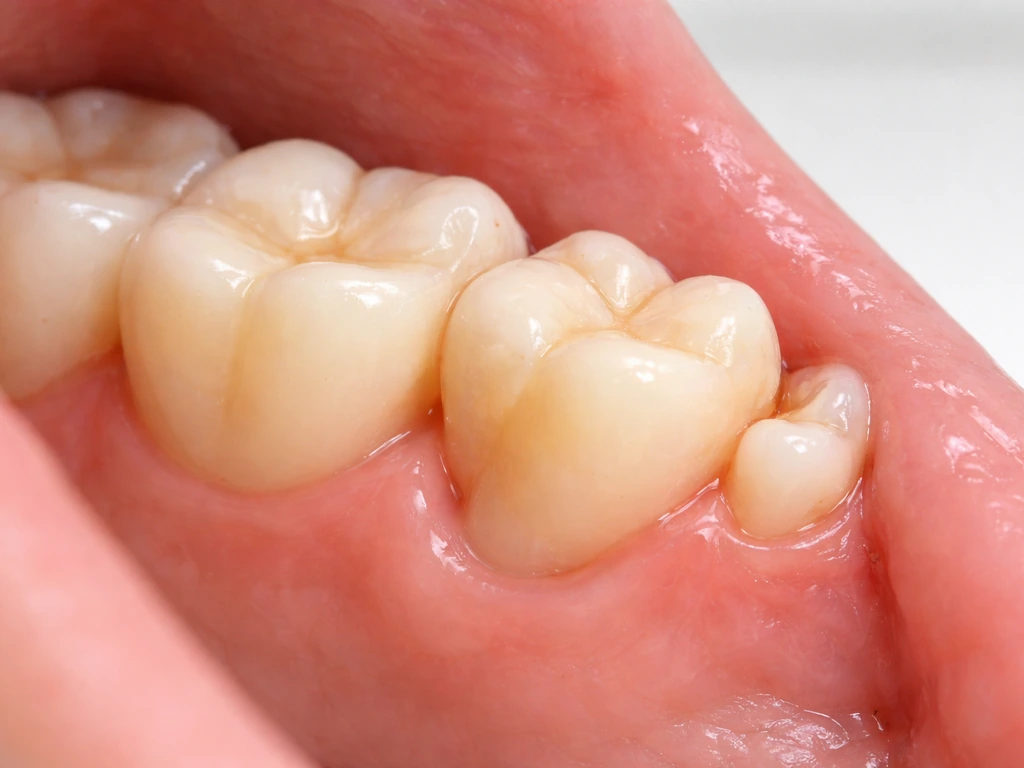
Wisdom teeth, or third molars, are the most frequent source of the "tooth growing under another tooth" feeling in adults. They typically begin erupting between ages 17 and 25, though some people don't see movement until their late 20s or even early 30s. Because they're the last teeth to come in, there's often very little room left in the jaw.
When they don't have a clear path, they push against the tooth in front of them, get stuck at an angle, or only partially break through the gum. The ADA defines an impacted tooth as one positioned against another tooth, bone, or soft tissue in a way that makes full eruption unlikely.
The American Association of Orthodontists explains that tooth impaction happens when a tooth is “stuck” eruption because of blocking, a wrong eruption pathway or angle, or a lack of space stuck eruption because of blocking, a wrong eruption pathway or angle, or a lack of space. That's exactly what happens with most wisdom teeth.
A horizontally impacted wisdom tooth can press directly into the root of the second molar next to it. From the outside, or even in a mirror, it can feel like something is trying to push through underneath or behind an existing tooth. It's not a new tooth. It's the wisdom tooth you were always going to have, just arriving at the wrong angle or without enough space to do it cleanly.
Why impaction happens more than it used to
Modern human jaws tend to be smaller than our ancestors' jaws, likely due to dietary changes over thousands of years. Softer foods during childhood may reduce the jaw's developmental stimulus. The result is that wisdom teeth, which evolved for a different jaw shape, routinely run out of space. Estimates suggest that the majority of people will have at least one impacted or problematic wisdom tooth over their lifetime.
Other reasons a tooth might appear behind or under another
Wisdom teeth get most of the attention, but they're not the only cause. There are a few other scenarios that produce the same confusing visual.
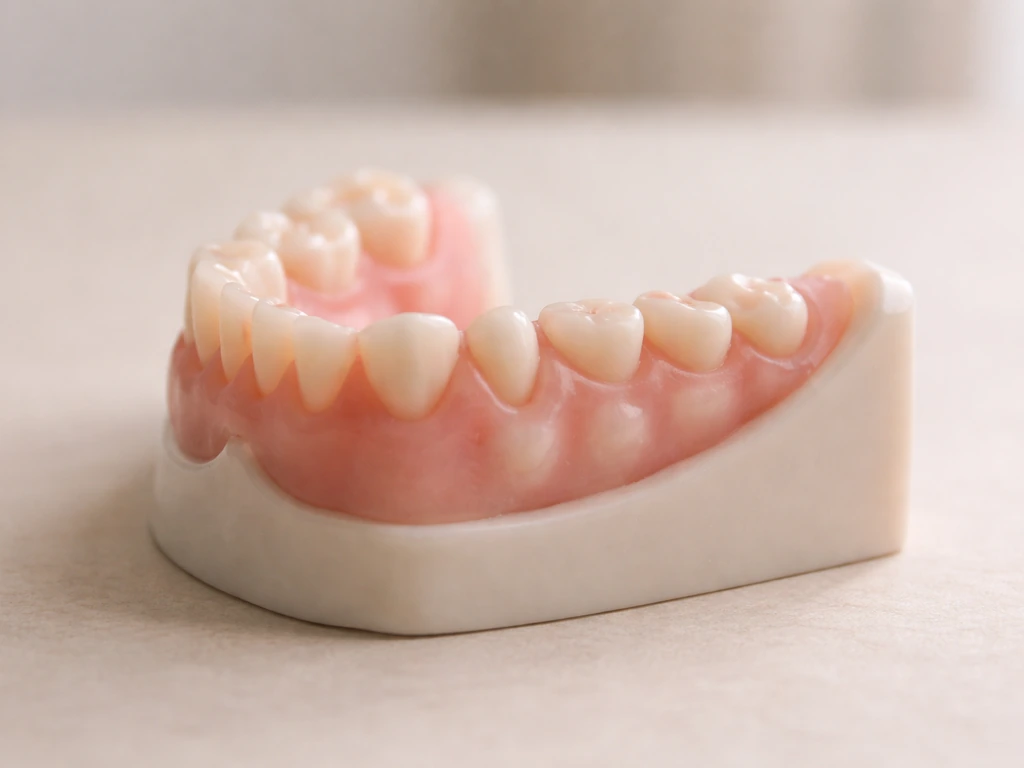
- Crowding and eruption path deviation: When there isn't enough space in the arch, a permanent tooth erupts behind or overlapping an existing tooth rather than pushing it out. This is extremely common in children whose jaws haven't grown enough to accommodate permanent teeth. The classic example is lower permanent incisors erupting in a second row behind the baby teeth, which haven't fallen out yet.
- Retained primary (baby) teeth: If a baby tooth doesn't fall out when it should, the permanent tooth underneath has nowhere to go and erupts adjacent to or behind it. Parents often panic thinking a new tooth has appeared, when really the primary tooth just overstayed its welcome.
- Supernumerary teeth: These are extra teeth that fall outside the normal count of 32. They develop from extra tooth buds and can appear anywhere in the mouth, sometimes emerging next to or partially beneath a normal tooth. They're not common, affecting about 1 to 4 percent of the population, but they're a real cause of the 'extra tooth' appearance. This connects to broader questions about teeth appearing in unexpected locations, which is a documented phenomenon worth understanding separately.
- Impacted teeth other than wisdom teeth: Canines are the second most frequently impacted teeth. An upper canine that fails to erupt properly can sit up in the palate or come down at an angle toward another tooth, sometimes staying partially hidden under gum tissue for years.
Normal development vs. something that needs attention
Not every unusual tooth position is an emergency, but some situations move faster than others. Knowing what to watch for helps you decide whether to book an appointment this week or get in sooner.
Usually normal (but still worth mentioning at your next visit)
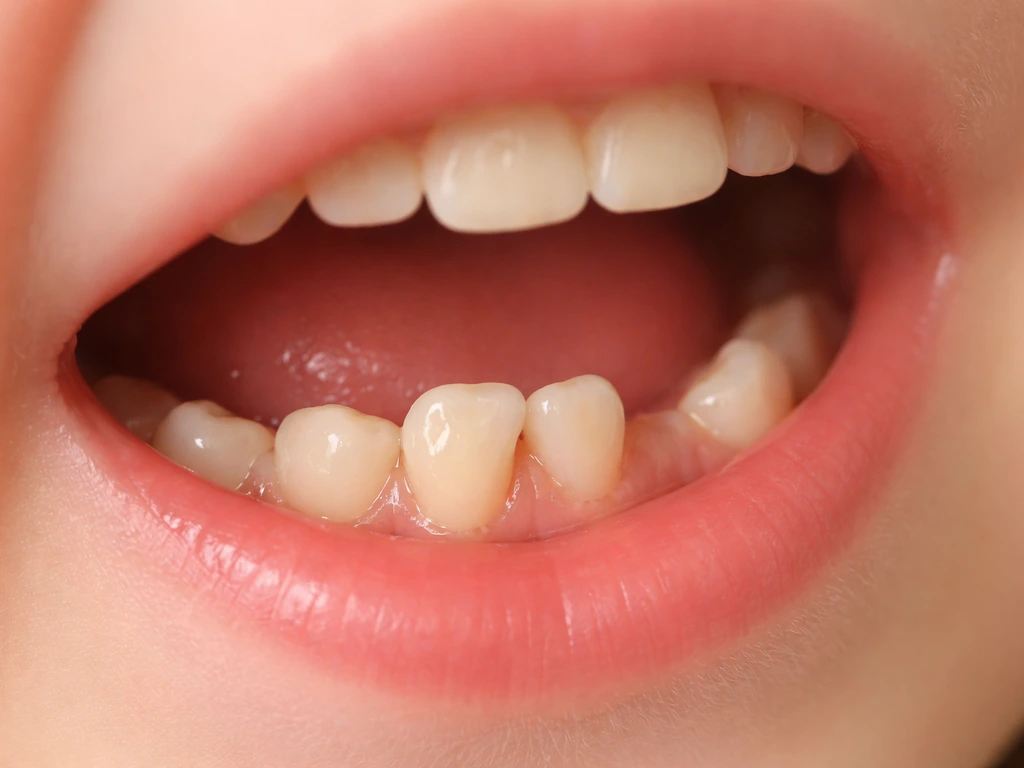
- A child's permanent incisors erupting slightly behind baby teeth that are still in place, with no pain and the baby teeth are getting loose
- Mild pressure or a dull sensation in the back of the jaw in a late teen or young adult (wisdom teeth starting to move)
- A tooth that looks slightly crowded or overlapping but isn't causing pain or swelling
Red flags that need prompt evaluation
- Swelling in the gum, jaw, or cheek near the area, especially if it's warm to the touch
- Pain that's getting worse over days, not better
- Difficulty opening your mouth fully, or pain when chewing
- A bad taste or odor near a partially erupted tooth (can signal infection in the gum flap covering a wisdom tooth, called pericoronitis)
- Numbness or tingling in the jaw or lip
- A baby tooth that still hasn't loosened in a child over age 7 or 8 when the permanent tooth behind it is clearly visible
- A hard lump under the gum that wasn't there before and isn't moving
Any of the red flags above warrant a dentist visit within a few days, not at your next annual cleaning. Infections around impacted teeth can escalate quickly, and catching an impacted canine early (ideally in a child between ages 10 and 13) dramatically improves treatment outcomes.
What the dentist will actually do
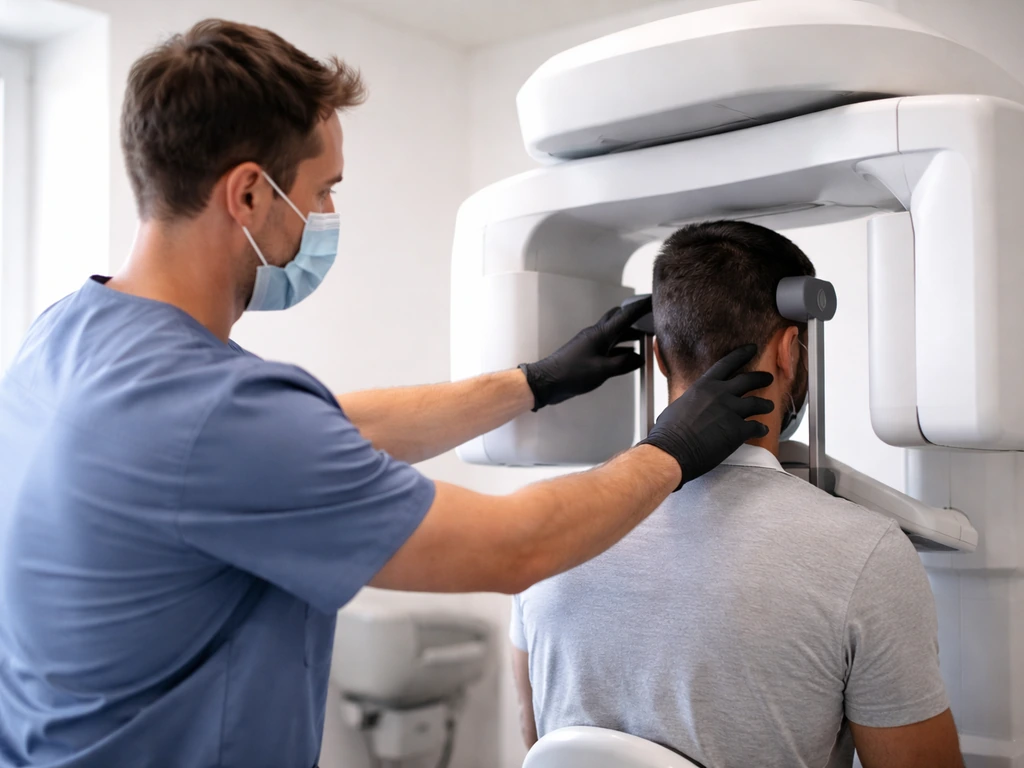
The first step is always a clinical exam. Your dentist will look at the tissue, feel the area, check for mobility in any adjacent teeth, and ask about your symptoms and timeline. After that, imaging is almost always necessary. You can't assess what's happening below the gumline without it.
A panoramic X-ray gives a full view of all teeth, roots, and the surrounding bone in one image. It's usually the starting point for evaluating impactions, extra teeth, or retained primary teeth. For more complex cases, particularly impacted canines or suspected supernumerary teeth with unusual positioning, a cone-beam CT (CBCT) scan provides a 3D view that shows exactly where the tooth is sitting and how it relates to surrounding structures. The FDA and ADA both note that imaging should be used based on clinical need and judgment, so your dentist will order what's actually appropriate for your situation rather than a blanket set of films.
Based on the exam and imaging, the likely diagnoses are impaction (most common in adults with back molar complaints), retained primary tooth with a blocked permanent tooth, crowding with eruption deviation, or a supernumerary tooth. Each of these has different management paths.
What you can do now and what treatment looks like
Right now, before you've seen a dentist, the most useful thing you can do is document what you're noticing. When did you first feel or see it? Is there pain? Is it changing? If a child has a visible second row of lower teeth and the baby teeth are loose, gently encourage wiggling. Sometimes all that's needed is for the baby tooth to fall out, and the permanent tooth will migrate forward on its own over a few weeks. If the baby tooth doesn't come out within two months of the permanent one appearing, the dentist should check it.
For adults with wisdom tooth discomfort, over-the-counter pain relief can help manage symptoms short-term, but it doesn't resolve the underlying issue. Rinsing with warm salt water can reduce irritation around a partially erupted tooth. Neither of these substitutes for an actual evaluation.
Treatment options by situation
| Situation | Typical Management | Timeline to Act |
|---|---|---|
| Impacted wisdom tooth with no symptoms | Watchful waiting with periodic X-rays, or elective extraction | Discuss at next dental visit |
| Impacted wisdom tooth with pain or infection | Extraction, sometimes with antibiotics first | Within days to one week |
| Retained baby tooth with permanent tooth erupting behind it | Extraction of baby tooth, then monitoring for self-correction | Within a few weeks of noticing |
| Impacted canine in a child (ages 10-13) | Orthodontic exposure and guided eruption | As soon as possible; age-sensitive window |
| Supernumerary tooth causing crowding or blockage | Extraction, sometimes followed by orthodontics | After full diagnosis and imaging |
| Crowding causing eruption misalignment | Orthodontic evaluation, possible extraction of select teeth | Routine but don't delay if significant |
Monitoring is a legitimate option for certain impacted teeth that aren't causing symptoms, aren't moving, and aren't threatening nearby tooth roots. But monitoring still means regular check-ups and imaging, not ignoring it entirely. An impacted tooth that starts pressing into an adjacent root can silently damage that root over time, and by the time there are symptoms, significant harm may already be done.
The hard truth about teeth growing back
Here's where a lot of internet searches go sideways. People notice something that looks like a tooth coming in where one was lost, or hope that what they're seeing is the body regenerating. It isn't. [Adult human teeth do not regenerate.](/ectopic-tooth-growth/teeth-that-grow-on-top-of-teeth) Once a permanent tooth is lost, no natural biological process will replace it. The dental science is clear on this: there are no significant stem cell populations in adult human teeth that would allow whole-tooth regeneration to happen spontaneously. Researchers are working on lab-based tooth regeneration, and there's genuine scientific interest in it, but it's not available as a treatment in 2026 and won't be anytime soon.
Similarly, tooth enamel does not grow back. Enamel has no living cells once it forms, so there's nothing to drive repair. Fluoride can help remineralize early surface damage, which is why it's useful for early-stage cavities, but that's a mineral deposition process on existing enamel, not regrowth. A cavity that has progressed through the enamel into the dentin needs a dentist, not wishful thinking.
The only real scenario where a human gets a second set of teeth is going from baby teeth to permanent teeth, and that's finished by your early 20s for most people. What appears to be a tooth growing under another is always one of the eruption or anatomical scenarios described above, not regeneration. That's not a pessimistic answer. It's just the biology, and knowing it helps you make the right call about treatment rather than waiting for something that won't happen.
The bottom line on next steps
If you're seeing or feeling what seems like a tooth coming in under or behind another, the situation almost certainly has a name: impaction, retained primary tooth, crowding, or a supernumerary tooth. In rare cases, there can also be conditions described as a disease where teeth grow everywhere, but those are uncommon and still require a dental evaluation impaction.
None of these are true regrowth, and none of them are things your body will simply sort out on its own without professional input. Some cases are low urgency. Some, especially those involving infection, root damage risk, or a child at a critical developmental window, need to move faster. Get a panoramic X-ray taken and let the images tell the real story.
That's the single most useful step you can take today.
FAQ
How can I tell if it’s an impacted tooth versus an extra (supernumerary) tooth?
It can be possible for a visible “extra” tooth to actually be a normal tooth erupting in an unusual spot, but it is not something you can confirm at home. A dentist can distinguish a buried tooth versus a supernumerary (truly extra) tooth using a clinical exam plus X-rays, and the treatment plan depends on which one it is.
If the tooth is only partially poking through, do I still need to worry?
Yes, a tooth can emerge partially and still be problematic. Partial eruption can trap bacteria around the gum flap, increasing the risk of inflammation or infection, so if you notice swelling, bad taste or odor, or worsening pain, you should be checked promptly rather than waiting for full eruption.
What does gum swelling over a “new” tooth mean?
Swollen gums can be caused by multiple issues, but when it happens over a suspected buried tooth, it often indicates irritation from eruption pressure or a gum flap that’s trapping debris. Cold compresses can reduce discomfort externally, but you still need a dental evaluation if symptoms are persistent or getting worse.
If the tooth I see feels hard and doesn’t move, is that a bad sign?
Do not rely on mobility changes alone. Primary teeth should loosen as the permanent tooth approaches, but in adults a “hard spot” that seems fixed is more concerning for impaction. The safest approach is to get an exam and imaging if the shape is changing, new pain appears, or an adjacent tooth feels different.
When is monitoring instead of treatment actually appropriate?
There are situations where waiting is reasonable, for example an impacted tooth that is not causing pain, not associated with infection, and not contacting nearby roots. However, monitoring still requires scheduled rechecks and usually repeat imaging, because root proximity can worsen over time even without daily symptoms.
What should I not do while I’m waiting to see a dentist?
Avoid aggressive poking, trying to pull a gum flap back, or attempting to remove anything at home. These actions can irritate tissue, increase infection risk, and can delay proper treatment. If it’s painful, stick to dentist-guided pain control and saltwater rinses.
Is it safe to wiggle a loose baby tooth if a permanent tooth seems to be coming in under it?
If a child has a visible second row and the baby tooth is loose, gentle wiggling is okay only if it is already naturally mobile and not painful. If there is no looseness, significant swelling, or pain, do not force it, and schedule a dental visit rather than waiting.
Can a tooth growing under/behind another affect my bite or alignment?
Yes. A tooth “coming in behind” can be associated with crowding that shifts the bite, but it can also be caused by impaction at an angle. Clear signs that you need earlier evaluation include visible change over weeks, increasing spacing loss, new bite issues, or pain when biting.
How soon should I get imaging, and can my last X-ray be enough?
X-rays matter because you need to know the tooth’s position relative to roots and other structures. If you have symptoms like throbbing pain, facial swelling, fever, or rapidly spreading gum inflammation, you may need imaging sooner rather than later, even if you already had a recent routine X-ray.
If I can manage the pain with ibuprofen or acetaminophen, should I still book a dental visit?
Over-the-counter pain relief can help you get through symptoms, but it does not treat the underlying obstruction or infection risk. If you’re needing pain medication repeatedly, or symptoms persist beyond a short window, plan a dental appointment instead of continuing to manage only the discomfort.
For a child, how long is it reasonable to wait before getting checked?
In some children, eruption changes can cause temporary appearance that settles after a baby tooth falls out, and that can take a few weeks. But if the permanent tooth area looks wrong for more than about two months after the permanent tooth begins to appear, a dentist should check for retained primary tooth or impaction.
Next Articles
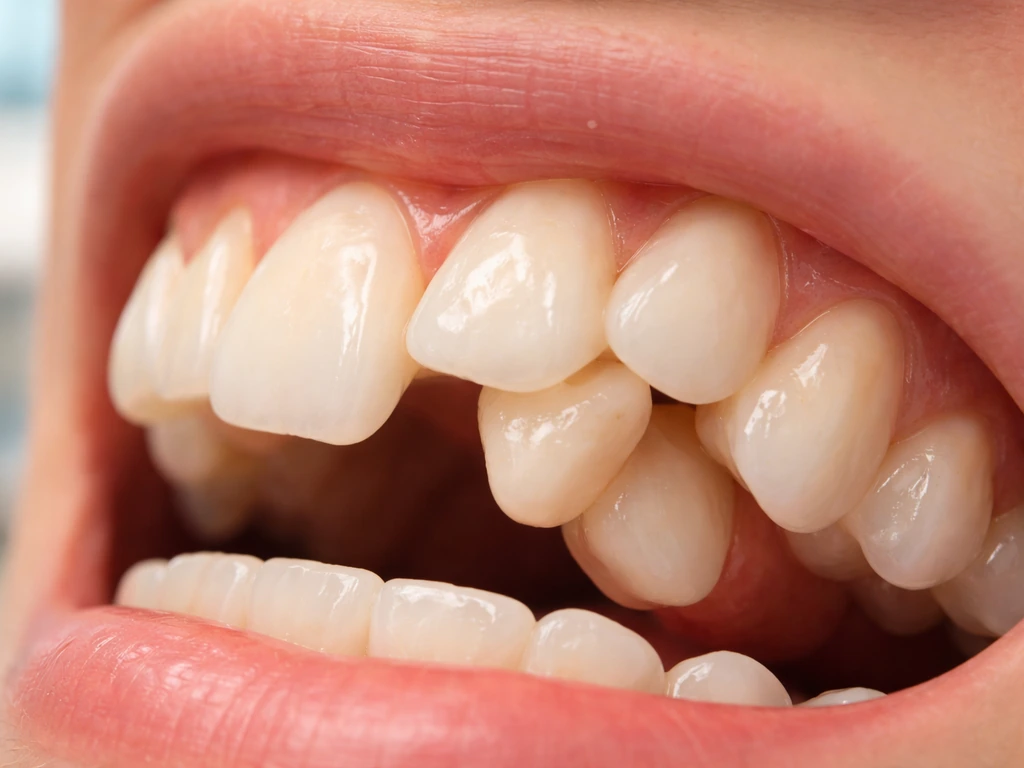
Teeth That Grow on Top of Teeth: Causes and What to Do
Causes of teeth that appear over others, true regrowth limits, symptoms, diagnosis steps, and treatment options by age.
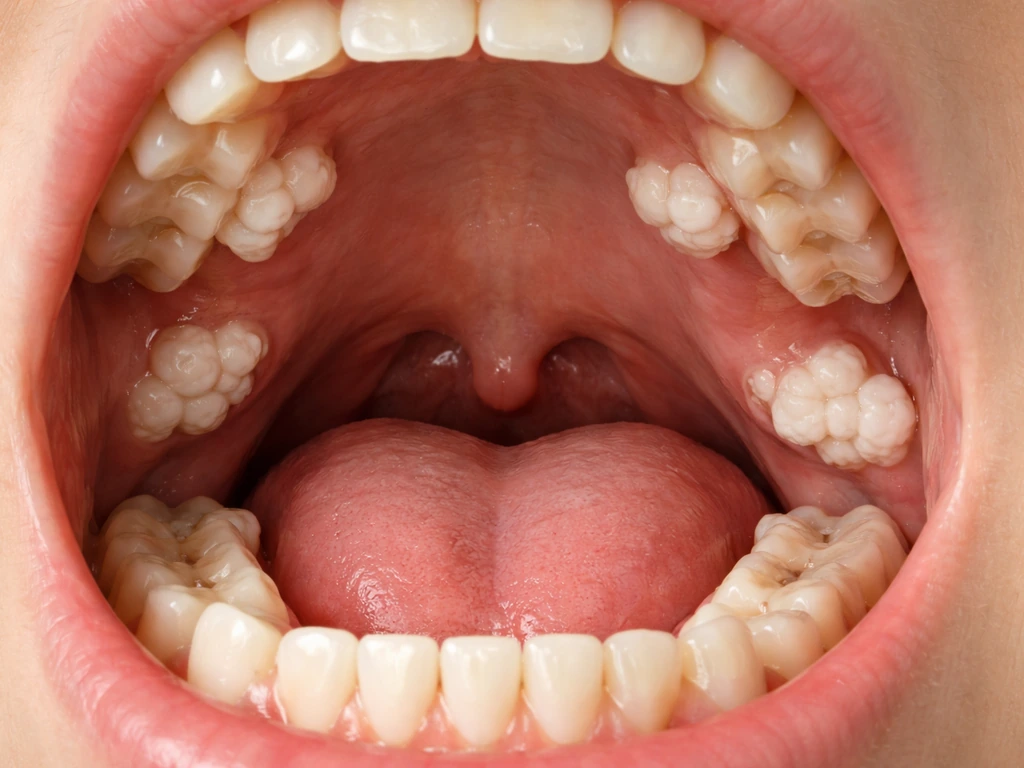
Disease Where Teeth Grow Everywhere: Causes, Diagnosis, Treatment
Learn why teeth-like growth can appear everywhere, how it’s diagnosed with imaging, and what treatments are possible vs
Can Teeth Grow in Other Parts of the Body? What’s Real
Teeth can’t grow anywhere on your body, but true odontogenesis occurs only in specific tissues and sites.