
No, teeth cannot naturally grow in your throat. Teeth only develop from very specific tissues found in your jaw, and the throat simply doesn't have those tissues. What most people are actually dealing with when they feel or see something tooth-like in the throat is a tonsil stone, a referred pain from an impacted wisdom tooth, a foreign-body sensation, or in extremely rare cases, an ectopic (misplaced) tooth that formed in the wrong spot during fetal development. None of those are the same as a tooth spontaneously growing in your throat, and all of them have straightforward explanations and treatment paths.
Can Teeth Grow in Your Throat? Causes and Next Steps

Marcus Holloway
22 May 2026
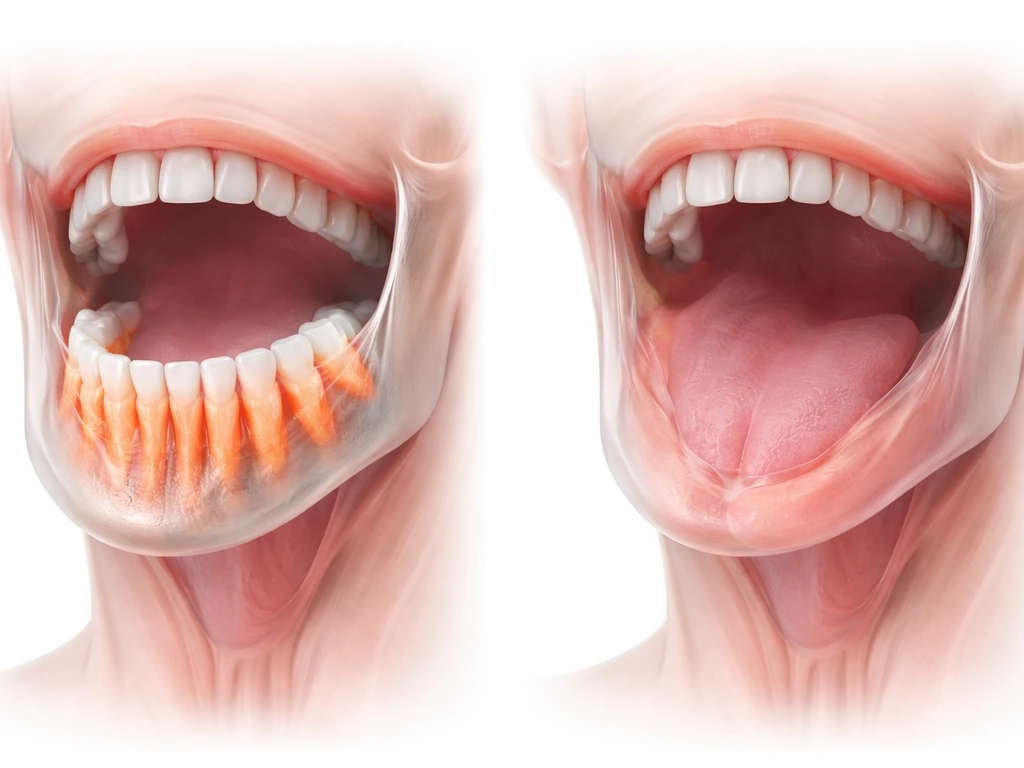
Why teeth can't form in your throat
Tooth formation is not a random process. It kicks off when a specialized layer of cells called the dental lamina, part of the oral epithelium, thickens and folds into the underlying tissue of the developing jaw. From there, neural crest-derived cells (called ectomesenchyme) interact with that epithelium through a tightly coordinated back-and-forth signaling process. This choreography eventually produces the specialized cells that build enamel (ameloblasts) and dentin (odontoblasts). The whole program is locked to the jaw during embryonic development. Your throat tissue never goes through this developmental sequence. It doesn't have a dental lamina, and it doesn't receive the right signals to start tooth organogenesis. So even if every ingredient for a tooth were floating around in your body, the throat is simply not a place where that developmental program can start from scratch in a normal adult.
Think of it like trying to grow a plant without a seed. The soil (throat tissue) might be there, but without the starting material and the right conditions, nothing tooth-like is going to sprout. Teeth are the result of a precisely timed embryonic process, not something your body can improvise in new locations after birth.
So what ARE people actually feeling or seeing in their throat?
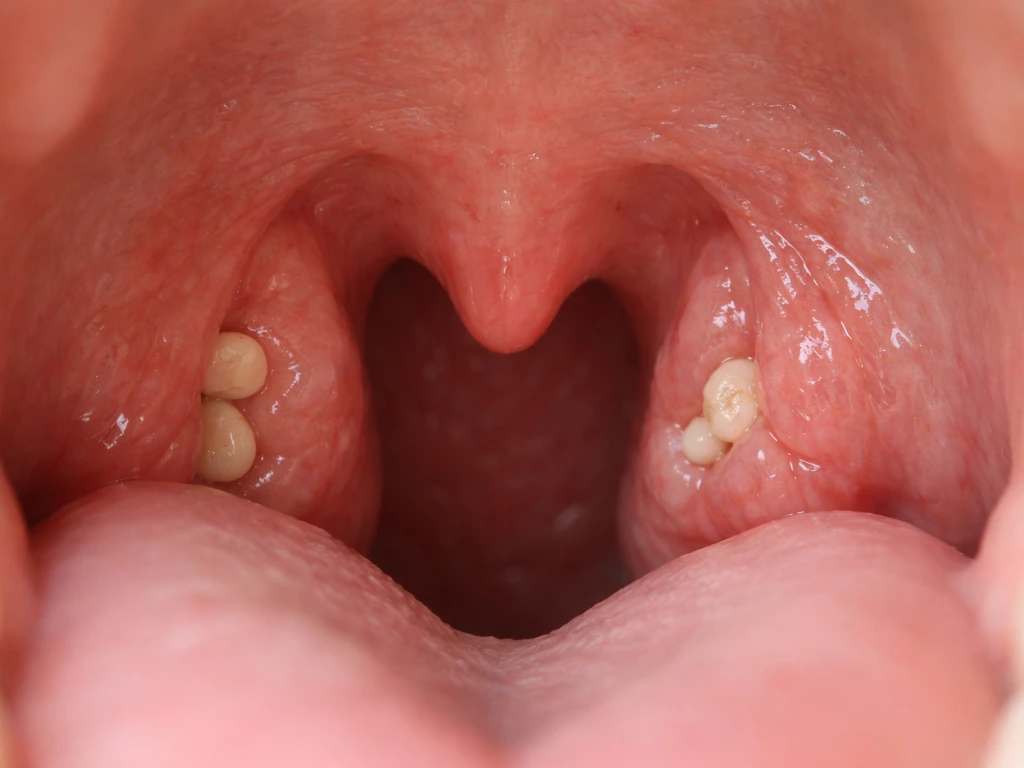
This is the part that trips most people up, and it's worth going through the common causes one by one, because several of them can genuinely look or feel like something hard and tooth-like.
Tonsil stones (the most common culprit)
Tonsil stones, also called tonsilloliths, are the number-one reason people think they have a tooth or hard pebble growing in the back of their throat. They form when food particles, dead cells, and bacteria get trapped in the pockets (crypts) of your tonsils and gradually calcify into white or yellow, rock-hard little lumps. They can look surprisingly tooth-like, especially when they're larger. Symptoms include a persistent sore throat, really bad breath, a foreign-body sensation like something is stuck, painful swallowing, and even ear pain. Tonsil stones can cause persistent sore throat and ear pain, and Mayo Clinic Health System advises getting an ENT evaluation, especially when symptoms mimic other throat problems. The ear pain part often throws people off, but tonsil stones can cause referred otalgia (ear pain without any ear problem) because the tonsils and ears share some of the same nerve pathways.
Referred pain from an impacted wisdom tooth
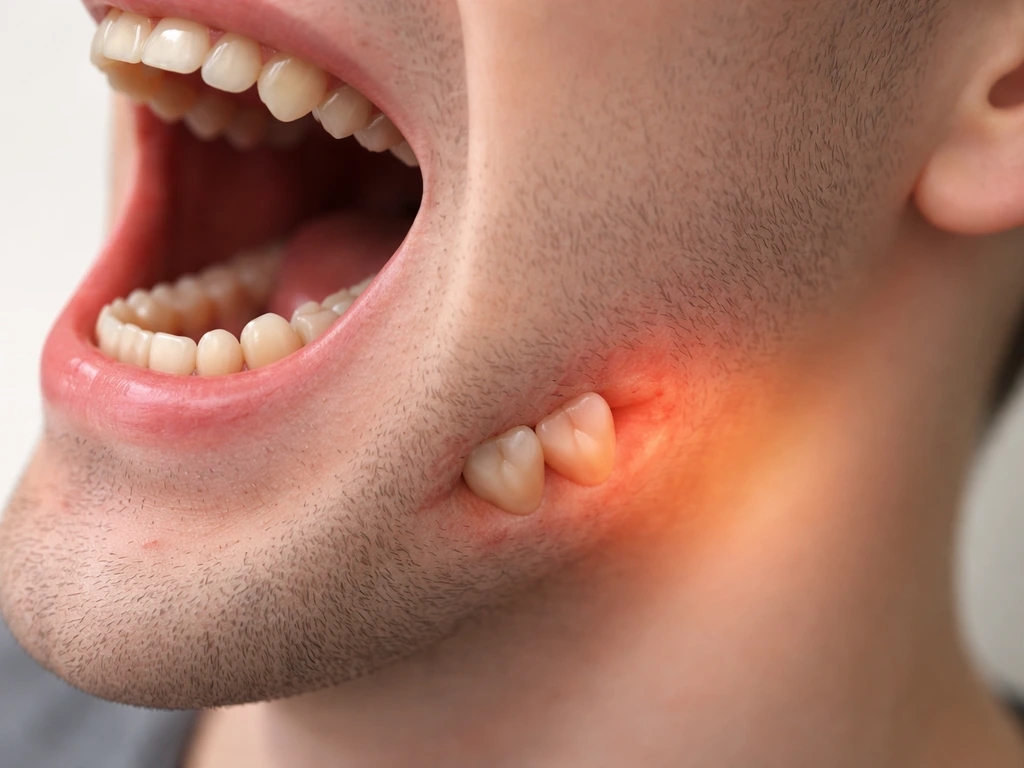
Impacted or erupting wisdom teeth, especially the lower ones, can cause pain that radiates into the throat, jaw, and ear. Many people feel this as throat pain or pressure and assume something is wrong in the throat itself. The wisdom teeth are so close to the back of the jaw that their nerves overlap with throat tissue sensation. If you're between roughly 17 and 25 and developing throat pain with no obvious infection, an impacted or partially erupted wisdom tooth is a very real possibility worth checking out.
Foreign body sensation
A cracked tooth fragment, a piece of bone from food, a fish bone, or even hardened food debris can get lodged in the throat or tonsil area and create a very convincing sensation that something hard is embedded there. This can persist for days and cause pain with swallowing. If there's any chance you recently chipped a tooth or ate something bony, this is a scenario worth ruling out early.
Ectopic or supernumerary teeth (extremely rare)
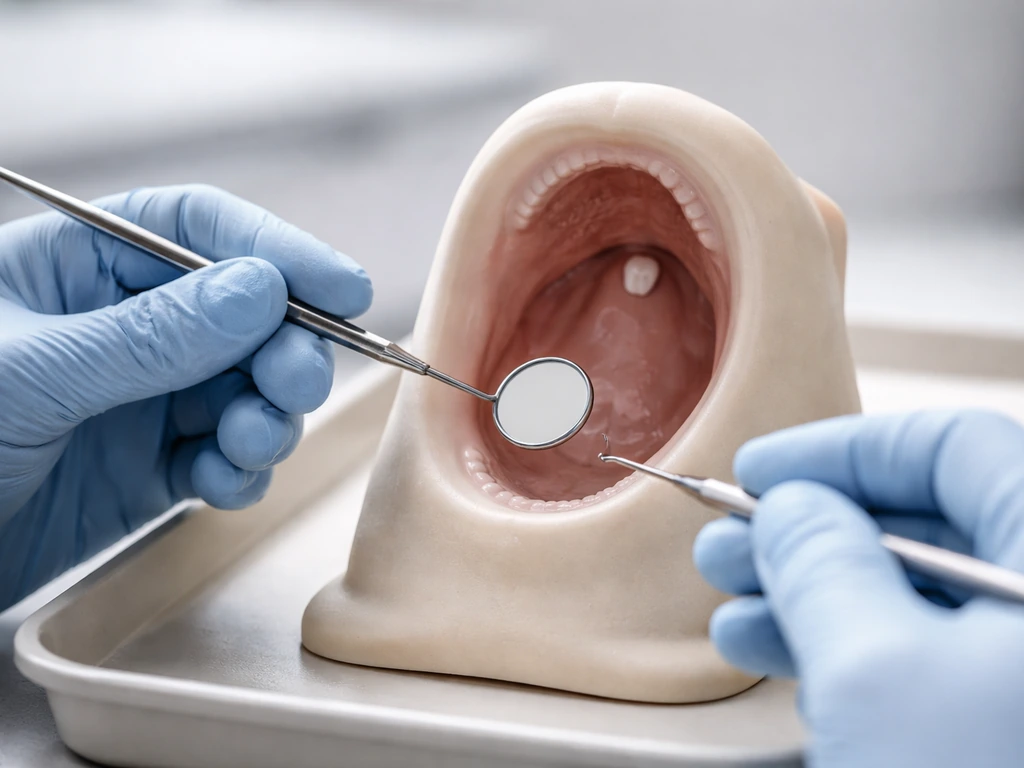
There are documented case reports of actual hard dental tissue found in or near the throat, including one case of a supernumerary (extra) tooth found in the oropharyngeal region and another involving a 13-year-old girl with bilateral tonsillar hamartomas that contained ectopic teeth. These are genuinely rare odontogenic anomalies, meaning they originate from dental tissue that migrated or developed in the wrong spot during fetal development. This is not the same as a tooth growing in the throat after birth. It's a developmental error that was set in motion before the person was born, and it's considered so unusual that case reports are published in medical journals just to document it. The treatment is surgical removal, and diagnosis requires imaging.
Other throat conditions that can feel or look tooth-like
- Peritonsillar abscess: a collection of pus behind a tonsil that can cause severe swelling, muffled voice, and the feeling of something pushing in the throat
- Throat ulcers or lesions from infection or other causes that create irregular textures
- Calcified lymph nodes in the neck that can be felt externally or show up on imaging
- Pharyngeal cysts that create pressure or fullness in the throat area
What teeth and dental tissues can and can't regenerate
Since this site focuses on dental regeneration questions, it's worth being direct about the biology here, because there's a lot of misinformation online about teeth "regrowing" in various ways.
| Dental tissue | Can it regenerate? | The reality |
|---|---|---|
| Enamel | No | Once enamel is formed, the cells (ameloblasts) that made it are gone. Enamel cannot repair itself. Fluoride can remineralize early surface lesions, but that's not the same as regenerating lost enamel. |
| Dentin | Limitedly | Odontoblasts in the pulp can produce small amounts of "reactionary" or "reparative" dentin in response to mild injury, but this capacity is limited and degrades with infection or inflammation. |
| Cementum | Limitedly | Some regrowth is possible in certain periodontal conditions, but it's modest and not guaranteed. |
| Gum tissue | Partially | Gums can heal and reattach to some degree after treatment, but significant gum recession does not fully reverse on its own. |
| Full tooth | No (in adults) | Adults cannot regrow teeth naturally. Stem-cell research is exploring this, but as of now it remains experimental with no established clinical standard. |
The bottom line on regeneration is that there are no obvious stem-cell sources in adult human teeth that would allow complete tooth morphogenesis to start over. Research into stem-cell therapy for craniofacial bone and tooth regeneration is ongoing and promising, but it is not available as routine care. If you've seen headlines about teeth "growing back," those are typically describing lab findings or early-phase trials, not something your dentist can offer you today.
Age and timeline context: eruption, wisdom teeth, and referred throat pain
Understanding normal eruption timelines can save a lot of worry, especially for parents and teenagers.
Children
Primary (baby) teeth erupt from around 6 months of age and are gradually replaced by permanent teeth starting around age 6. During this process, kids often feel pressure, soreness, and general discomfort in their mouths and jaws. Some kids complain of throat discomfort during active eruption phases, which can be due to increased saliva, mild inflammation in surrounding tissues, or simply referred soreness. None of this means a tooth is growing in the throat. If you are wondering about a tooth growing in your ear, it is usually referred pain rather than a real tooth developing there.
Teenagers and young adults
Wisdom teeth (third molars) typically erupt between ages 17 and 21, though the timeline varies. MedlinePlus lists typical eruption timing for permanent teeth, including third molars (wisdom teeth) erupting around ages 17 to 21 blank" rel="noopener noreferrer">third molars (wisdom teeth) typically erupt between ages 17 and 21. When they're partially erupted or impacted, they can cause significant discomfort that radiates to the throat, ear, and jaw on the same side. This is one of the most common reasons a teenager or young adult ends up searching something like "tooth growing in my throat," because the pain genuinely feels like it's coming from the throat region. A dental X-ray can confirm impaction within minutes. Similar throat-adjacent confusion can come up with other ectopic eruption sites; for instance, teeth occasionally erupt in unusual positions in the palate or other nearby areas, which can feel and look strange but are still confined to the oral cavity. Even though tooth-like tissue is very rare, the roof of your mouth is still part of the oral cavity and tooth development is limited to specific dental tissues unusual positions in the palate.
Adults and older adults
Once all permanent teeth are in place, the sensation of something growing in the throat is almost never tooth-related. Tonsil stones, dental infections with referred pain, cracked tooth fragments, or non-dental conditions (like pharyngeal lesions) are far more likely explanations. Adults who still have their wisdom teeth partially impacted can continue to experience flare-ups of pain and throat discomfort well into their 30s and beyond.
Red-flag symptoms that need urgent attention
Most causes of tooth-like sensations in the throat are not emergencies, but a few situations genuinely are. Get to an emergency room or call emergency services immediately if you or someone else has any of these:
- Difficulty breathing, noisy breathing (stridor or wheezing), or a sensation of the airway closing
- Bluish color around the lips or fingertips (a sign of oxygen deprivation)
- Inability to swallow saliva, drooling because swallowing is impossible
- Muffled, "hot potato" voice combined with severe one-sided throat pain and inability to fully open the mouth (trismus) — these are classic peritonsillar abscess signs
- High fever with rapidly worsening neck pain, stiffness, or swelling of the neck
- A known or suspected sharp foreign body (bone fragment, broken tooth) lodged in the throat causing pain with breathing or worsening difficulty swallowing
Deep neck infections and peritonsillar abscesses can progress to airway obstruction quickly. Peritonsillar abscess in particular is considered potentially life-threatening if untreated. Don't wait and see with those symptoms.
Symptoms that are concerning but not immediately emergency-level and should prompt a same-day or next-day appointment include: a persistently visible white or yellow lump on the tonsil that doesn't go away, a sore throat lasting more than a week, ear pain with no ear infection, severe bad breath that doesn't improve with brushing, or the feeling that something hard is stuck that you can't dislodge.
Your practical next steps: what to do and who to see
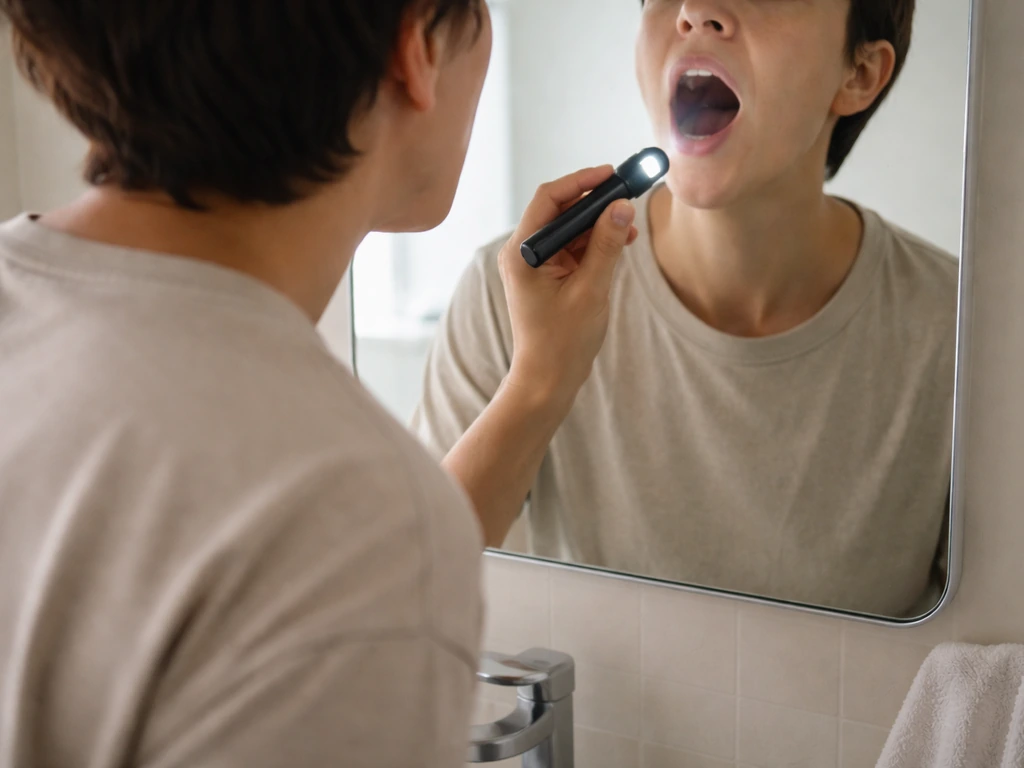
Check yourself first (without panicking)
Take a flashlight and look in the mirror at your tonsils. Are there any visible white or yellow bumps sitting in the folds of your tonsils? That's tonsil stone territory. Is there significant swelling on one side making your uvula look pushed to the opposite side? That's a reason to get seen urgently. Is the pain mostly in your lower jaw and radiating outward, especially if you're in the 17 to 25 age range? That's probably wisdom tooth related. Note how long the sensation has been present, whether you have fever, and whether swallowing is painful or just uncomfortable.
When to see a dentist vs. an ENT
If you suspect the problem is tooth or jaw related (wisdom tooth pain, a broken tooth fragment, jaw swelling alongside throat discomfort), start with a dentist. They can do a clinical exam and take X-rays to see what's happening with your teeth and jaw. If the problem seems more tonsil or throat-focused (visible tonsil stones, throat swelling, recurring tonsillitis), an ENT (ear, nose, and throat specialist) is the better first call. In practice, your primary care doctor can also help triage you to the right specialist.
What to ask for and what to expect
- At the dentist: ask for a panoramic X-ray (OPG) if wisdom tooth involvement is suspected. This gives a full view of all tooth positions including impacted ones. Mention any throat symptoms and when they started.
- At the ENT: ask about tonsil stone evaluation. If a stone is large or not visible on the surface, a CT scan of the oropharynx can confirm the diagnosis and show the size and location of the calcification.
- If a foreign body is suspected: an endoscopy (upper GI scope) can locate and remove objects stuck in the esophagus or throat that don't show on plain X-ray.
- If an ectopic tooth or unusual hard mass is found: expect referral to an oral and maxillofacial surgeon. Treatment typically involves surgical extraction after imaging to confirm the location.
Treatment paths once you have a diagnosis
- Tonsil stones: small ones can often be dislodged at home with a water flosser or gentle irrigation. Larger or recurrent stones may require ENT removal, and chronic cases may ultimately lead to a tonsillectomy discussion.
- Impacted wisdom teeth: monitoring, antibiotics if infection is present, or extraction depending on the severity and position.
- Foreign body: endoscopic removal if the object is in the esophagus; surgical if deeper or inaccessible.
- Peritonsillar abscess: drainage (needle aspiration or incision) plus antibiotics, done urgently in a clinical setting.
- Ectopic or supernumerary tooth (rare): oral surgery extraction after imaging and planning.
- Periodontal involvement: if gum disease is contributing to referred pain or loose tooth fragments, a periodontist can evaluate tissue health and develop a treatment plan.
One last thing worth noting: the throat is not the only unusual location people wonder about when it comes to misplaced or unexpected dental findings. In very rare cases, something tooth-like can actually be ectopic, so a dentist can confirm what you are seeing misplaced or unexpected dental findings. Similar questions come up about other sites in the head and neck region, and in each case the biology is the same: teeth can only develop from dental tissue in the jaw, and anything tooth-like found elsewhere is either an ectopic developmental anomaly, a calcification of a different type, or a case of referred pain from a real dental problem nearby. If you're unsure, that's exactly what a dentist or ENT is there to sort out.
FAQ
How can I tell if what I see in the back of my throat is a tonsil stone versus something else tooth-related?
Tonsil stones are often white or yellow and sit in the tonsil crypts, they can look like tiny calcified pieces, and they usually come with bad breath or a persistent “something stuck” feeling. If you see a single hard bump plus worsening one-sided swelling, fever, or trouble swallowing, get checked promptly, because those patterns can fit an abscess or other throat lesion rather than a stone.
If I can’t get a “tooth-like” hard piece out of my throat, does that mean it’s a tooth or ectopic tissue?
Not necessarily. Something stuck that does not dislodge is more commonly hardened debris, a lodged food fragment near the tonsils, or inflamed tissue from recurrent tonsillitis. If it persists beyond a few days, causes ongoing pain with swallowing, or you feel it moving, have a clinician look in the throat and consider imaging if indicated.
Can tonsil stones cause ear pain even if my ears feel normal?
Yes. Ear pain can be referred because throat structures and the ear share overlapping nerve pathways, so the ear exam may be normal. A clue is that your symptoms track with throat irritation or bad breath, and swallowing tends to worsen the discomfort.
Could dental infection or an abscess cause a feeling of something growing in the throat?
Yes. A tooth or jaw infection can cause referred throat soreness and a bad taste, sometimes without obvious mouth sores. If you also notice gum swelling near a tooth, increasing facial pain, fever, or swollen neck nodes, seek dental care urgently because infections can spread beyond the tooth area.
At what age should I suspect wisdom teeth if my pain feels like it’s in my throat?
Most people develop third molars between the late teens and early 20s, but flare-ups can continue later, especially if a tooth stays partially impacted. If the pain is one-sided and radiates to the jaw or ear and chewing makes it worse, ask a dentist for an X-ray even if the main complaint is throat discomfort.
What emergency signs suggest the “hard thing in my throat” could be serious?
Get emergency care if you have rapidly worsening throat pain, muffled “hot potato” voice, drooling, difficulty breathing, inability to swallow even liquids, significant neck swelling, or high fever. These can be red flags for deep neck infections or peritonsillar abscess.
If I’m seeing a white/yellow area on a tonsil, how do I decide whether it’s urgent?
A visible tonsil spot plus persistent or worsening symptoms generally deserves evaluation, especially if it lasts more than a week, is associated with severe bad breath that does not improve with oral hygiene, or comes with one-sided swelling or ear pain without an ear infection. If it is accompanied by fever, dehydration, or escalating pain, try to be seen sooner rather than waiting.
Can tooth fragments from food cause symptoms that last a long time?
They can. A small fragment can irritate tissue and keep the sensation going until it’s removed or the inflammation settles. If symptoms keep recurring or do not improve within a few days, ask a clinician to examine the area, because repeated “stuck” sensations sometimes come from ongoing irritation rather than a true tooth structure.
Do dental “regrowth” headlines mean my tooth or teeth could regrow in the throat?
No. Adult tooth structures do not spontaneously re-create themselves in new locations, and current regenerative research is not routine clinical care. If you see headlines claiming regrowth, interpret them as early-stage lab or trial work, not something a dentist can perform for throat complaints.
If it’s not a tooth, what other conditions could mimic “something tooth-like” in the throat?
Several non-dental problems can feel similar, including pharyngeal lesions, persistent tonsillar inflammation, and other throat conditions that present as a lump, soreness, or irritation. If symptoms are persistent, unexplained, and not clearly linked to tonsil stones or tooth issues, an ENT evaluation can clarify the cause.
What’s the best first step if I suspect a dental source versus a tonsil source?
If the pain relates to a specific back-of-mouth tooth, jaw tenderness, gum swelling, or age range consistent with wisdom teeth, start with a dentist for an exam and X-rays. If you have visible tonsil bumps, recurrent bad breath, or symptoms clearly centered on the tonsils, an ENT is often the more direct first call. When unsure, primary care can help triage while you arrange the specialist visit.
Next Articles
Can Teeth Grow Out of Your Toes? What to Know and Do
No, teeth can’t grow from toe tissue. Learn what tooth-like bumps are, warning signs, and when to see a dentist.
Can a Tooth Grow in Your Ear? What’s Real and Why
Can a tooth grow in your ear? Learn causes of tooth-like growth, symptoms, diagnosis steps, and what regeneration can an
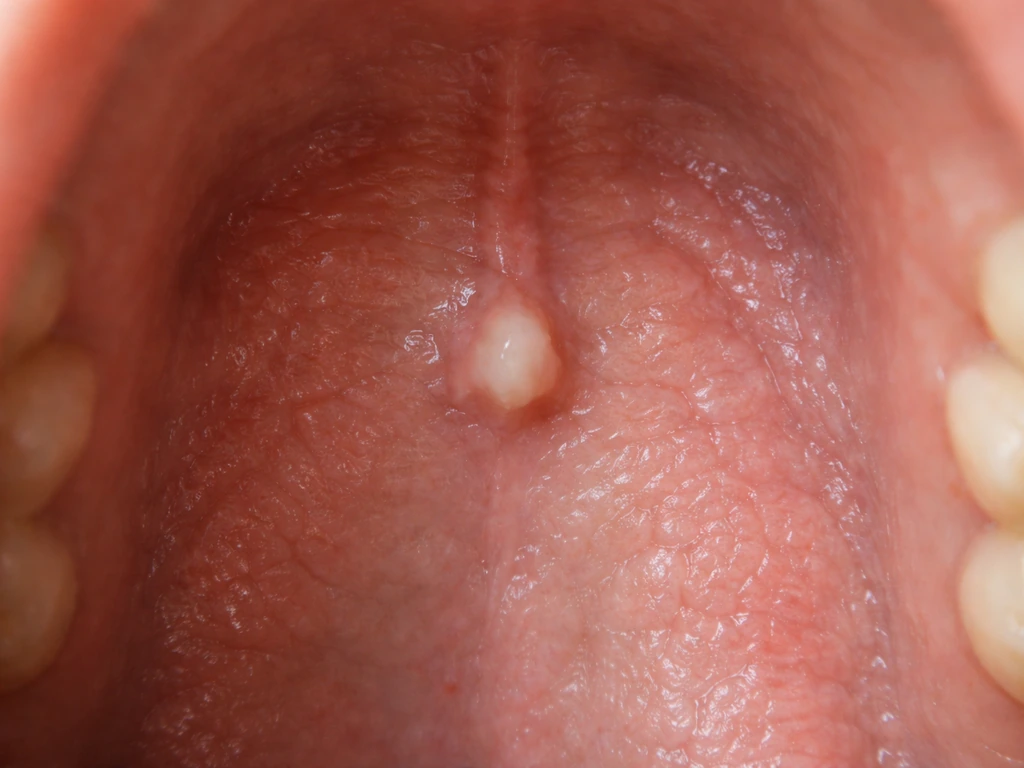
Can Teeth Grow in the Roof of Your Mouth? What to Know
Can teeth form on the palate? Learn what tooth-like bumps mean, true extra teeth vs cysts, and next steps to get checked