Teeth grow crooked primarily because of a mismatch between the size of your teeth and the size of your jaw. That one sentence explains the majority of cases. But the full picture is a bit more interesting, because genetics, eruption paths, childhood habits, and even how you breathe all play into it. If you're trying to figure out why your teeth (or your kid's teeth) didn't come in straight, this guide will walk you through the actual biology, the real causes, and what you can do about it today.
Why Do Teeth Grow Crooked and How to Fix It

Marcus Holloway
7 Apr 2026
How teeth normally grow in (and where crooked starts)
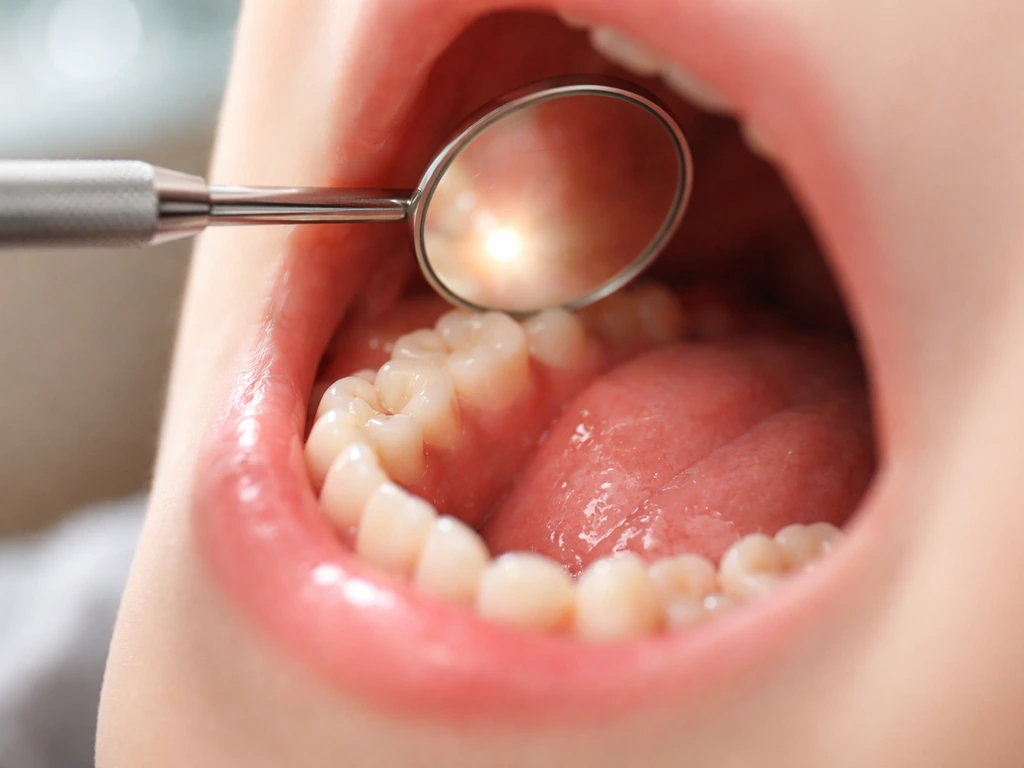
To understand why teeth end up crooked, it helps to know what normal development actually looks like. How teeth grow is a layered process that starts long before any tooth is visible in the mouth. Teeth form from a structure called the dental lamina, a strip of tissue in the embryonic jaw that generates both baby teeth and the permanent teeth underneath them. By the time a child is born, the crowns of the primary teeth are already nearly complete inside the gums, and permanent tooth buds are already forming below those.
Baby teeth typically erupt between 6 months and 3 years of age. They serve as placeholders, keeping space open in the jaw for the larger permanent teeth coming later. Starting around age 6, permanent teeth begin pushing upward, reabsorbing the roots of the baby teeth above them, which is why those teeth eventually become loose and fall out. The permanent tooth then follows a path through the gum tissue and emerges into the mouth. Understanding how teeth grow through gums makes it clear why the eruption path matters so much: even a small deviation in that path can mean a tooth comes in tilted, rotated, or crowded against its neighbors.
Crooked teeth happen when something disrupts that process. Either there isn't enough room in the jaw, the eruption path gets redirected, or the tooth itself comes in at an angle because of crowding pressure from neighboring teeth. It rarely has a single dramatic cause. Usually it's a combination of factors that accumulate over childhood development.
The big causes of crooked teeth
Jaw size vs. tooth size mismatch
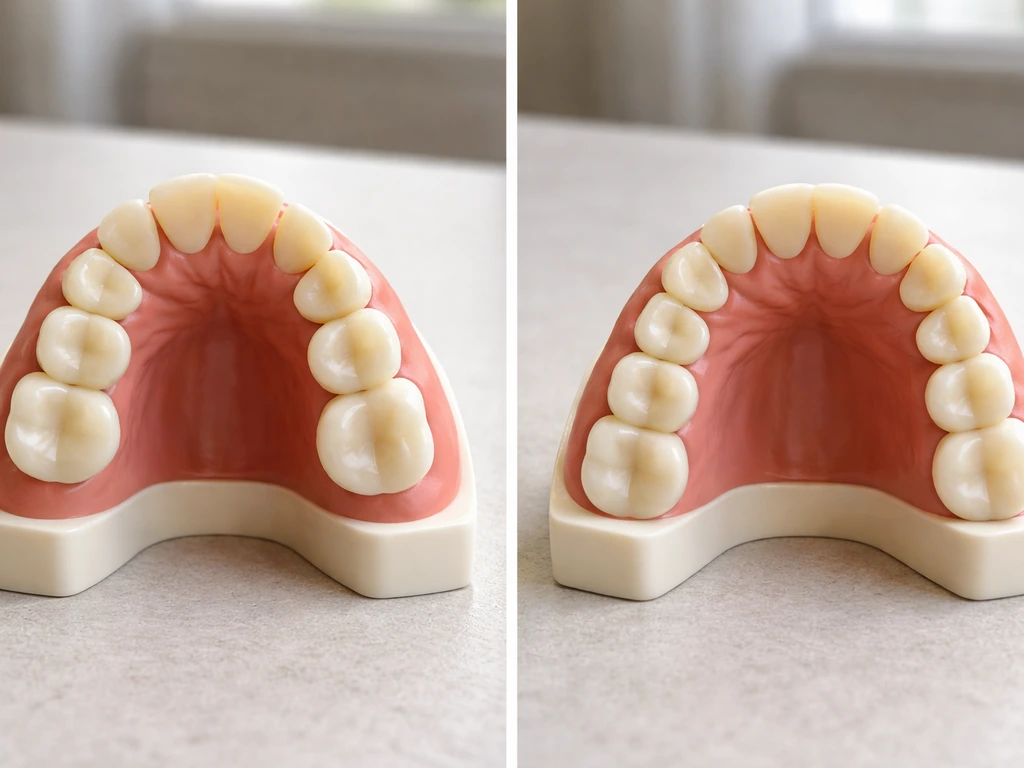
This is the number one cause, and it's worth spending time on. Modern human jaws have become smaller over thousands of years, largely due to changes in diet (softer foods require less chewing, which means less stimulation for jaw bone development). But tooth size hasn't shrunk proportionally. The result: too many teeth for the available arch space. When a permanent tooth is trying to erupt and there simply isn't room, it gets pushed forward, backward, or sideways. You end up with overlapping front teeth, teeth that sit behind the row, or canines that stick out at an angle.
Eruption path problems
Sometimes the issue isn't purely space, it's direction. Where teeth grow from inside the jaw determines a lot about the angle at which they emerge. If a baby tooth is lost too early (due to decay or trauma), the surrounding teeth can drift into that space, blocking or redirecting the path of the incoming permanent tooth. This is one reason early childhood cavities matter more than people think: they can start a chain reaction that throws off permanent tooth alignment years later.
Dental crowding
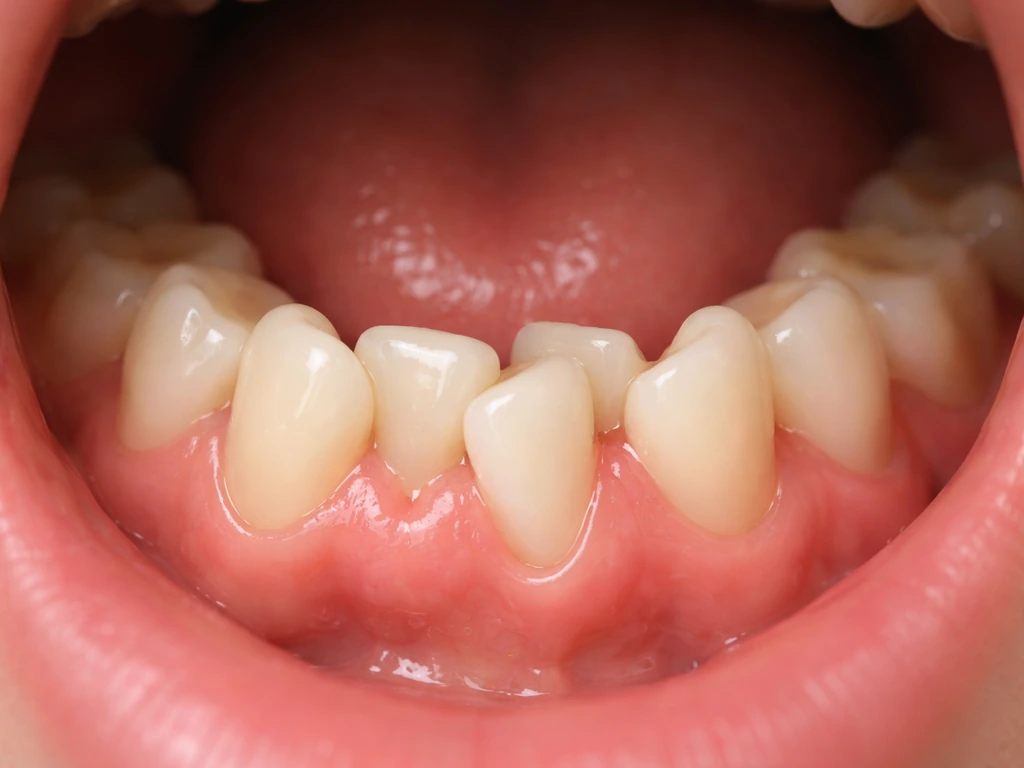
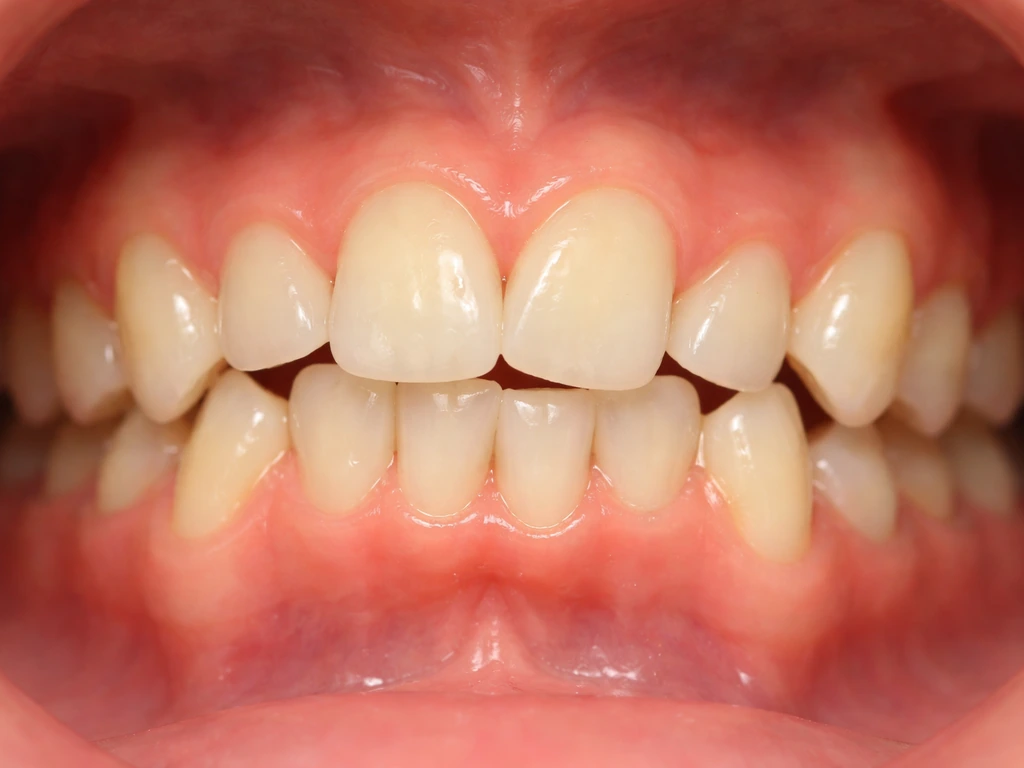
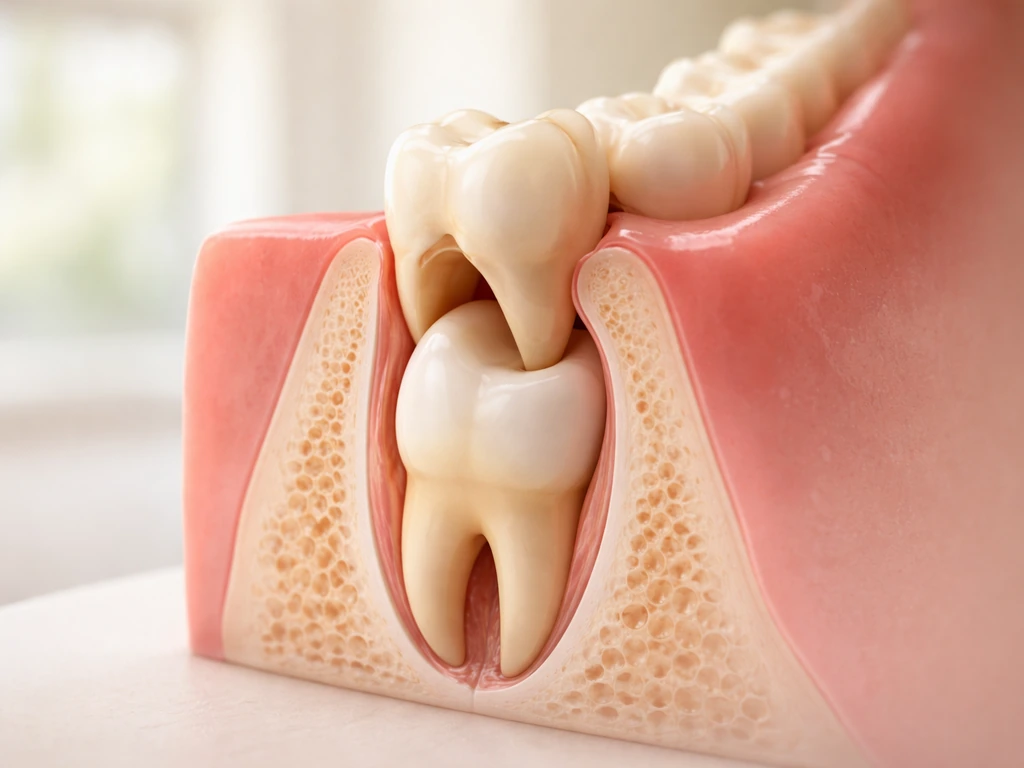
Crowding is the direct result of a size mismatch, but it compounds on itself. As teeth compete for limited space, they rotate, overlap, and push each other out of line. The front teeth are often most visible, but crowding can affect the entire arch. Severe crowding sometimes creates a situation where a tooth erupts in a completely different location than expected. You've probably seen cases where a canine tooth appears up near the gum line, seemingly stuck above the regular row. That's an impacted or ectopic tooth, and it happens because the normal eruption path was blocked entirely.
Extra teeth and unusual eruption patterns
In some cases, the problem isn't just crowding of normal teeth. Why extra teeth grow is a separate biological question, but hyperdontia (having more teeth than the standard 32) adds more crowding pressure into an already tight space. Similarly, cases where teeth grow behind other teeth are a classic example of an eruption path gone sideways, literally. This is common in lower front teeth in children when baby teeth haven't fallen out yet and the permanent tooth erupts behind the row instead of replacing the primary tooth.
Genetics vs. habits: what shapes alignment early
Both matter, but genetics sets the stage. You inherit your jaw size from your parents, your tooth size from your parents, and those two things may not have been selected for each other. If one parent has a large jaw and the other has large teeth, you might end up with a child whose tooth-to-jaw ratio is completely mismatched. This is why crooked teeth tend to run in families, and it's also why treating one child in a family often predicts that siblings will need orthodontic care too.
Habits and environmental factors layer on top of genetics. Prolonged thumb sucking (generally past age 4 or 5) can push the upper front teeth forward and alter the shape of the palate. [Mouth breathing, especially during early childhood when the jaw is still developing, reduces the natural pressure of the tongue against the roof of the mouth. ](https://www.
ncbi. nlm. nih. gov/books/NBK553375/) That tongue pressure is actually part of what helps the upper arch expand to a normal width.
Without it, the palate can become narrower, which means less room for teeth. Pacifier use, tongue thrusting, and long-term bottle feeding have all been associated with similar effects, though the evidence varies in strength. The American Academy of Pediatric Dentistry (AAPD) policy on pacifiers references literature about associations between pacifier use and malocclusion, including an evidence review framing [Pacifier use, tongue thrusting, and long-term bottle feeding have all been associated with similar effects](https://www. aapd.
org/research/oral-health-policies--recommendations/p_pacifiers. pdf/).
Diet plays a role too, and not just historically. Children who eat primarily soft, processed foods don't exercise their jaw muscles and bone the same way children who chew tougher foods do. Jaw bone responds to mechanical load, and less chewing stimulation during development can result in a slightly narrower or shorter arch. It's not the whole story, but it's a contributing factor that's increasingly discussed in orthodontic and paleoanthropological research.
How alignment changes over time
Teeth don't stay static once they've come in. Alignment can shift at several points in life, and knowing when to expect change helps you plan.
During childhood and early adolescence, the jaw is actively growing. This is actually the best time to catch and correct problems, because you can use that growth to your advantage. Orthodontists can guide the expansion of the palate or the direction of jaw growth in ways that aren't possible once the bones have matured. The American Association of Orthodontists recommends that children get their first orthodontic screening by age 7, even though most of their baby teeth are still present. At that age, there's already enough information in the mix of primary and permanent teeth to identify whether a problem is developing and whether early intervention makes sense.
In the teenage years, the full set of permanent teeth is typically in place, and the jaw is still growing. This is the classic time for braces. But here's what a lot of people don't realize: even after orthodontic treatment is complete, teeth want to move back toward their original positions. That's why retainers are non-negotiable after treatment, not optional.
Wisdom teeth are a common concern here. Many people worry that wisdom tooth eruption causes the front teeth to become crowded again. The evidence on this is mixed: studies suggest that the forces wisdom teeth exert are probably not strong enough to cause significant crowding on their own. However, wisdom teeth that erupt at odd angles can push neighboring teeth and cause localized shifting. If you've noticed your lower front teeth becoming more crowded in your late teens or twenties, wisdom tooth position is worth evaluating with an X-ray. Also, if you're wondering why some teeth haven't grown in yet in your late teens, impacted wisdom teeth or delayed permanent teeth may be part of the story.
In adulthood and later years, teeth continue to drift slowly forward and inward, even without wisdom teeth in the picture. This natural mesial drift means that even people who had perfectly straight teeth as teens may notice more crowding in their 30s and 40s, particularly in the lower front teeth. Gum recession and bone loss (often associated with gum disease) can also allow teeth to tilt and shift in older adults.
Why crooked teeth won't just grow back straight on their own
This is a big one, and it comes up a lot. Some people hope that if they wait long enough, or try certain tongue exercises, or use some product they saw online, their crooked teeth will naturally realign. They won't. Here's why.
Human teeth are not regenerative structures in the sense that they can reposition themselves. The ligament that holds a tooth in its socket (the periodontal ligament) is flexible enough to allow teeth to move under sustained pressure, which is literally how orthodontics works. But teeth do not generate directional movement on their own. There is no biological signal that says "move left to fix alignment.
" The same logic applies to enamel and the tooth's internal structure. People sometimes ask about color alongside shape, wondering why teeth grow in yellow, and the honest answer about both color and position is the same: once a permanent tooth has formed and erupted, you cannot regenerate its shape, color, or position naturally. What you can do is move teeth orthodontically or restore them with dental work.
There is no verified evidence that tongue exercises, chewing harder foods as an adult, or any supplement causes crooked permanent teeth to move into correct alignment. Posture changes and myofunctional therapy (tongue and jaw muscle retraining) can be useful adjuncts to orthodontic treatment, particularly for children whose habits are contributing to the problem, but they don't replace mechanical correction of already-misaligned teeth. Anyone selling you a product that claims otherwise is not working from evidence-based dentistry.
Figuring out your likely cause right now
You don't need to wait for a dental appointment to start narrowing down what's going on. Here are some self-checks that can point you in the right direction.
- Look at family photos or your parents' teeth: if crowding or a specific bite pattern runs in the family, genetics is almost certainly a major factor in your case.
- Think back to childhood habits: did you (or does your child) suck a thumb, use a pacifier past age 4, breathe primarily through the mouth, or have persistent tongue-thrusting? These are meaningful risk factors for specific types of misalignment.
- Check whether baby teeth were lost early or had cavities: premature tooth loss disrupts spacing and is a common upstream cause of adult crowding.
- Look at the pattern of crookedness: overlapping front teeth suggest crowding and space issues; a tooth that's completely out of the row suggests a blocked eruption path; an upper jaw that's noticeably narrower than the lower can signal habit-related palatal narrowing.
- For teens and young adults: get an X-ray to check wisdom tooth position if front teeth have started shifting recently.
- For adults over 30: ask your dentist about gum health and bone levels if you're seeing new shifting, since gum disease-related bone loss can cause teeth to tilt even when there's no crowding history.
When you see an orthodontist or dentist for a formal evaluation, here's what they're actually assessing: panoramic X-rays (to see all teeth including unerupted ones), cephalometric X-rays (a side-view X-ray that shows jaw relationships), intraoral photos, study models or digital scans of the teeth, and a bite assessment. For children, the AAO's age-7 visit allows an orthodontist to advise whether any treatment is warranted even while baby teeth are still present, and to monitor development without necessarily starting treatment right away. That monitoring window is valuable because early treatment during active jaw growth can guide arch expansion and make more space for incoming permanent teeth, potentially avoiding more extensive treatment later. The American Academy of Pediatric Dentistry also supports interceptive orthodontic treatment (before a malocclusion fully develops) as a way to improve both function and appearance early and reduce the severity of problems down the line.
Evidence-based ways to actually fix crooked teeth
The good news: crooked teeth are one of the most treatable dental problems. The approach depends heavily on age, the cause, and the severity.
| Age Group | Typical Situation | Evidence-Based Options | Key Timing Consideration |
|---|---|---|---|
| Children (ages 6-10) | Mix of baby and permanent teeth; jaw still actively growing | Monitoring, palatal expanders, space maintainers, early (Phase 1) braces if needed | AAO recommends first screening by age 7; early intervention can guide jaw growth |
| Preteens and Teens (ages 11-17) | Full permanent teeth (except possibly wisdom teeth); jaw still maturing | Traditional braces, clear aligners (Invisalign and similar), retainers after treatment | Most comprehensive treatment window; jaw growth still usable for correction |
| Adults (18+) | Jaw growth complete; bone density established | Clear aligners, traditional braces, veneers or bonding for minor cases, surgical correction for severe skeletal issues | Fully treatable but may require longer treatment; retention is critical to prevent relapse |
| Adults with gum/bone issues | Crowding complicated by periodontal disease or bone loss | Orthodontics only after periodontal disease is treated; more frequent monitoring during tooth movement | Gum disease must be controlled first; movement of teeth in compromised bone requires specialist coordination |
For kids: the case for not waiting
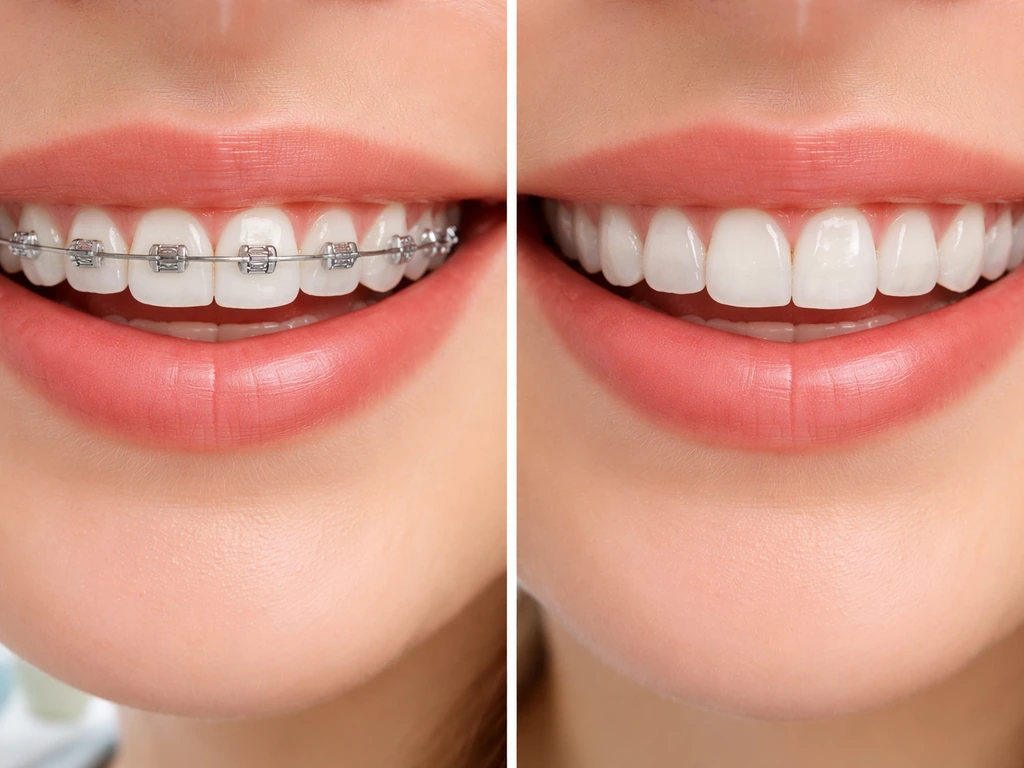
If your child is around age 7 and you've noticed crowding, a crossbite, an unusually narrow upper arch, or teeth coming in behind the baby teeth, an orthodontic evaluation is worth scheduling now. The point isn't to put a 7-year-old in full braces. It's to get information. Some children benefit enormously from a palatal expander at age 8 or 9 that creates enough room to avoid extractions later. Others just need monitoring. You won't know which category your child falls into until an orthodontist looks at the full picture, including what's happening below the gumline on X-rays.
For teens and adults: braces vs. aligners
Both traditional braces and clear aligners (like Invisalign) work by applying sustained gentle pressure to move teeth through the bone via the periodontal ligament. Neither is universally better. Traditional braces tend to handle more complex cases, severe rotations, and significant bite correction more reliably. Clear aligners offer better aesthetics and are easier to clean around, which makes them attractive for teens and adults who are compliant about wearing them. The critical word is compliant: aligners only work if you wear them 20 to 22 hours per day. People who frequently remove them see slower or incomplete results.
Retention: the part people skip
Finishing braces or aligners is not the end of the story. Teeth move back toward their original positions after treatment, sometimes quickly. A fixed retainer (a thin wire bonded behind your front teeth) and a removable retainer worn at night are the standard of care after orthodontic treatment. Many orthodontists now recommend wearing removable retainers indefinitely at night. This is not an upsell. It reflects the basic biology: teeth are held in place by the periodontal ligament, which has a memory for its original position, and without retention, relapse is common.
The bottom line is this: crooked teeth are overwhelmingly caused by jaw-tooth size mismatch and eruption path issues, shaped by genetics and sometimes worsened by early habits. They don't self-correct, and no supplement or exercise will reposition a permanent tooth. But they are very treatable at essentially any age, with the best results and least intervention typically coming from earlier evaluation in children and consistent retention after treatment in everyone.
FAQ
Can crooked teeth be caused by things that happen after the permanent teeth erupt?
Yes. Even after eruption, teeth can shift due to continued crowding, changes in bite forces, gum recession, and natural mesial drift. However, the earlier you address the underlying cause (like a narrow arch, harmful habits, or eruption problems), the more predictable the correction tends to be.
If my child stops thumb sucking, will the teeth correct themselves?
Stopping helps, but it does not guarantee spontaneous straightening. If thumb sucking started early and was prolonged, the upper arch may already be shaped differently. An orthodontist can check whether interceptive treatment (for example, timing an expander) is needed or whether monitoring is enough.
Are mouth breathing and enlarged tonsils or allergies linked to crooked teeth?
Mouth breathing during childhood can contribute to a narrower palate and altered tongue pressure, which reduces space for teeth. If breathing is being driven by allergies, enlarged tonsils, or chronic nasal blockage, addressing the airway issue with a pediatrician or ENT can improve the overall environment for orthodontic success.
What red flags suggest an earlier orthodontic evaluation than “sometime later”?
Consider earlier assessment if a tooth comes in far behind the row, a canine looks abnormally high near the gum line, there is a crossbite, the upper arch seems unusually narrow, or primary teeth were lost early from trauma or decay. These patterns can indicate eruption path problems or space issues that respond better to timely intervention.
Does losing baby teeth early always cause permanent teeth to be crooked?
Not always, but it can. Early loss can allow neighboring teeth to drift, potentially blocking or redirecting the permanent tooth’s path. The risk is higher when the gap closes quickly, there is significant crowding, or the permanent tooth appears to erupt in an unusual position.
How do I know whether crooked teeth are mainly crowding versus an actual bite problem?
A key clue is whether teeth overlap because of lack of space (crowding) versus misalignment of upper and lower jaws (bite issues like crossbites). Dentists and orthodontists confirm this with bite evaluation and side-view imaging, because treatment plans differ for space creation versus jaw relationship correction.
Is it true that only genetics matters, or can my choices still change outcomes?
Genetics often sets the baseline tooth-to-jaw fit, but environment can worsen or moderate the final outcome. Habits such as tongue thrusting, prolonged pacifier use, thumb sucking, and chronic mouth breathing can influence arch width and tooth position, making behavior correction a useful add-on even when braces or aligners are still needed.
Will braces or aligners move teeth without affecting the jaw or bite?
They can change more than tooth position. Depending on the case, treatment may also influence arch width, overbite, overjet, and bite relationships. That is why planning relies on X-rays and measurements, not just how teeth look in photos.
Do clear aligners work for impacted or badly angled teeth?
Sometimes, but not always. Mild-to-moderate rotation and crowding are often feasible with aligners, while more complex eruption issues, severe rotations, or significant bite correction may require braces for more dependable force control. The determining factor is the specific position and angulation shown on imaging.
How long should retainers be worn to prevent relapse?
Relapse risk is real because teeth tend to drift back toward their original positions. Many orthodontists recommend a fixed retainer plus night wear of a removable retainer, and some advise indefinite night retention. Skipping retainer wear is one of the most common reasons results fade.
Can wisdom teeth cause my front teeth to become crowded in adulthood?
They can, but it is not the only or most common cause. If wisdom teeth erupt at an odd angle, localized pressure can contribute to shifting, especially in the lower front region. If crowding is new, an orthodontist can evaluate wisdom tooth position with an X-ray and determine whether removal or monitoring is appropriate.
Are tongue exercises a replacement for braces?
For permanent tooth alignment, no. Exercises may help with habits or muscle patterns that affect the bite, and myofunctional therapy can be a helpful adjunct, especially in children. But they do not provide the sustained directional force needed to reposition established misaligned teeth.
Could dental work like filling gaps or removing teeth make crookedness worse?
In some situations, poorly timed extractions or dental spacing changes can affect eruption paths or bite relationships. If extractions are considered, the plan should be coordinated with orthodontic goals, not done solely based on short-term appearance or localized decay.
What should I ask my orthodontist at the first visit?
Ask what measurements show about space and eruption path, whether the problem is primarily tooth-to-jaw mismatch or bite relationship, whether interceptive treatment is recommended for your child’s age, and what the retention plan will be after treatment. Also ask what imaging findings (like panoramic and side-view views) are driving the recommendation.
Next Articles
How Do Teeth Grow Back: Primary to Adult Tooth Timeline
Teeth growth timeline from baby to adult, what can regrow after loss, and realistic options to replace damaged teeth.
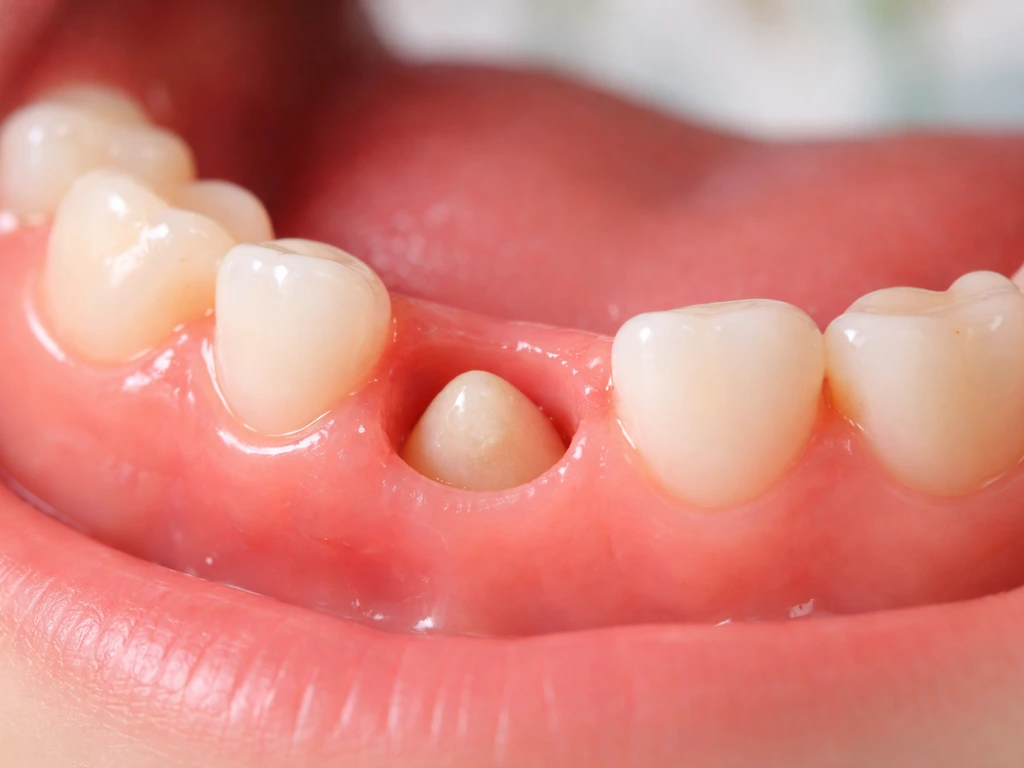
Do Milk Teeth Grow Back? Timelines, What to Do, Red Flags
Learn if milk teeth regrow, typical timelines for permanent teeth, what to do after loss or injury, and red flags.
Can Milk Teeth Grow Twice? Replacement vs True Regrowth
Can milk teeth grow twice? Learn why baby teeth usually only get replaced, not regrown, and what to do if one falls out