
No, teeth cannot grow back after age 18. Once your permanent teeth are fully in, that's it biologically. There is no third set waiting in the wings, no dormant tooth buds that will activate if you lose a molar, and no natural process that rebuilds a tooth you've lost to decay or trauma. That's the direct answer. But there's a lot more nuance worth understanding here, because some things can still happen after 18 (wisdom teeth, minor enamel surface repair), and the treatment options for damaged or missing teeth are genuinely impressive today. Let's break it all down.
Can Teeth Grow Back After 18? What’s Possible and Next Steps

Marcus Holloway
9 Apr 2026
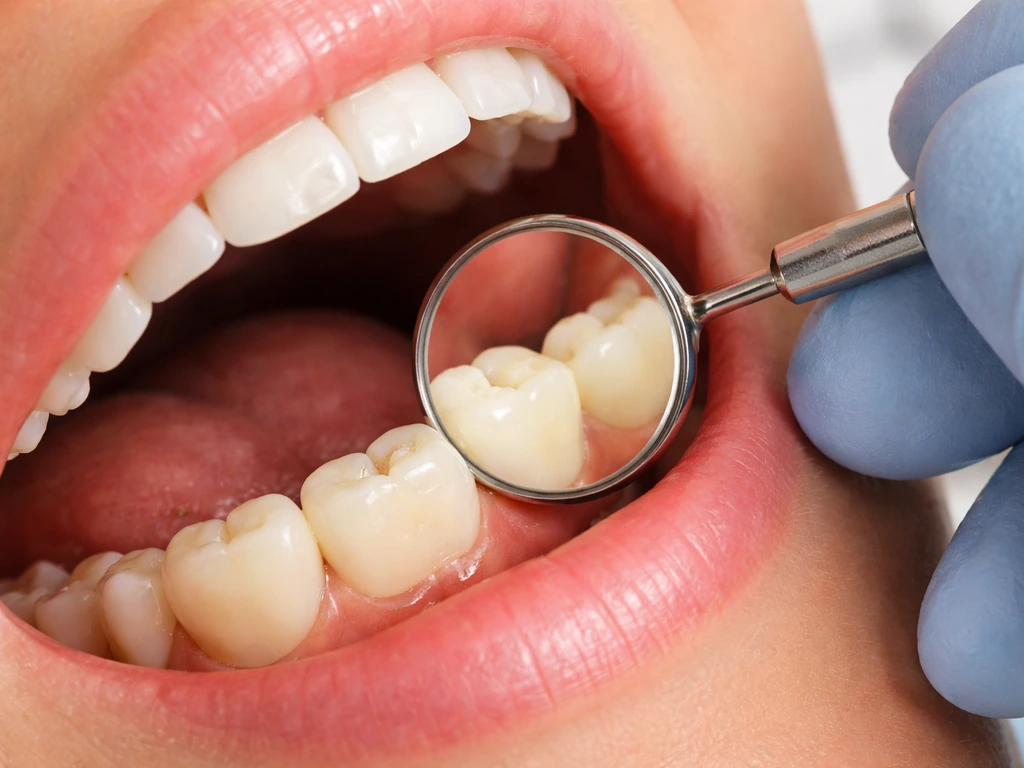
What "teeth growing back" actually means after 18
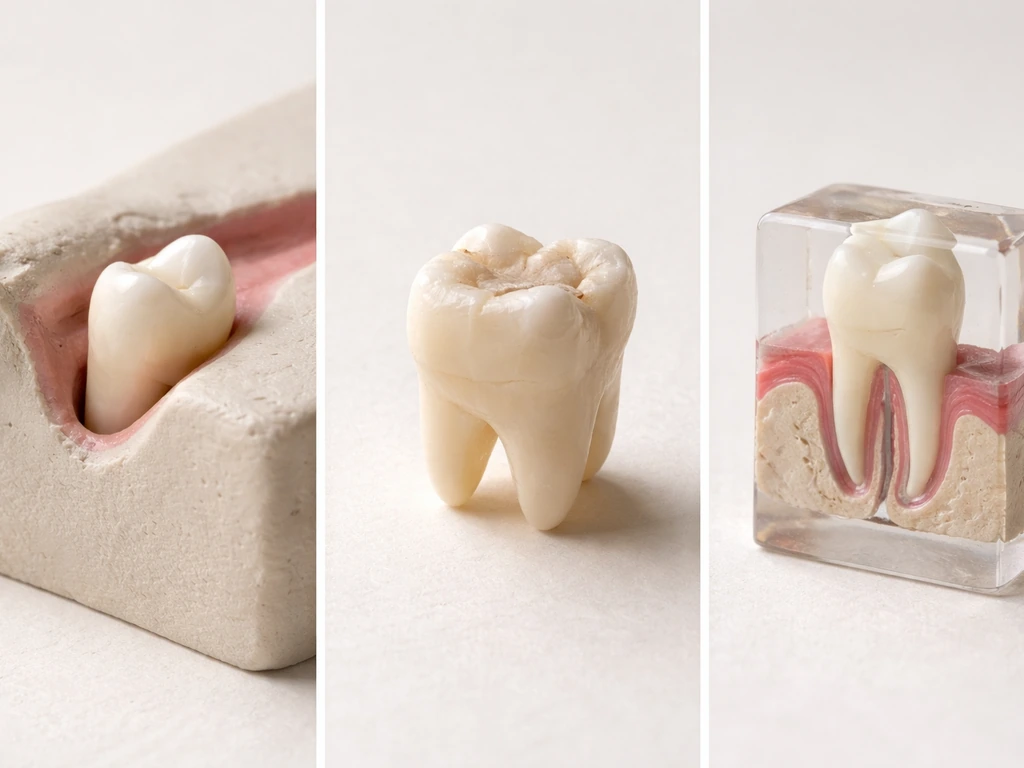
When people search for this, they usually mean one of three different things: Will a tooth I lost physically regrow from the socket? Can enamel I've worn down or chipped repair itself? Or is there any tooth that might still be coming in at my age? These are completely different questions with completely different answers, so it's worth separating them.
True regrowth, meaning a new tooth forming from scratch to replace a lost one, does not happen in adult humans. That only happens once in your lifetime, when your permanent teeth replaced your baby teeth. After that transition is complete (and it's largely done well before age 18), the tooth-forming cells responsible for building new teeth are gone. There is no biological restart button.
What people sometimes confuse with "growing back" includes things like a wisdom tooth finally breaking through the gum, a swollen gum receding to reveal more tooth structure, or a filling blending in so well it feels like a natural tooth returned. None of those are regrowth. They're either normal late development or dental treatment doing its job.
Can enamel or gums regenerate? The honest answer
Enamel is the hardest substance your body makes, but here's the painful irony: it cannot regenerate itself. The reason is straightforward. Enamel is built by specialized cells called ameloblasts, and those cells are completely lost after a tooth erupts. Once your tooth is in your mouth, there is no cell layer left behind capable of producing more enamel. A published scientific review puts it bluntly: mature enamel cannot regenerate, which is what makes it fundamentally different from bone or dentin. Bone has cells that continuously remodel it. Enamel does not.
There is one partial exception worth knowing about: remineralization. Your saliva naturally contains calcium and phosphate ions that can deposit back into the outermost layer of enamel after mild acid exposure, essentially patching microscopic surface damage. Fluoride accelerates this process. But this is mineral repair at a microscopic level, not regrowth of bulk tooth structure. If you've lost a visible chunk of enamel, no amount of remineralizing toothpaste will rebuild it. Research groups are exploring materials that could allow for more meaningful enamel remineralization, but those are still largely experimental and nowhere near rebuilding a tooth from the ground up.
Gum tissue is a different story and slightly more optimistic. Gums can regenerate to some degree, but it's not straightforward or guaranteed. Surgical approaches like guided tissue regeneration aim to restore periodontal attachment (the connection between gum, bone, and tooth root) after disease has damaged it. The European Federation of Periodontology frames these procedures as attempts to achieve more predictable regeneration of periodontal attachment rather than just cutting away diseased tissue. That said, even with surgery, the amount of regeneration achieved can be limited and unpredictable, according to research on periodontal outcomes. If you've lost significant gum tissue, a periodontist can help, but expectations need to be realistic.
Tooth development timelines: what should be done by 18
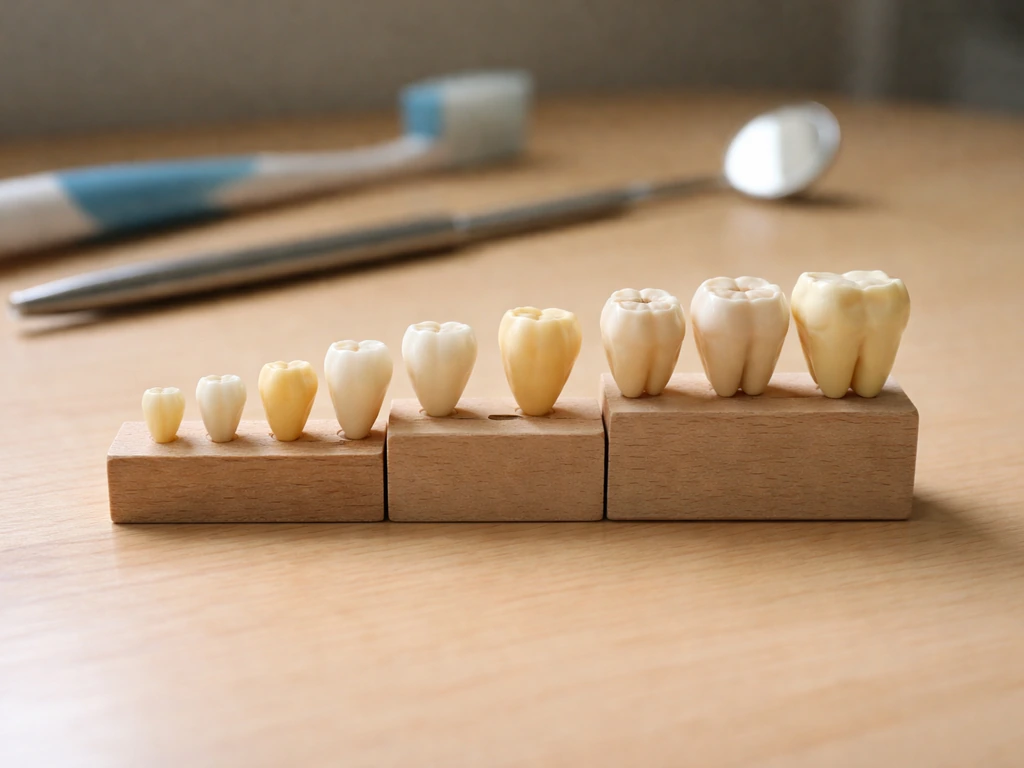
Understanding where age 18 falls in tooth development helps clarify why this question comes up so often. Your permanent teeth start arriving around age 6, with the first molars and central incisors typically leading the way. By around age 12, most of your permanent teeth (excluding wisdom teeth) have erupted. Tooth development around age 18 is essentially a finished process for almost everything in your mouth except, potentially, the third molars.
So by 18, you should have 28 permanent teeth in place (assuming no extractions or congenital absences), with your wisdom teeth in various stages of development depending on your individual biology. If you're wondering whether teeth can still develop or change after 18, the answer is: not in terms of new tooth formation, but wisdom teeth may still be moving.
One thing that does continue subtly throughout life is minor positional drift. Teeth shift over time, especially without a retainer after orthodontic treatment. This isn't growth, but it can look like teeth are moving, which sometimes causes confusion. If you're curious about how teeth change as you age beyond the development years, the short version is: they wear, they shift, and they can be lost, but they don't grow new structure.
When something can still come in versus when it definitely won't
Wisdom teeth: the one real exception
Wisdom teeth (third molars) are the only teeth that may legitimately still be erupting after age 18. The MSD Manual lists their eruption window as roughly 17 to 25 years, and a systematic review on third molar prevalence confirms that eruption is generally completed somewhere between 17 and 20 years, with plenty of individual variation. Some people don't see their wisdom teeth fully emerge until their early to mid-twenties.
If you're wondering which teeth typically come in around age 18, wisdom teeth are essentially the only candidates. However, a large proportion of people have impacted wisdom teeth, meaning they don't have enough room to erupt properly and get stuck in the jaw. Around age 18 or 19, if a dentist diagnoses inadequate room for functional eruption, removal is often recommended to protect the health of the neighboring second molar. So a wisdom tooth "coming in" at 18 might mean a new tooth emerging, or it might mean a problem that needs to be managed.
When a tooth will not regrow after it's gone
Any tooth other than a wisdom tooth that gets knocked out, extracted, or lost to decay after age 18 will not grow back. Period. There are no tooth buds remaining for your incisors, canines, premolars, or first and second molars. Once those are gone, they're gone permanently, and the only way to replace them is with a dental prosthetic or implant. This is why protecting your existing teeth matters so much.
Why teeth don't regrow: the biology in plain language
Here's the simple biological reason: teeth form from a process called odontogenesis, which involves a very specific set of signals and specialized cells (dental follicle, dental papilla, enamel organ). This process plays out during development and is tightly programmed. Humans are diphyodonts, meaning we get exactly two sets of teeth: baby teeth and permanent teeth. Once the permanent set is in, the developmental program is complete and those cell populations are no longer available.
Compare that to some animals (sharks, for example) that continuously replace teeth throughout their lives. They're polyphyodonts, with an entirely different developmental setup. Human genetics simply doesn't include that capability. Researchers are investigating whether stem cells or molecular signaling could one day trigger tooth regrowth in humans, but as of now this remains in early experimental stages. It is not a treatment available in any dental office today.
There is one area of active clinical use called regenerative endodontics, but it's frequently misunderstood. This technique uses biologically based protocols to regenerate a functional pulp-dentin complex inside a tooth's root canal, and it can even allow continued root development. But here's the key: it only works in immature permanent teeth with open, undeveloped roots (typically in children and adolescents, not fully formed adult teeth). The American Association of Endodontists is clear that this procedure is designed to overcome limitations of conventional treatment in immature teeth with necrotic pulps, not to rebuild entire teeth or help adults whose roots are fully mature. Research comparing regenerative protocols in mature adult teeth versus immature teeth confirms significantly lower capacity for revascularization and tissue development in fully formed roots.
What to do if you're missing or have damaged teeth at 18+
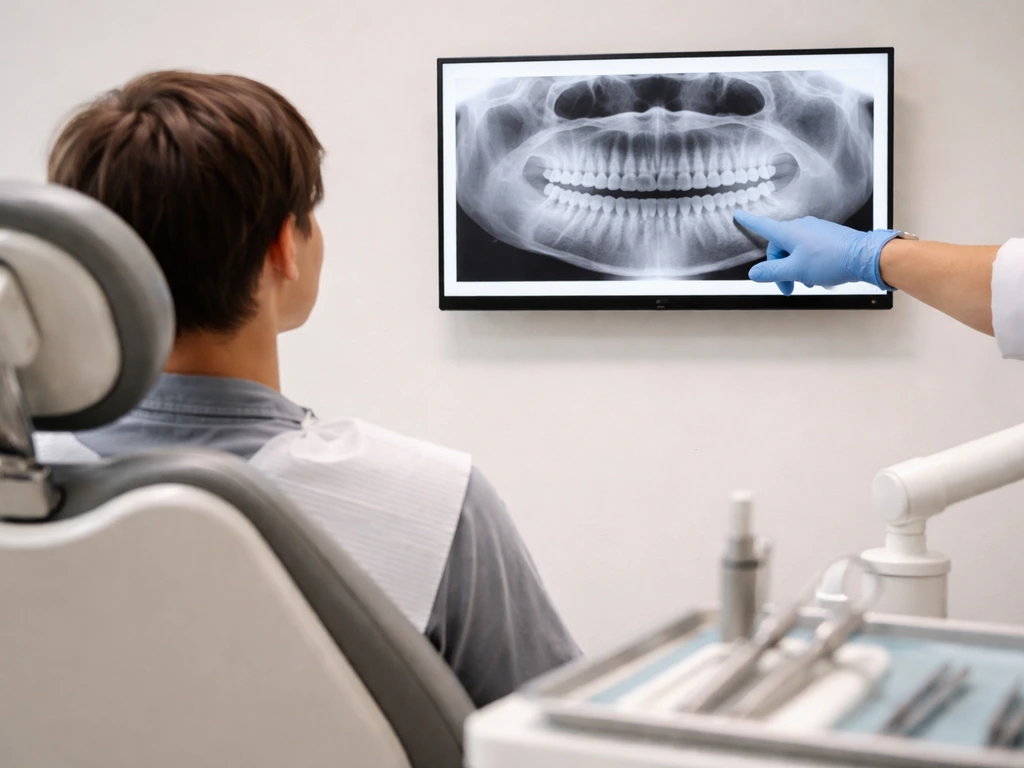
If you're 18 or older and dealing with a missing, broken, or severely decayed tooth, the right first step is getting a proper evaluation. This means seeing a dentist, not just reading about it. A general dentist can handle most assessments, but depending on the situation you may also be referred to a specialist: an endodontist if root health is the issue, a periodontist if gum or bone loss is involved, an oral surgeon for extractions or implant placement, or a prosthodontist for complex restorations.
Modern dental imaging is crucial here. Standard 2D X-rays catch a lot, but cone beam computed tomography (CBCT) provides a 3D view that can detect root fractures, periapical lesions, and bone pathology that flat X-rays miss. The AAE notes that limited-field-of-view CBCT provides greater diagnostic accuracy than 2D imaging for root canal anatomy and can identify features that conventional imaging misses. If you have a complex situation, don't be surprised if your dentist recommends this type of scan. It changes what's visible and what's treatable.
When you go in, be prepared to explain the history: when you noticed the problem, whether there was trauma, any pain or sensitivity, past dental work on that tooth, and whether you smoke or have conditions like diabetes that affect healing. The more context you give, the better the diagnosis.
Realistic treatment options to restore your teeth
The good news is that modern dentistry has excellent tools for replacing or restoring teeth that won't grow back on their own. Here's a practical breakdown of what's available and when each applies.
| Treatment | Best for | Preserves natural tooth? | Approximate longevity |
|---|---|---|---|
| Filling (composite or amalgam) | Small to moderate cavities with intact tooth structure | Yes | 5–15 years depending on material and location |
| Crown | Severely decayed, cracked, or root-canal-treated teeth | Yes (covers remaining tooth) | 10–20+ years with proper care |
| Root canal + crown | Infected or necrotic tooth with salvageable root | Yes (saves the root) | Decades with good oral hygiene |
| Dental implant | Single missing tooth with adequate bone | No (replaces the tooth) | 20+ years, often lifelong |
| Dental bridge | One or more missing teeth with healthy adjacent teeth | No (relies on neighboring teeth) | 10–15 years |
| Partial or full denture | Multiple missing teeth or full arch replacement | No | 5–10 years before reline or replacement |
| Orthodontic space management | Missing tooth where neighboring teeth have drifted | Not applicable | Depends on follow-up restoration |
Fillings and crowns are the first line of response when a tooth is still present but damaged. If a tooth has a deep infection but the root is intact and salvageable, a root canal followed by a crown is often the best way to keep it functional for decades. Losing a tooth doesn't automatically mean an implant, but implants have become the gold standard for single-tooth replacement because they integrate into the jawbone, preserve bone density, and don't require grinding down neighboring teeth the way a bridge does.
If you're missing a tooth and not yet sure which path to take, don't wait too long. The bone underneath a missing tooth starts to resorb (shrink) within months of extraction, and less bone means fewer options and higher cost later. Getting an evaluation soon after a tooth is lost gives you the most flexibility.
One underappreciated option for young adults is orthodontic space management. If a tooth is lost or congenitally absent, braces or clear aligners can sometimes redistribute spacing so that a well-positioned implant or bridge becomes more feasible. This requires coordination between an orthodontist and a restorative dentist, but it can make a significant difference in the final outcome, especially if you're 18 to 25 and your bone is still dense and responsive.
Bottom line: teeth don't grow back after 18, but that doesn't mean you're stuck. The options available today, from highly durable implants to minimally invasive bonding and crown techniques, mean that most situations are very treatable. The key is getting evaluated promptly, being honest with your dentist about what happened, and not letting anxiety about cost or appointments delay care. Waiting almost always makes things more complicated and more expensive. If a tooth is gone or in trouble, now is the right time to figure out the plan.
FAQ
I’m over 18 and my tooth fell out, will it come back by itself if I wait?
If you lost a permanent tooth after 18, it will not regrow naturally because the cells and tooth-bud structures that form teeth do not remain active after eruption. In practice, “replacement timing” matters more than age, many dentists prefer evaluating as soon as the tooth is extracted or lost (often within weeks) to prevent bone loss from limiting implant options.
Can I rebuild worn or chipped enamel after 18 with toothpaste or remineralization?
Enamel cannot truly regenerate, but you can sometimes improve the surface appearance when damage is very superficial. For chips or dullness, dentists may offer resin bonding, veneers, or crowns rather than relying on remineralizing products, especially if the chip exposes dentin or there is sensitivity when you drink cold water.
My tooth feels like it is moving after 18, does that mean it is growing back?
If your tooth is still present but feels “loose” or is migrating, that is usually periodontal support loss or orthodontic drift, not tooth regrowth. A key next step is asking for measurements like probing depths and gum attachment, because treatment (cleaning, gum therapy, splinting, or orthodontics) depends on whether the root support is still intact.
A tooth seems to be coming in later than expected, could any non-wisdom tooth erupt after 18?
No new teeth like incisors, canines, premolars, or molars are expected to erupt after 18, aside from wisdom teeth. If a different tooth appears “new” around this age, it is more often an impacted tooth trending into view, a gum/soft tissue change revealing more structure, or a misidentified tooth, so a dentist should confirm with an exam and usually X-rays.
If my wisdom tooth is erupting after 18, is that always a good sign?
Wisdom teeth can erupt after 18, but eruption does not equal “better.” If they are impacted or only partially erupted, they can increase risk of infection and gum problems around the second molar, even if you feel minimal pain. Ask your dentist to evaluate space, angulation, and whether there is a functional path for eruption before deciding on monitoring versus removal.
How soon after losing a tooth should I see a dentist if I want an implant later?
If you are missing a tooth, bone resorption begins quickly, and the main determinant of implant feasibility is the amount of bone and whether supporting tissues can be restored, not just your age. Often, options like bone grafting or guided bone regeneration can help, but delaying evaluation can reduce the chance of a simple fix.
Could regenerative endodontics help my adult tooth grow back after damage or infection?
Regenerative endodontics is mainly for immature, developing permanent teeth with open roots, not fully formed adult roots. For an adult with a mature tooth, the usual goal is infection control and sealing the canal, and any “regeneration” is far less predictable, so ask whether your root is open on imaging before expecting this approach.
When should I request CBCT instead of relying on standard X-rays?
For root fractures, deep cavities, and hidden bone disease, 3D imaging can change the diagnosis and treatment plan. If your symptoms do not match what a 2D X-ray shows, ask whether a limited-field-of-view CBCT would meaningfully clarify the root, periapical area, or anatomy that affects endodontic or surgical decisions.
What are the most common mistakes adults make after losing or breaking a tooth?
A major reason costs rise later is that conditions progress, for example untreated gum disease can worsen bone loss, and an infected tooth may become non-restorable. If you are considering bridges or implants, also ask about staged planning (temporary tooth solutions first, definitive replacement later) so you can treat pain or infection immediately and finalize the restoration when tissues are ready.
If my teeth shifted after braces, can that change be confused with teeth growing back?
If you had orthodontics and no retainer, mild shifting can happen for years, and it can make teeth look like they are “growing back” or changing direction. The practical step is to get a current bite assessment, because sometimes the solution is retainer re-initiation or minor aligner correction rather than any structural replacement.
Next Articles
How Many Times Can Teeth Grow After Childhood
Teeth grow in two natural sets: baby then permanent. Regrowth after loss is rare; wisdom teeth are the exception.
Can Teeth Grow Back 3 Times? What’s Real and Next Steps
Debunks can teeth grow back 3 times. Explains natural tooth replacement once, enamel remineralization, and real treatmen
How Many Times Do Your Teeth Grow Back? Facts
Teeth rarely regrow after permanent set: most people get one replacement only. Learn limits, myths, and what to do next.