At 18, the only teeth that should still be coming in are your third molars, better known as wisdom teeth. Every other permanent tooth, your incisors, canines, premolars, and second molars, should already be fully erupted by your mid-teens. Wisdom teeth are the wild cards: they erupt anywhere from age 17 to 25, which means turning 18 and feeling pressure or pain in the very back of your mouth is completely normal. What's also normal is that they sometimes don't fully come in at all, and that's where things get more complicated.
What Teeth Grow in at 18 Wisdom Teeth and Timing

Marcus Holloway
27 May 2026
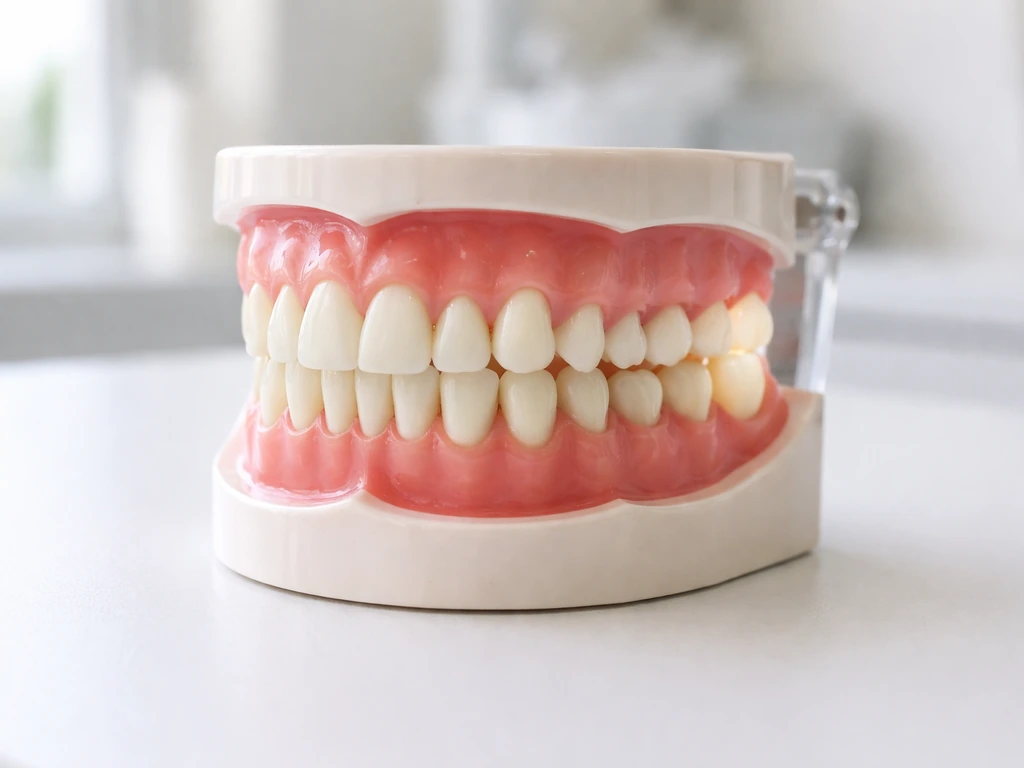
Adult tooth eruption at 18: what's left to grow
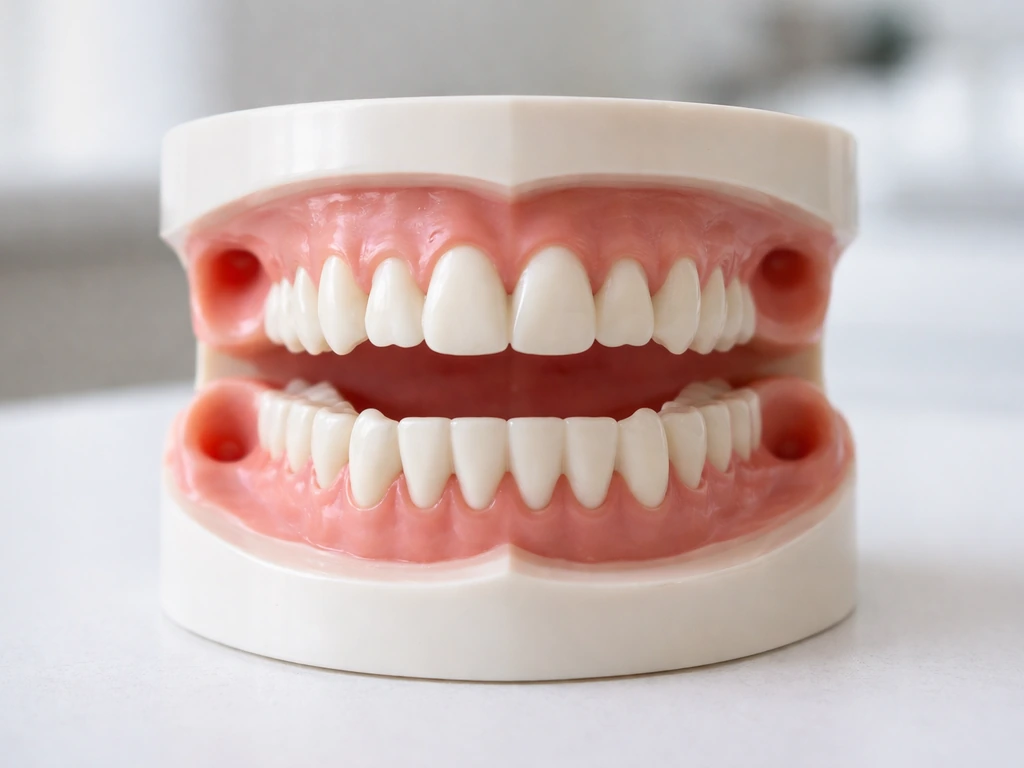
By the time most people hit 18, they have 28 permanent teeth already in place. The full adult set is 32, which means those last four slots belong to the wisdom teeth. If yours haven't come in yet, you're right on schedule, or at least within a completely reasonable window. If something other than a wisdom tooth feels like it's pushing through at 18, that warrants a closer look, because late eruption of other tooth types is unusual and usually signals something going on beneath the surface.
It's also worth being clear about what 'growing in' actually means here. When a tooth erupts, it's moving through the jaw and gum tissue from a position it's been developing in for years. This is not the same as a tooth regrowing. Nothing new is being created at 18. Your wisdom teeth have been forming in your jaw since around age 8 or 9, slowly calcifying and waiting for enough jaw development to attempt eruption. The sensation of 'new teeth' is simply the movement phase of a long process.
Wisdom teeth: most common reason teeth still come in at 18
Third molars are almost certainly what you're feeling if something seems to be 'growing in' around 18. According to the Merck Manual, wisdom teeth erupt between ages 17 and 25, and MedlinePlus narrows the most common window to 17 to 21 years. So at 18, you're right in the thick of it. Some people feel all four erupt within a year or two. Others have one or two come in and the rest stay impacted, and some people never experience eruption at all because their wisdom teeth are fully buried in the jaw.
Why do wisdom teeth cause so much trouble compared to every other tooth? Mostly because modern human jaws often don't have enough room for them. The first and second molars already took up the available space, so the third molars end up angled, partially blocked, or pressing sideways against the tooth in front. A 2024 retrospective study using panoramic X-rays found significant rates of third-molar impaction in the 18 to 25 age group specifically. Impaction doesn't mean something went wrong, it just means the tooth couldn't fully complete its path.
Types of teeth and typical eruption timelines
Here's a practical reference for when each type of permanent tooth normally comes in. Knowing these timelines helps you immediately recognize what would be 'normal late eruption' versus something a dentist should investigate.
| Tooth Type | Typical Eruption Age | Still Erupting at 18? |
|---|---|---|
| Central incisors (front teeth) | 6–8 years | No |
| Lateral incisors | 7–9 years | No |
| Canines (cuspids) | 9–12 years | No |
| First premolars (bicuspids) | 9–11 years | No |
| Second premolars | 10–12 years | No |
| First molars (6-year molars) | 5–7 years | No |
| Second molars (12-year molars) | 11–13 years | No |
| Third molars (wisdom teeth) | 17–25 years | Yes, commonly |
As you can see, every tooth except the third molars should be fully erupted well before 18. If you're wondering whether teeth grow at the age of 18, this is mainly about whether your third molars, or wisdom teeth, are still erupting. If you're 18 and a premolar or second molar feels like it's 'just now' coming in, something unusual is happening, and it's not a variation of normal timing. That kind of delayed eruption needs X-rays and a dentist's assessment.
What else could feel like a new tooth at 18 (besides wisdom teeth)
Most of the time, what you're feeling at 18 is absolutely a wisdom tooth. But there are a few other possibilities worth knowing about, especially if your dentist has already told you your wisdom teeth are impacted or missing.
Late eruption of other permanent teeth
Occasionally, a tooth that should have erupted years earlier hasn't fully done so. This can happen due to crowding (a neighboring tooth physically blocking the path), early loss of a baby tooth that caused surrounding teeth to shift and close off the space, or simply an unusually slow developmental trajectory. Canines are the most commonly delayed non-wisdom tooth, particularly the upper canines, which can sometimes be found in the palate in young adults who thought their tooth was simply missing.
Supernumerary teeth (extra teeth you didn't know were there)
A small percentage of people, roughly 1.5 to 3.5% of the population according to research on permanent dentition, develop extra teeth called supernumerary teeth, a condition known as hyperdontia. These extra teeth can sit dormant in the jaw for years and then begin to shift or partially erupt in the teen or young adult years. They can also block normal teeth from erupting properly, which is one reason late eruption of an expected tooth sometimes traces back to a supernumerary tooth sitting in the way. If something feels like it's coming in at 18 and it's not in the third-molar position, this is one possibility your dentist will check for.
Dental development quirks and jaw size factors
Genetics plays a real role in eruption timing. If your parents had late-erupting wisdom teeth, there's a good chance you will too. Jaw size matters as well: a smaller jaw gives erupting teeth less room to navigate, which can delay or fully prevent eruption. These aren't things you can control, but they're worth knowing because they explain why your experience might be different from a sibling or a friend.
Can teeth actually grow back or 'fill in' after 18?
This is one of the most common misconceptions in dental health, so let's be direct: no, teeth do not regrow after loss in humans. What happens at 18 with wisdom teeth is eruption of a tooth that already formed years ago, not the creation of new tooth structure. Once a permanent tooth is lost, nothing replaces it naturally. This is true at any age, but it's especially worth understanding at 18 when questions like 'can teeth grow back after 18' or 'do teeth grow after 18' come up frequently.
Here's how it breaks down by tooth structure:
- Enamel: The hardest substance in your body, but it cannot regenerate. Enamel-forming cells (ameloblasts) are gone once a tooth fully erupts. Fluoride and remineralization can slow or partially reverse early decay by strengthening existing enamel, but that's repair at a mineral level, not regrowth.
- Dentin: The layer beneath enamel. Your body can produce a limited amount of secondary dentin over time, particularly as a response to irritation or slow-progressing decay. But this is a defensive, capping response, not true regeneration of lost tooth structure.
- Pulp: Researchers are actively studying regenerative endodontics, which aims to revitalize pulp tissue in teeth that have suffered pulp death, especially in younger patients with immature teeth. The outcomes are real but limited, variable, and definitely not 'growing back' a tooth.
- Cementum: The tissue covering the root can repair itself to a slight degree but cannot fully regenerate after significant loss.
- Whole tooth: There is no biological mechanism in adult humans to regenerate a complete tooth after loss. Dental implants, bridges, and dentures are the current replacements because nature doesn't offer one.
So if you're wondering whether a tooth erupting at 18 means a 'new' tooth is being made, the answer is no. That wisdom tooth has been developing since you were in elementary school. And if an existing tooth is chipped, cracked, or lost, your body cannot make a new one. That's a biological reality, not a gap in dental science that will soon be filled, although researchers are working on it.
When to see a dentist now
Not every wisdom tooth eruption needs emergency attention, but some situations absolutely do. Here's how to read the signals.
Normal eruption discomfort (watch and wait is fine)
Mild pressure or aching in the very back of your upper or lower jaw, especially if it comes and goes, is often just the tooth pushing through gum tissue. You might see a small flap of gum tissue covering the emerging tooth. This is uncomfortable but not dangerous on its own.
Signs that need prompt dental attention
- Pain that is persistent, worsening, or spreading toward your ear or jaw
- Visible swelling of the gum tissue around the back teeth
- A bad taste in your mouth or bad breath that doesn't go away with brushing
- Difficulty fully opening your mouth (trismus)
- Pus or any kind of discharge near the back of your mouth
- Swollen lymph nodes under your jaw or in your neck
These signs point to pericoronitis, which is inflammation and often infection of the gum tissue around a partially erupted wisdom tooth. Pericoronitis is extremely common in the 17 to 25 age group and can range from mild to severe. Left untreated, infection can spread. This is not something to wait out at home with ibuprofen for more than a day or two.
Go to urgent care or the ER if you have:
- Fever alongside jaw or mouth swelling
- Difficulty swallowing or breathing
- Rapidly spreading facial swelling
- Feeling generally unwell or severely ill
These are signs of a spreading dental infection that can become life-threatening. Don't wait for a routine dental appointment if you have fever plus facial swelling.
How dentists check and plan at 18
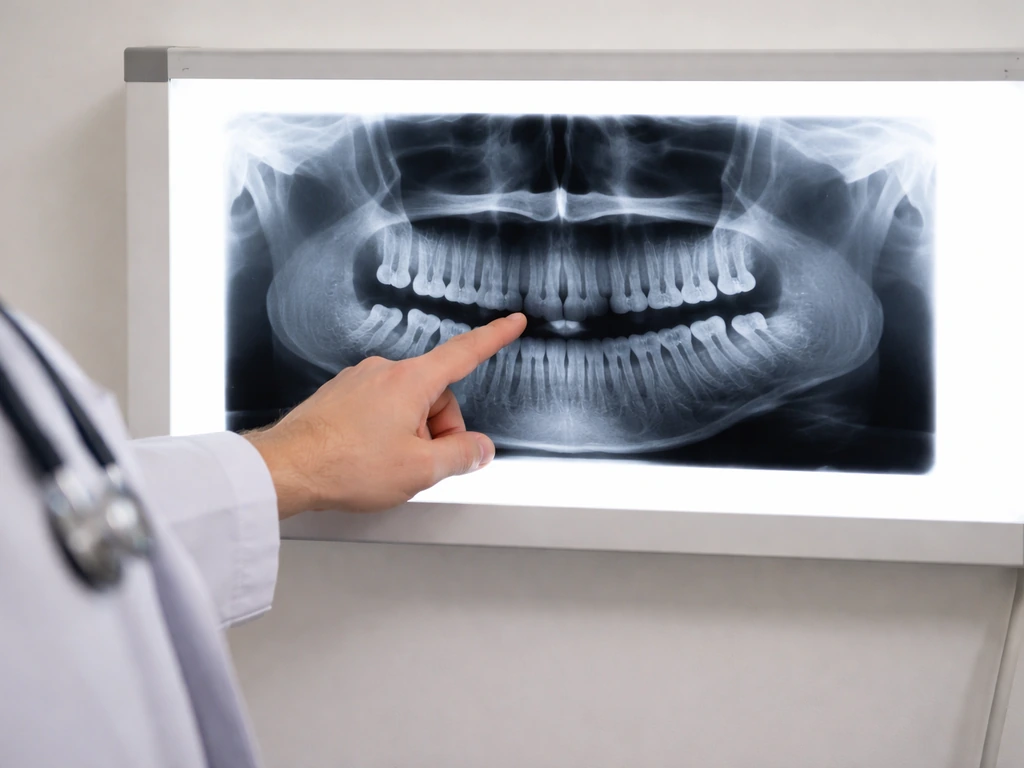
When you come in around this age with concerns about teeth coming in, your dentist's first tool is almost always a panoramic X-ray (also called an OPG or panoramic radiograph). This single image shows all of your teeth, roots, jaw, and the positions of any unerupted teeth at once. From this, your dentist can immediately see:
- Whether wisdom teeth are present and how many (some people naturally have fewer than four)
- The angle and position of each wisdom tooth (vertical, horizontal, or angled toward or away from the adjacent molar)
- How deeply impacted they are, or how close they are to the surface
- Whether there is enough space for eruption or whether impaction is certain
- Whether any cysts (particularly dentigerous cysts) have formed around the crown of an unerupted tooth
- Whether any unexpected teeth, including supernumerary teeth, are present
In more complex cases, especially when wisdom teeth are sitting close to major nerves or sinuses, your dentist or an oral surgeon may recommend a CBCT scan. This gives a detailed 3D image of the jaw and can show exactly how close an impacted tooth is to the inferior alveolar nerve, which matters a lot for extraction planning. The American Association of Oral and Maxillofacial Surgeons (AAOMS) supports CBCT as a selective tool for these higher-stakes assessments.
After the imaging, the decision usually goes one of three ways: monitor the teeth over time if they're still potentially able to erupt without causing problems, proceed with extraction if they're impacted in a way that makes eruption unlikely or that creates ongoing infection/crowding risk, or take a 'watch and wait' approach if the teeth are partially erupted but not causing issues yet. There's no universal right answer. Some wisdom teeth that look scary on an X-ray erupt fine. Others that look manageable become chronic problems. Your dentist's job is to weigh the specific geometry of your jaw, your symptoms, and your overall oral health.
If you're 18 and haven't had a panoramic X-ray that includes your wisdom teeth yet, this is genuinely a good time to get one regardless of whether you have symptoms. Knowing what's happening before problems start gives you more options and less urgency.
FAQ
If I feel a tooth “coming in” at 18, does that always mean wisdom teeth?
Usually, no. The only permanent teeth commonly still erupting around 18 are the third molars (wisdom teeth). If you feel pressure that seems to be coming from the front teeth or from a premolar or second molar area, that is more likely delayed eruption from crowding, a shifted tooth path, or something blocking the normal route, and it should be checked with a dental exam and often an X-ray.
How do I tell normal wisdom-tooth pressure from pericoronitis at 18?
Pain can be from eruption, but it is not a perfect timing signal. Some people have little discomfort while a wisdom tooth is erupting, while others get major symptoms when it is only partially out. Because pericoronitis and impaction can look similar early on, your dentist may base urgency on exam signs (gum flap, swelling, pus, smell, bite changes), not just age or symptom pattern.
Can I have symptoms from a wisdom tooth that never fully comes in?
If a wisdom tooth is impacted, “no eruption” can still come with symptoms because the gum tissue over it can keep inflaming. That means you can have pain, bad taste, or recurrent gum irritation even if the tooth never fully breaks through. The key is whether you have repeated flare-ups, worsening swelling, or signs of infection, which makes monitoring alone less appropriate.
My pain is on one side, but my dentist says the impacted tooth may be elsewhere, why?
Sometimes. It is possible to feel one-sided swelling, pain when biting, or discomfort on one side even if the tooth is positioned on the other side of the jaw. Also, referred pain can make the area in front of the mouth feel involved. A panoramic X-ray helps localize the actual tooth, and in tricky cases a CBCT can confirm proximity to nerves.
When is “watch and wait” for wisdom teeth no longer enough?
Waiting is reasonable when symptoms are mild and temporary and imaging suggests the tooth is not causing ongoing gum problems or crowding. But if you keep getting the same episode, have persistent inflammation, or develop worsening pain with limited jaw opening, you should not keep delaying. Repeated pericoronitis often turns into a cycle, so many dentists recommend a plan based on your history, not a one-time symptom.
Do I always need a CBCT, or is a panoramic X-ray usually enough?
Yes. A panoramic X-ray (OPG) usually shows whether wisdom teeth are present and their general angulation and impaction. It still has limitations in detail, so CBCT is typically considered when an impacted tooth is close to major structures or when extraction planning needs 3D accuracy, such as nerve proximity concerns.
If my premolar or molar feels late at 18, what could cause that?
Not necessarily. If your third molars are delayed or positioned in a way that does not erupt fully, you can still have normal adjacent tooth eruption. However, if a tooth other than a wisdom tooth seems late, common causes include crowding, space changes after early baby-tooth loss, or a supernumerary (extra) tooth. Your dentist can use X-rays to rule out “hidden” blockers.
Why can wisdom teeth start erupting and then stop?
Sometimes the tooth is present, but it is not in the correct position to erupt fully. Jaw size and tooth angulation can affect the path, and genetics influences both. You can have a tooth that looks like it is “coming in” for a while then stops, or one that stays under the gum with repeated irritation.
Is it still normal if my wisdom teeth are not fully out by 18?
You might still be on schedule even if eruption is not complete, because the typical window extends beyond 18. Many people experience some level of eruption between 17 and 21, but the full range reaches into the mid-twenties. The decision depends on symptoms and imaging, not only whether the tooth is fully out by your birthday.
Could an extra tooth cause my “late eruption” at 18?
Yes, and the timing matters. Extra teeth (supernumerary teeth) can sit in the jaw and block the eruption path of expected teeth, especially if imaging shows an unusual tooth shape or an “extra” spot. This is one reason dentists investigate any delayed eruption that is not in the third-molar position.
Does feeling a tooth erupt at 18 mean my body is regrowing missing teeth?
No. Teeth do not regrow after loss, and a tooth “growing in” is eruption of a tooth that already formed in the jaw. At 18, any new-seeming tooth sensation usually reflects eruption progress, not new tooth creation. If a permanent tooth was extracted, chipped, or lost, it requires a dental replacement plan rather than waiting for it to appear.
What symptoms mean I should seek urgent care, not just schedule a visit?
Yes. Fever plus facial swelling, rapidly worsening pain, trouble swallowing, or difficulty opening your mouth are signs you should seek urgent dental or medical care. These can indicate a spreading infection and are not situations to manage with pain relief alone while waiting for a routine appointment.
Next Articles
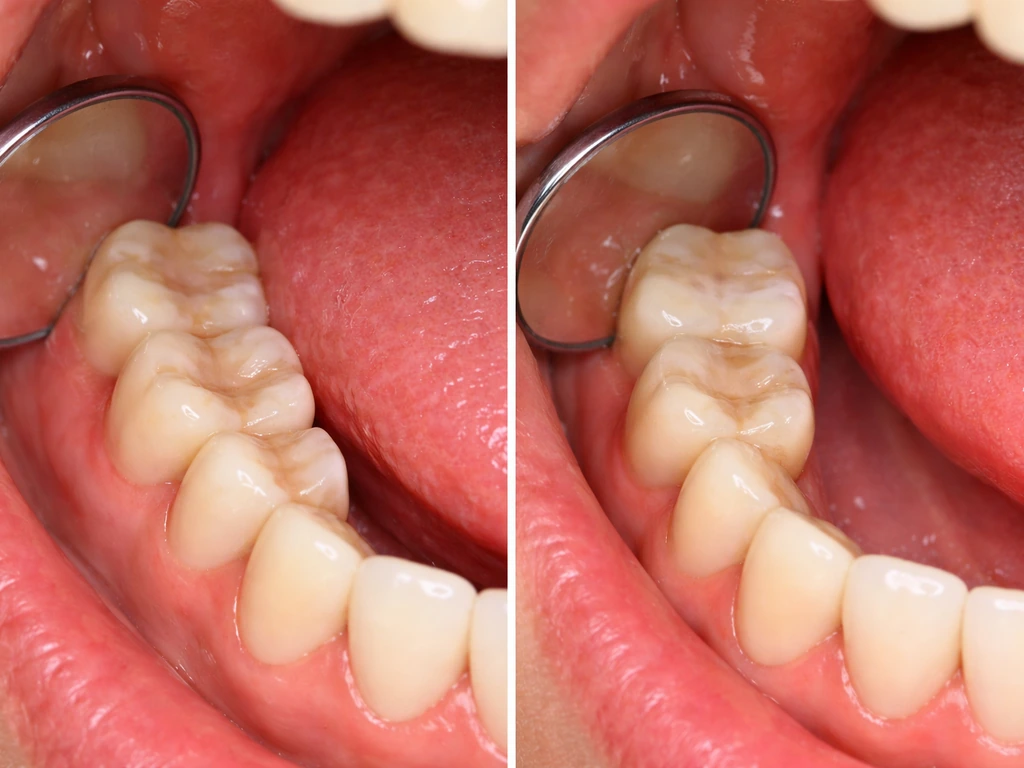
Does Teeth Grow at Age 18? Eruption, Wisdom Teeth, and Regrowth
See if teeth erupt at 18, why wisdom teeth may appear, and why teeth usually do not regrow after loss.

Do Your Teeth Grow as You Get Older? True Causes
Teeth do not grow bigger with age. Learn why they look longer, what can regenerate in adults, and when to see a dentist.
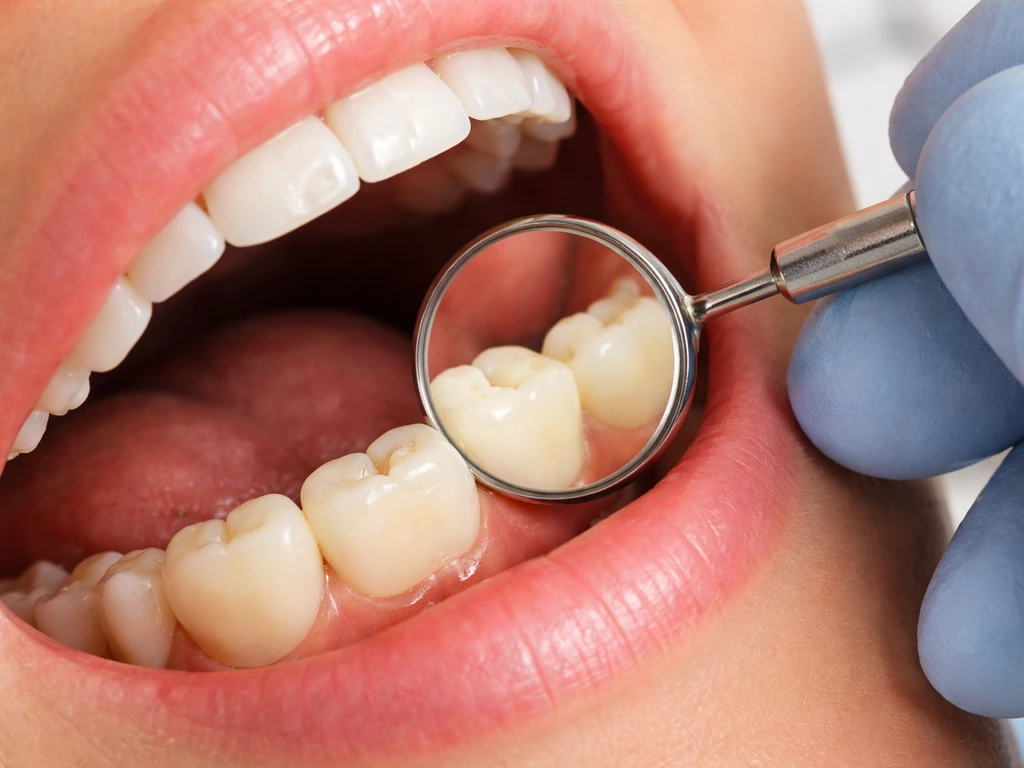
Can Teeth Grow Back After 18? What’s Possible and Next Steps
Can teeth grow back after 18? Learn what regrows vs what needs restorations, and next steps for evaluation.