After age 18, teeth don't grow back, but they can still erupt, move, and change in ways that feel very much like growing. Wisdom teeth routinely push through anywhere between 17 and 30 years old. Permanent teeth that are already in place can shift, tip, or continue their slow drift into position. What teeth absolutely cannot do after 18, or at any age, is regenerate from scratch. Lost enamel stays lost. A pulled tooth doesn't grow back. Understanding exactly which kind of 'growing' is happening matters a lot, because it changes what you should do about it.
Do Teeth Grow After 18? Late Eruption vs Regrowth

Marcus Holloway
2 Jun 2026
What 'teeth grow' actually means after 18
There are two completely different things people mean when they ask whether teeth grow after 18, and they have completely different answers. The first is eruption: a tooth physically moving through the gum and into its position in the mouth. The second is regrowth: tissue like enamel, dentin, or an entire tooth regenerating after it's been damaged or lost. These are not the same thing at all, and conflating them leads to a lot of confusion and some dangerous assumptions.
Eruption absolutely can and does happen after 18. Your wisdom teeth are the clearest example, but even already-erupted teeth undergo slow, ongoing movement throughout life driven by the periodontal ligament (the connective tissue anchoring teeth to bone). Regrowth, on the other hand, is not something human teeth do. Enamel, the outer hard shell of a tooth, is produced by cells called ameloblasts that die off once a tooth finishes forming. Once they're gone, your body has no mechanism to rebuild bulk enamel. The same applies to a whole tooth: once it's gone, it's gone unless a dentist puts something back.
The real timeline: when teeth finish erupting
Most of your permanent teeth show up well before 18. The first permanent molars arrive around age 6. By your early teens, most of the rest, incisors, canines, premolars, second molars, have already erupted. By 17 or 18, the average person has a full set of 28 permanent teeth in place, plus potentially the beginning of wisdom tooth eruption. Even though enamel and whole teeth don't regrow, some people notice new movement like wisdom teeth erupting later or shifts in existing teeth do your teeth grow as you get older. So in that sense, the major eruption milestones are mostly done by the time you graduate high school.
But 'mostly done' isn't fully done. Wisdom teeth (third molars) are the clear exception. And even the teeth that have already erupted don't just freeze in place. Gums continue to mature and settle around teeth into your early 20s. Small positional shifts happen throughout adulthood as part of continuous eruption, a slow, lifelong process driven by the periodontal ligament. It's not dramatic, but it's real and measurable over years.
Wisdom teeth after 18: how late is normal, and when do they become a problem
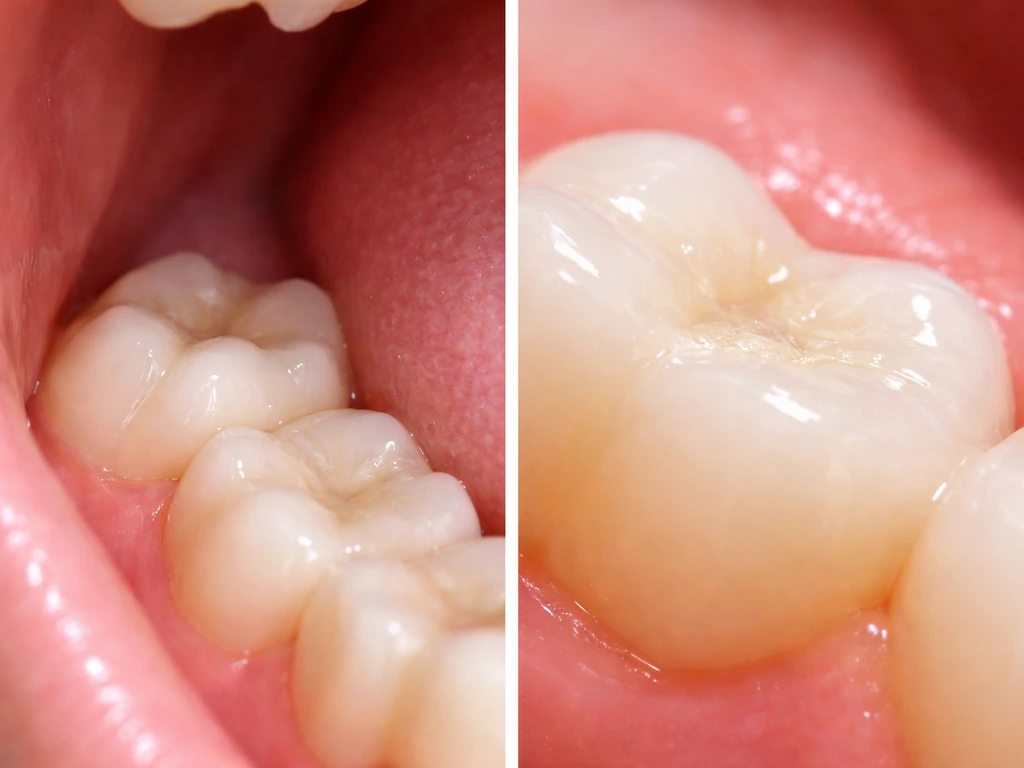
Wisdom teeth are genuinely the wild card here. The American Association of Oral and Maxillofacial Surgeons (AAOMS) puts their eruption window at 17 to 25 years old, but the American Academy of Pediatric Dentistry lists the range as 17 to 30 for both upper and lower third molars. That means if you're 24 and your wisdom tooth is just starting to poke through, that's textbook normal. If you're 28 and still waiting, that's within the range too.
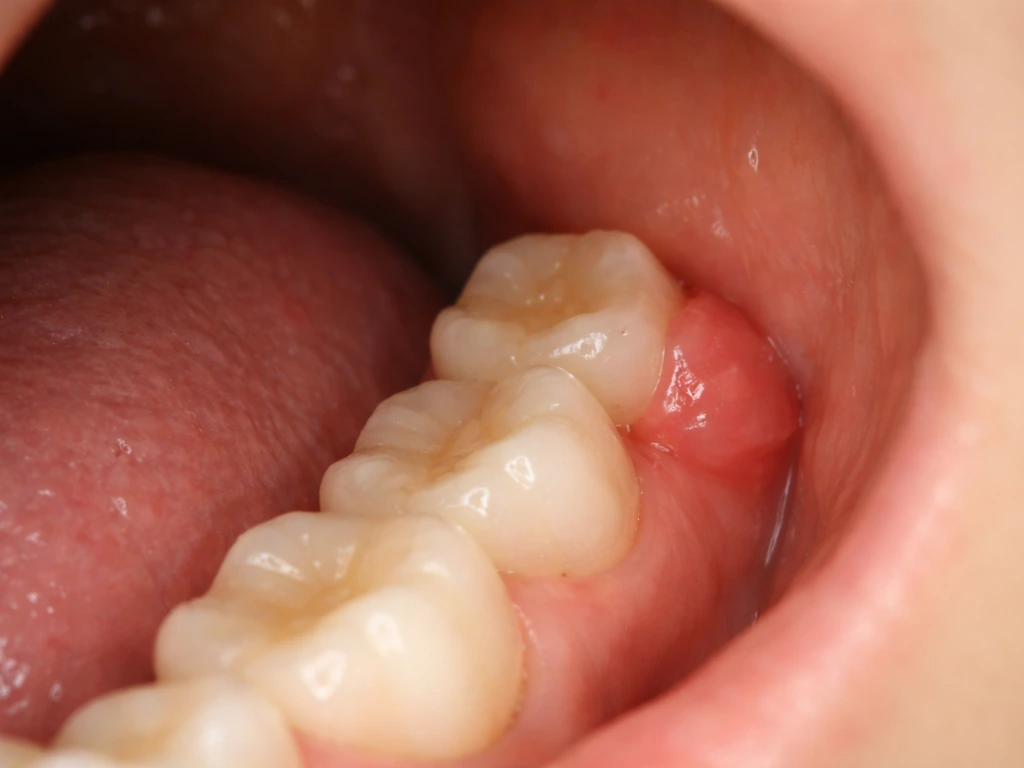
The trouble is that late-erupting wisdom teeth often don't have enough room. They can emerge at odd angles, press into neighboring teeth, or only partially break through the gum. A tooth stuck halfway out creates a flap of gum tissue that traps bacteria underneath, and that leads to pericoronitis, a painful, localized soft-tissue infection that can cause swelling, pain, bad taste, and sometimes fever. Pericoronitis is one of the most common reasons people end up seeing an oral surgeon in their 20s. If it keeps coming back, extraction is typically recommended.
Impaction, where the tooth never erupts at all because it's blocked by bone or another tooth, is also very common with wisdom teeth. An impacted wisdom tooth may cause no symptoms for years, or it can silently damage the adjacent second molar. Regular X-rays after 18 let your dentist monitor what's happening below the gumline before a problem develops.
Can enamel or dentin actually regrow? The honest answer
No, not in any meaningful clinical sense. Enamel is the hardest substance in the human body, and once it's gone, it doesn't come back. The cells that build enamel (ameloblasts) are only active during tooth development. By the time a tooth erupts, those cells have already died off. There is no biological pathway left for your body to rebuild enamel from scratch. What is possible, and this matters, is remineralization: minerals from saliva and fluoride can be absorbed into the surface of partially demineralized enamel, effectively patching microscopic damage before a cavity forms. That's real and useful, but it's surface-level repair, not regrowth.
Enamel does continue to mature after a tooth erupts, meaning it gets harder and more resistant to acid over time through post-eruptive mineralization. So a newly erupted tooth is actually somewhat more vulnerable to cavities than a tooth that's been in place for a few years. But again, this is maturation of existing tissue, not generation of new tissue.
Dentin, the layer beneath enamel, tells a slightly more interesting story. Secondary dentin forms naturally throughout your life and gradually narrows the inner pulp chamber, which is one reason older teeth have smaller nerve spaces. This age-related formation of secondary dentin is discussed in the dental research literature on the pulp-dentin complex secondary dentin forms naturally throughout your life and gradually narrows the inner pulp chamber. Dentists can also see reparative dentin form in response to damage or drilling, where the pulp lays down a thin bridge of dentin-like tissue to protect itself. Research into pulp-dentin regeneration is ongoing and shows promise for immature teeth, but we're not at a point where you can regrow a cracked or lost tooth in a clinical setting. The reality today is: enamel doesn't heal, dentin has limited self-repair only, and whole teeth don't regenerate.
Why your teeth might feel like they're 'still growing' after 18
If you're over 18 and feel like something is shifting or coming in, there are a few likely explanations. The most obvious is a wisdom tooth erupting right on schedule. But there are other reasons teeth feel like they're on the move.
- Continuous eruption: even fully erupted teeth drift slowly throughout life, controlled by the periodontal ligament. This is measurable over years but usually not something you feel day to day.
- Compensatory eruption: if you lose or extract a tooth, the opposing tooth can start to 'super-erupt' into the gap because there's no contact stopping it.
- Orthodontic treatment: braces or aligners physically move teeth through the bone by applying sustained pressure. Feeling movement and tenderness for a day or two after an adjustment is normal and expected.
- Gum recession: as gums pull back with age or due to brushing too hard, more of the tooth root is exposed. This can make teeth look longer even though they haven't actually erupted further.
- Wear and shifting: teeth grind against each other over years. Enamel wear can change how teeth contact each other, causing the bite to shift and teeth to feel like they've moved.
Most of these aren't something to panic about, but a few (compensatory eruption, bite shifting, gum recession) are worth tracking because they can lead to bigger problems if left alone.
When to actually get checked out
Some of what happens to teeth after 18 is completely normal, and some of it is a signal that something needs attention. Here's a practical breakdown of what warrants a dentist or oral surgeon visit.
| Symptom or situation | What it might mean | Who to see |
|---|---|---|
| Pain or swelling behind your last molar | Wisdom tooth erupting or pericoronitis | Dentist or oral surgeon |
| A permanent tooth that never came in | Impacted or congenitally missing tooth | Dentist (panoramic X-ray first) |
| Tooth visible in gum tissue or partially through | Delayed or ectopic eruption | Dentist or orthodontist |
| Bite feels off, teeth don't meet right | Shifting, eruption change, or wear | Dentist or orthodontist |
| Fever alongside jaw pain or swollen gums | Possible infection (pericoronitis or abscess) | Dentist promptly, same day if possible |
| A gap where a tooth used to be and it's getting wider | Drifting of adjacent teeth into the space | Dentist or orthodontist |
| Teeth look longer but aren't hurting | Gum recession | Dentist for evaluation |
The diagnostic starting point for most of these is a panoramic X-ray, which gives your dentist a full view of all teeth including those still under the bone. If positioning detail is needed (for example, to check whether an impacted tooth is pressing into a neighbor's root), a cone-beam CT can provide 3D information that a standard X-ray can't.
What to do instead of waiting for teeth to 'regrow'
Since human teeth don't regrow, the practical question becomes: what are the actual options when something is missing, damaged, or out of place? The good news is that modern dentistry offers effective solutions for almost every scenario.
For teeth that are missing or never came in
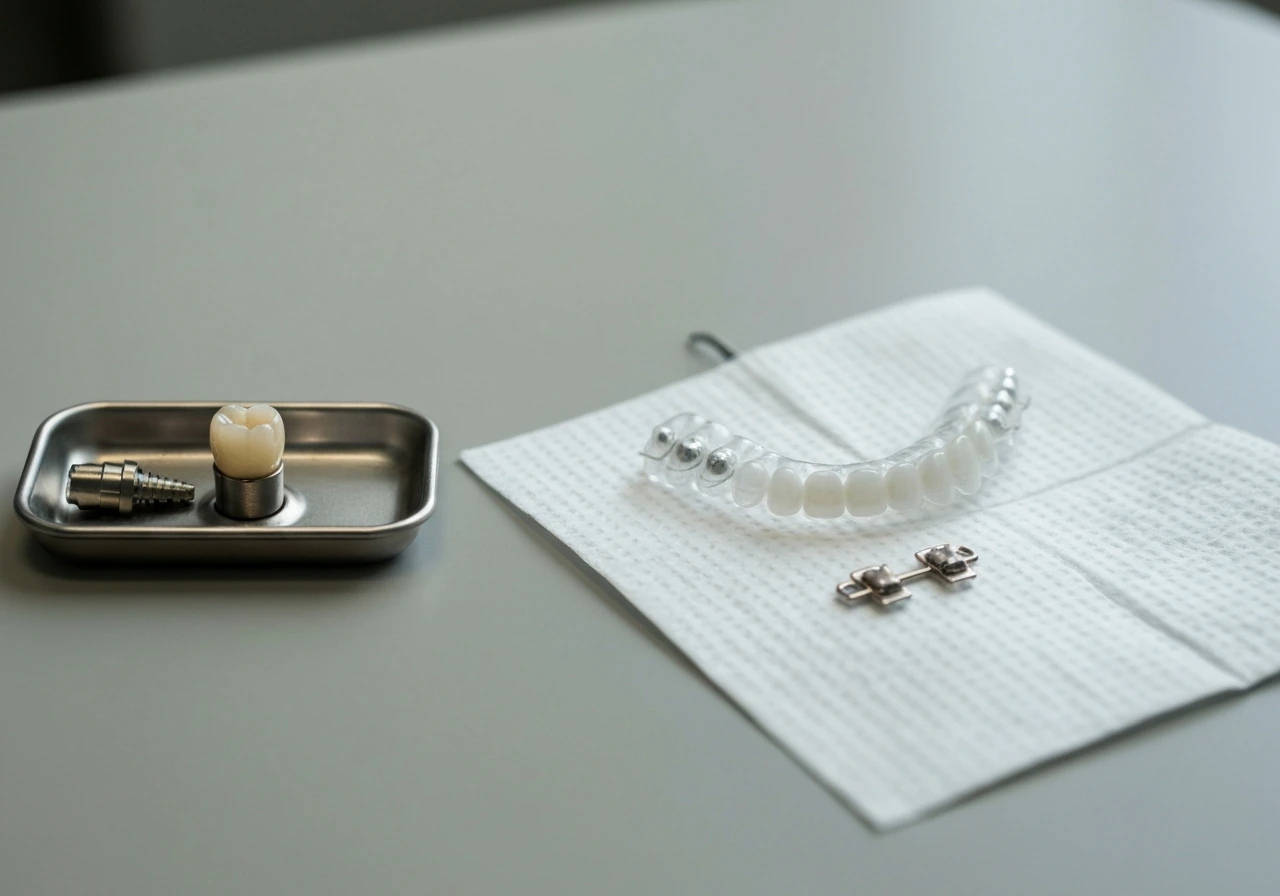
Dental implants are currently the closest thing to a permanent replacement. A titanium screw is placed into the jawbone where the root would have been, and a crown is attached on top. Implants look, feel, and function like natural teeth, and they prevent the bone loss that happens when a tooth is absent. Dental bridges are another option, anchoring a replacement tooth to the adjacent natural teeth on either side. Both are well-established treatments, not experimental.
For teeth that are out of position or didn't erupt properly
Orthodontics works at any age. Adults move teeth with braces and clear aligners just as effectively as teenagers, though the process can be a bit slower because adult bone is denser and the periodontal environment changes with age. A review on age-related effects in adult orthodontics reports that age-related changes can alter the periodontal environment and reduce the speed of tooth movement periodontal environment changes with age. If a tooth is impacted but still viable, an orthodontist and oral surgeon can sometimes work together to expose and guide it into position. If a wisdom tooth is impacted and causing problems, extraction is usually straightforward and prevents future damage.
For damaged enamel and dentin
If enamel is chipped or worn, bonding, veneers, or crowns can restore the shape and function. For early cavity-stage damage where enamel is demineralized but not yet fully broken down, fluoride treatments and remineralizing products (like those containing hydroxyapatite) can help shore up the surface. Once a cavity goes through the enamel into dentin, a filling is needed. These are repairs and replacements, not regrowth, but they work.
If you're in your late teens or early 20s and wondering whether a tooth might still come in on its own, the honest answer is: it depends entirely on what's going on beneath the surface. The only way to know is with an X-ray. Don't assume a gap means permanent absence, and don't assume pain behind your molars will resolve on its own. Checking it out is always the right call.
FAQ
If my teeth seem to be moving at 20, how can I tell what is actually happening?
Sometimes teeth feel like they are “coming in” after 18 because wisdom teeth can erupt later, or because existing teeth subtly shift as the bite and gum tissues settle. The key clue is whether you can see a new tooth surface through the gum, versus only noticing pressure, spacing changes, or bite feel.
Can a dentist fix a tooth that looks like it’s “wearing down” after 18, or does it regrow?
Tooth movement happens, but true regrowth does not. If a tooth is chipped, missing, or removed, the remaining surface can only be repaired or covered (bonding, veneers, crowns, fillings), not rebuilt from scratch. That means you should treat any “it will grow back” expectation as a red flag and get an exam.
What imaging should I ask for if a wisdom tooth might be impacted?
A panoramic X-ray is usually the first step for positioning and for checking whether a wisdom tooth is present under the gum. If your dentist needs to evaluate proximity to roots or nerves, or to plan treatment for impaction, a cone-beam CT may be recommended because it shows 3D relationships.
Is jaw or back-molar pain at 19 always from wisdom teeth?
Not necessarily. Pain behind the molars can be from pericoronitis, but it can also be from a cavity, gum infection, cracked tooth, or bite-related inflammation. If symptoms persist more than a few days, recur, or include swelling, bad taste, or fever, prompt evaluation is important.
When should recurrent pericoronitis stop being “normal” and become a decision for extraction?
You generally should not try to “wait it out” if you are getting recurrent gum flap inflammation around a partially erupted wisdom tooth, because repeated pericoronitis episodes can damage nearby tissues and increase the chance that extraction will be recommended. If it keeps coming back, plan follow-up rather than indefinite delays.
How can an impacted wisdom tooth cause problems if it never hurts?
Yes, an impacted wisdom tooth can cause damage without obvious symptoms for a long time. That is why dentists often use X-rays to look for signs of pressure on the second molar, abnormal angulation, or decay risk you cannot feel yet.
If I lost a tooth in my 20s, how soon should I consider replacement like an implant?
If you have missing teeth, the biggest “timing” issue is bone preservation. Implants are often positioned based on bone availability and may require grafting if you have significant prior loss. Bridges also require adjacent teeth to be healthy enough to support the anchor.
Will orthodontics be slower or riskier for adults, especially if my gums have receded?
Braces or aligners can work well in adults, but the plan depends on gum health, bone levels, and tooth root positions. Adult movement can be slower and needs careful monitoring, especially if there is recession or periodontal disease.
Can fluoride or remineralizing products reverse a cavity at the early stage, or is it too late?
If enamel damage is limited to surface demineralization, early intervention with fluoride and remineralizing strategies can help reverse early white-spot changes. Once there is a true cavity into dentin, remineralization will not restore the missing structure, and a filling is typically needed.
My adult tooth area looks empty, how do I know whether something still might erupt on its own?
If you are trying to decide whether a gap means a tooth will still erupt, the only reliable answer is an X-ray. A gap can be normal anatomy, agenesis (missing tooth development), or a tooth being blocked/angulated, and each scenario has different next steps.
Next Articles
What Teeth Grow in at 18 Wisdom Teeth and Timing
At 18, typically wisdom teeth may erupt late; learn which teeth should already be in and when to see a dentist.
Does Teeth Grow at Age 18? Eruption, Wisdom Teeth, and Regrowth
See if teeth erupt at 18, why wisdom teeth may appear, and why teeth usually do not regrow after loss.
Do Your Teeth Grow as You Get Older? True Causes
Teeth do not grow bigger with age. Learn why they look longer, what can regenerate in adults, and when to see a dentist.