At 13, you get exactly two sets of teeth your entire life, and by this age most of your permanent teeth are already in or actively coming in. So no, if a permanent tooth is lost, damaged, or extracted at 13, it will not grow back on its own. There is no third set waiting. The only realistic exceptions are a few teeth that may not have erupted yet, like second molars or wisdom teeth, which are part of your normal permanent set and are still on schedule. But a tooth that's already in and gets knocked out, pulled, or decays through, stays gone unless a dentist steps in.
Can Your Teeth Grow Back at Age 13? What’s Possible

Marcus Holloway
16 Jun 2026
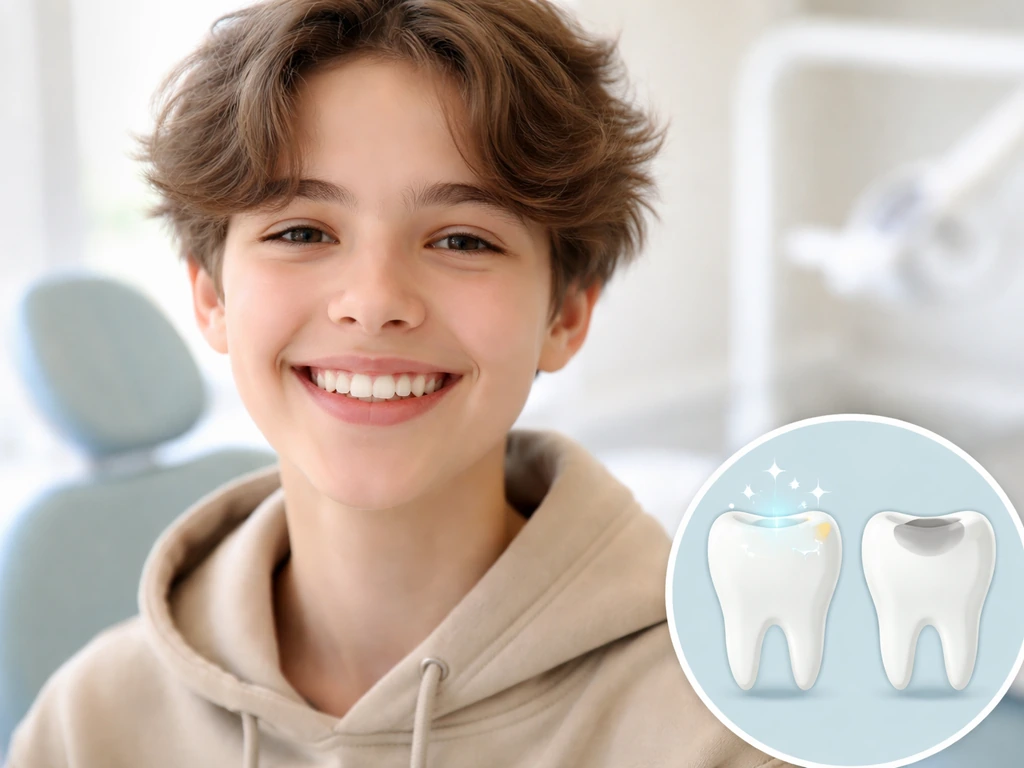
What can and can't regrow at age 13
Here's the straightforward breakdown. By age 13, you're almost fully into your permanent dentition. The vast majority of your 32 adult teeth are either already erupted or in the process of coming through. Your canines typically erupt around ages 11 to 12, your second molars around ages 11 to 13, and wisdom teeth (third molars) usually arrive between 17 and 21. That means at 13, you might still be waiting on a second molar or two, and wisdom teeth are still years away. Those teeth, because they haven't erupted yet, are technically still 'growing in.' But any tooth that's already in place and gets damaged or lost is not coming back naturally.
What's also important to understand is that even the structures within a tooth, like enamel, have hard biological limits on what they can repair. More on that below. The bottom line: no new teeth will spontaneously grow to replace a lost permanent tooth, and no tooth will fully rebuild itself after serious damage.
Baby teeth vs. permanent teeth: the timeline at 13
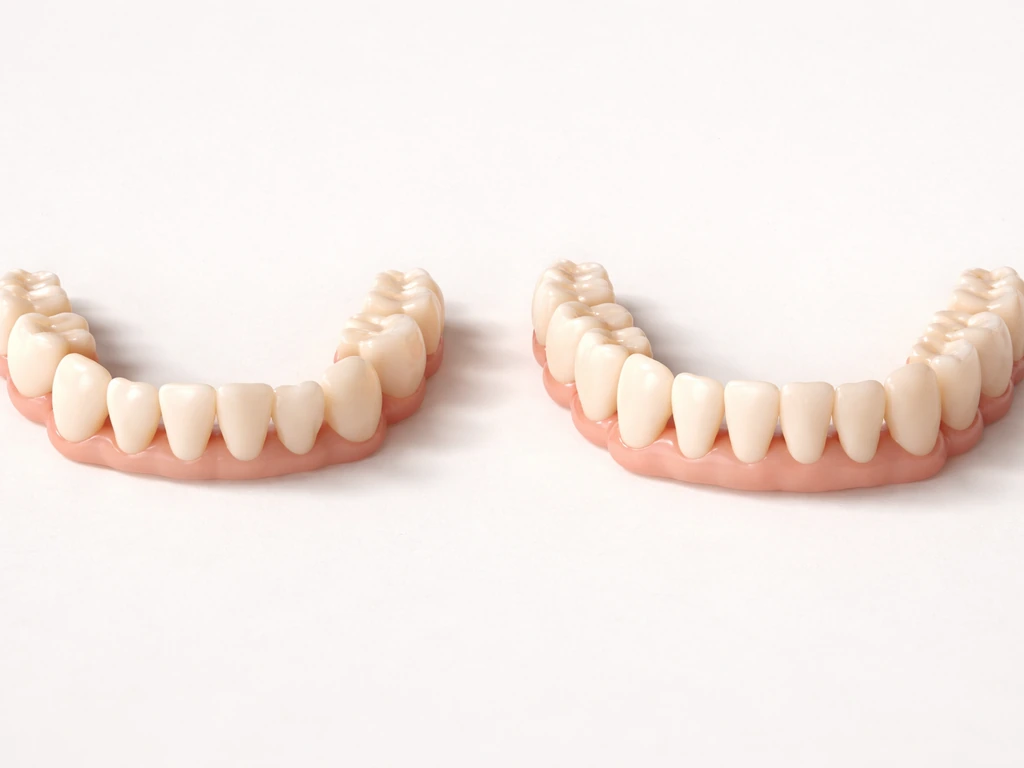
You start with 20 baby teeth (primary teeth), and they begin falling out around age 6 to make room for 32 permanent teeth. By 13, most kids have already lost all or nearly all of their baby teeth. The primary canines typically exfoliate around ages 9 to 12, and the primary second molars shed somewhere between 12 and 14. So if you're 13 and still have a baby tooth in place, that's not unusual, especially a back molar. The permanent tooth underneath is usually making its way up.
The key distinction here is this: losing a baby tooth is normal and expected, because a permanent tooth replaces it. Losing a permanent tooth is permanent. There is no third set coming. This is why dentists treat a knocked-out or extracted permanent tooth very differently from a lost baby tooth. The urgency and the long-term planning are completely different.
| Tooth Type | Expected Exit/Eruption at 13 | Replacement? |
|---|---|---|
| Baby canines | Already gone or exfoliating ~9–12 years | Yes, permanent canine replaces it |
| Baby second molars | Shedding ~12–14 years | Yes, permanent second premolar replaces it |
| Permanent canines | Already erupted ~11–12 years | No replacement if lost |
| Permanent second molars | Erupting now, ~11–13 years | No replacement if lost once erupted |
| Wisdom teeth (3rd molars) | Not yet, typically ~17–21 years | N/A, still years away |
Can enamel grow back? The real answer
This one trips a lot of people up. You might have heard that you can 'remineralize' your teeth with certain toothpastes or that early cavities can heal. There's truth buried in that, but the full picture is more nuanced and it matters a lot for what you do next.
Enamel is formed by cells called ameloblasts, and those cells are lost after a tooth finishes developing. Once a tooth erupts into your mouth, those enamel-forming cells are gone. Enamel is acellular, meaning it has no living cells left in it to drive repair. It literally cannot regenerate itself the way a cut on your skin can heal. This is a hard biological fact, not a debate.
However, there is a real process called remineralization, and it does matter. When enamel starts to demineralize, meaning acid from bacteria is leaching out calcium and phosphate minerals, the damage is not always permanent right away. If caught early enough, before the enamel surface actually breaks down into a cavity, fluoride, saliva, and remineralizing agents can deposit minerals back into that weakened zone. You might see this as a white spot on the tooth surface, called a white spot lesion, and the American Dental Association recognizes these as potentially reversible noncavitated lesions. That's the category where remineralization actually works.
Once the enamel surface collapses and you have an actual cavitated cavity, the hole does not fill back in. No amount of fluoride toothpaste closes a cavity. At that point, a dentist needs to restore it. The distinction between 'early demineralization' and 'true cavity' is everything here, and only an exam can tell you which one you're dealing with.
If a permanent tooth is already missing or extracted
If a permanent tooth has been lost at 13, whether from trauma, extraction, or decay, the jaw is still growing and developing, which actually complicates your replacement options more than it helps. Because of this, the answer to can your teeth grow back at age 16 is usually no if a permanent tooth is lost or extracted. Dental implants, which are the gold standard for replacing missing teeth in adults, are not placed in 13-year-olds because the jaw bone is still growing. Placing an implant too early causes it to end up in the wrong position as the jaw develops. Most dental professionals wait until growth is complete, usually late teens at the earliest.
So what do you do in the meantime? The most important thing is space management. If a tooth is lost and nothing holds the space, neighboring teeth drift into the gap and the tooth above (or below) can over-erupt. This makes future treatment much harder and more expensive. A space maintainer, which is a passive dental appliance, holds that gap open so the bone develops properly and future options stay available. For some situations, orthodontic planning may actually use that space intentionally, but that decision involves an orthodontist.
For front teeth, where aesthetics matter most, a temporary partial denture or a bonded bridge may be used during the growing years. These aren't permanent solutions, but they keep things functional and looking normal until implants or a permanent bridge become an option. Every situation is different, so a dentist and orthodontist working together will map out a plan specific to which tooth is missing and where it sits in the mouth.
One more critical point about traumatic tooth loss: if a permanent tooth gets knocked completely out (avulsed), the window to save it is narrow. For avulsed permanent teeth, AAPD’s endorsement document (referencing IADT) notes that root canal treatment may be initiated within about two weeks after replantation and discusses replantation decisions even when dry time has been longer, depending on the situation avulsed permanent tooth. The American Association of Endodontists recommends seeing a dentist within about 30 minutes of the injury. Keep the tooth moist, ideally in milk or a tooth preservation solution, and get to a dental office or emergency room immediately. Time and storage conditions directly affect whether the tooth can be replanted and survive.
Signs you should get checked today
Some situations call for a same-day or next-day dental visit, not a 'we'll see how it goes' approach. If any of these apply, book an appointment now:
- A permanent tooth was knocked out, cracked, or significantly chipped from injury
- A tooth has been extracted and nothing was done to manage the space
- You or your child has a white spot, dark spot, or sensitivity on a tooth that wasn't there before
- A tooth feels loose without a baby tooth explanation (no wiggly baby tooth nearby)
- Jaw or gum swelling, pain, or any sign of infection near a tooth
- A tooth seems to be erupting in the wrong direction or hasn't come in when expected
- You haven't had a dental X-ray in over a year and there's a history of cavities
When you go in, ask specifically for a panoramic X-ray if one hasn't been done recently. A panoramic gives the dentist a full view of all erupting and unerupted teeth, which is extremely useful at age 13 when second molars and other teeth are still developing. For a tooth that's missing, impacted, or erupting oddly, a cone beam CT (CBCT) scan may also be recommended because it gives a 3D view that standard 2D X-rays can't match. The American Academy of Oral and Maxillofacial Radiology supports CBCT when standard radiographs don't provide enough diagnostic information, especially for things like impacted canines or unusual eruption paths.
Treatment options for a 13-year-old with damaged or missing teeth
The treatment path depends heavily on what type of tooth is affected, how much damage there is, and whether the tooth is still alive. Here's a practical summary of what's actually used at this age:
For early enamel damage or cavities
- Fluoride treatments and prescription fluoride toothpaste to support remineralization of early, noncavitated lesions
- Dental sealants on back teeth to protect grooves from decay
- Fillings (composite or other restorative material) once a cavity is cavitated and needs restoration
- Root canal treatment for a tooth where decay has reached the pulp, or for a traumatized tooth with pulp involvement; for immature permanent teeth, special approaches like apexification or regenerative endodontics may be used to allow the root to finish developing
For a missing permanent tooth
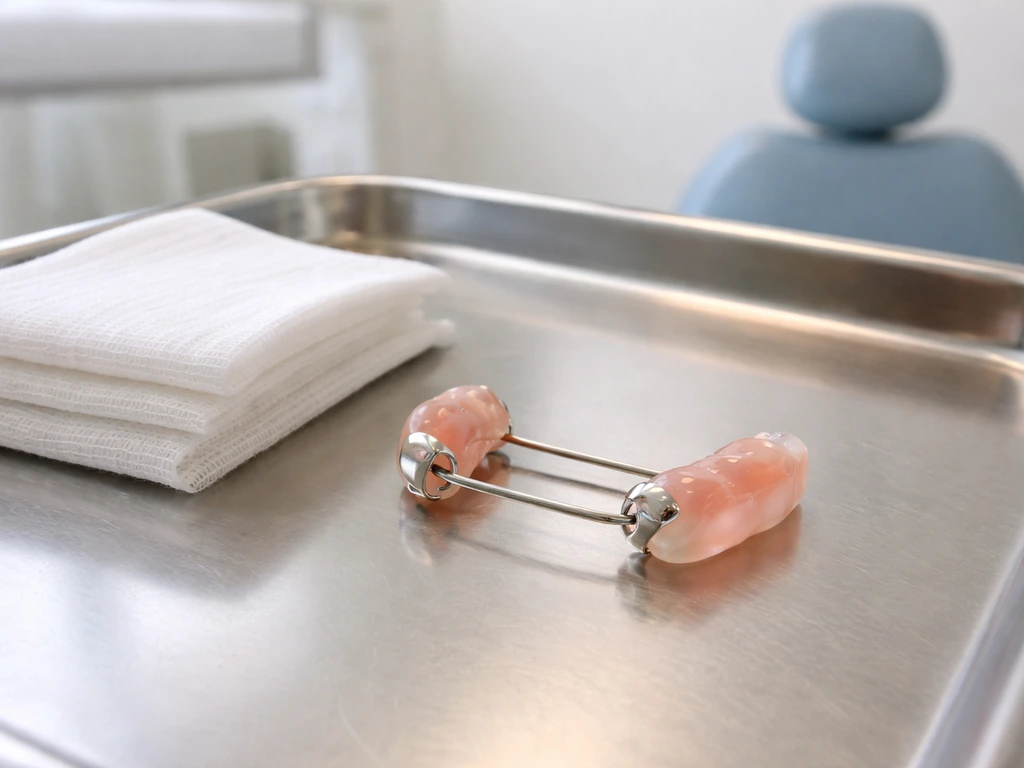
- Space maintainer to hold the gap while the jaw finishes growing
- Removable partial denture as a temporary cosmetic and functional solution during the teen years
- Orthodontic evaluation to determine if space should be held open for a future implant or strategically closed with braces
- Dental implant (planned for later, typically after jaw growth is complete, usually 17 or older for girls and 18 to 21 for boys)
- Fixed bridge as an option once growth is complete, though this involves preparing adjacent teeth
The decisions made in the next year or two really do matter. Drift and bone loss happen faster than most people expect, so starting treatment planning early, even if the final restoration is years away, protects the outcome significantly.
The 'natural regrowth' myths: where the internet gets it wrong
There are a few claims floating around online that deserve a direct response, because believing them can lead to real harm if someone delays seeing a dentist.
Myth: Oil pulling, special diets, or supplements can regrow lost teeth or repair cavities. False. No food, oil, or supplement regrows a tooth or closes a cavity. Nutrition supports overall oral health and saliva quality, but it cannot rebuild a structure that's already gone. The biology simply doesn't support it. Teeth are not like bones, which have living osteoblast cells capable of remodeling. Enamel has no cells. Dentin has some capacity for limited defensive responses, but not regrowth.
Myth: There's a third set of teeth that can grow in at 13. There isn't, except in extremely rare genetic or developmental anomalies. At 17, you may have some wisdom teeth still developing, but losing a tooth will not regrow naturally. The overwhelming scientific and clinical consensus is that humans have two sets: primary and permanent. Wisdom teeth are part of the permanent set, not a bonus third set, and they typically don't arrive until the late teens.
Myth: Remineralization can heal any cavity. Remineralization is real and valuable, but it only works on the earliest stage of enamel damage before the surface breaks down. Once a cavity is cavitated, meaning there's a physical hole or breakdown in the enamel surface, remineralization cannot close it. The ADA's clinical guidelines are clear that noncavitated lesions may be managed non-restoratively, while cavitated lesions require restorative treatment.
Myth: Researchers have found a way to regrow teeth, so it's coming soon. There is genuinely exciting research in dental regeneration, including work on enamel repair materials and stem cell approaches. But as of right now, none of these are clinical treatments available at a dental office. Active research is not the same as available treatment. What's available today is excellent and improving, but it involves dentists, not biology doing the work on its own.
If you're 13 (or the parent of a 13-year-old) and something is going on with a tooth, the single most useful thing you can do is get a proper dental exam with current X-rays. The questions about what teeth are still developing, whether a space needs to be maintained, and whether damage is reversible or needs restoration can only be answered by looking at what's actually there.
Similar questions come up at 14, 15, and 16 too, because the transition to a fully permanent dentition stretches across these years. Similar questions come up at 14, 15, and 16 too, because the transition to a fully permanent dentition stretches across these years questions about regrowth at 14. But the core answer stays the same at every age: no tooth grows back on its own, and the sooner you get a plan, the better your options.
FAQ
If I lost a permanent tooth at 13, is there anything that can replace it besides implants later?
Yes. Depending on the tooth location and your growth stage, dentists may use a temporary partial denture, a removable retainer-style appliance, or a bonded bridge to restore chewing and appearance until a definitive option is appropriate. The key decision is whether space can be held, because drift and over-eruption can make later replacement harder.
How soon should a knocked-out permanent tooth be seen at age 13, and does storage matter even if I get there quickly?
Even within the first hour, storage conditions matter. Keep the tooth moist in milk or a tooth preservation solution, avoid letting it dry out, and handle it by the crown. The dentist will decide whether replantation is viable based on root condition and contamination, so going immediately improves the odds.
What’s the difference between a baby tooth that’s loose and a permanent tooth that’s loose at 13?
At 13, a loose baby tooth usually exfoliates because the permanent tooth underneath is erupting. A permanent tooth can feel loose after trauma or gum inflammation, but it does not naturally “fall out to be replaced.” A full exam with X-rays is the only reliable way to tell which tooth you’re looking at.
If I see a “white spot” on my enamel at 13, does that mean it will turn into a cavity?
Not necessarily. A white spot can represent an early, noncavitated lesion that may be reversible with proper fluoride, daily plaque control, and risk-based care. The crucial caveat is that you need an exam to confirm it is noncavitated, because once the enamel surface collapses, it will not be repaired back with toothpaste alone.
Can braces or orthodontic treatment “regrow” a missing tooth or fix the gap?
Braces themselves do not regenerate tooth structure. They can align teeth and sometimes close or shift space intentionally, but that decision depends on what tooth is missing, your bite, and the status of developing teeth. If a permanent tooth is missing, an orthodontist may also coordinate space maintenance so you do not lose options later.
Will a missing second molar at 13 cause major problems later if I do nothing right now?
It can. Back teeth drifting, changes in bite contacts, and altered eruption of opposing teeth can increase the complexity and cost of later treatment. For some gaps, dentists recommend space management during the years when other molars are still erupting, especially when it affects how your upper and lower arches meet.
If wisdom teeth haven’t come in yet, can they “replace” a missing tooth at 13?
Not in the way people hope. Wisdom teeth are part of the permanent set but they do not naturally function as a direct substitute for a specific missing tooth. Their timing is usually much later, and whether they can erupt into a useful position depends on space, angulation, and your individual anatomy.
What should I ask for at the dental visit if I’m worried about whether a tooth is missing, impacted, or still developing?
Ask whether a panoramic X-ray is needed for an age-13 overview of erupting and unerupted teeth, and whether a cone beam CT is warranted for a suspected impacted tooth or unusual eruption path. This helps the dentist determine if the tooth is truly missing, still developing, or blocked from erupting.
Are there situations where a tooth extracted at 13 can be saved instead of replaced?
It depends on what “extracted” means. If the tooth is still present but the problem is reversible, dentists may treat early decay or repair fractures. If a tooth has already been fully removed, options shift toward replacement or maintaining space, but the success of any emergency rescue action is highly time-sensitive.
What are common mistakes that reduce the chances of saving a permanent tooth at this age?
Delaying the dental evaluation, not taking current X-rays, using “home repair” remedies for a fractured or missing tooth, and letting a knocked-out tooth dry out are the big ones. Another common issue is assuming a gap can be ignored, when early space management can prevent drift and extra orthodontic work later.
Next Articles
Can My Teeth Grow Back at 17? What Is and Isn’t Possible
Can teeth regrow at 17? Enamel wont, but eruption, repair and gum improvement may be possible with the right diagnosis.
Can Your Teeth Grow Back at Age 15? Real Answers
Can teeth grow back at 15? Learn what can and can’t regenerate, why missing teeth usually won’t regrow, and next steps.
Can My Teeth Grow Back at 14? What’s Realistic
Teeth do not regrow at 14. Learn what can repair or erupt, treatment options for missing teeth, and when to see a dentis