No, your teeth cannot grow back at age 15. Once a permanent tooth is lost, severely damaged beyond repair, or extracted, your body has no biological mechanism to replace it with a new one. If you’re asking, “can your teeth grow back at age 13,” the short answer is that most permanent teeth do not regrow once they’re lost or damaged beyond repair. This is true at 13, 15, 17, or any age after your adult teeth come in. That said, there are a few important nuances: some teeth may still be erupting or developing at 15, certain dental tissues have limited healing ability, and there are solid treatment options to replace or restore what's missing. But spontaneous regrowth of a full permanent tooth? That simply does not happen in humans today.
Can Your Teeth Grow Back at Age 15? Real Answers

Marcus Holloway
5 Jun 2026

What people usually mean when they ask if teeth can "grow back"
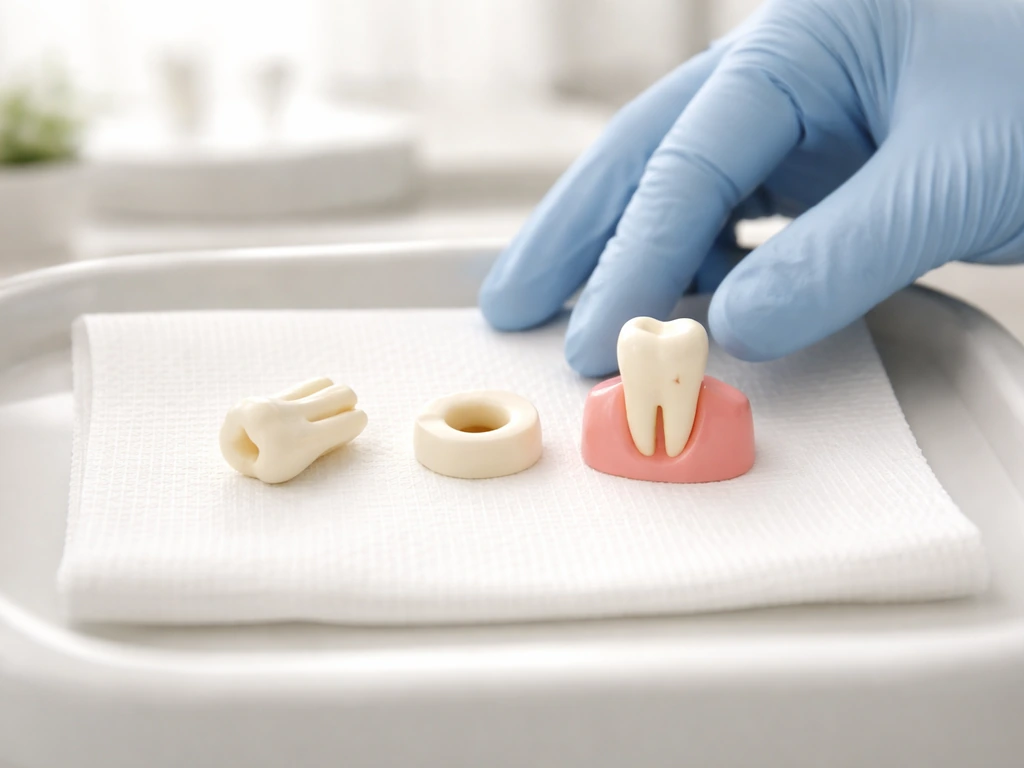
This question can mean a few different things, and the answer changes depending on which one you're actually dealing with. It helps to separate them clearly before jumping to conclusions.
- A tooth was knocked out or extracted and you're wondering if a new one will come in to replace it
- A tooth has a chip, cavity, or crack and you're wondering if it can heal on its own
- A tooth seems to be "missing" but you're not sure whether it was ever there or just hasn't erupted yet
- You heard something online about teeth regrowing and want to know if it applies to you
These are four very different situations. A knocked-out permanent tooth won't grow back. A minor cavity or surface damage has limited self-repair potential, but only in very early stages. A tooth that hasn't erupted yet might still be on its way in. And the internet claims about tooth regrowth? They mostly refer to lab research that is nowhere close to a treatment you can actually use right now.
The actual biology: what teeth can and can't do on their own
Teeth are made of several different tissues, and they don't all behave the same way when it comes to repair and regeneration.
Enamel: the part that can't come back
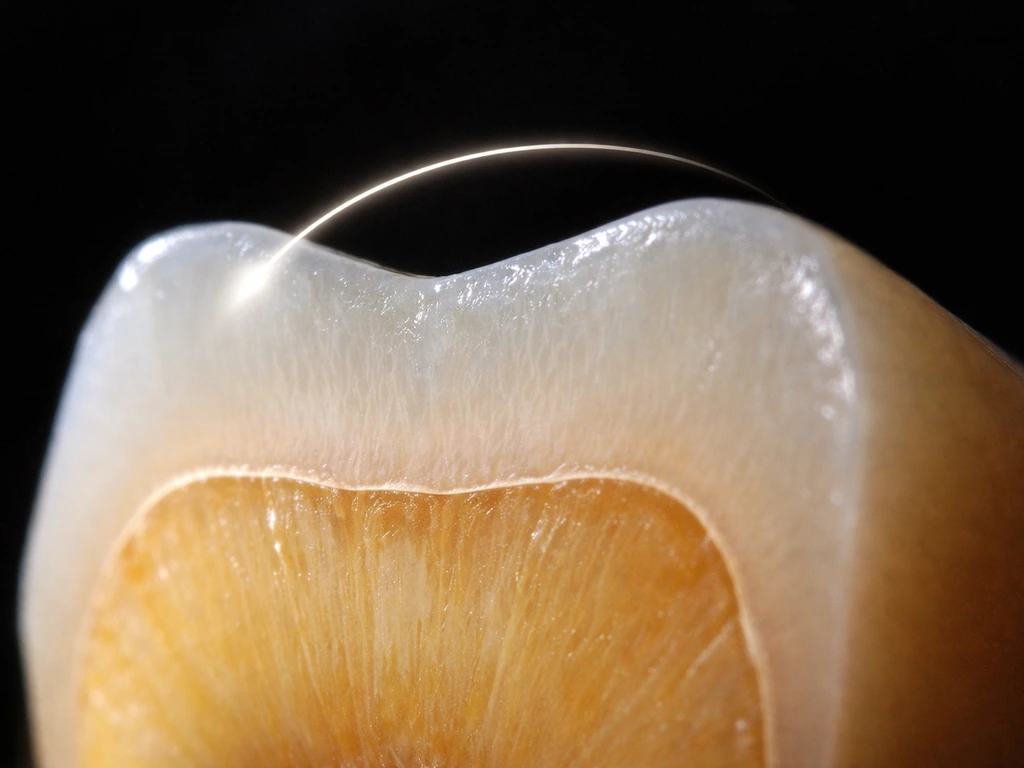
Enamel is the hard outer shell of your tooth and it's produced by specialized cells called ameloblasts. The catch is that ameloblasts are only active during tooth formation. Once a tooth erupts, those cells are gone, and so is your body's ability to make new enamel. A chip, a cavity that reaches enamel, severe acid erosion: none of that rebuilds itself. Fluoride can help remineralize the very surface of enamel in extremely early cavity stages, but that is not the same as growing new enamel. It's more like patching a surface, and it only works before a cavity actually forms.
Dentin and pulp: limited response, not regrowth
Dentin, the layer just inside enamel, is made by cells called odontoblasts that live in the pulp. These cells can produce small amounts of what's called tertiary or reparative dentin in response to mild irritation or shallow damage. This is the tooth's defense mechanism, not a full repair. It's like a scar forming, not like the original tissue growing back. And this only happens with minor insults. Deep cavities, trauma that reaches the nerve, or infection overwhelm this response completely. Current research into pulp-dentin regeneration is promising, but as of today, it's still in experimental stages and not something your dentist can offer you as a routine treatment.
A whole new tooth: not happening
The American Dental Association has been clear: there is no treatment available today that can regrow a complete permanent tooth. Stem cell research and tooth bud experiments exist in labs, but these are years or decades away from clinical use. If someone tells you there's a supplement, oil, or protocol that regrows teeth, that is not based on any approved or proven science.
What's actually still developing at age 15
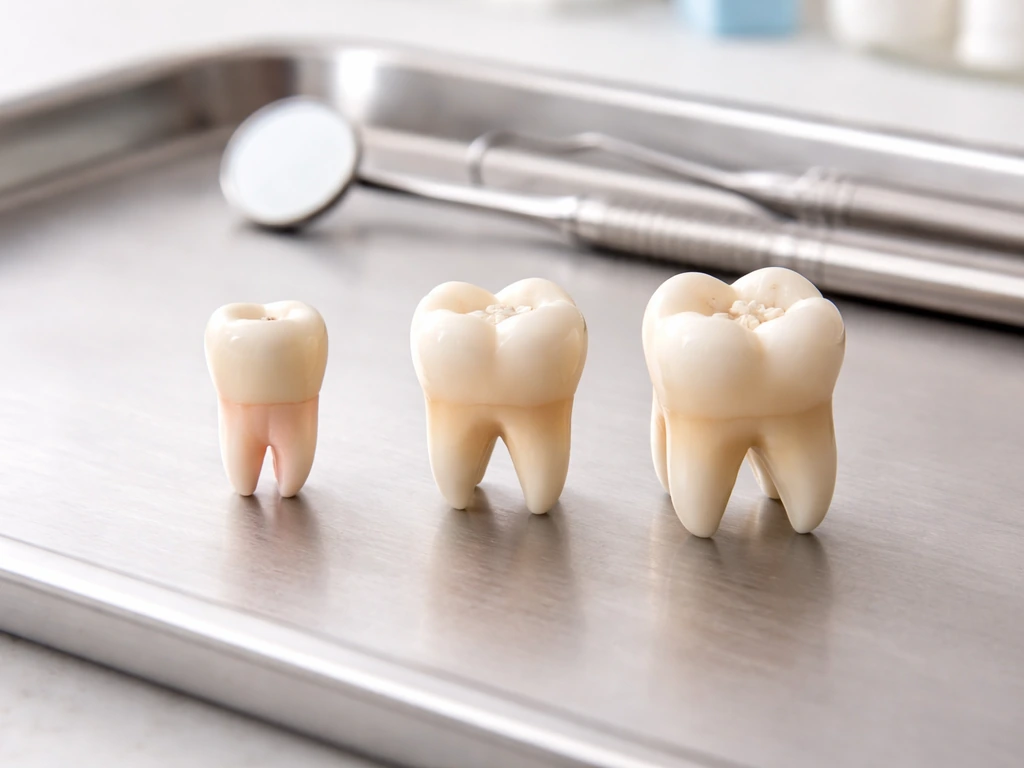
Here's where things get more nuanced. Age 15 sits in an interesting window of dental development, and a tooth that seems "missing" might actually just be late to show up.
By 15, most of your permanent teeth should be in. The first and second molars, premolars, canines, and incisors typically finish erupting by around age 13. But there are two common exceptions. Second molars sometimes erupt as late as age 13, so if yours came in slowly, the timing might still feel recent. More importantly, wisdom teeth (third molars) don't typically erupt until age 17 to 21. So if you feel like something is still coming in at the back of your mouth, that could be perfectly normal development, not regrowth.
There's also a less common but real situation called a congenitally missing tooth, where one or more permanent teeth simply never formed. This affects about 5 to 6 percent of people and is most often discovered when a dentist takes an X-ray and finds no tooth bud beneath the gum. This is completely different from a tooth that was there and lost. It also means the space isn't going to fill itself in naturally.
For comparison, someone at 14 or 16 faces essentially the same biological reality. The development window is almost identical across those mid-teen years. The core facts don't change much from one year to the next at this stage.
How a dentist figures out what's actually going on
If a tooth is missing or seems to be absent, figuring out why is the first job. If you have a tooth that seems missing or damaged at 14, a dentist can check whether it is actually erupting late, congenitally absent, or lost from an injury missing or seemingly absent tooth at 14. A dentist won't just guess based on looking at your mouth. Here's what the evaluation typically involves.
Clinical exam and dental history
The dentist will check your bite, look at eruption patterns, and ask about your dental history. Did you have a tooth pulled? Was there trauma? Has anything ever been in that space? This context matters a lot before any imaging is ordered.
X-rays and imaging
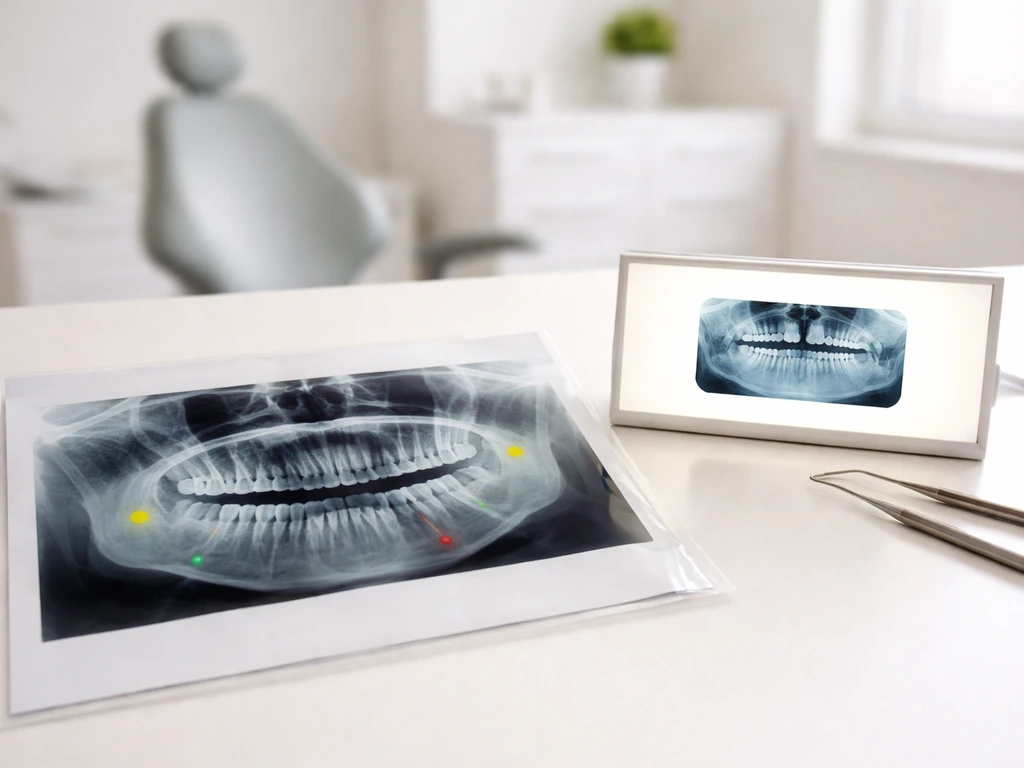
The ADA recommends X-ray selection based on your individual situation, including signs like missing teeth of unknown cause, suspected impacted teeth, or unusual eruption patterns. For a missing tooth at 15, a dentist will typically use bitewing or periapical X-rays to look at specific areas, or a panoramic X-ray to see the full picture of all teeth, tooth buds, and the developing wisdom teeth at once. In some cases, a CBCT scan (cone beam CT) gives a 3D view when more detail is needed, particularly for orthodontic planning or impacted teeth.
These images will tell the dentist whether a tooth bud is present and developing, whether a tooth is impacted and stuck under the gum, whether a tooth is simply absent from development (congenital), or whether there's bone loss, infection, or another issue affecting the area.
Treatment options for 15-year-olds with missing or damaged teeth
This is the most practically useful part, because there is genuinely a lot that can be done, even if the tooth can't grow back on its own.
Restorations for damaged teeth
If a tooth is damaged but still present, a dentist has real tools. Cavities are filled with composite resin or other materials. Chips can be bonded. Larger damage may need a crown. If the pulp (nerve) is affected, a root canal or vital pulp therapy can save the tooth structure while removing the infected or damaged nerve tissue. These are not regrowth, but they preserve what you have and restore function and appearance.
Space management and orthodontics
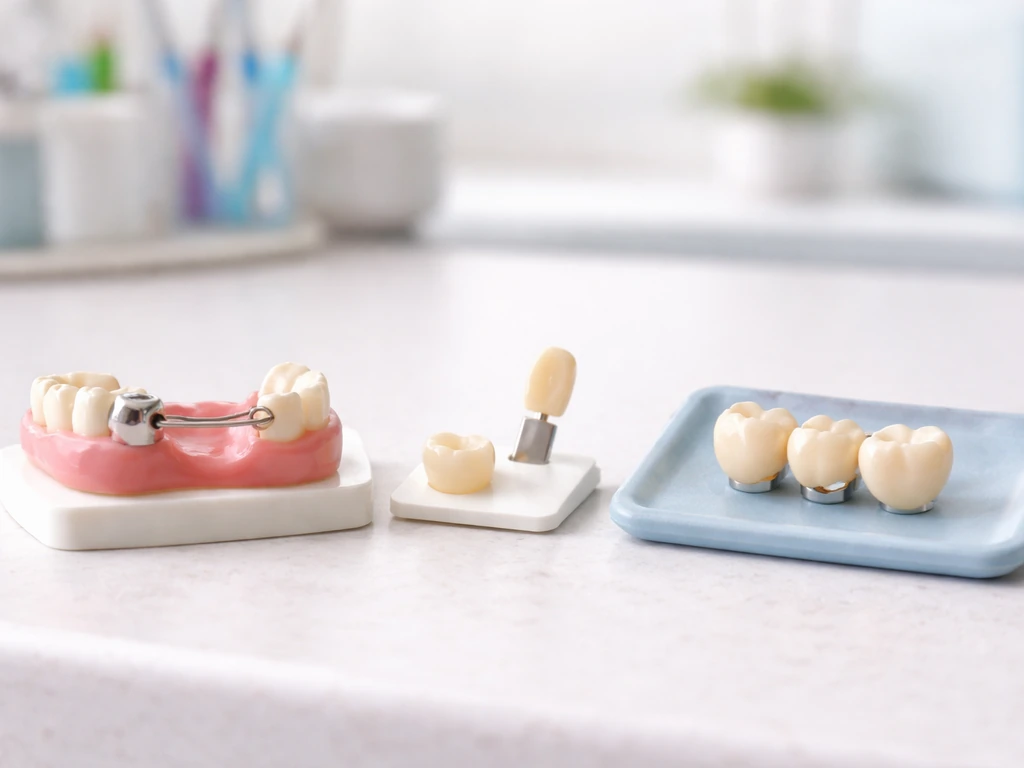
When a permanent tooth is missing, the surrounding teeth will drift over time to fill the gap unless that space is actively managed. Orthodontic treatment (braces or aligners) can hold the space open or close it intentionally, depending on the plan. In cases of congenitally missing teeth, the orthodontist and dentist work together to decide whether to close the gap with braces and reshape adjacent teeth, or to hold the space for a future replacement.
Implants and other replacements: the timing question
Dental implants are generally considered the most permanent solution for missing teeth in adults. The problem at 15 is timing. Implants require that jaw growth be complete, because an implant placed too early can end up in the wrong position as the jaw continues to develop. For most people, that means waiting until at least 17 to 18 for girls and 18 to 20 for boys, sometimes later. Research confirms that implant use in growing patients is complex and that protocols vary, so this is highly individual and requires specialist evaluation.
In the meantime, a removable partial denture or a Maryland bridge (a minimal-prep bonded bridge) can fill the gap and maintain appearance and function while waiting for growth to complete. These aren't permanent, but they serve an important role in the interim. Fixed bridges are also an option eventually, though they require reshaping adjacent healthy teeth, which is why many dentists prefer to wait and explore implants first.
| Option | Best For | Age 15 Consideration |
|---|---|---|
| Dental filling / bonding | Cavities, chips, minor damage | Appropriate now if tooth is present |
| Crown | Large cavity, fracture, root canal follow-up | Appropriate now if tooth is present |
| Root canal / vital pulp therapy | Infected or exposed pulp | Appropriate now to save existing tooth |
| Space maintainer / orthodontics | Missing tooth, gap management | Highly appropriate during growth phase |
| Removable partial denture | Temporary gap filling | Suitable now as interim solution |
| Maryland bridge | Minimal-prep temporary bridge | Suitable now with dentist guidance |
| Dental implant | Permanent replacement for missing tooth | Usually delayed until jaw growth is complete (17–20+) |
| Fixed traditional bridge | Permanent replacement without implant | Possible after growth; requires adjacent teeth reshaping |
When to get urgent care (don't wait on these)
Some dental situations at 15 are true emergencies and need same-day attention. Here's what counts as urgent.
Knocked-out permanent tooth
If a permanent tooth gets knocked completely out, you have a narrow window to save it. For knocked-out (avulsed) teeth, the American Association of Endodontists notes that treatment is preferably within 30 minutes to improve the chance of saving the tooth. The goal is to keep the tooth moist and get to a dentist within 30 minutes. The best option is to gently rinse the tooth (without scrubbing the root), and if possible, place it back in the socket yourself and bite gently on gauze to hold it. If that's not possible, store it in milk, a Save-a-Tooth kit, or between your cheek and gum. Do not store it in water. After about 30 minutes outside the mouth dry, most of the periodontal ligament cells on the root are no longer viable, which significantly worsens the prognosis. After 60 minutes dry, the outlook changes substantially. Speed matters more here than almost anything else.
If the tooth is successfully replanted, follow-up care continues for up to five years to monitor for root resorption and healing. This isn't a one-visit fix.
Signs of infection or spreading swelling
Dental infections can spread into the jaw, neck, and surrounding spaces. If you have facial or neck swelling, fever, difficulty swallowing or breathing, or feel seriously unwell, that is an emergency. Go to an emergency department immediately, or call 911. This is not something to manage at home or wait for a regular appointment. Dental infections that reach deep neck spaces can become life-threatening quickly, and antibiotics alone are not enough without proper drainage and treatment.
Severe pain or trauma
Severe tooth pain that isn't controlled with over-the-counter medication, significant mouth trauma from an accident or injury, or visible nerve exposure after a chip or break should all be seen the same day if at all possible. Call your dentist first; most practices have protocols for urgent cases. If the injury involves the face or jaw, an emergency department may be the right first stop.
Your practical next steps
If you're 15 and worried about a missing, damaged, or seemingly absent tooth, here's the straightforward path forward. First, book a dental appointment as soon as you can, not someday. Bring a parent or guardian if you need one. Tell the dentist exactly what you're concerned about: whether a tooth seems to be missing, whether something happened to a tooth, or whether you're unsure if something is still coming in. Ask for X-rays to get a clear picture of what's actually going on beneath the gum.
If you're missing a permanent tooth, ask about space management options now and what the long-term plan looks like, including when an implant or other replacement might be appropriate. If a tooth is damaged, find out what restoration option fits your situation. If you're in pain or there's any swelling, don't wait: get seen urgently.
The bottom line is that no tooth is going to grow back on its own at 15 or any other age. But there are real, effective options to address whatever is going on, and starting that process sooner always leads to better outcomes than waiting and hoping.
FAQ
If a tooth isn’t showing by age 15, how can I tell if it’s late-erupting vs congenitally missing?
Sometimes it can look like a tooth is missing when it is actually erupting late (often molars) or positioned high under the gum (impacted). That is why X-rays matter. If you have no tooth bud on imaging, it is more likely congenitally missing or previously lost, and the plan will be different.
What should I ask for if my dentist says a tooth might be impacted or still developing?
Ask your dentist to document whether the tooth is present under the gum, whether it is impacted, and whether it has a developing tooth bud. Panoramic or periapical/bitewing X-rays can show presence, but CBCT is often used when the 3D position affects orthodontic planning or surgical decisions.
Does the advice change if my tooth was chipped versus completely knocked out?
If the tooth was knocked out completely (the whole tooth, not just chipped enamel), time is critical for replanting. If it was not completely avulsed, regrowth will not happen, but urgent evaluation still matters for nerve and bone damage.
Is it ever a good idea to try to remove a tooth that seems to be stuck or not erupting?
Do not try to pull the “missing” tooth out yourself. In an impacted or partially erupted tooth, force can worsen damage to surrounding bone and teeth, and it can increase infection risk.
What are the most common reasons a permanent tooth seems to be absent at 15?
The most common cause of a “tooth vanished” story at 15 is that it was never there (congenitally missing) or it was removed due to trauma, decay, or infection earlier. Imaging and your dental history determine which situation you have.
When is a missing or damaged tooth situation an emergency, not just an appointment to book?
If you have swelling, fever, pus, trouble swallowing, or breathing difficulty, treat it as urgent, not something to wait on. Antibiotics alone may not resolve the problem if there is an abscess that needs drainage or specific dental treatment.
If a permanent tooth is confirmed missing, why should I plan for space management right away?
If your dentist confirms the tooth is permanently missing, space management should be planned early. Otherwise, nearby teeth can drift and make future replacement more difficult and more expensive.
Why can’t I get an implant at 15 even if the tooth is missing?
At 15, implants are usually deferred because jaw growth and alignment can still change implant position and affect bite. Your dentist or orthodontist can discuss interim options and revisit timing when growth is closer to finished.
What interim options work best at 15 while waiting for a more permanent replacement?
For interim replacement, removable partial dentures or resin-bonded options can restore appearance and help chewing while you wait. The “best” temporary choice depends on the location of the missing tooth and how much adjacent teeth are affected.
What about supplements or home remedies that claim they can regrow teeth?
Supplements, oils, and at-home protocols cannot rebuild enamel after eruption or regenerate a complete permanent tooth. If you want to prevent progression of a cavity or erosion while you wait for care, ask about fluoride use tailored to your risk rather than relying on products marketed as tooth regrowth.
How urgent is it to treat a severely chipped tooth, and does delaying change outcomes?
If a tooth is present but damaged and the nerve is affected, waiting can increase the chance of infection and make the treatment harder. Timelines vary by severity, but painful swelling or nerve exposure should be seen the same day if possible.
Next Articles
Can My Teeth Grow Back at 14? What’s Realistic
Teeth do not regrow at 14. Learn what can repair or erupt, treatment options for missing teeth, and when to see a dentis
Can Your Teeth Grow Back at Age 16? What’s Possible
Can teeth grow back at 16? Learn what regrows, what does not, why changes happen, and next steps for treatment.
Do Milk Teeth Grow Back? Timelines, What to Do, Red Flags
Learn if milk teeth regrow, typical timelines for permanent teeth, what to do after loss or injury, and red flags.