No, teeth do not grow back after 30. Once your permanent teeth are in, that's your final set. There is no third round of tooth development waiting to kick in after your 30th birthday, and nothing in human biology triggers new teeth to replace ones that are lost or worn down in adulthood. The only realistic exception is a wisdom tooth that never fully erupted, which can still push through in your late 20s or even into your 30s, but that's completing a process that started in adolescence, not growing a brand-new tooth. Everything else you might notice changing after 30, whether that's sensitivity, gaps, shifting teeth, or visible wear, comes down to disease, damage, or aging tissue, not new tooth growth.
Will Teeth Grow After 30 Years? What’s Normal and What Isn’t

Marcus Holloway
8 Jun 2026
How teeth actually develop (and when the process ends)
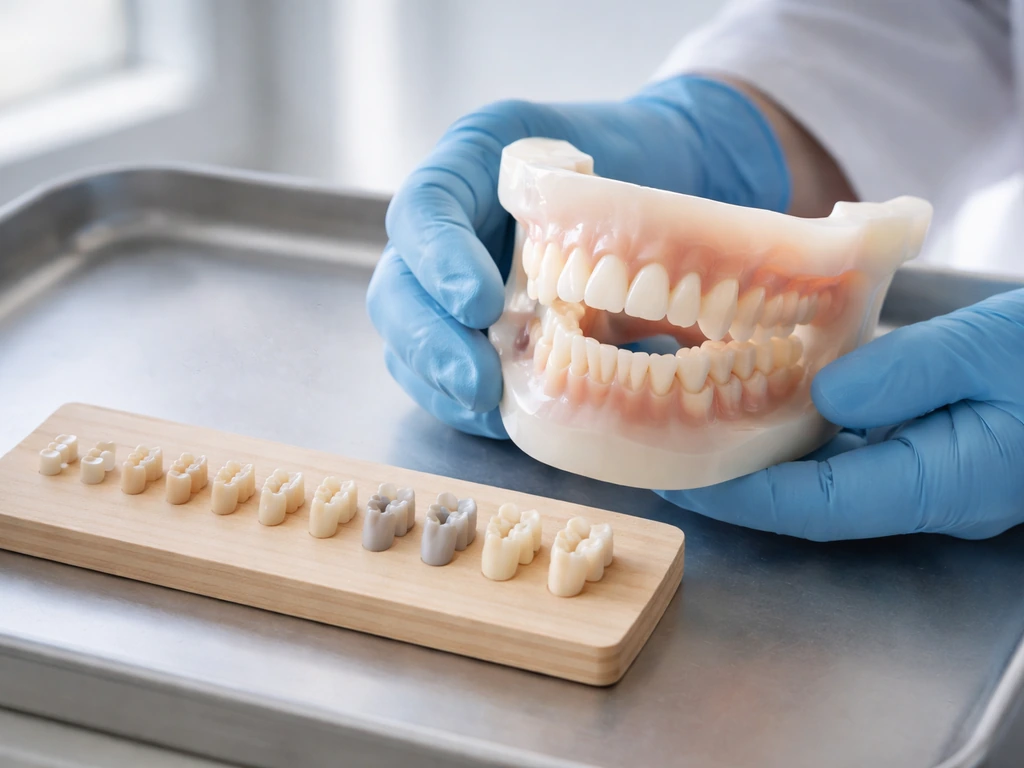
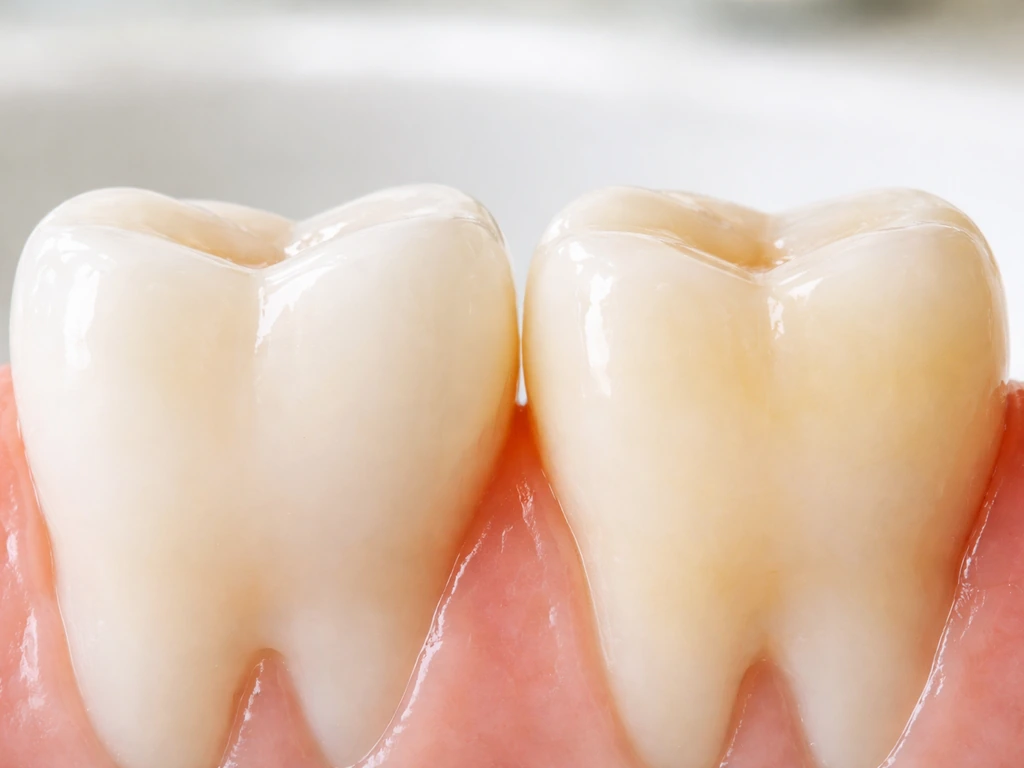
Humans get two sets of teeth in a lifetime. The first set, your 20 baby (primary) teeth, starts coming in around 6 months of age and is typically complete by age 3. Then, starting around age 6, permanent teeth begin replacing them from the front back. By the mid-teens, most people have their full set of 28 permanent teeth in place. The only teeth still in progress at that point are the third molars, better known as wisdom teeth.
Wisdom teeth are the last teeth to erupt, and their timing is genuinely variable. According to MedlinePlus, they typically come through between ages 17 and 21. The Cleveland Clinic puts the window slightly wider, between 17 and 25. The American Academy of Pediatric Dentistry notes eruption can extend to around age 30 in some cases. So yes, if you're in your late 20s and your wisdom teeth are just now making themselves known, that's still within the recognized range of normal development. But once that window closes, there is no further natural eruption to expect.
What "grow back" actually means for each part of your tooth
When people ask whether teeth can grow back, they sometimes mean different things: will a whole tooth reappear, will the hard outer surface repair itself, can the inner tissue recover? The answer varies by structure, but it's mostly bad news for regeneration.
Enamel
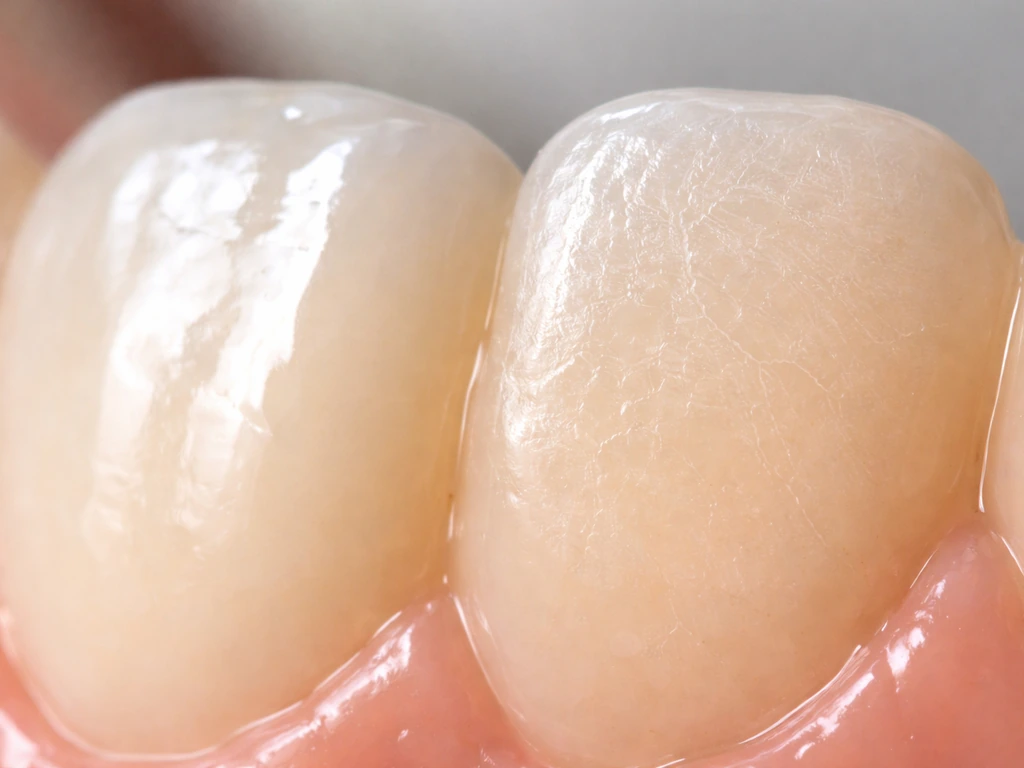
Enamel is the hardest tissue in your body, but it has a critical weakness: it contains no living cells after your tooth finishes forming. The cells that built it, called ameloblasts, are gone by the time your tooth erupts. As both the Cleveland Clinic and WebMD make clear, once enamel is lost to erosion, decay, or wear, it does not grow back. Fluoride from toothpaste and drinking water can help remineralize early-stage surface weakening (before a cavity forms), but that's strengthening damaged enamel crystals, not regrowing new enamel. CDC explains that fluoride from brushing with fluoride toothpaste “sticks” to tooth surfaces and recommends fluoride use to prevent and control dental caries Fluoride from toothpaste. A full cavity is permanent damage that requires a filling.
Dentin and pulp
Dentin sits below the enamel and is produced by cells called odontoblasts, which actually remain alive inside the tooth. This means dentin has limited regenerative capacity: the tooth can form a thin layer of secondary or tertiary dentin in response to a slow-moving cavity or mild irritation. That's a defense mechanism, not full repair. The pulp (the soft inner tissue containing nerves and blood vessels) can become inflamed or infected but does not regenerate in a meaningful clinical sense once significantly damaged, which is why advanced decay leads to root canals or extraction rather than natural recovery.
Whole tooth regrowth
Scientists have successfully regrown teeth in mice and ferrets, and the American Dental Association has reported that human trials were being discussed for people aged 30 to 64. But as of today, this is experimental research, not a treatment you can book at your dentist's office. Whole-tooth biological regrowth in humans is not a standard or available procedure.
What happens to gums and bone after 30
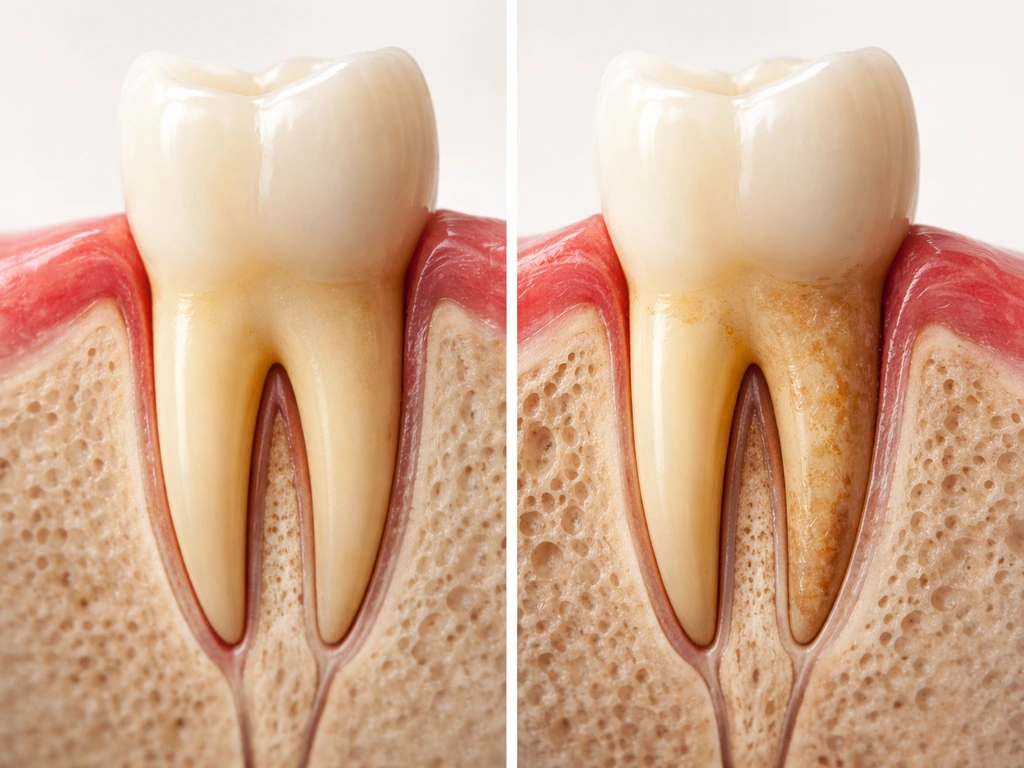
Your teeth don't stand alone: they're anchored by gum tissue, a periodontal ligament, and the alveolar bone surrounding each root. After 30, these supporting structures become increasingly important, and increasingly vulnerable if disease is present.
The CDC identifies periodontitis (advanced gum disease) as one of the leading causes of tooth loss in adults, alongside tooth decay and smoking. Periodontitis destroys the gum attachment and bone that hold your teeth in place. The NIDCR measures this as clinical attachment loss (CAL), and the condition is genuinely common in adults over 30. Gum recession, where the gum line pulls back exposing more of the root, can look alarming and contribute to sensitivity, and if left untreated the Cleveland Clinic warns it can progress to bone loss, tooth mobility, and eventual tooth loss.
Here's the regeneration reality for gums and bone: some improvement is possible with treatment, but it's not unlimited. Guided tissue regeneration procedures, bone replacement grafts, and biologic agents used in periodontal surgery can restore some lost bone and attachment in selected defects, according to AAP consensus research. Gum grafts can cover exposed roots and reduce recession. But these are surgical interventions with specific indications, not natural regrowth, and they cannot fully replace what was there originally. Healthy gum tissue does not spontaneously regrow once destroyed by periodontitis.
When something tooth-like might actually appear after 30
There are a few legitimate scenarios where something new and tooth-related shows up in an adult mouth after 30, though none of them represent normal tooth regrowth.
- Wisdom teeth completing late eruption: As noted above, third molars can push through in the late 20s or even around 30 in some people. If one was partially impacted and shifts, you might feel it suddenly becoming more prominent or painful.
- Supernumerary (extra) teeth: About 0.5% to 5.3% of people have extra teeth beyond the standard 32. These are present from development but may be impacted (stuck under the gum) for years before causing symptoms, shifting, or being found on an X-ray.
- Ectopic eruption: A tooth taking an abnormal eruption path can emerge in an unexpected location or at an unexpected time. This is a developmental anomaly, not new tooth formation.
- Odontogenic cysts or pathology: Case reports in the medical literature describe scenarios like a 30-year-old presenting with an ectopic supernumerary tooth associated with an odontogenic cyst, found incidentally on imaging. These are pathological findings, not normal growth.
The common thread in all of these is that the tooth itself formed during your developmental years. It's simply been hiding, impacted, or waiting. Nothing is being created from scratch after 30.
Why your teeth look or feel different after 30 (and it's not new growth)
A lot of what people notice in their 30s and beyond gets misread as something growing or changing in a positive direction, when it's usually a sign of damage or disease. The CDC frames adult tooth changes squarely as disease-driven, not growth-driven. Here are the real culprits:
| What you notice | What's actually happening | Cause |
|---|---|---|
| Teeth look longer | Gum recession exposing more root | Periodontal disease, aggressive brushing, aging |
| Sensitivity to hot/cold | Enamel thinning or root exposure | Erosion, decay, recession |
| Gaps between teeth | Tooth shifting or bone loss | Periodontitis, missing tooth, bite changes |
| Worn-down biting edges | Enamel loss from grinding or acid | Bruxism (grinding/clenching), erosion |
| New pain or pressure at the back | Wisdom tooth movement or impaction | Late eruption, impaction, infection |
| Visible hole or darkening | Active cavity progressing | Decay from bacteria and acid |
| Loose or shifting tooth | Bone loss around roots | Advanced periodontitis |
The NIDCR notes that bruxism (grinding and clenching) is a significant driver of tooth wear that dentists can detect through surface changes, and the CDC links both smoking and ongoing decay to tooth loss in adults. None of these processes represent biological growth. They're all forms of loss.
What you can actually do about it today
Since biological regrowth isn't an option for most dental structures, the practical question becomes: what can a dentist actually do to restore what's lost? The short answer is quite a lot, depending on what's missing and how much tooth structure remains.
Start with a proper assessment
Before anything else, you need current X-rays. Bitewing X-rays catch decay between teeth and bone levels around the back teeth. A panoramic X-ray shows all your teeth, roots, and jaw in one image, which is how unerupted wisdom teeth, supernumerary teeth, or cysts get found. Many adults go years without updated imaging and are surprised by what's there. A full clinical exam with periodontal probing (measuring gum pocket depths) gives the dentist a clear picture of your attachment levels and any bone loss already present.
Restoration options by situation
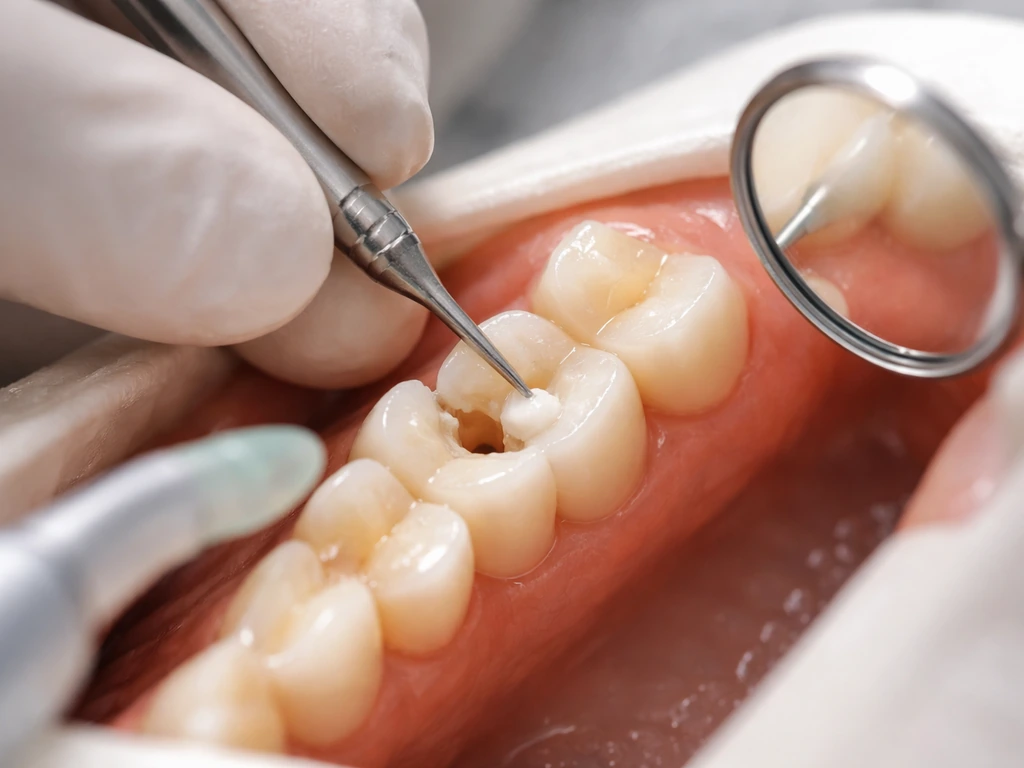
| Problem | Evidence-based treatment options |
|---|---|
| Mild enamel erosion or small cavity | Fluoride remineralization, composite filling |
| Larger cavity or weakened tooth | Composite or amalgam filling, dental crown |
| Chipped or worn front teeth | Dental bonding, porcelain veneers, crown |
| Missing single tooth | Dental implant, fixed bridge |
| Multiple missing teeth | Implant-supported bridge, partial or full denture |
| Gum recession | Gum graft (connective tissue graft), pinhole technique |
| Bone loss from periodontitis | Deep cleaning (scaling and root planing), guided bone regeneration, bone grafts |
| Grinding damage | Night guard (occlusal splint), bite adjustment, restorations as needed |
| Impacted or problematic wisdom teeth | Monitoring, extraction if causing damage or recurrent infection |
None of these treatments regrow your natural tooth. What they do is restore function, prevent further damage, and in the case of implants, replace the root and crown with something that performs very similarly to a natural tooth. That's a realistic and achievable goal for most adults after 30.
How to stop making things worse from here
Since you can't grow new teeth, protecting what you have is the most important thing you can do. The habits that matter most are well-established and not complicated.
- Brush twice a day with fluoride toothpaste. The CDC confirms fluoride from toothpaste binds to tooth surfaces and is one of the most effective tools for preventing cavities. Community water fluoridation prevents at least 25% of tooth decay even in adults with access to other fluoride sources, per the ADA.
- Floss or use interdental cleaners daily. Most cavities and the earliest stages of periodontal disease start in the spaces between teeth that a toothbrush can't reach.
- See a dentist at least once a year, ideally every 6 months. Many conditions including early cavities, early bone loss, and impacted teeth cause no symptoms until they're already significant. Catching them early is the difference between a filling and a root canal, or between gum therapy and surgery.
- Get a night guard if you grind your teeth. Bruxism silently destroys enamel and cracks teeth. A custom guard made by your dentist protects your teeth during sleep when you have no conscious control.
- Manage acid exposure. Frequent consumption of acidic foods and drinks (citrus, soda, sports drinks, vinegar-based foods) erodes enamel. Rinsing with water after acidic drinks and waiting 30 minutes before brushing after eating acidic foods reduces damage.
- Don't smoke. The CDC lists smoking as one of the leading contributors to tooth loss in adults, partly because it significantly worsens periodontal disease and impairs healing.
- Get periodontal maintenance if you've been diagnosed with gum disease. Standard cleanings aren't sufficient once attachment loss has occurred. More frequent (typically every 3 to 4 months) professional cleaning keeps bacterial levels low and slows further destruction.
The biology here is straightforward but worth saying plainly: your adult teeth have been your permanent set since adolescence. If you're around 30, everything that's happened in the last 15 or more years has been about maintaining, damaging, or treating that same fixed set of teeth. The goal from here isn't regrowth. If you're worried about can teeth grow at age 40, the key takeaway is that after the usual eruption windows close, new natural tooth formation is not something you can count on isn't regrowth. It's preservation and smart restoration when needed. People who stay consistent with professional care and good daily habits genuinely do keep their teeth in good shape well into older age. That's the realistic, achievable version of "getting your teeth back."
If you're curious about what's typical at specific ages around this range, the picture at 30, 35, and 40 is broadly similar in terms of biology but can differ in terms of cumulative damage and risk. The earlier you get a clear baseline from X-rays and a periodontal assessment, the more options you have.
FAQ
If a tooth looks different after 30, does that ever mean it is actually growing?
Sometimes what looks like growth is movement, mineral changes, or damage. Teeth can shift due to bite changes or periodontal support loss, enamel can look different after erosion or whitening, and recession can expose more root surface. A dentist can confirm whether a “new” appearance is eruption, movement, or tissue loss with an exam and updated imaging.
Can enamel or a small chip regrow on its own after 30?
Enamel does not regrow. If the damage is a minor surface loss, fluoride and good home care may slow further breakdown by strengthening remaining enamel crystals, but they will not fill in the missing area. For a chip or rough edge, your dentist may recommend smoothing, bonding, or a protective restoration depending on depth and sensitivity.
Why do my teeth feel longer or more sensitive after 30?
That pattern often points to gum recession or enamel wear, not tooth growth. Recession can expose root dentin which is more sensitive, and wear can thin the enamel layer. If sensitivity is new or worsening, it is worth treating promptly because progression can lead to more exposure and bone attachment loss.
What should I do if I think a wisdom tooth is coming in after 30?
Pain, swelling, or a partially erupted bump can indicate the tooth is moving into place, but it can also be an infection around an impacted area. The usual next step is an exam plus imaging (often a panoramic X-ray) to check position and whether there is risk to the neighboring molar or development of a pericoronal problem.
If my teeth are shifting in adulthood, is that normal aging?
Shifting can happen from normal bite changes, but it is commonly driven by loss of periodontal support, tooth loss, or habits like clenching. True “normal aging” shift without underlying disease is less common. Periodontal probing and bite assessment help determine whether this is movement from support loss, occlusion changes, or something else.
Can gum grafts or bone grafts fully replace what was lost to periodontitis?
They can improve attachment and reduce recession in selected cases, but they do not recreate identical original tissue architecture. Outcomes depend on defect type, severity, and how well inflammation is controlled after surgery. Your dentist may also recommend long-term maintenance visits to prevent additional breakdown.
Are there any non-surgical options that can reverse early gum recession?
Non-surgical measures can sometimes stabilize or modestly improve early recession by controlling inflammation, improving brushing technique, and addressing contributing factors like trauma from brushing or orthodontic-related forces. But if recession is advanced or there is significant attachment loss, surgical options like grafting are often needed to meaningfully cover exposed roots.
If I have a cavity in my 30s, can the tooth heal itself without a filling?
Early, very small lesions can sometimes be arrested or remineralized with professional monitoring and fluoride, especially when detected before a cavity fully forms. Once a cavity reaches the stage where there is actual structural breakdown, it will not heal back into intact tooth and a filling is typically needed to restore the tooth and prevent spread.
How do implants relate to tooth regeneration, and do they count as new teeth growing?
Implants replace the root portion using a titanium post plus a crown, they do not regrow your natural tooth tissues. The benefit is function and appearance similar to a natural tooth, and they can support chewing and comfort. Whether you are a candidate depends on bone volume, periodontal health, and overall risk factors.
What’s the most useful baseline check for someone worried about tooth loss after 30?
Ask for current bitewing and/or a panoramic X-ray plus periodontal probing to document attachment levels and bone status. That baseline helps separate wear and gum recession from hidden issues like ongoing decay between teeth or bone loss that cannot be seen just by looking.
Next Articles
Can Teeth Grow at Age 40? What’s Real and What Isn’t
Learn if can teeth grow at 40, what changes mimic regrowth, wisdom tooth timing, and when to get X-rays.
Will Teeth Grow After 15 Years? What’s Normal and Not
Find out if teeth can still grow after 15, wisdom timing, what’s normal, and next steps with X-rays.
Can Teeth Grow at Age 35? What Can and Cannot Regrow
Can teeth grow at 35? Know what can regrow like enamel remineralization and what cannot, plus next steps.