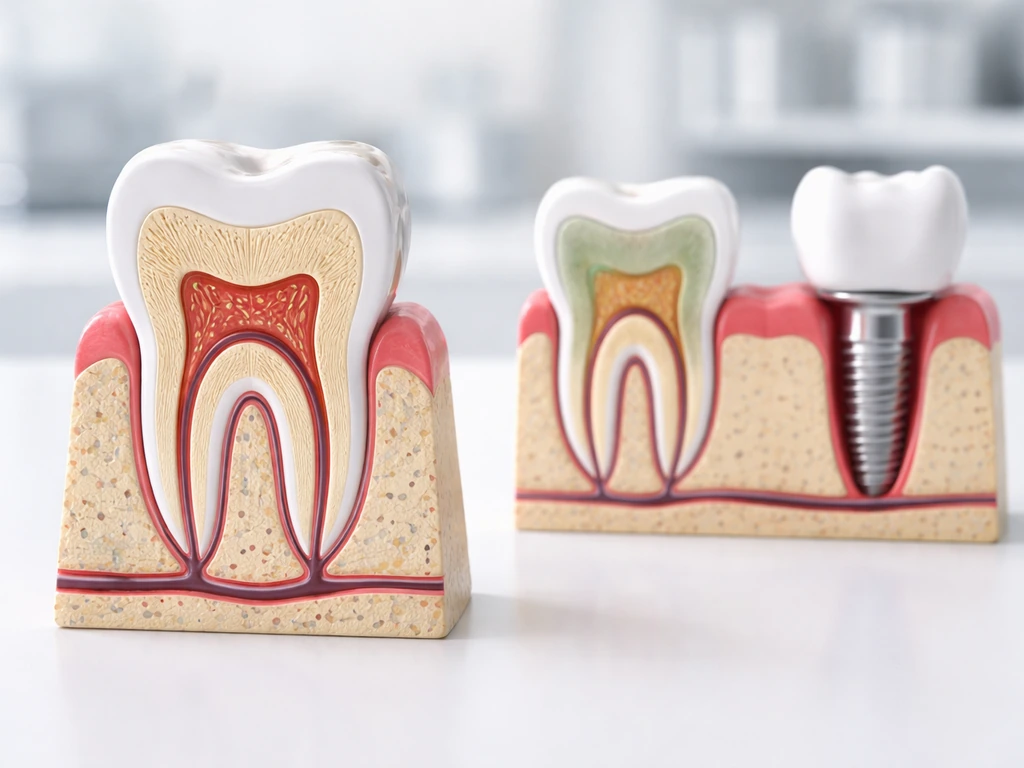
Diagnose before you prescribe: what's actually limiting your growth?

The single biggest mistake practices make is jumping straight to marketing spend without first figuring out where their funnel is actually leaking. Think of it like a dental diagnosis: you wouldn't recommend a treatment plan without an exam. The same logic applies here. Before spending a dollar on ads or hiring another associate, you need to know whether your problem is upstream (not enough people finding you) or downstream (people are calling but not booking, or booking but not showing up, or showing up but not accepting treatment). Each of those problems has a completely different fix.
The simplest diagnostic is to map your current funnel from inquiry to collected revenue: How many new patient calls or online inquiries do you get per month? Of those, how many actually schedule? Of those scheduled, how many show up? Of those who show up, how many accept a treatment plan? Of accepted plans, how much gets collected? Wherever the drop-off is biggest, that's your bottleneck, and that's where you start.
Set real growth goals and know your baseline numbers
Vague goals like "grow the practice" go nowhere. Specific, measurable targets give your team something to actually work toward. Start by pulling your current numbers for the last 12 months: new patients per month, production per hour, collections rate, no-show rate, and case acceptance rate. Then compare those to industry benchmarks so you know where you stand.
| KPI | Industry Average | Top Performer Target |
|---|
| New patients per month | 20–50 | 50+ |
| Lead-to-scheduled appointment rate | 57% | 75–85% |
| No-show rate | 11–15% | Under 5% |
| Case acceptance rate | 25–35% | 70–90% |
| Production per hour | $400–$500 | $500–$800 |
| Collections rate | 90–95% | 98%+ |
| Missed call rate | ~32% | Under 15% |
Once you have your baseline, set a 90-day target for each metric that represents a realistic step up, not a fantasy leap. For example, if your case acceptance is currently 28% and the average is 25–35%, a reasonable 90-day target might be 40%. If your no-show rate is 14%, getting it to 8% in 90 days is achievable. These numbers give your whole team a shared scoreboard.
One more foundational step: count your active patients of record. The ADA defines "active" as any patient who has received care in the past 12 months (or 24 months for existing patients of record). If your active patient count is flat or shrinking year over year, retention is a bigger problem than acquisition, and you should address that first before pouring money into getting new people in the door.
Bringing in more new patients: marketing and referrals that actually work

Patient acquisition starts with being findable, then being convincing. For most general practices in 2026, the highest-ROI acquisition channels are local SEO (especially your Google Business Profile), patient referral programs, and targeted paid search ads for high-intent terms. Social media can support brand awareness but rarely drives appointment volume the way search does.
Local SEO and your Google Business Profile
Your Google Business Profile is the single most important free marketing tool you have. Make sure your hours, phone number, and address are current, post updates at least twice a month, and actively respond to every review (positive and negative). To actually measure what's working, add UTM parameters to the links in your GBP so you can track in Google Analytics which local search paths are leading to booked appointments. Without that tracking, you're flying blind on what your SEO efforts are producing.
Paid ads: only run them if you can track them
Google Ads for dentistry can be extremely effective, but they're commonly wasted because practices don't close the loop between ad click and booked appointment. Use call tracking numbers that are unique to each campaign so you know exactly which ad drove which phone call and whether that call turned into a patient. If you can't tie an ad campaign to a booked appointment, you don't know your cost per new patient, and you can't make smart decisions about where to spend. This matters especially because roughly 32% of dental practice calls go unanswered, which means a significant chunk of your ad spend is evaporating at the phone.
Build a referral engine, not just a referral hope
Most practices rely on passive word-of-mouth. A referral system means actively asking happy patients to refer at the right moment (right after a great experience), making it easy (a direct link to your Google review page or a referral card), and acknowledging referrals when they happen. For specialist practices, a structured program to build relationships with referring GPs, including regular communication and fast referral feedback, is worth far more than any ad campaign. The cost of a referred patient is essentially zero compared to a paid acquisition.
Convert more inquiries into actual appointments

Getting someone to call or fill out a contact form is only half the battle. According to 2024 benchmarking data, the average dental practice converts about 57% of new patient inquiries into a scheduled appointment. Top performers reach 75–85%. That gap represents a massive number of patients you're currently losing after they've already expressed interest.
Fix your phone handling first
Only about 68% of dental practice calls get answered during business hours. If nearly one in three calls goes unanswered, no amount of marketing spend will fix your growth problem. The American Dental Association notes that blank" rel="noopener noreferrer">lost calls from prospective patients can happen when the phone isn’t answered fast enough, callers hang up instead of waiting on hold, or the caller doesn’t feel a personal connection with the staff member answering questions. If you want to address your growth problem by improving daily intake and retention workflows, good to grow dental is a related approach you can compare with as you plan next steps. Audit your call answering rate immediately. Consider an after-hours answering service or an AI-assisted scheduling tool for overflow. Train your front desk staff specifically on how to handle new patient calls: the goal is to get a name, a need, and a scheduled appointment in that first conversation, not to give a price quote or transfer the caller to voicemail.
Nail the new patient experience
The new patient experience starts before they walk in the door. Send a confirmation with clear directions and parking info, a welcome message from the doctor or team, and all necessary paperwork digitally in advance so the first visit isn't spent on a clipboard. The ADA recommends that patients review and update their medical and dental history at every visit, so having a streamlined digital intake process makes this easy instead of a burden. First impressions drive both review behavior and case acceptance, so every touchpoint before, during, and after that first appointment matters.
Keep the patients you already have: retention and case acceptance
Acquiring a new patient costs significantly more than retaining an existing one, and yet most practices focus far more energy on the former. You can also boost long-term revenue by learning how to grow your dental membership plan alongside your retention system. Retention starts with recall, and recall only works if it's systematic, not ad-hoc.
Build an automated recall system

Every patient who leaves your chair without a next appointment scheduled is a retention risk. Your practice management software should trigger automated recall reminders at 3 months, 5 months, and 5.5 months for six-month recall patients. Multi-channel outreach (text, email, then phone) dramatically outperforms single-channel. For lapsed patients (those who haven't been in for 13–24 months, who the ADA still classifies as patients of record), a reactivation campaign with a specific reason to return ("you're due for your cleaning and we have openings this week") works better than a generic reminder. Automated systems can handle the callback routing too, so staff aren't playing phone tag with 40 patients a day.
Raise your case acceptance rate
The industry average case acceptance rate sits at 25–35%, but top-performing practices achieve 70–90%. That gap is almost entirely explained by how treatment is presented, not by whether patients can afford it. The key principles: present the full treatment plan (not a watered-down version you think they'll accept), use visual aids and intraoral camera images so patients see what you see, discuss the consequences of delaying treatment in plain language, and always offer flexible payment options including third-party financing. Never present treatment as optional if it isn't. Train your entire clinical and administrative team on how to discuss treatment in a consistent, non-pressuring but clear way.
Cut your no-show rate

A no-show rate of 11–15% is common in general dentistry, but the best practices operate at under 5%. Getting there requires a multi-touch confirmation system: an automated reminder 72 hours out, a confirmation request 24 hours out (requiring the patient to actively confirm, not just receive a message), and a phone call from the front desk for high-value appointments or for patients with a history of cancellations. Reddit dentists and practice operators discuss real-world approaches for reducing no-shows and last-minute cancellations, including confirmation calls and other front-desk follow-ups reducing no-shows with multi-touch confirmation and follow-ups. Implementing a clear cancellation policy with a minimum 24-hour notice requirement, and in some cases a deposit for longer appointments, reduces chronic no-shows significantly. The Michigan Dental Association supports policies that include deposit forfeiture for no-shows or late cancellations, which is a reasonable standard for procedures requiring significant chair time.
Optimize your operations so growth doesn't break your team
Growing a practice by adding patients only works if your operations can actually absorb the demand. Many practices hit a ceiling because they're already running at or near capacity, and adding new patients just creates scheduling chaos and burnout. Before you scale marketing, check your operational baseline.
Know your capacity numbers
A useful benchmark: operatory chairs in many practices sit empty roughly 40% of the time, and average revenue per chair hour is approximately $400. If you have two operatories running 8 hours a day, 4 days a week, and they're only occupied 60% of the time, you're leaving roughly $3,840 per week on the table before you even think about marketing. The first question isn't "how do I get more patients?" It's "do I have the chair time and team capacity to see them?"
Schedule for access, not just efficiency
Industry data shows that average practices often have appointment lead times of a month or more for new patients, while top performers prioritize same-week access for new and emergency patients. Long wait times are a silent killer for new patient conversion: someone who calls and hears "the next available is six weeks out" will frequently call a competitor. Protect a small number of daily appointment slots specifically for new patients and urgent cases, and fill them with hygiene and routine restorative only when they're unfilled by the day before.
Invest in your front desk team
Your front desk team is the highest-leverage part of your operation. A well-trained scheduling coordinator who converts calls, confirms appointments, collects balances, and reschedules cancellations effectively is worth more to your practice revenue than almost any other role. Use a structured 30/60/90-day onboarding scorecard for new hires so they reach proficiency quickly and aren't winging it in week three. Regular role-specific training (phone scripts, financial conversation frameworks, scheduling protocols) should be ongoing, not a one-time event.
Track these KPIs and build your 30/60/90-day plan
You don't need 40 metrics. You need a short scorecard that you actually review every week. Pick five to seven KPIs that cover the full funnel, assign ownership for each one, and review them in a team huddle every Monday morning. When a number moves in the wrong direction, you catch it in days, not quarters.
Your core KPI dashboard
- New patients per month (target: 20–50+ depending on practice size and growth stage)
- Lead-to-scheduled appointment conversion rate (target: 75%+)
- No-show and cancellation rate (target: under 5%)
- Case acceptance rate (target: 50%+ average; 70%+ top performer)
- Production per hour (target: $500–$800)
- Collections rate (target: 98%+)
- Active patient count year-over-year (should be growing)
- Missed call rate (target: under 15%)
Your 30-day sprint: fix the leaks
- Pull your baseline numbers for every KPI above. If you don't know a number, figure out how to measure it this week.
- Audit your call answering rate. Listen to recorded calls if your system supports it. Identify the top three reasons new patients don't book on the first call.
- Implement or upgrade your multi-touch appointment confirmation system. Aim to get no-shows under 8% by end of month.
- Review your new patient intake process end-to-end. Switch to digital paperwork if you haven't already.
- Check your Google Business Profile: updated hours, recent photos, responses to all reviews, and a UTM-tagged website link.
Your 60-day push: build the systems
- Launch or formalize your recall and reactivation system. Every patient should leave with their next appointment scheduled, and lapsed patients should receive a targeted outreach sequence.
- Train your clinical and front-desk team on treatment presentation and case acceptance best practices. Role-play financial conversations.
- Set up call tracking on your paid ads and website. You should be able to name your cost per booked new patient by the end of this period.
- Review your scheduling template. Protect daily slots for new and emergency patients. Calculate your current chair utilization rate.
- Implement a cancellation and no-show policy with a 24-hour notice requirement and document it in your patient communication.
Your 90-day review: scale what's working
- Compare all KPIs to your 30-day baseline. Celebrate specific wins with the team. Identify the one or two metrics still lagging.
- Evaluate your marketing channels by cost per booked new patient. Double down on the channels with the best ROI and pause or restructure the underperformers.
- If chair utilization is above 80% and new patient volume is growing, begin planning your next capacity expansion: extended hours, an additional hygienist, or a second operatory.
- Build a referral recognition program if you haven't already. Identify your top 20 referring patients and thank them directly.
- Set your next 90-day targets based on what you learned in this cycle.
Growing a dental practice is fundamentally about diagnosing your specific bottleneck, fixing it with a measurable system, and then moving to the next constraint. If you want good to grow pediatric dental services, the same bottleneck-first approach and KPI tracking can help you scale without sacrificing the patient experience. If you want where smiles grow pediatric dentistry delmar services, use the same bottleneck-first approach and KPI tracking to scale without sacrificing the patient experience. It's not about doing everything at once. Practices that grow consistently aren't running 15 growth initiatives simultaneously: they're running three or four very well, measuring them weekly, and iterating. Start with your data, pick your biggest leak, and fix that first. Everything else builds from there.