
No, gums do not grow over trapped food in any helpful or reliable way. If food is wedged at your gumline or in a pocket between your tooth and gum, your body's response is inflammation, not a tidy seal of new tissue over the debris. The gum may swell and look like it's "closing in," but that swelling is your immune system reacting to irritation, not gum tissue regenerating a protective cover. The food needs to come out, and the faster you remove it, the faster the irritation settles down.
Can Gums Grow Over Food? What Happens and What to Do

Marcus Holloway
12 Jun 2026
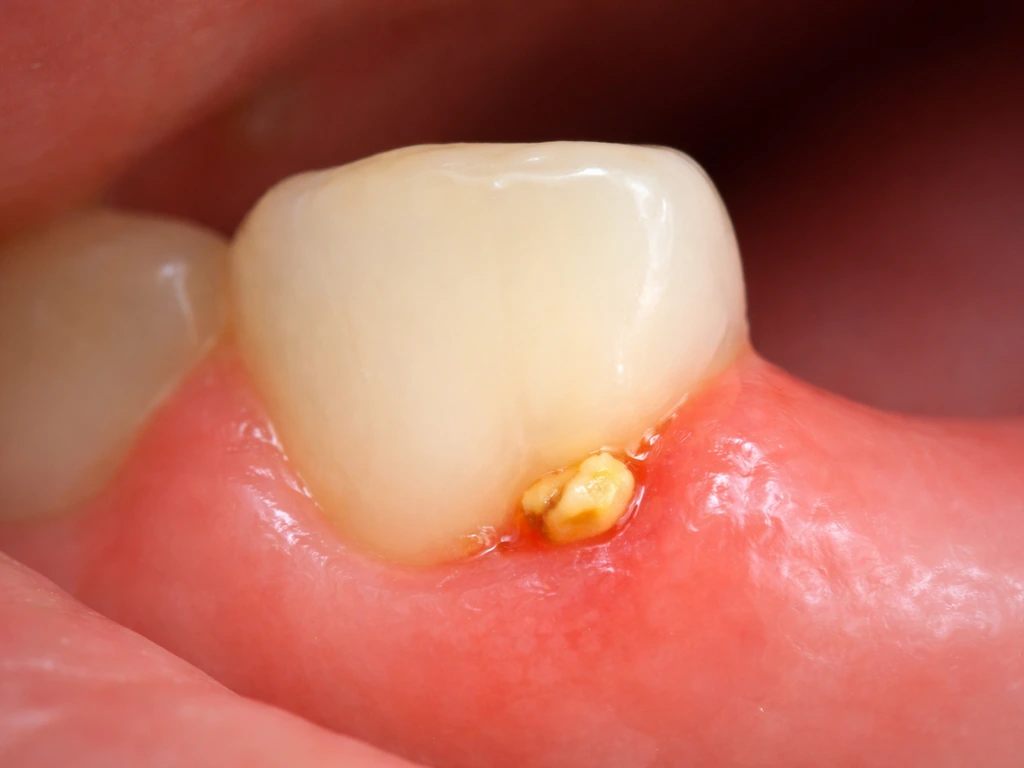
What's actually happening when food gets "stuck in your gums"
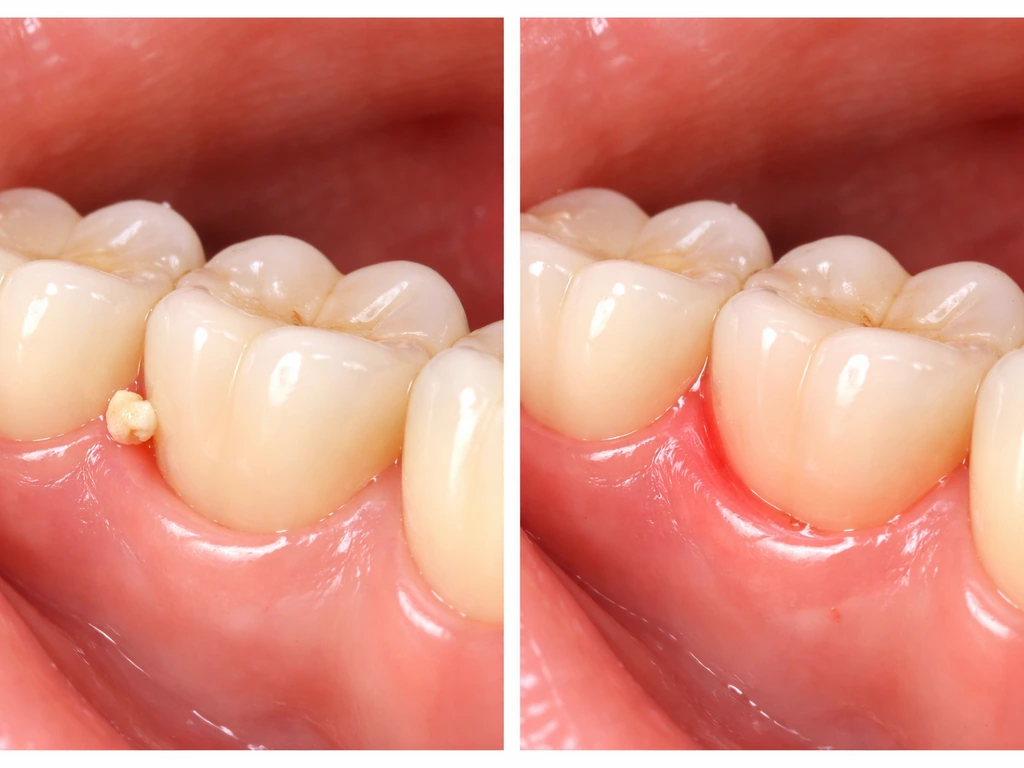
There are really two different things people mean when they say food is stuck in their gums, and it matters which one you're dealing with.
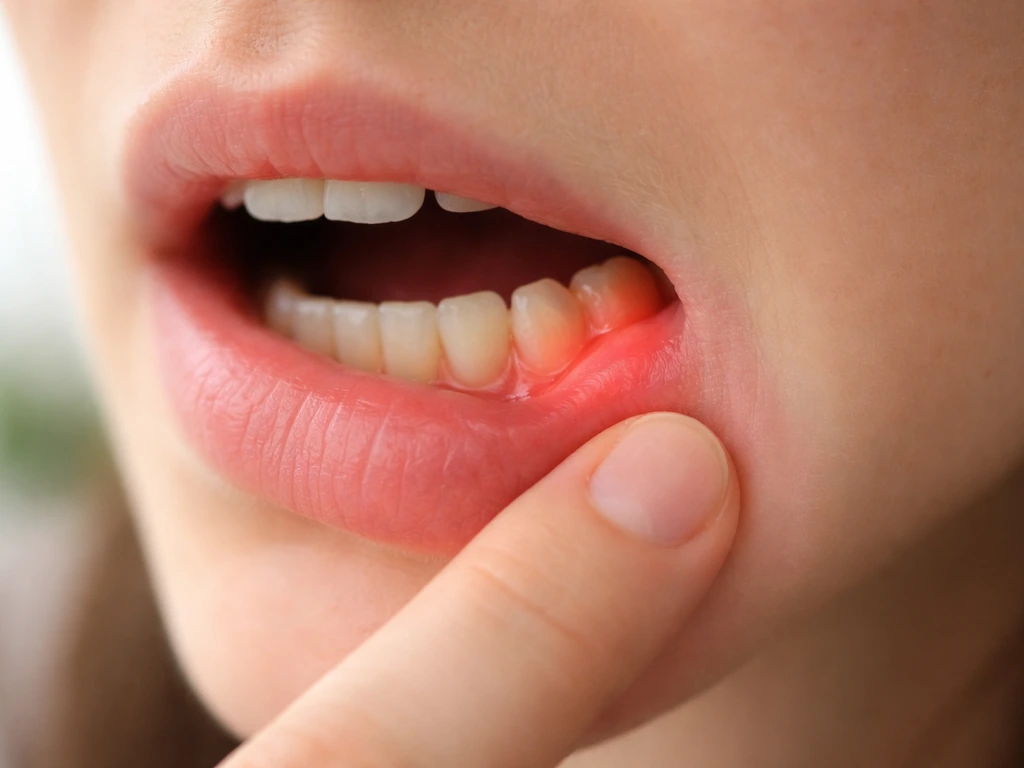
The first is straightforward food packing, which is when a piece of food (a kernel of popcorn, a sliver of meat, a seed) wedges into the space between teeth right at or just below the gumline. This is a mechanical problem. The food is sitting there physically, and it's irritating the surrounding tissue. The gum gets red and tender, maybe bleeds a little when you touch it. This is extremely common and almost always fixable at home.
The second is a gum pocket, where chronic gum disease has caused the gum to detach from the tooth, creating a below-the-surface space. Food and bacteria collect in that pocket constantly. You may not even feel it as "food stuck" so much as persistent soreness, bad breath, or bleeding that never quite goes away. This situation is not solvable with floss alone, and it's the version that actually warrants a dentist visit.
A third scenario worth knowing: if you're dealing with a partially erupted wisdom tooth, the gum flap (called the operculum) that sits over it creates a natural trap for food and bacteria. This is called pericoronitis, and it's particularly prone to infection. Teens and young adults in their late teens and twenties are most likely to deal with this, since wisdom teeth typically erupt between ages 17 and 25. The flap doesn't "grow over" the problem either; it just keeps the debris in place and the inflammation going.
How to remove the food safely today
Start gentle and escalate from there. Most cases of food stuck at the gumline resolve with one or more of the following approaches used in order.
Rinse first
Warm saltwater is your first move. Mix about half a teaspoon of table salt into a glass of warm water and swish vigorously for 30 seconds. The water pressure and the motion can dislodge loose food particles and reduce inflammation at the same time. Do this two or three times before reaching for anything else.
Floss with proper technique
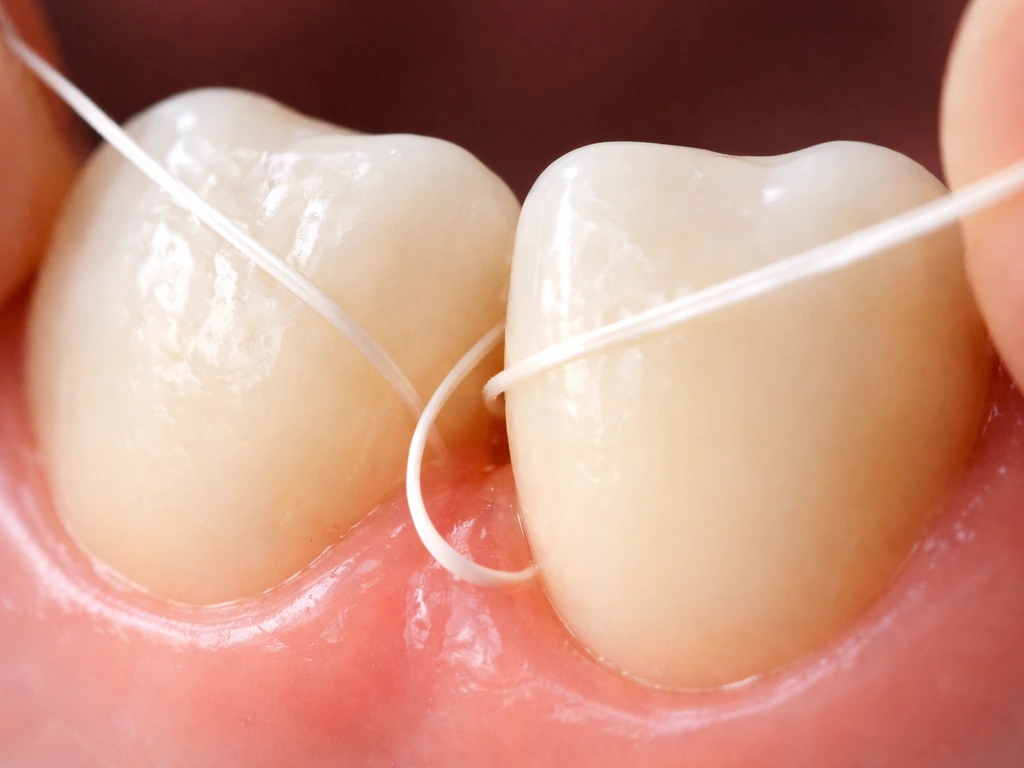
When you floss the affected area, don't snap the floss down hard or saw back and forth aggressively. Instead, slide the floss gently between the teeth, and when you reach the gumline, curve it into a C-shape against one tooth, then gently slide it up and down to clean just beneath the gumline. This technique clears debris from below the gum margin without traumatizing the tissue. Do the same against the adjacent tooth. If the area is very tender and bleeding, be gentle but don't skip it; leaving debris there will only extend the irritation.
Interdental brushes for wider gaps
If there's a gap between your teeth, an interdental brush (a small, cone or cylindrical brush on a wire handle) can be more effective than floss at clearing packed debris. An ADA Seal product page for an interdental brush indicates products evaluated under ADA Seal criteria for safety and effectiveness, supporting the use of purpose-made interdental tools rather than improvised picks interdental brush can clear packed debris. The key rule here is size: choose the largest brush that passes through the space without force. Forcing an oversized interdental brush can cut the gum tissue and make the problem worse. Start small, and if it slides through easily, try the next size up.
Water flosser as a flush
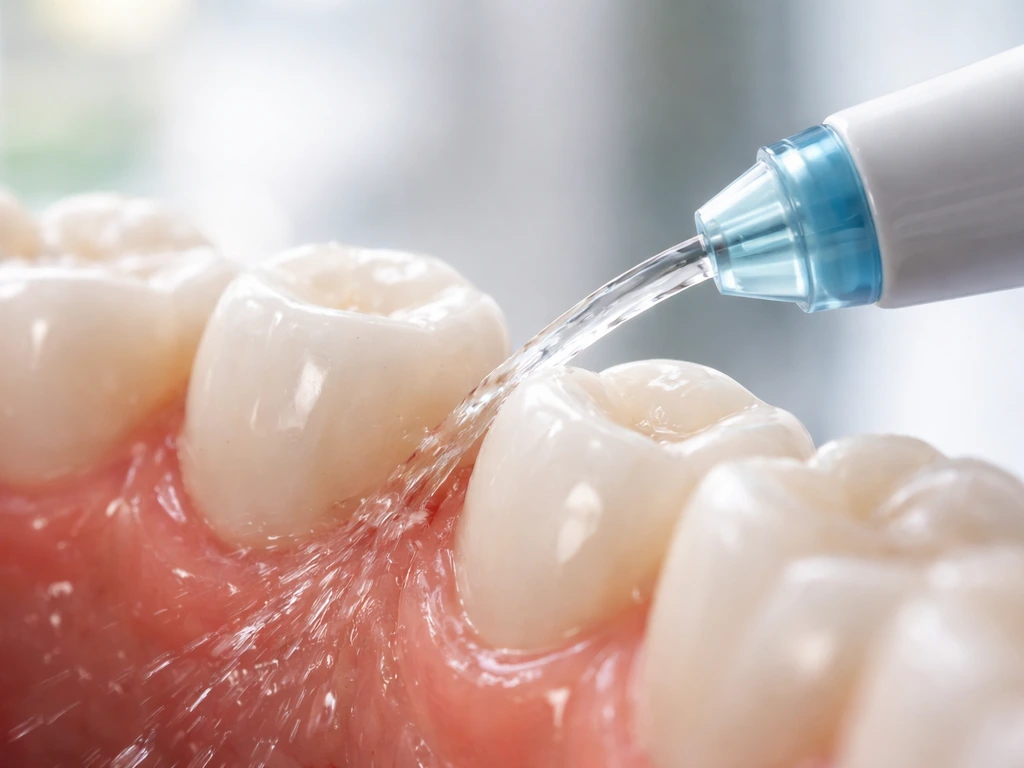
A water flosser (like a Waterpik) can be excellent at flushing debris from the gumline and shallow pockets that regular floss can't quite reach. If you're using one for the first time, start on the lowest pressure setting to avoid irritating already inflamed tissue. Aim the tip at the gumline at roughly a 90-degree angle and let the pulsing water do the work. This is also one of the better tools for flushing under a wisdom tooth flap, though it won't replace the need for treatment if pericoronitis is actually setting in.
What not to do
A few things that feel intuitive in the moment but genuinely make the situation worse:
- Don't use toothpicks, pins, fingernails, or any sharp improvised object to dig at the gum. These cause small puncture wounds that let bacteria directly into the tissue, which can trigger a localized infection or gingival abscess.
- Don't brush the inflamed area with heavy pressure. Scrubbing an irritated gum doesn't clean it faster; it strips the outer tissue layer and prolongs healing.
- Don't try to "flush" the area with hydrogen peroxide straight from the bottle. The ADA supports rinsing as an adjunct to mechanical cleaning, not as a replacement, and undiluted harsh rinses can damage the mucosal tissue.
- Don't ignore it hoping the gum will just grow over and seal it in. Tissue swelling is not a solution. It traps debris further and sets up the conditions for a deeper infection.
- Don't force floss or an interdental brush between teeth that don't have room. Forcing tools creates more injury than the original food impaction.
How long healing takes and what normal vs. abnormal looks like
If food packing is the only issue and you've cleared it, the gum should calm down within 24 to 72 hours. Mild redness, a little tenderness, and some bleeding with contact are all normal while the tissue is recovering. Kids and teenagers often heal faster than adults because their gum tissue tends to be more vascular and resilient; adults over 50 or those with gum disease or diabetes may notice healing takes a bit longer.
| What you see/feel | Normal or concerning? | What to do |
|---|---|---|
| Mild redness and tenderness at gumline, improves over 1-3 days | Normal healing after food removal | Continue gentle cleaning; monitor |
| Slight bleeding when flossing, stops quickly | Normal with mild gum inflammation | Keep flossing gently; should improve within a week |
| Swelling that grows over 24-48 hours despite clearing food | Concerning; possible early infection | Call your dentist same day or next day |
| Persistent bad taste or bad breath that doesn't resolve | Concerning; may indicate pus or deeper debris | Dental appointment soon |
| Throbbing pain, visible swelling of the gum or face, pus | Urgent; possible abscess | See a dentist urgently or go to emergency care |
| Fever, difficulty swallowing, or jaw stiffness | Emergency | Go to an emergency room immediately |
When to get urgent dental care
Most food-at-the-gumline situations are not emergencies. But a few signs mean you need professional help fast, not "sometime this week."
Go urgently (same day, or to an emergency room if you can't reach a dentist) if you notice any of the following: facial swelling on the cheek, jaw, or under the eye; a fever above 38°C (100.4°F); difficulty opening your mouth, swallowing, or breathing; pus draining from the gum even if the pain temporarily improves afterward; or a swelling in the mouth that feels like it's spreading. The NHS, Mayo Clinic, and the American Association of Endodontists all align on these red flags as signs of a dental abscess that can spread to the neck and airway if not treated. Pain going away on its own doesn't mean the infection is resolved; it can mean the abscess has ruptured, and the bacteria are still present.
For persistent but non-emergency symptoms, a dentist should see you within a few days if: bleeding at the gumline doesn't stop after two weeks of proper cleaning, there's ongoing pain at mealtimes in the same spot (which can indicate food impacting into a periodontal pocket), or you have a wisdom tooth flap that keeps getting re-infected.
The regeneration reality: what gums can and can't do
Here's where a lot of internet myths lead people in the wrong direction. Gum tissue can absolutely heal after irritation. If you remove the irritant (the trapped food), keep the area clean, and let the inflammation subside, the tissue recovers and looks normal. That's healing, not regeneration. The gum was never gone; it was just inflamed.
True periodontal regeneration is a completely different and much harder biological process. When periodontitis has destroyed the attachment between tooth, gum, ligament, and bone, the body does not simply rebuild those structures on its own. Periodontal regeneration in the clinical sense means forming new cementum, new periodontal ligament, and new alveolar bone, and research consistently shows this is difficult to achieve even with surgical interventions like enamel matrix derivatives or scaffolding procedures. "Shrinking" gum swelling with medication is periodontal repair, not regeneration. New tissue coverage over a long-standing pocket that has had bone loss is not something that happens naturally.
So when someone asks whether gums can grow over food, the honest answer is: inflamed gum tissue can swell around food, making it look enclosed, but that is a sign of a problem, not a solution. The food still needs to come out. And if food keeps packing in the same spot repeatedly, it's worth asking your dentist whether there's an underlying pocket, a poorly contoured filling, or a partially erupted tooth that's creating the trap in the first place.
This connects to a broader truth this site covers across topics: whether you're wondering about gum growth over teeth, how to actually encourage gum tissue health, or the reality of what gums can and cannot regenerate naturally, the pattern is the same. Healing after acute irritation is possible. Natural regrowth of lost periodontal structures is not. That distinction matters for how you approach treatment and what expectations you bring to your dentist.
A quick summary of what to do right now
- Rinse with warm saltwater two to three times to dislodge loose debris and reduce inflammation.
- Use proper C-shaped floss technique at the gumline, or an appropriately sized interdental brush, to clear the food mechanically.
- Try a water flosser on low pressure if the food is still not clearing, especially around wisdom teeth.
- Avoid sharp objects, heavy-pressure brushing, or anything that punctures or strips the gum tissue.
- Monitor for 24 to 72 hours; mild tenderness and redness should improve within that window.
- Call your dentist if swelling grows, a bad taste persists, or pain at that spot keeps returning.
- Go to an emergency room if you develop facial swelling, fever, or difficulty swallowing or breathing.
FAQ
If I remove the food, how long should it take before the gum looks normal again?
For simple food packing, swelling and tenderness typically calm within 24 to 72 hours, but lingering mild redness can take a few more days. If the area is still bleeding with gentle contact after 1 to 2 weeks of careful cleaning, it suggests a pocket, ongoing trauma, or another trap that needs a dental exam.
Is it safe to keep trying to “push” the food out with toothpicks or hard picks?
Usually no. Hard or pointy tools can cut the gum and drive debris deeper, especially right at the gumline. If you need something besides saltwater, use floss with a gentle C-shape technique or an appropriately sized interdental brush, and stop if you see worsening bleeding or a new sore spot.
Will mouthwash or hydrogen peroxide dissolve the food so the gum can heal faster?
Mouthwash can reduce surface bacteria, but it does not reliably remove a wedge of food lodged between tooth and gum. Hydrogen peroxide can irritate already inflamed tissue and delay comfort for some people. The priority is mechanical removal plus gentle cleaning, then supportive rinsing.
Does flossing always work better than an interdental brush?
Not always. If food is packed in a slightly wider space, an interdental brush can clear it more effectively than floss. The key decision aid is sizing, choose the largest brush that passes without force, because forcing a bigger size can injure the gum and prolong inflammation.
Can a water flosser replace floss or brushing if food keeps getting stuck?
A water flosser can help flush debris from the gumline and shallow pockets, but it should not replace brushing and floss or interdental cleaning. Use it as a supplement, and if the same spot keeps recurring, you may need evaluation for a periodontal pocket, a rough restoration edge, or a wisdom tooth flap.
What should I do if the gum bleeds when I clean the area, but the food seems gone?
Some bleeding during the first few days can be normal with irritation. If bleeding continues beyond about two weeks despite gentle technique, or tenderness persists at a specific spot, get dental assessment because ongoing inflammation often means debris is still getting trapped in a pocket or under a flap.
Can brushing or flossing too hard cause the “looks like it’s closing over” effect?
Yes. Aggressive cleaning can create additional swelling that makes the area look more covered, even though the underlying issue is irritation or trapped bacteria. Use controlled pressure, gentle floss movement, and consider starting with warm saltwater to reduce tenderness before deeper cleaning.
If pain suddenly improves, does that mean the infection cleared on its own?
Not necessarily. Pain can temporarily lessen if an abscess ruptures, but bacteria may still be present. If you had severe pain or pus, or you notice facial swelling or fever, treat it as potentially serious and seek urgent care rather than waiting for discomfort to fully disappear.
When is “same day” care truly necessary for food stuck near the gumline?
Go urgently if you have facial or jaw swelling, fever over 38°C (100.4°F), trouble opening your mouth, swallowing, or breathing, pus from the gum, or a spreading mouth swelling sensation. These patterns suggest a spreading infection risk and should not be managed with home rinses alone.
Could a poorly contoured filling or a wisdom tooth flap keep causing the same problem?
Yes. Repeated food packing in the same location is often due to a trap created by anatomy or dental work, such as a rough or overhanging margin, a partially erupted wisdom tooth with an operculum, or a periodontal pocket. If it recurs, ask your dentist to check for these specific causes rather than repeating the same home routine indefinitely.
Next Articles
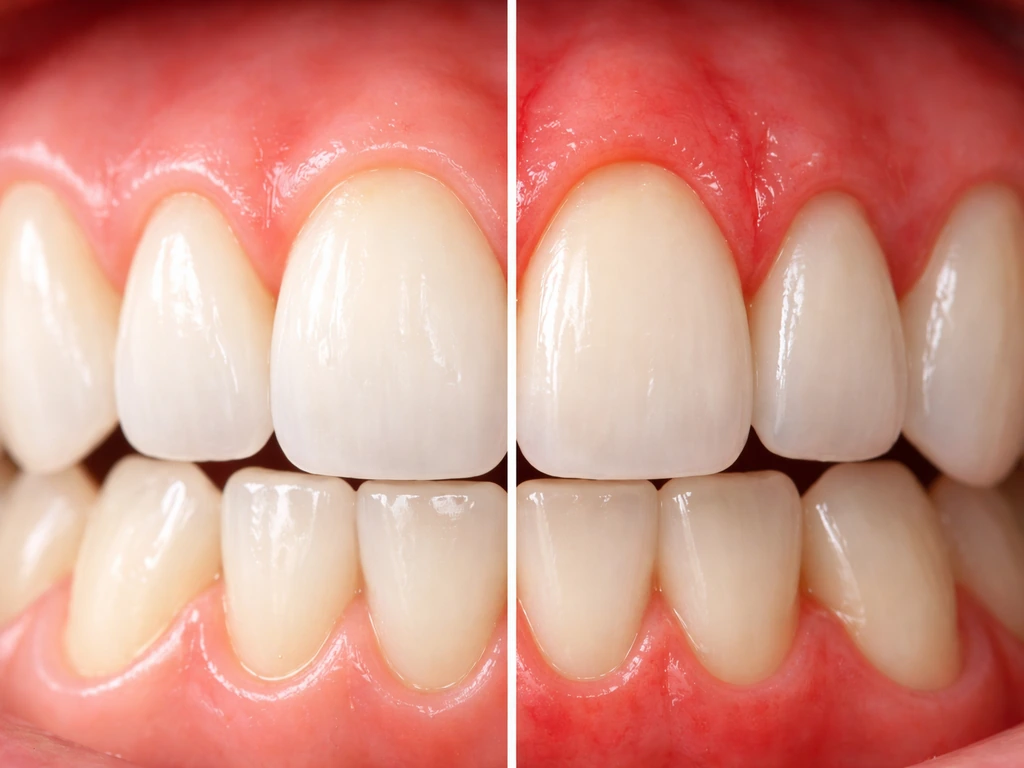
How to Grow Gums in Teeth Naturally: What Works
Natural, evidence-based steps to improve gum health and recession, what can regrow, and when professional periodontal ca
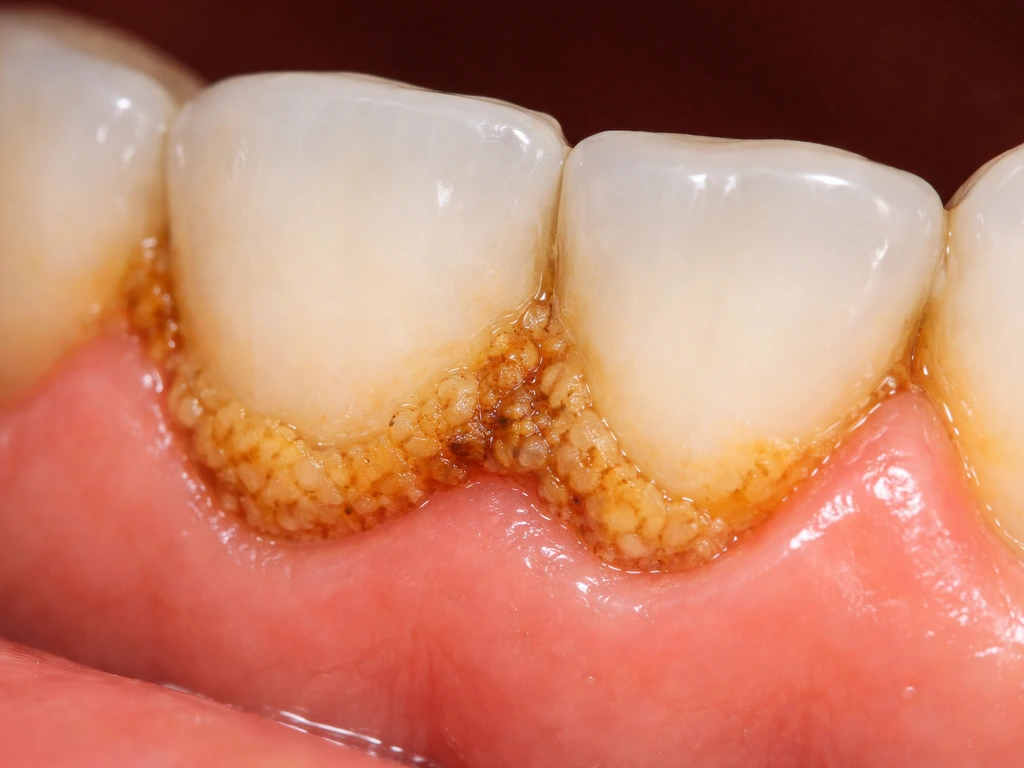
Can Tartar Grow on Gums? How It Forms and What to Do
Learn if tartar builds on gums, why it forms at the gumline, and how to remove it safely and prevent recurrence.
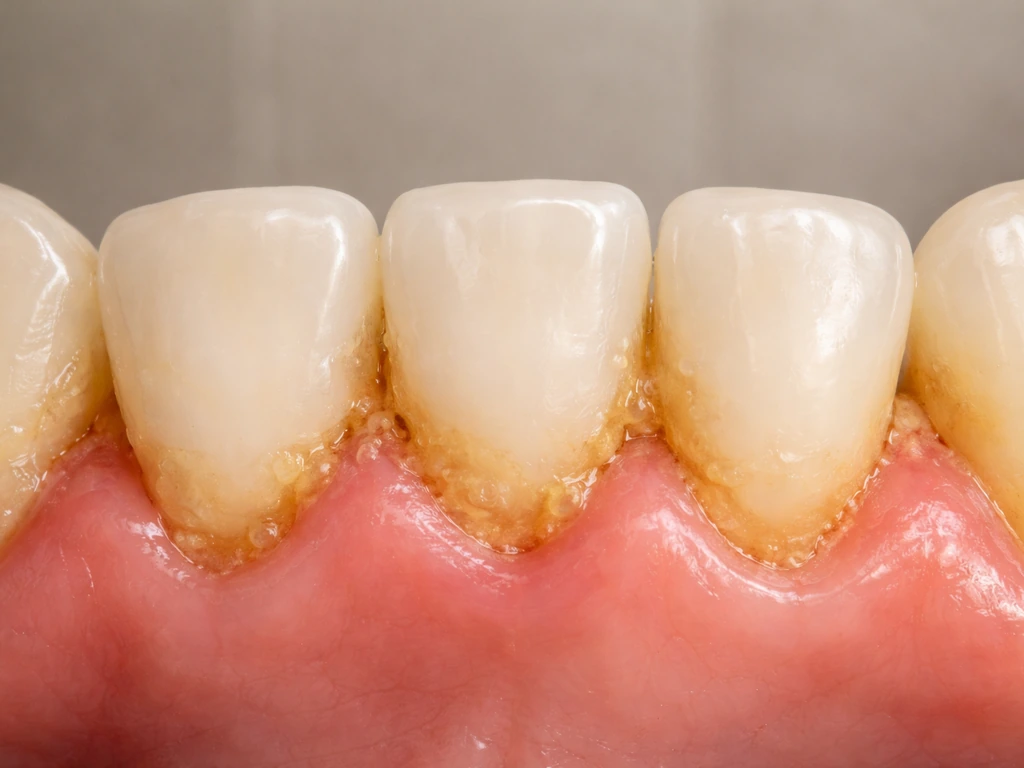
Can Plaque Grow on Gums? What It Means and What to Do
Learn if plaque forms on gums, signs to watch, and a step-by-step routine to remove it and prevent gingivitis.