Yes, a wisdom tooth can absolutely erupt in a direction that puts it in direct contact with your cheek tissue. It doesn't literally burrow through your cheek like a tunnel, but when a wisdom tooth comes in at the wrong angle, its crown can press, rub, or bite into the soft tissue of your inner cheek (the buccal mucosa), causing everything from chronic ulcers to serious infections. This is more common than most people realize, and it's one of the clearest signs that a wisdom tooth needs professional attention sooner rather than later.
Can Wisdom Teeth Grow Into Your Cheek? Causes and What to Do

Marcus Holloway
13 Jun 2026
What "growing into your cheek" actually looks like
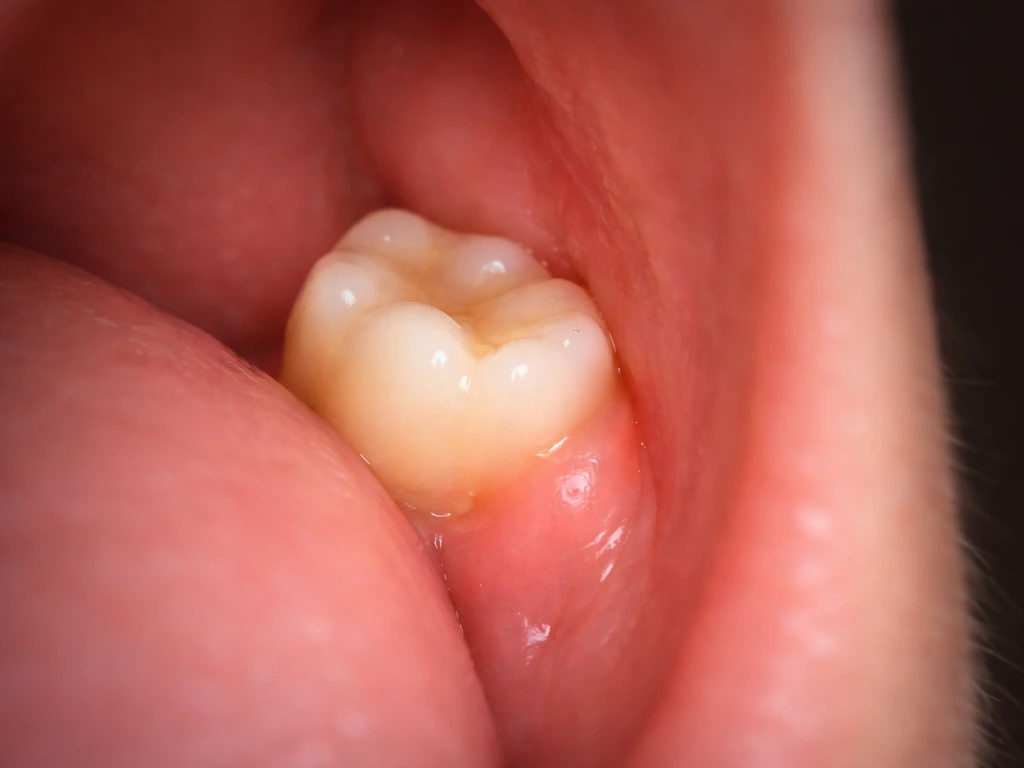
When people say a wisdom tooth is growing into their cheek, they usually mean one of a few overlapping things. The most common scenario is a partially erupted lower wisdom tooth that has tilted outward (toward the cheek side) during its eruption path. The sharp edge or cusp of the emerging crown then makes repeated contact with the inner cheek wall every time you chew or close your mouth. The result is a sore, red patch, a recurring ulcer, or a thickened area of cheek tissue that simply won't heal because the tooth keeps traumatizing it.
A second scenario involves what's called a buccally impacted wisdom tooth, where the tooth is angled enough toward the cheek that it's partially or fully trapped under the gum but still exerts pressure on the overlying soft tissue. You might not see the tooth at all, but you feel a hard pressure point in your cheek, persistent swelling, or a dull ache along the back of your jaw. In either case, the cheek tissue is being damaged, not the tooth doing anything medically dramatic, but the consequence to your soft tissue can escalate quickly if left alone.
Why wisdom teeth drift toward the cheek in the first place
Wisdom teeth, or third molars, typically start making their move between ages 17 and 25, though Johns Hopkins Medicine notes they most often first appear in young adults between 17 and 21. The AAOMS adds that they can take years to fully erupt, which means there's a long window during which things can go sideways. The core problem is almost always the same: not enough room.
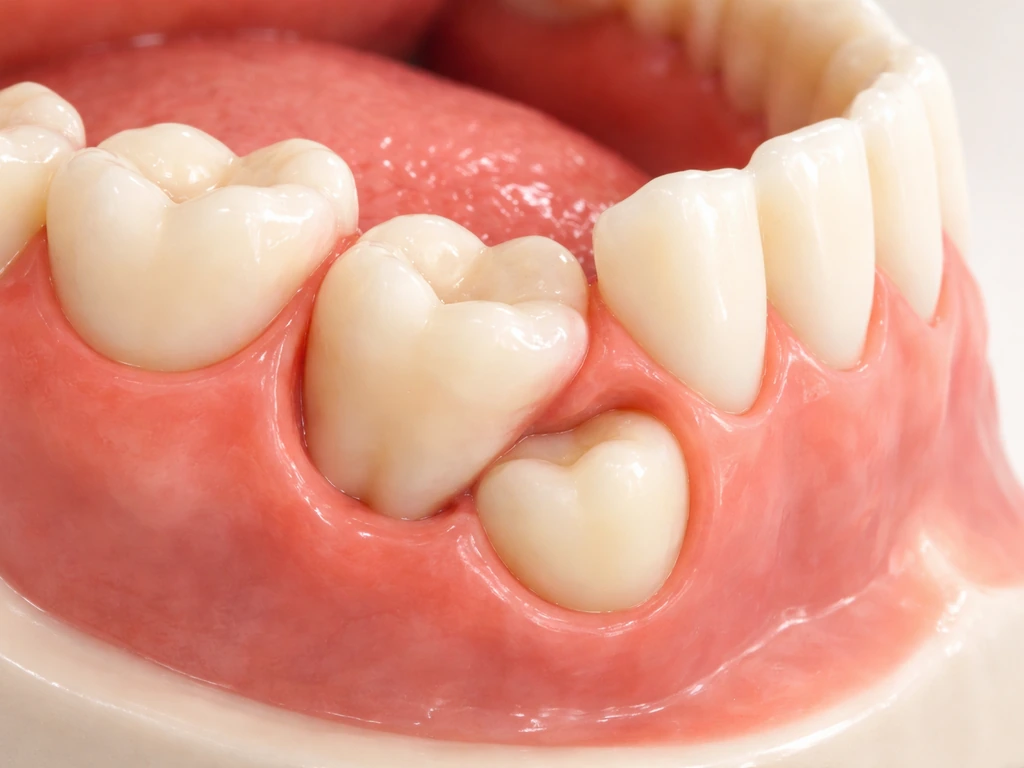
Modern human jaws are often too small to comfortably accommodate a third molar. When the tooth tries to erupt but hits a wall of bone or the neighboring second molar, it doesn't stop growing. Instead it tilts and redirects. Dental researchers classify impacted wisdom teeth by their angle of tilt: vertical, mesioangular (tilting forward), horizontal (lying on its side), distoangular (tilting backward), and buccal (tilting outward toward the cheek). A buccally angled tooth is the one most likely to directly contact cheek tissue. Even a tooth that isn't fully buccally impacted can cause cheek problems if it partially erupts through the gum at an outward angle and the cusp sits right where your cheek rests when your jaw closes.
Crowding from the second molar, a narrower-than-average jaw, or simply the genetic luck of where the tooth's root begins its growth path can all push the eruption direction outward. Age matters here too. If you're a teen or young adult (17 to 21), this is prime eruption territory and the most likely time you'll first notice symptoms. But the AAOMS notes impaction issues can persist well into the mid-twenties and sometimes beyond, so adults in their mid-to-late twenties are far from in the clear.
Symptoms to watch for at home
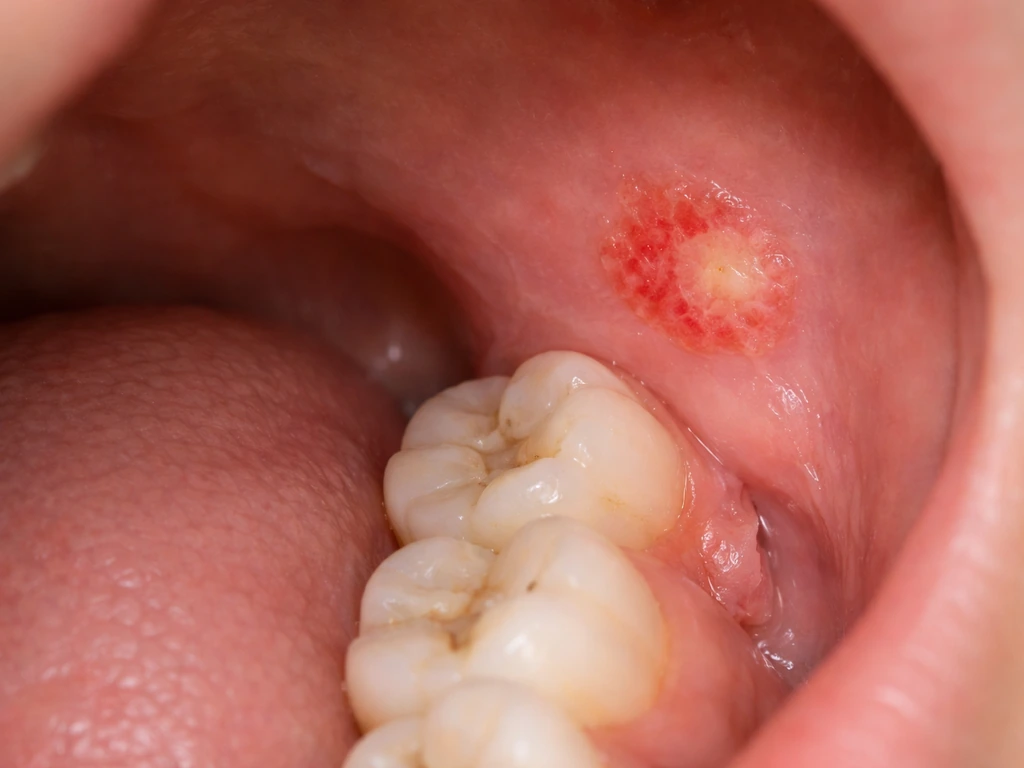
Cheek-side wisdom tooth problems don't usually arrive quietly. The symptoms build progressively, and knowing which ones are manageable versus which ones demand urgent care is genuinely important.
- A raw, sore, or ulcerated patch on your inner cheek in line with your back teeth, especially one that keeps returning
- A feeling of something sharp or hard pressing into your cheek when you close your mouth
- Swelling along the back corner of your jaw or cheek, either visible from outside or felt from inside
- Pain that worsens when chewing or biting
- A bad taste in your mouth, especially toward the back, which can signal trapped food or early infection under the gum flap (operculum) surrounding a partially erupted tooth
- Difficulty fully opening your mouth (trismus), which the Merck Manual lists as a common sign of pericoronitis
- Swollen or tender lymph nodes under your jaw
- Fever, which the RCS guidelines flag as a sign that infection may be spreading beyond the local area
The Cleveland Clinic describes pericoronitis, the infection that develops when bacteria get trapped under the gum flap around a partially erupted tooth, as involving severe pain near the back teeth and discomfort when swallowing. If your symptoms include any combination of fever, trouble swallowing, or a feeling that the swelling is spreading toward your neck or floor of the mouth, those are red-flag signs that need same-day dental or emergency care. Don't wait and see at that point.
How a dentist confirms what's going on
A dentist can usually get a strong clinical read from a visual exam alone. They'll look at the eruption angle of the wisdom tooth, check for a gum flap (operculum) that's trapping debris, probe for tenderness, and examine the cheek tissue for signs of trauma or ulceration. But to truly understand the direction the tooth is growing, its depth in the bone, and how close it sits to important nerves or adjacent teeth, imaging is essential.
A panoramic X-ray is typically the first step. It gives a broad 2D view of all four wisdom teeth and their angulation relative to the jaw and neighboring molars. For more complex cases, especially when the tooth appears to be sitting very close to the inferior alveolar nerve or when the 3D position of the tooth is ambiguous on a flat film, a cone beam CT (CBCT) scan gives a detailed three-dimensional picture. Research published in peer-reviewed literature confirms that CBCT can reveal proximity relationships and angulation details that panoramic X-rays alone can miss, which directly affects how a surgeon plans the extraction approach and what tissue risks to anticipate. This is worth knowing because some patients are surprised when a dentist orders a CBCT rather than a standard X-ray, but for a buccally angled impaction, the 3D view can meaningfully change the treatment plan.
Treatment options, from watchful waiting to extraction
Mild symptoms: monitoring and home care

If your wisdom tooth is just beginning to emerge and the cheek irritation is mild, a short window of careful monitoring is reasonable. StatPearls notes that if a tooth eventually erupts into a functional, cleanable position, the surrounding gum tissue (operculum) can regress on its own and symptoms resolve. The key phrase is "functional and cleanable." If the tooth is coming in straight and there's room for it, patience has some logic. If it's clearly angled into your cheek, that position isn't going to self-correct.
Pain control and local treatment
For mild to moderate pericoronitis without signs of spreading infection, first-line treatment is local debridement and irrigation. This means a dentist or hygienist thoroughly cleans out the space under the gum flap using sterile saline, chlorhexidine rinse, or diluted hydrogen peroxide, as recommended in StatPearls. At home, warm salt water rinses can help reduce bacterial load in the area. Over-the-counter pain relievers (ibuprofen or acetaminophen at appropriate doses) manage discomfort in the short term. The RCS guidelines are clear that antibiotics are not a first-line treatment for localized pericoronitis. They're only indicated when there's fever, spreading infection, severe swelling that isn't responding to local measures, or trismus. Merck Manual Professional Edition lists trismus as a common feature with pericoronitis and notes that patients without red-flag findings or facial swelling are more likely to have an isolated dental condition. If your dentist prescribes antibiotics without examining you or doing any local treatment, that's worth questioning.
When extraction is the right call
The RCS guidelines and NICE guidance both indicate that extraction becomes the appropriate recommendation when pericoronitis has occurred more than once, when conservative measures have failed, or when the tooth's position makes it impossible to keep clean. For a wisdom tooth that is genuinely erupting into cheek tissue, extraction is almost always the most reliable long-term solution. The AAOMS notes that impacted wisdom teeth left in place can become infected and damage neighboring teeth, and the longer a buccally positioned tooth traumatizes the cheek mucosa, the greater the cumulative tissue damage. NICE guidance does note that a single, non-severe episode of pericoronitis alone isn't an automatic surgical indication, but repeated episodes or ongoing cheek trauma change that calculus. Your oral surgeon will assess whether the tooth has any functional value at all. A wisdom tooth pressing into your cheek has essentially none.
Operculectomy and other intermediate options
In some cases, if the tooth is well-positioned but a persistent flap of gum tissue is the main problem, a minor surgical procedure called an operculectomy (removing the gum flap) can resolve the issue without extracting the tooth. This is most useful when the tooth has genuine room to erupt properly but the overlying tissue is blocking it. For a tooth that's genuinely angled into the cheek, removing the operculum doesn't fix the direction of the tooth, so it's not a solution for that situation.
What you should do right now
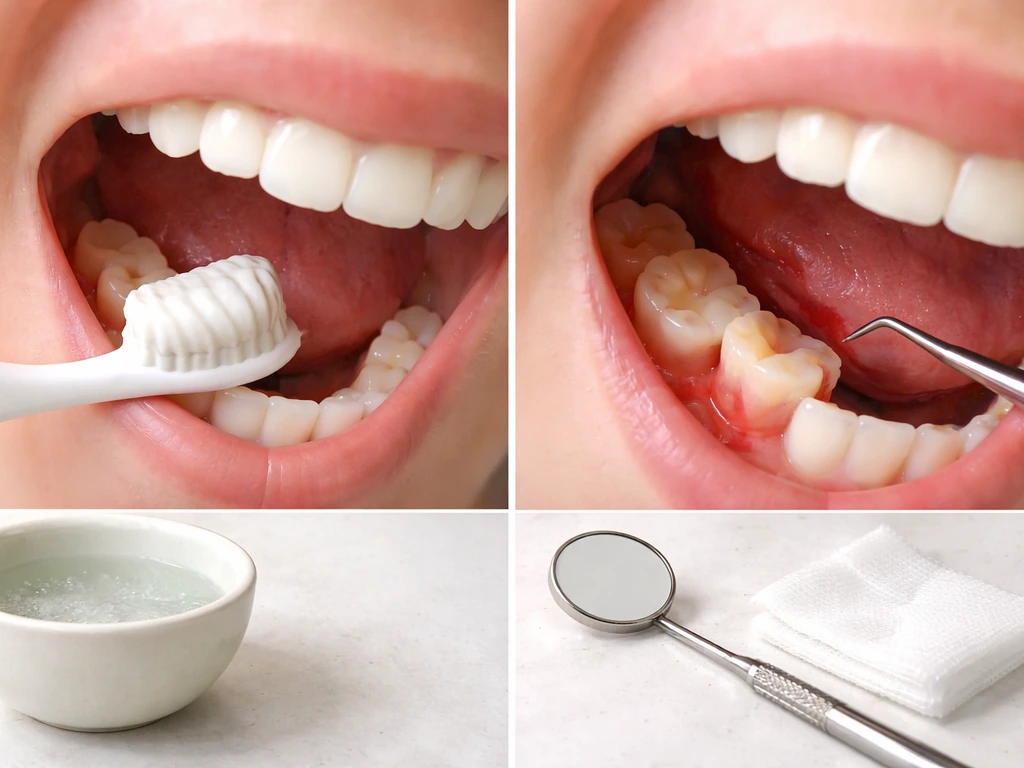
If you're reading this because you're dealing with symptoms today, here's a clear breakdown of what's safe to do versus what to avoid.
| Do this | Avoid this |
|---|---|
| Rinse with warm salt water 2 to 3 times a day to reduce bacteria in the area | Poking or pushing the tooth with your finger or any object |
| Take ibuprofen or acetaminophen as directed for pain | Applying aspirin directly to the gum tissue (it causes chemical burns) |
| Book a dental appointment within the next few days if symptoms are mild | Waiting more than 24 hours if you have fever, difficulty swallowing, or swelling spreading toward your neck |
| Eat soft foods and avoid chewing on the affected side | Using numbing gels repeatedly to mask worsening symptoms without getting evaluated |
| Go to an emergency dentist or urgent care if you develop trismus (can't open your mouth fully), fever, or fast-spreading swelling | Assuming the problem will resolve on its own if symptoms have lasted more than a week |
If you're a teenager (17 to 21) and this is new, your dentist may want to monitor the eruption path over several months with periodic X-rays before recommending extraction. If you're in your mid-twenties or older and the tooth hasn't fully erupted cleanly, the odds that it ever will are lower, and the argument for extraction is stronger. Either way, getting imaging done sooner rather than later gives you the most options.
Does anything grow back? The reality of tissue healing vs. regrowth
This is where a common myth needs addressing directly. The cheek tissue (mucosa) that gets traumatized by a wisdom tooth can heal after the source of trauma is removed. That's normal wound healing, and it works reasonably well in healthy people. But the tissue doesn't regenerate in any meaningful way while the tooth is still causing damage, and the damage doesn't simply grow back to normal while the tooth is still there. Repeated trauma leads to scarring and thickened, sometimes permanently altered tissue.
As for the wisdom tooth itself, there is no biological mechanism by which a wisdom tooth changes its own eruption angle once it has formed and begun moving. The direction is set by the tooth's position in the jaw, the space available, and the bone surrounding it. It doesn't redirect itself toward a safer path just because time passes. In general, wisdom teeth can develop issues on one side or both sides, depending on their eruption angles and how much room they have. Once a tooth is erupting into cheek tissue, the only reliable ways to stop the damage are to remove the tooth, redirect it orthodontically in very limited circumstances, or in some cases remove the tissue that's in the way (operculectomy, with the caveats above).
It's worth noting that wisdom tooth eruption timing and symmetry vary considerably from person to person. Some people have one wisdom tooth erupt years before another, and it's entirely possible for only one tooth to cause problems while others erupt normally. In many cases, though it can happen for more than one wisdom tooth to emerge around the same time, the key is still evaluating each tooth’s position and symptoms individually can 2 wisdom teeth grow at the same time. The key question is always what the specific tooth in question is doing, not what anyone else's wisdom teeth do.
Reducing the risk and protecting your cheek going forward
If your wisdom teeth are just starting to erupt and you want to minimize cheek problems, the most practical steps are keeping the area clean, getting baseline X-rays during the eruption window (typically between 17 and 21), and not ignoring new pain at the back of your jaw. Gentle brushing of the area with a soft-bristle toothbrush, combined with daily rinsing, reduces the bacterial load that makes pericoronitis worse.
For adults who already know they have impacted wisdom teeth that haven't been addressed, the risk of problems doesn't disappear with age. The AAOMS is clear that impacted third molars left in place can develop infections or damage neighboring teeth over time. A proactive evaluation with a current panoramic X-ray, especially if you've never had one or haven't had imaging in several years, is genuinely worth doing. Prevention here mostly means getting ahead of problems before tissue damage accumulates, because once a wisdom tooth has been traumatizing your cheek for months or years, you're managing consequences rather than preventing them.
FAQ
How can I tell if my wisdom tooth is actually pressing my cheek versus just causing general back-of-mouth soreness?
Cheek-contact cases usually produce a repeating, very localized sore spot on the inner cheek (same area each time you chew). General soreness from eruption is more diffuse and improves between flare-ups. If you can point to one consistent rubbing or ulcer area, that suggests the tooth is contacting the buccal mucosa and deserves an exam and X-ray.
Can I keep using that side of my mouth while waiting for a dental appointment?
You can usually chew on the other side, but avoid putting pressure on the irritated area. If biting down reliably triggers the sore or pain, it’s a sign of ongoing trauma, and waiting can worsen scarring and infection risk. Also avoid poking the gum flap with tools, because it can deepen irritation.
When is a wisdom tooth cheek problem an emergency?
Seek same-day dental care or emergency evaluation if you have fever, swelling that seems to spread, trouble swallowing, voice changes, drooling, swelling under the tongue, or difficulty opening your mouth (trismus). These can indicate infection moving beyond the local gum area.
Do mouthwashes or peroxide alone fix a wisdom tooth rubbing the cheek?
They may temporarily reduce odor or bacterial load, but they do not remove the mechanical cause. If the tooth crown keeps rubbing the cheek, the tissue will continue to re-injure, so rinses are supportive care only, not a solution.
Are antibiotics helpful if I think the wisdom tooth is infected?
Antibiotics are not typically first-line for localized pericoronitis. The key step is local cleaning under the gum flap (debridement and irrigation). Antibiotics are more likely appropriate if there is fever, spreading infection, severe swelling, or trismus, and they should follow an in-person exam.
Should I get a CBCT scan right away if my dentist suspects a buccally angled wisdom tooth?
Not always. Many cases start with a panoramic X-ray to assess angulation and proximity in 2D. CBCT becomes more likely when the 3D position is unclear on the panoramic image or there is concern about proximity to the inferior alveolar nerve, because that changes extraction planning.
If the tooth is only partially erupted, will it eventually stop touching my cheek by itself?
Spontaneous improvement is more likely when the tooth ends up in a functional, cleanable position. If it remains angled toward the cheek and keeps contacting it during jaw closure, it usually does not self-correct, and symptoms tend to recur until the source is treated.
What is an operculectomy, and when does it actually work?
An operculectomy removes a flap of gum tissue that traps debris. It works best when the tooth itself has a decent eruption path and the flap is the main reason the gum inflames. It typically does not resolve cheek trauma when the tooth direction itself is the problem (true buccally angled contact).
Can orthodontics redirect a wisdom tooth away from the cheek instead of extracting it?
In limited situations, orthodontic forces can sometimes guide eruption, but wisdom teeth are often too poorly positioned, too late in development, or too close to roots and nerves to move safely. If the tooth is already traumatizing the cheek, extraction is usually the most reliable long-term option.
Is it possible that both sides will cause cheek issues at the same time?
Yes, but it depends on each tooth’s position and room in your jaw. Two teeth can erupt around similar times, and only one can be problematic. The decision should be based on the specific tooth causing localized symptoms and its imaging findings.
What should I do at home during a flare-up before I’m seen?
Use warm salt-water rinses, gently brush the area, and take over-the-counter pain relief as directed on the label (avoid exceeding maximum daily doses). Skip smoking, avoid very hot or spicy foods, and keep chewing pressure off the irritated spot. Do not attempt to lift or remove gum tissue yourself.
If I had a panoramic X-ray years ago, do I need new imaging now?
If it’s been several years, or if symptoms are new or worsening, updated imaging is usually important because tooth position and surrounding bone relationships can change. Fresh X-rays help confirm current angulation, eruption depth, and risk to adjacent teeth and nerves before choosing between monitoring, flap procedures, or extraction.
Next Articles
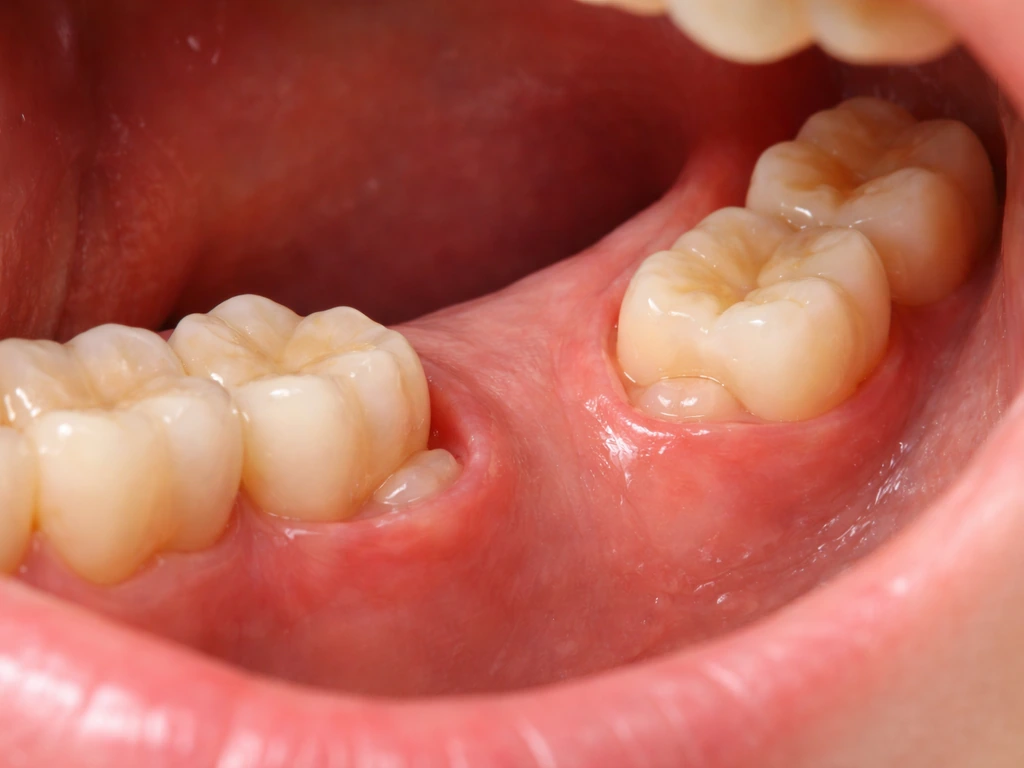
Can 2 Wisdom Teeth Grow at the Same Time? What to Expect
Can two wisdom teeth erupt together? Learn timing, signs, why delay happens, red flags, and when extraction is needed.
Do Wisdom Teeth Grow on Both Sides? One-Side Eruption Explained
Find out if wisdom teeth erupt on both sides or just one, why it happens, symptoms, and when to get an X-ray.
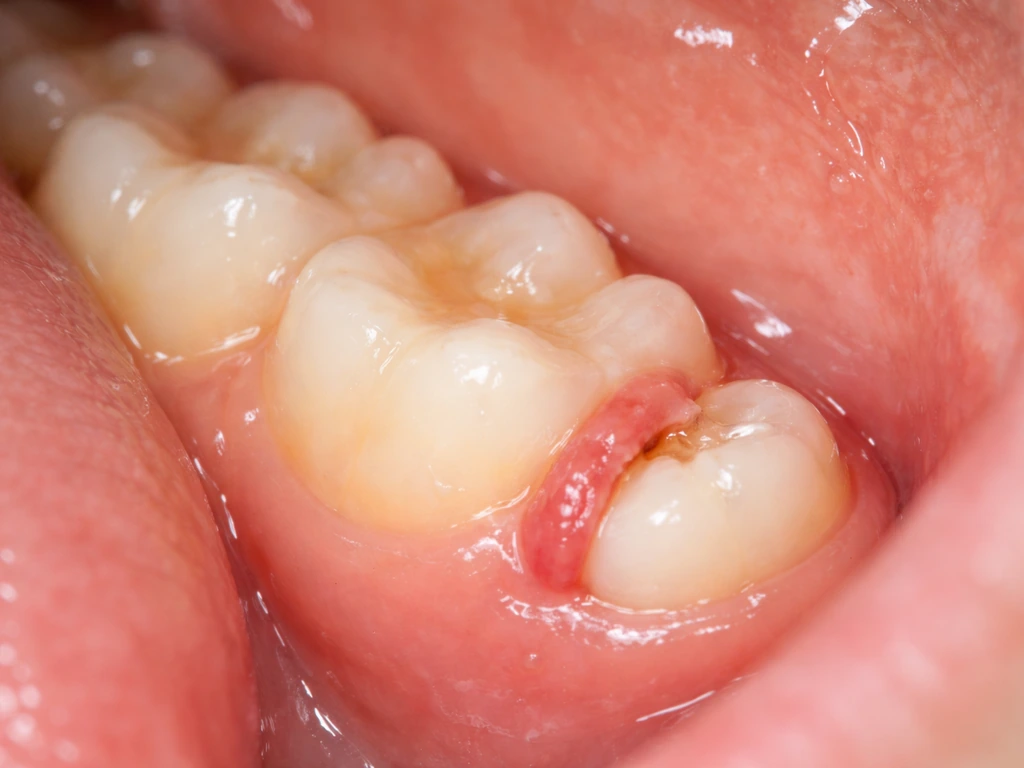
Do Wisdom Teeth Grow Out of the Gum? What’s Normal
Learn if wisdom teeth truly grow out, normal eruption signs and timelines, red flags, and what to do next.