
No, cows do not grow teeth in their hooves. Not even close. A cow's hoof is made of keratin, the same protein found in your fingernails, and it has absolutely no biological connection to tooth tissue. What people sometimes see in or near a hoof that looks "tooth-like" is either overgrown horn, a piece of debris, an embedded foreign object, or diseased tissue. There are no enamel-forming cells, no pulp, no roots, nothing that makes a tooth a tooth anywhere near a cow's foot.
Do Cows Grow Teeth in Their Hooves? What Hooves Really Are

Marcus Holloway
18 Jun 2026
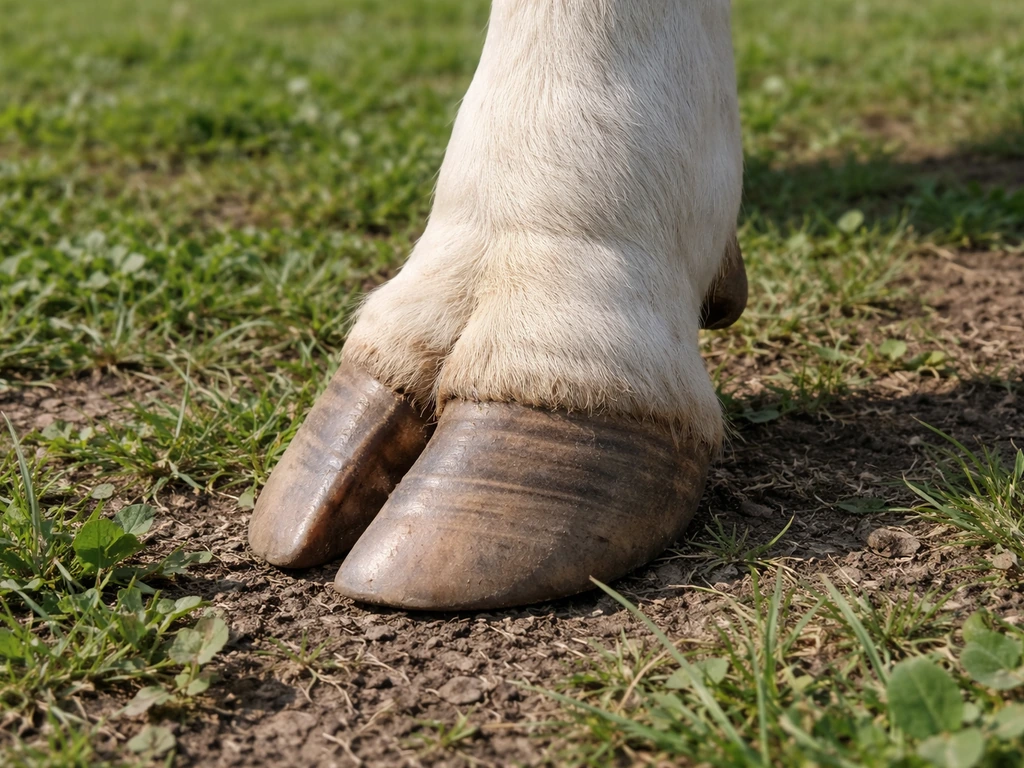
What a cow hoof actually is (and what teeth actually are)
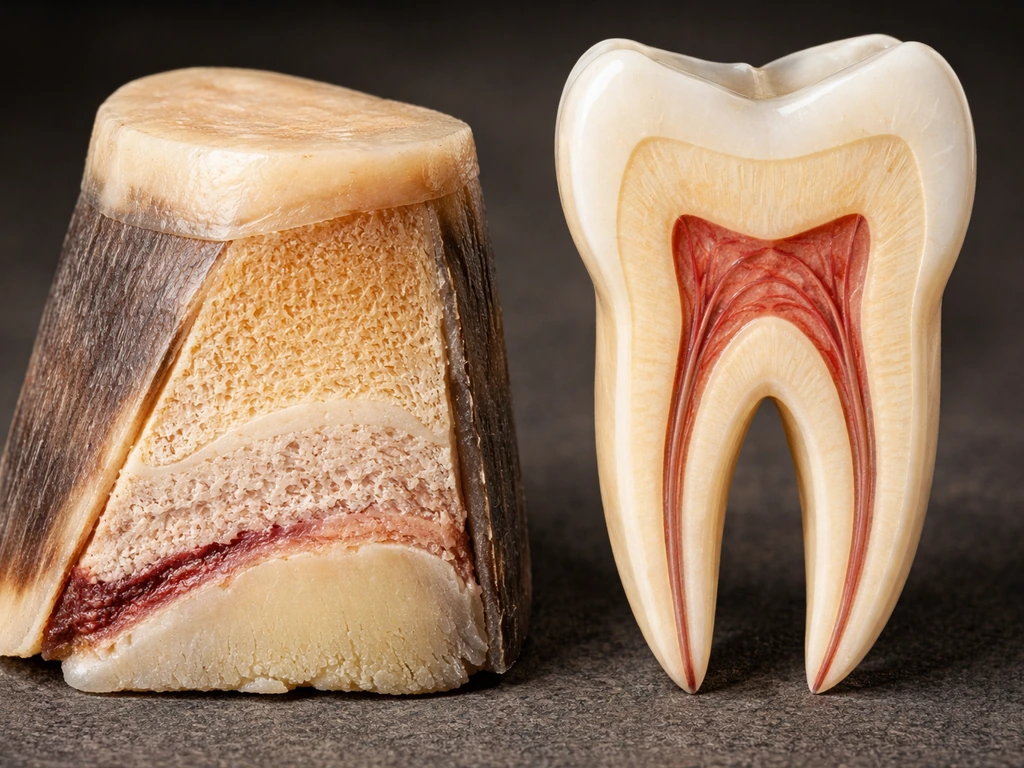
A cow's hoof is essentially a heavily modified version of skin. The outer structure you can see includes several distinct zones: the periople (a thin waxy layer near the top), the coronary band (the growth zone, equivalent roughly to where your fingernail grows from your cuticle), the hard wall that wraps around the outside, and the sole on the bottom. All of that hard material is made of tubular and intertubular horn, which is a dense form of keratin.
The hoof wall is the most rigid part, grown from papillae in the coronary corium, and the sole is slightly softer. It's a composite keratin structure designed for weight-bearing, shock absorption, and protection, not anything to do with digestion or sensation the way teeth are.
Teeth are a completely different biological system. A tooth has enamel on the outside, which is the hardest substance in a mammal's body and is made by specialized cells called ameloblasts before the tooth ever erupts. Under that sits dentin, a hard but slightly flexible mineral tissue. At the center is the pulp, which is a living chamber full of blood vessels and nerves. The whole tooth is anchored into the jaw's alveolar bone by the periodontal ligament, a fibrous connective tissue that acts like a suspension system. There is no equivalent of any of this in a hoof. The two structures, hoof and tooth, develop from completely different embryonic tissue pathways and serve completely different functions.
| Feature | Cow Hoof | Tooth |
|---|---|---|
| Primary material | Keratin (horn) | Enamel, dentin, cementum |
| Living tissue inside | Corium (vascularized dermis) | Pulp (nerves + blood vessels) |
| Growth mechanism | Continuous from coronary band | Formed once, then erupts (no regrowth) |
| Attachment structure | Integrated with distal limb anatomy | Periodontal ligament to alveolar bone |
| Function | Weight-bearing, locomotion | Biting, chewing, sensory |
| Regeneration possible? | Yes, continuously grows | No true regeneration after loss |
Why people think cows might grow teeth in their hooves
The confusion comes from a few different places. First, overgrown hoof horn can curl and twist into strange shapes that vaguely resemble teeth or tusks, especially when the hoof hasn't been trimmed in a long time. Second, online photos sometimes show a hard, pale, pointed object near a cow's foot, which turns out to be a tooth the animal stepped on, a bone fragment, or a piece of debris worked into the interdigital space (the gap between the two claws). People see it, assume it must have grown there, and the story spreads.
There's also a general cultural tendency to be surprised by how hard and structural hoof horn looks. When people who aren't familiar with cattle see trimmed hoof shavings or grossly overgrown hooves for the first time, the material genuinely does look like something from a dental office. It's pale, hard, and dense. But it's keratin, not enamel, and the two materials are not interchangeable. Internet forums have entire threads where someone posts a photo of something found in or near a cow's hoof and people debate whether it's a tooth, a bone spur, or something else entirely. In almost every case, it's either overgrown tissue or an embedded foreign object.
It's worth noting that unusual hard growths in the animal world are a common source of curiosity and myth. Elephant tusks, for example, are actually highly modified teeth. In elephants, the specific teeth that develop into tusks are their upper incisors, which can keep growing over time Elephant tusks. Sharks continuously cycle through thousands of teeth across their lifetimes. Some herbivores have teeth that grow almost continuously throughout their lives to compensate for the grinding wear of their diet. These genuinely strange dental facts make it easy to assume that maybe, just maybe, hooves could be doing something similar. They're not, but the curiosity is understandable.
How hoof growth and wear actually work
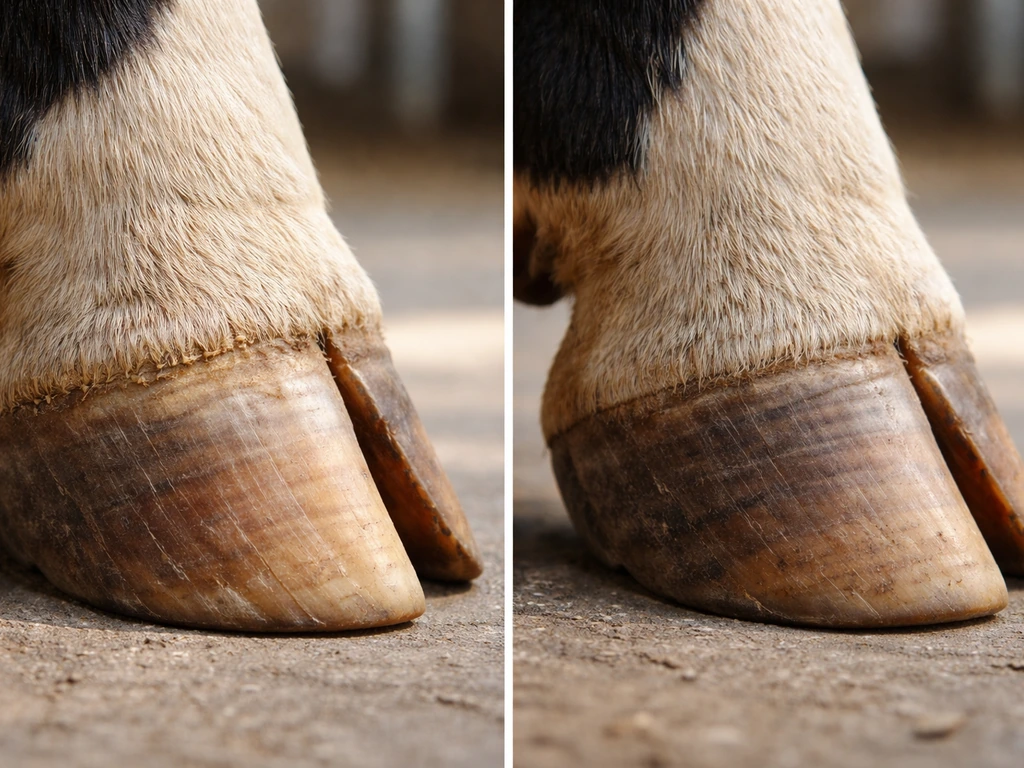
A cow's hoof grows continuously from the coronary band downward, at roughly 7 mm per month for the wall and about 3 mm per month for the sole. Do hypsodont teeth grow continuously? Yes, they are adapted to long-term wear grows continuously. Unlike a snake shedding its skin or a deer shedding its antlers, the hoof never detaches or renews all at once. It's a constant, slow process, like how your fingernails grow. The hoof wall slides down and outward over months, and the old material either wears away through contact with the ground or gets trimmed.
In cattle that walk on abrasive surfaces like concrete or hard pasture, wear can keep pace with growth reasonably well. But in modern dairy settings with soft, wet flooring (think slurry or rubber mats), the sole stays moist and soft, and wear is minimal. Growth outpaces wear, and the hoof becomes overgrown. That's when the claw capsule distorts, weight distribution shifts, and problems start. Functional trimming corrects this by restoring the appropriate dorsal toe wall length and sole thickness, and by balancing load between the two weight-bearing claws.
Normal vs. abnormal hoof growth: what to look for today
If you're looking at a cow's feet right now and trying to figure out what's normal, here's a practical checklist. A healthy hoof has a smooth, continuous wall without horizontal cracks or ridges, a clean interdigital space (the gap between the two toes) without swelling or discharge, and claws that are roughly balanced in size with each other. The sole should be firm and flat, not concave, and the animal should bear weight evenly on all four feet.
- Horizontal cracks or rings in the wall: often a sign of past stress or nutritional changes
- Vertical cracks (sand cracks): can allow bacteria to enter the hoof; worth monitoring closely
- Overgrown toes that curl upward: classic sign of insufficient wear or trimming
- Swelling and heat above the coronary band: could indicate laminitis or infection
- Foul smell with soft, discolored interdigital tissue: classic early sign of foot rot
- Animal walking on its knees or severely favoring one foot: urgent, get a vet involved quickly
- Hard, pale, tooth-like material visible in or near the hoof: most likely overgrown horn, debris, or a foreign object, not a grown tooth
Sole hemorrhages, which appear as reddish or bruised patches on the sole, are also worth taking seriously. A large hemorrhage that causes pain when pressure is applied with hoof testers should be treated like a sole ulcer. It's not life-threatening immediately, but it gets worse fast without intervention.
When to call a vet or farrier, and what they'll actually do
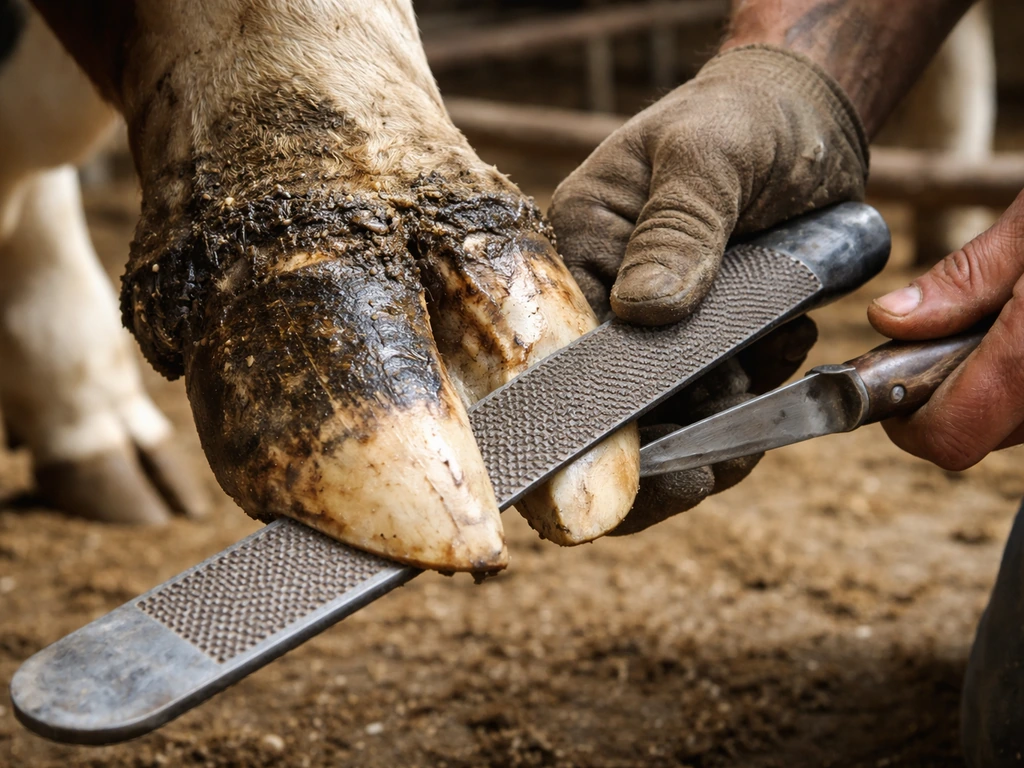
For routine hoof care, most dairy cattle should have their hooves inspected and trimmed every four to six months. That's the broad guidance, though there's surprisingly little hard scientific evidence pinning down exactly how often it needs to happen for every situation. The Dutch Method of functional claw trimming is the most widely used framework, and a trained hoof trimmer or farrier can usually handle routine work.
Call a veterinarian (not just a farrier) when you see any of the following: obvious lameness that persists for more than a day or two, swelling that extends above the hoof, discharge with a foul odor that suggests infection, or an animal that is completely non-weight-bearing on a limb. Foot rot, one of the most common hoof infections in cattle, needs antibiotic treatment quickly. Labeled antibiotics like oxytetracycline, florfenicol, ceftiofur, and tulathromycin are used depending on the situation, but those are prescription decisions. The vet will also trim away necrotic tissue, and in some cases apply a hoof block to take weight off the affected claw while it heals. NSAIDs are commonly added to reduce pain and inflammation.
Laminitis, which involves inflammation and damage to the tissue between the hoof capsule and the underlying coffin bone, is a more serious condition. In severe cases, radiographs may be taken to assess bone position and guide trimming decisions. The goal is to redistribute weight and reduce tension on the deep flexor tendon while the tissue heals. The earlier you catch any of these conditions, the better the outcome and the lower the cost.
What this means for tooth regrowth in general
The reason this question connects back to dental science is simple: hooves can regrow continuously, and teeth cannot. That contrast is actually a useful way to understand what makes teeth biologically unique and limiting. Hoof horn regenerates because the coronary band keeps producing keratin cells throughout the animal's life. Tooth enamel, once formed before eruption, is produced by ameloblasts that are no longer present after the tooth comes in. There's no ongoing cellular machinery to replace it. So when enamel wears down or gets destroyed by decay, it doesn't come back on its own. Remineralization can reverse very early-stage demineralization, but it can't rebuild enamel that's already lost.
Dentin and pulp are slightly more nuanced. Research into regenerative endodontics, including direct pulp capping and cell-homing techniques, shows some promise for restoring pulp function and encouraging dentin thickening in specific situations, particularly in immature teeth with necrotic pulps. But this is not the same as growing a new tooth. Some animals can grow an extraordinary number of teeth over their lifetime. It's repair and partial regeneration of tissue within an existing tooth, and it doesn't apply to enamel at all. In normal human biology, if you lose a permanent tooth, it's gone. You don't get a third set. Primary teeth get replaced by permanent teeth, and that's the end of the natural replacement cycle.
So if you landed on this page wondering whether something strange is happening with a cow's hoof, or you were chasing a broader question about what biological structures can and can't regenerate in animals (and by extension, in yourself), here's the takeaway: hooves grow back, teeth don't. The hoof is keratin with a living growth layer that never stops working. A tooth is a mineralized structure formed once, erupted once, and that's that. If you're worried about an actual cow's foot, get a vet or qualified hoof trimmer involved sooner rather than later. And if you're worried about your own teeth, no amount of waiting is going to regrow enamel. That's a dentist conversation.
FAQ
How can I tell if something “tooth-shaped” near a cow’s hoof is actually from the hoof?
No. If the animal is growing something that looks tooth-like, it is usually overgrown hoof horn curling, a bone or tooth from something the cow stepped on, or diseased tissue in the interdigital space. If you can lift the tissue and see a hard object embedded under the horn, treat it as a foreign body or injury, not a tooth.
Why does it sometimes seem like a cow has a tooth inside the hoof area?
In most cases, the item is not attached the way a true tooth would be (with roots in supportive tissue). A practical check is whether the “point” moves with surrounding horn or if it feels separate when gentle pressure is applied around the area. Anything embedded, draining, or foul-smelling should be checked by a vet rather than pulled out.
Can hoof trimming make it look like teeth are growing?
Trimming can change the appearance a lot. When hooves are overgrown, the wall can curl and create points that resemble teeth. After trimming, these shapes often disappear or become clearly horn, not mineralized tooth material.
What should I do if my cow is limping and I notice tooth-like growths?
If you’re seeing true lameness, swelling above the hoof, or non-weight-bearing, do not wait to see if it “grows out.” Many hoof problems worsen quickly, so contact a veterinarian promptly, especially if there is heat, discharge, or a foul odor.
Can foot rot or interdigital issues create tooth-like shapes?
Yes, hoof problems can mimic the “found an object” stories because interdigital infections can create odd-looking, pale or dark tissue and fluid. Foreign bodies and foot rot both commonly involve the space between the toes, so the same visual clue can have different causes.
Why do hooves sometimes overgrow into weird shapes on certain farms?
Yes. The coronary band keeps producing keratin, so the hoof capsule can lengthen and distort if wear is too low. Soft, wet flooring can reduce abrasion, causing faster growth than wear, which leads to abnormal wall shape and increased risk of deeper complications.
Could sole hemorrhages be mistaken for teeth or bone?
Sole hemorrhages can start as bruised or reddish patches and may look like damage that someone might misinterpret as a “tooth” injury. They are still hoof tissue injury, and a larger painful hemorrhage should be treated as an urgent sole ulcer-type situation.
If hooves grow continuously, why doesn’t “tooth-looking” stuff appear gradually?
No. Hooves continue to grow from the coronary band, but the outer appearance does not update instantly. If you find something tooth-like today, it might have become visible because of recent wear, trimming, or changes in swelling, not because it newly formed as a tooth.
How do I know whether my cattle need trimming sooner than the usual schedule?
Routine trimming intervals are often guidance-based (commonly every 4 to 6 months for many dairy systems), but the correct schedule depends on growth rate and wear conditions. If the farm uses soft wet surfaces, more frequent inspection may be needed even if trimming timing stays the same.
When should I involve a veterinarian instead of only a hoof trimmer?
A farrier or hoof trimmer can be great for routine functional trimming, but prescription treatment decisions, determining whether infection is present, and assessing more serious problems like laminitis typically require a veterinarian. If there is severe pain, fever, spreading swelling, or non-weight-bearing, prioritize the vet.
Next Articles
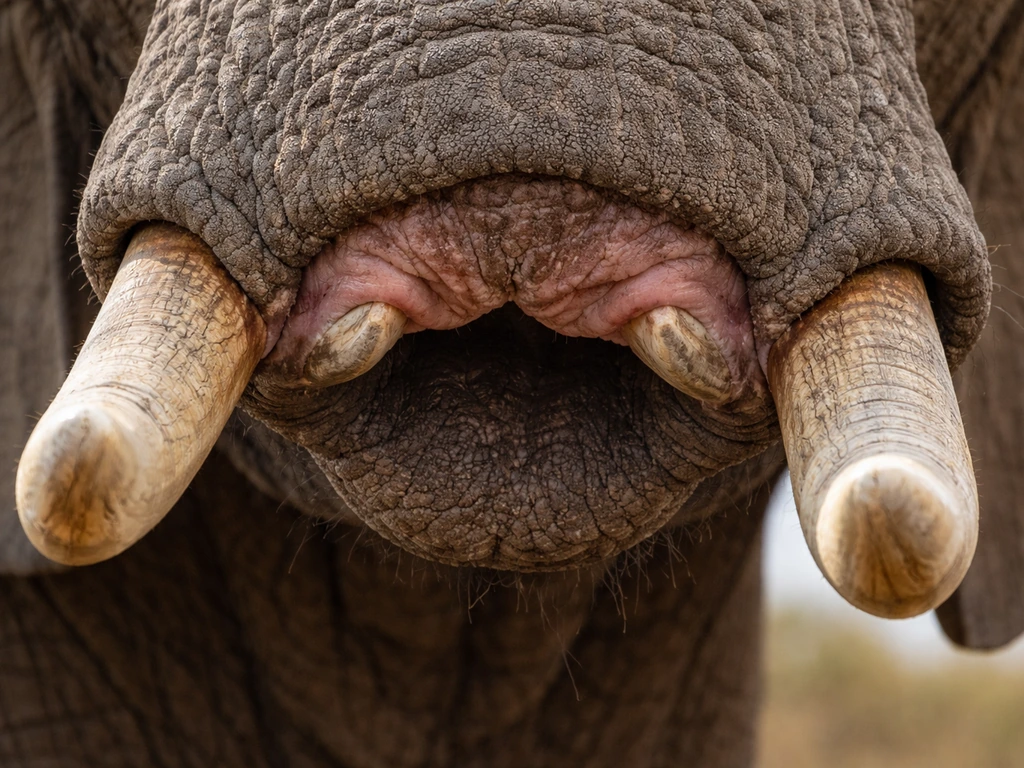
Which Teeth of Elephants Grow Into Tusks? Key Facts
Upper canines develop into elephant tusks; explains myths about extra or regrowing teeth vs normal eruption and tooth an

How Many Teeth Can a Shark Grow in Its Lifetime?
Learn how many teeth sharks replace over a lifetime, typical cycles, and the range behind this tooth regrowth estimate.
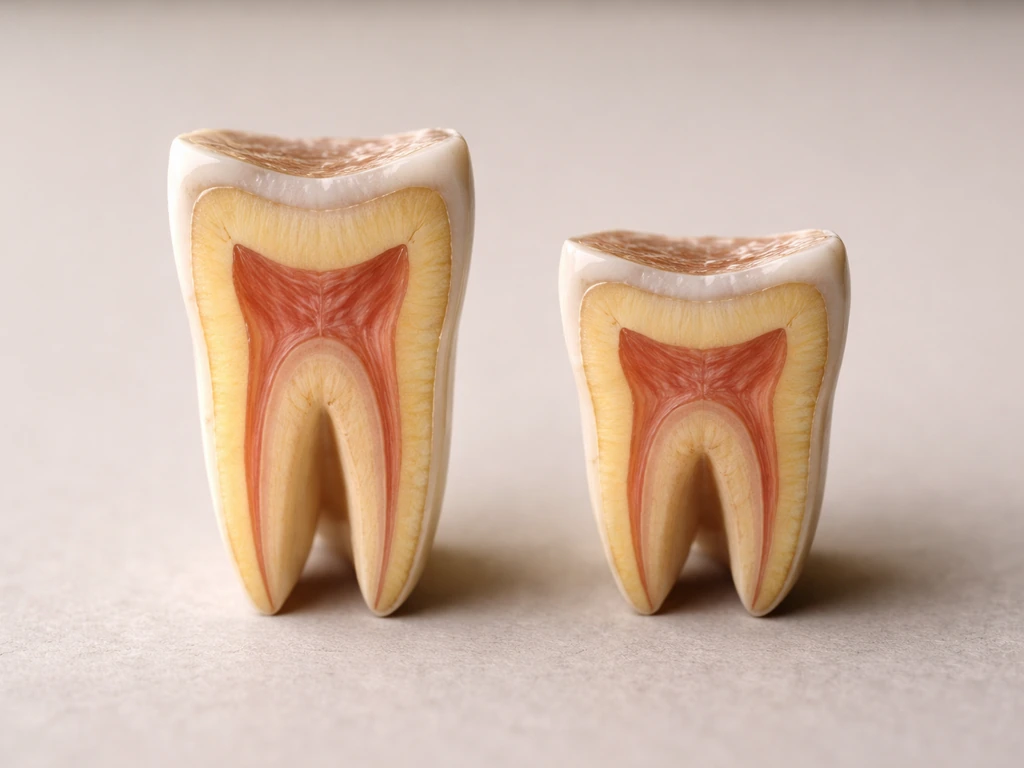
Do Hypsodont Teeth Grow Continuously and How Wear Works
Hypsodont teeth can erupt continuously to replace worn crown height, but not regrow enamel or tooth roots.