
A shark can grow somewhere between 20,000 and 35,000 teeth over its lifetime, and some species push past that into the tens of thousands more. That wide range comes down to three things: how many tooth rows the species carries, how fast it cycles through replacements, and how long it lives. blank" rel="noopener noreferrer">Most sharks replace each tooth position every 9 to 38 days, running a non-stop conveyor belt of new teeth from birth to death. Humans get two sets and that's it. Sharks never stop.
How Many Teeth Can a Shark Grow in Its Lifetime?

Marcus Holloway
29 May 2026
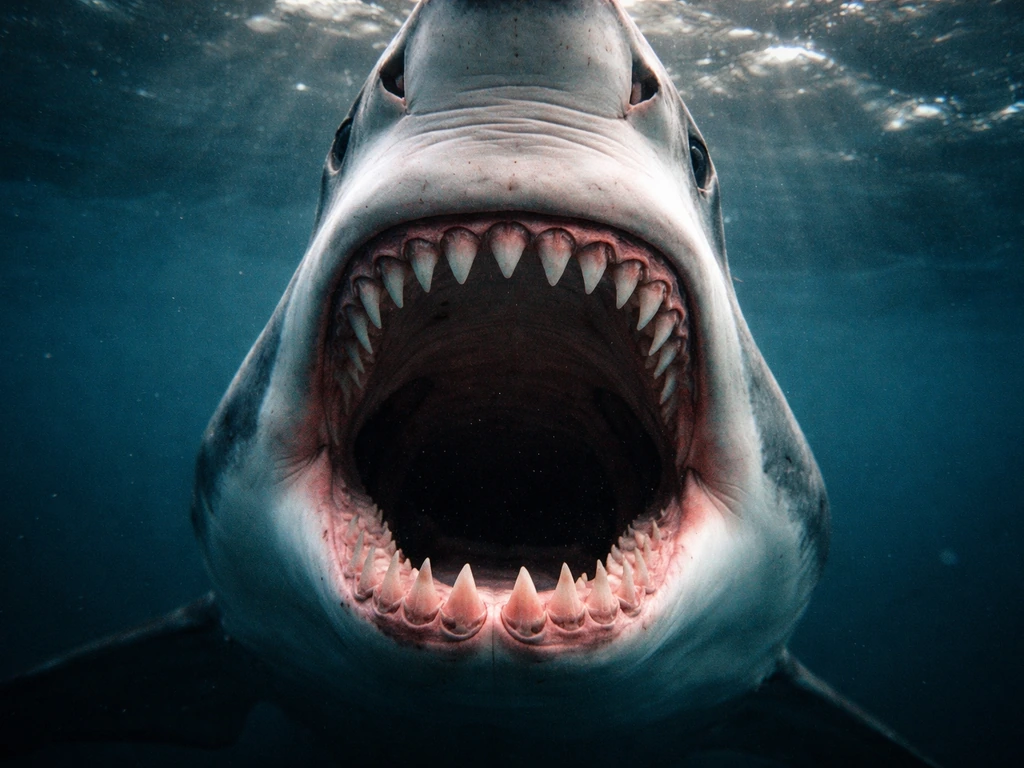
Shark teeth basics: replacement vs. growing new sets
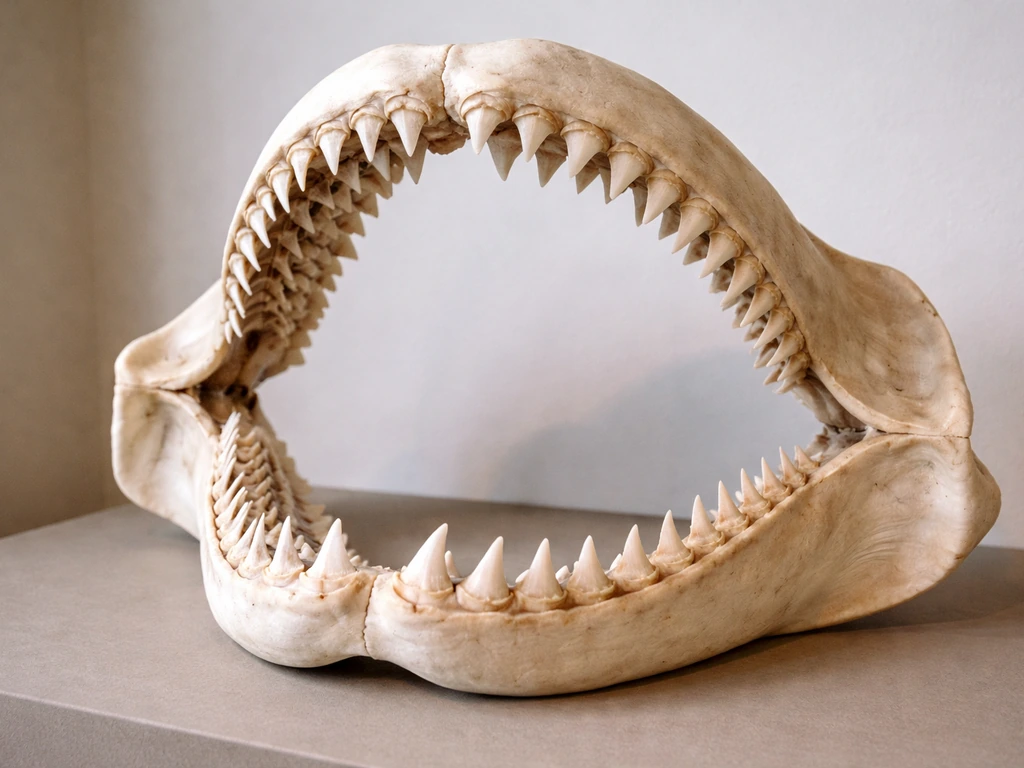
Here's the misconception worth clearing up first: sharks don't grow distinct "sets" of teeth the way humans grow baby teeth and then adult teeth. Elephant tusks are enlarged, modified incisors that come from specific developing teeth, rather than from replacement of a whole set of teeth the way many sharks do which teeth of elephants grow into tusks. Instead, sharks are polyphyodonts, meaning they produce replacement teeth continuously throughout their entire lives. Think of it less like swapping out a set and more like a factory floor that never shuts down.
At any given moment, a shark's jaw holds multiple rows of teeth. The Natural History Museum reports that sharks typically carry between 50 and 300 teeth arranged in up to 10 rows. Only the front one or two rows are actively biting. The rows behind them are essentially teeth-in-waiting, slowly moving forward along the jaw like a conveyor belt. When a front tooth is lost or worn down, the next tooth in line migrates forward to take its place. This process is driven by a structure called the dental lamina, which contains progenitor cells that keep producing new teeth at every position throughout the shark's life.
So when we talk about how many teeth a shark "grows," we're really counting every replacement tooth produced over its lifetime, not just the ones sitting in the jaw at one time. That's where the big numbers come from.
Typical shark tooth replacement cycle
Replacement rate is the key variable in any lifetime tooth estimate. Researchers have measured this directly in several species, and the results vary quite a bit. Lemon sharks are among the fastest, replacing lower-jaw teeth roughly every 8.2 days and upper-jaw teeth every 7.8 days in captive studies. At the other extreme, sandy dogfish replace teeth roughly every 150 days. Nurse sharks fall somewhere in between, cycling through a row in 18 to 35 days depending on water temperature. Leopard sharks take about 38 days per row.
The broader scientific literature puts the measured range at roughly 9 to 36 days per row for most studied species, though the full span across all measured taxa runs from about 8 days up to 150 days. Great white sharks are notably slower, with replacement cycles estimated at around 106 to 242 days per tooth family depending on the shark's age and which jaw position you're measuring, with older individuals replacing teeth more slowly than younger ones.
Temperature matters too. Nurse sharks in warmer water replace teeth faster than those in cooler conditions. This means even within a single species, a shark's lifetime tooth count can shift based on its environment.
Estimating lifetime tooth count: variables and assumptions

To get a rough lifetime number, you need to combine three inputs: the number of active tooth positions in the jaw, the replacement rate at each position, and the shark's total lifespan. Here's a simplified version of how that math works.
Take a species with 50 functional tooth positions across both jaws and a replacement cycle of 14 days per position. Over one year (365 days), each position produces about 26 replacement teeth. Multiply by 50 positions and you get roughly 1,300 teeth per year. Over a 20-year lifespan, that's 26,000 teeth. Scale up to a species with 300 positions and a 9-day cycle over the same lifespan and the number climbs dramatically. This is why sources like Britannica cite figures above 35,000 teeth for some sharks, while the Natural History Museum references 30,000 as a common benchmark. Both numbers are plausible depending on the species.
A spotted ragged-tooth shark (Carcharias taurus) has been measured losing an average of 1.06 teeth per day. Over a 25-year lifespan, that's roughly 9,600 teeth per year or about 240,000 teeth total if the rate holds steady, which is an extreme outlier case. For most species, the realistic lifetime range sits between 20,000 and 40,000 teeth, with some high-replacement, long-lived species potentially going higher.
| Assumption | Low Estimate | Mid Estimate | High Estimate |
|---|---|---|---|
| Tooth positions (functional) | 50 | 100 | 300 |
| Replacement cycle (days per position) | 38 | 18 | 9 |
| Replacements per position per year | ~10 | ~20 | ~40 |
| Lifespan (years) | 15 | 20 | 30 |
| Estimated lifetime teeth | ~7,500 | ~40,000 | ~360,000 |
The table above shows how dramatically the numbers shift when you change the inputs. The commonly cited figures of 20,000 to 35,000 reflect realistic mid-range assumptions for well-studied species. Extreme outliers like the ragged-tooth shark or very fast-replacing species with many tooth rows can push far beyond that.
Species differences and why numbers vary so much
Different sharks are built differently, and that has a huge effect on lifetime tooth counts. Tiger sharks, for example, have 10 to 12 tooth files per side of the jaw, and the number of teeth per file increases as the shark ages, from about 4 teeth per file in juveniles to up to 7 in adults. A species with more tooth files and more teeth per file produces a higher turnover rate even at the same replacement cycle speed.
Great whites are slower replacers, partly because their teeth are massive and take longer to form. Their replacement cycles can stretch to over 200 days in older individuals. A great white lives 70 years or more in the wild, which still adds up to a large lifetime total, just accumulated more slowly than in a fast-cycling species like the lemon shark.
Smaller, faster-living species tend to cycle through teeth more rapidly. Diet plays a role too: sharks that crunch through hard-shelled prey may wear teeth faster, driving faster functional replacement. This is one reason the measured replacement rates across species span such a wide range.
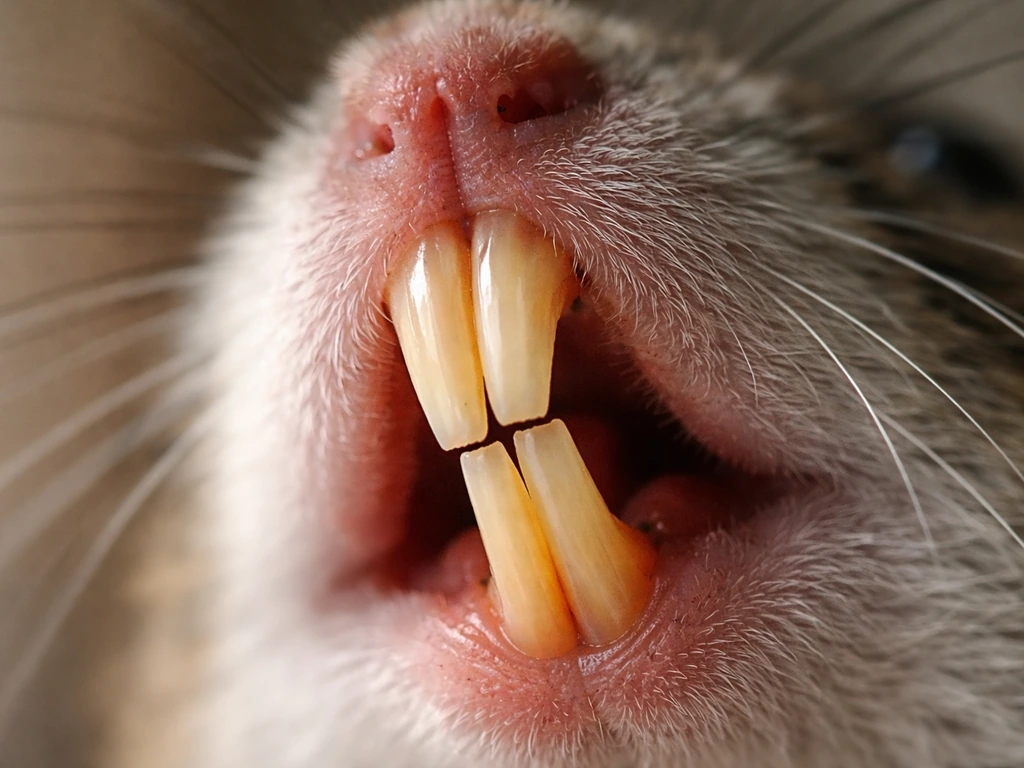
It's also worth noting that comparisons to other animals are interesting here. Some species, like certain rodents, have continuously growing teeth, while elephants cycle through a fixed number of molar sets across a lifetime, and sharks represent a different strategy entirely: an open-ended, position-by-position replacement factory. In some animals, like rodents, teeth can even grow continuously over time, which is different from shark replacement patterns continuously growing teeth.
The teeth of some other animals, like certain rodents, also continue to grow throughout life instead of being replaced on a fixed schedule continuously growing teeth. Elephants, however, grow their tusks from specific teeth that develop into enlarged tusks over time elephants cycle through a fixed number of molar sets across a lifetime. Each approach reflects the animal's evolutionary pressures.
What this means vs. human tooth limits
Here's where the myth-busting really matters for anyone reading this on a site about dental regeneration: human teeth do not work like shark teeth, and they never will without medical intervention. Not even close.
Humans are diphyodonts, meaning we get exactly two sets of teeth: 20 baby teeth and up to 32 permanent adult teeth (counting wisdom teeth). Once your adult teeth are in, there is no third set waiting in the wings. The dental lamina that drives shark tooth replacement doesn't stay active in adult humans the way it does in sharks. After your permanent teeth erupt, the cells responsible for forming enamel (called ameloblasts) are no longer present.
Enamel becomes acellular after formation, which means your body has no mechanism to regenerate it. Dentin can partially regenerate through pulp stem cells, but it's limited and can't restore a severely damaged tooth. Cementum, the tissue anchoring the tooth root, has essentially no remodeling capacity. Cows do not have teeth in their hooves, but their hooves can wear down and need proper care to stay healthy do cows grow teeth in their hooves.
Sharks maintain lifelong tooth replacement because their dental lamina stays biologically active and is populated by progenitor cells throughout the animal's life. Research comparing shark and mammalian dental development shows that the successional lamina in sharks keeps extending and producing new tooth germs, a process that essentially shut down in the mammalian lineage. That's not a flaw in human biology, it's a trade-off: mammals evolved more complex, precisely fitted teeth that don't benefit from constant raw replacement the way a fish's simpler teeth do.
So if you've read that you can "grow your teeth back" with some supplement or technique, that's internet folklore, not biology. A shark's replacement system is built into its developmental biology in a way that human teeth simply aren't. Dental researchers are actively working on enamel and tooth regeneration approaches, but they don't yet exist as clinical realities.
How to get a better estimate for a specific shark species

If you want a more precise number for a particular species, you need four data points: the number of tooth files (rows) per side of the jaw, the number of teeth per file, the measured replacement rate for that species, and the species' average lifespan. From there, the formula is straightforward: (tooth files per side x 2 sides x teeth per file x 365 days) divided by replacement cycle in days, multiplied by lifespan in years.
For replacement rate data, the best starting point is the primary literature on elasmobranch dentition. Studies using intravital tetracycline labeling (the method developed by Boyne) have produced the most precise replacement timing data for species like lemon sharks and nurse sharks. For species without direct measurements, the 9-to-38-day range represents a reasonable middle-ground estimate for most active predatory sharks.
Lifespan data varies widely too. Many smaller shark species live 15 to 25 years. Great whites can live over 70 years. Greenland sharks, the longest-lived vertebrates known, can survive for centuries, meaning their lifetime tooth count (even at a slow replacement rate) would be staggering in absolute terms.
- Find the species' measured tooth file count (scientific literature or museum specimen databases are the best sources).
- Look up whether replacement rate has been directly measured for that species; if not, use 18 to 28 days as a conservative middle-range estimate.
- Use the species' documented maximum or average lifespan from sources like FishBase or peer-reviewed age-and-growth studies.
- Plug those values into the formula: (tooth positions x 365 / replacement cycle in days) x lifespan in years.
- Compare your result against the cited ranges (20,000 to 35,000+ for most species) as a sanity check.
The honest answer is that precise lifetime tooth counts are only published for a handful of well-studied species. For the rest, you're working from estimates. But the science is solid enough that the 20,000 to 35,000 range is a reasonable answer for a typical shark, with species at the extremes sitting well outside that window in both directions.
FAQ
When people ask how many teeth a shark can grow, are they counting teeth in its mouth at one time?
Researchers usually count “lifetime teeth produced,” not “teeth you could photograph in the jaw at once.” At any moment a shark may have only 50 to 300 teeth visible across several rows, but replacements keep occurring in the same tooth positions over years.
How much do jaw structure differences (tooth files and teeth per file) change the lifetime tooth estimate?
Yes. If you hold lifespan and replacement days per tooth position constant, doubling the number of tooth files or teeth per file roughly doubles the lifetime total because more positions are producing replacements simultaneously.
Why can the lifetime tooth count change even within the same shark species?
A big reason is that replacement timing is not one fixed value. Some sharks replace faster when they are younger, during certain seasons, or under warmer conditions, so using a single average cycle can overestimate or underestimate the total.
Does a shark replace teeth at the same speed throughout its life?
It can be, but the common shorthand “9 to 38 days per tooth position” is already a simplification. For older sharks like great whites, the replacement cycle for specific tooth families can be much longer than for younger individuals, so age must be considered if you want a better estimate.
How sensitive is the total to the shark’s lifespan assumption?
Not usually. Many estimates are built from replacement timing data measured under particular conditions, then multiplied by an assumed lifespan. If a species’ real-world lifespan differs from the assumed average, the lifetime total shifts proportionally.
Do sharks replace teeth faster if they eat hard-shelled prey?
Diet is partly a proxy for wear, but the replacement schedule is governed by developmental biology and can still proceed on its own timing. Harder-crunching diets may increase how quickly teeth are lost in function, which can make replacement appear more “active,” yet the measured replacement cycle may not match purely how worn teeth look.
Is the “formula” accurate for every individual shark, or is it an approximation?
Yes, the math in the article assumes a steady cycle and a stable set of functional tooth positions. Real sharks can experience variation from injury, disease, or differences in how tooth rows transition during growth, which can add uncertainty around the final number.
Why are lifetime tooth totals especially hard to pin down for very long-lived sharks like Greenland sharks?
Greenland sharks can live extremely long, so even slow replacement cycles accumulate huge totals, but estimates are challenging because direct replacement-rate measurements for very long-lived species are limited. For them, lifetime totals should be treated as rough ranges rather than precise published counts.
Do all teeth in a shark get replaced at exactly the same time?
No. Each tooth position has its own replacement rhythm, but the underlying model multiplies by the number of positions and days, assuming continuous replacement. That approach captures the overall production rate even though individual teeth move forward at different moments.
What’s the most common mistake when using the typical 20,000 to 35,000 teeth range?
Some shark species are documented to have much faster or much slower cycles than the mid-range. If you only apply the “typical” range to a species with known extremes, you can be off by an order of magnitude.
What is the difference between “number of teeth in the jaw” and “total teeth produced over a lifetime”?
For education and comparison, it helps to distinguish three different quantities: visible teeth at one moment, number of teeth replaced per year, and number of replacement teeth produced over the whole lifespan. The lifetime “how many teeth” answer corresponds to the third quantity.
Can humans really use shark-like biology to grow teeth back?
No supplement can switch humans into a polyphyodont-like system. The reason sharks can do it is that their tooth-forming tissue stays active and continues generating new tooth germs, while humans lose the enamel-forming cell population after development.
Next Articles
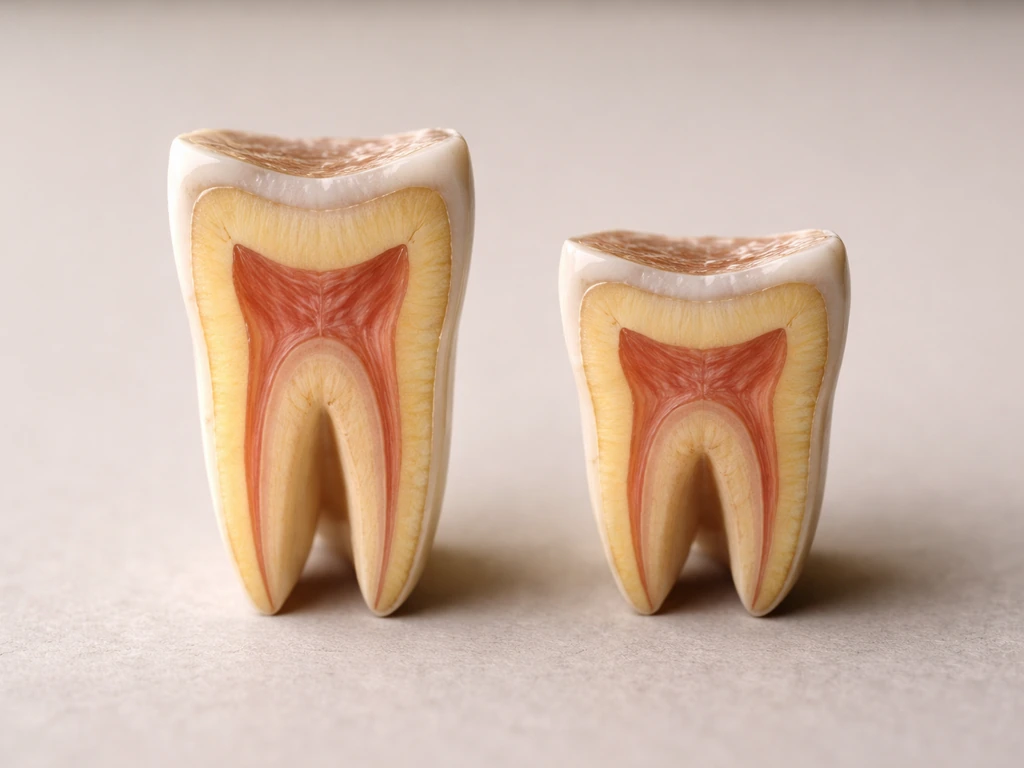
Do Hypsodont Teeth Grow Continuously and How Wear Works
Hypsodont teeth can erupt continuously to replace worn crown height, but not regrow enamel or tooth roots.
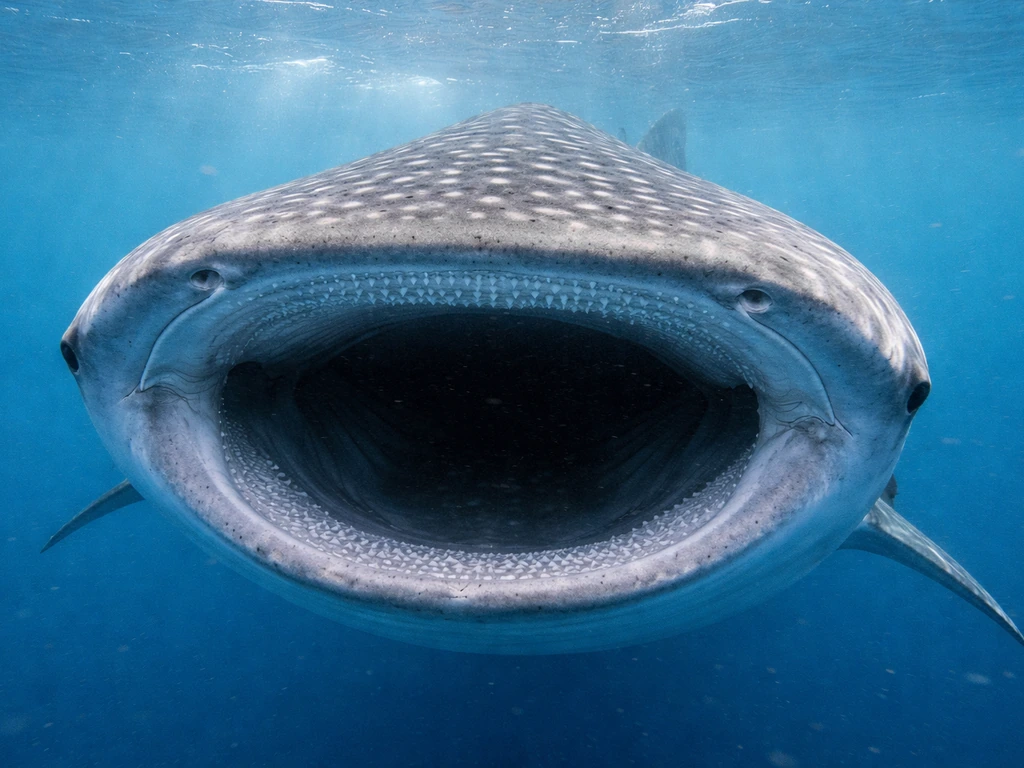
Animal With Up to 3000 Teeth: What the Claim Really Means
Unpack the 3000-teeth claim: which animal replaces teeth for life, why it happens, and what regrowth means for humans
The Teeth of What Animal Continue to Grow
Learn which animals have continuously erupting teeth, why they grow, and how it differs from tooth regrowth myths.