
The animal most commonly cited as having "up to 3,000 teeth" is the whale shark (Rhincodon typus). But here's the important catch: those aren't 3,000 teeth lined up in a jaw ready to bite you. They're thousands of tiny, non-functional teeth spread across hundreds of rows in the mouth of a filter-feeder the size of a school bus. And depending on which source you're reading, the number 3,000 might not even refer to mouth teeth at all. Understanding what that number actually means tells you a lot about how tooth replacement really works in animals, and why humans got such a comparatively raw deal when it comes to growing teeth back.
Animal With Up to 3000 Teeth: What the Claim Really Means

Marcus Holloway
18 May 2026
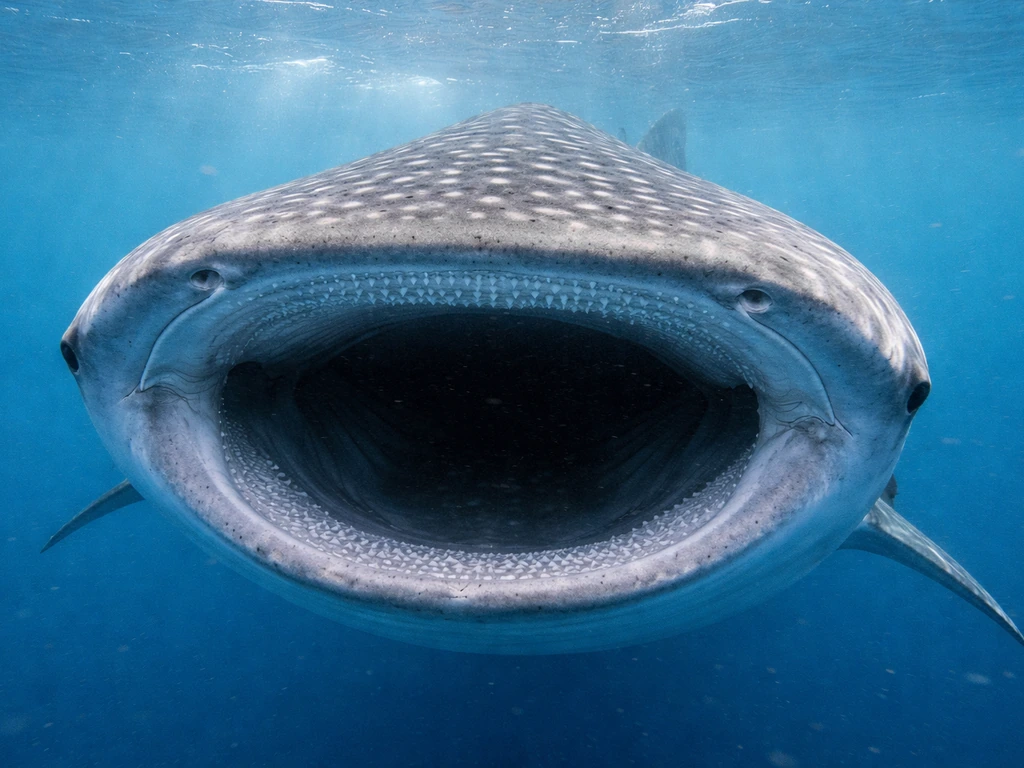
The 3,000-teeth claim: which animal it's actually about
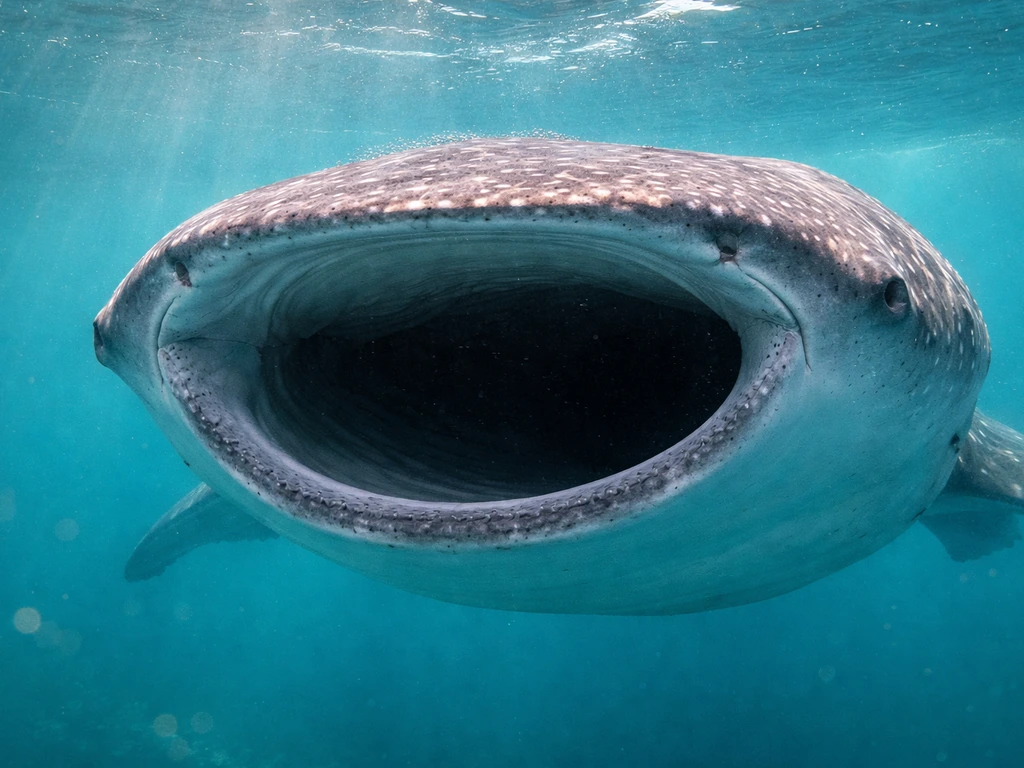
The whale shark is the species most frequently tied to the "up to 3,000 teeth" fact. Whale sharks are the largest fish on Earth, and their mouths contain an extraordinary number of very small teeth arranged in over 300 rows. Wikipedia’s summary of whale shark biology similarly notes that their mouth teeth are arranged in blank" rel="noopener noreferrer">over 300 rows and are tiny rather than functional biting teeth. These teeth are not used for chewing, biting prey, or tearing food. Whale sharks are filter feeders: they swim with their enormous mouths open and filter tiny plankton, krill, and small fish directly from the water. The teeth are essentially vestigial, meaning they exist but aren't central to how the animal actually feeds.
There's an additional wrinkle worth knowing. A 2020 study published via Phys.org reported that researchers discovered whale sharks also have tiny tooth-like structures called dermal denticles covering the surface of their eyes, with around 3,000 denticles per eye covering. So some of the "3,000 teeth" figures you'll see online may actually be referring to these eye denticles, not the mouth teeth. The fact that whale sharks have thousands of tiny tooth-like structures in their mouths AND on their eyes explains why the numbers get conflated so easily in popular content.
What "up to 3,000 teeth" actually means biologically
This is the part that most "did you know" posts skip entirely. When you see "3,000 teeth" applied to a shark species, you need to ask: is that the number of teeth present at one time, or is it a lifetime estimate of replacements? How many teeth a shark can grow in its lifetime depends on whether scientists are counting simultaneous teeth or the continuous replacements over the years lifetime tooth counts.
For whale sharks, the figure is largely about the number of teeth present simultaneously across all those rows. Many other shark species, though, are better described by lifetime tooth counts, which can run into the tens of thousands because sharks are polyphyodonts: they replace their teeth continuously throughout their lives.
Humans, by contrast, are diphyodonts. That means we get exactly two sets: 20 primary (baby) teeth and up to 32 permanent adult teeth, including wisdom teeth. There is no third set waiting in reserve. So when you read that a shark can grow a seemingly limitless number of teeth over a lifetime, that's not just a quirky animal fact. It represents a fundamentally different biological system for tooth replacement that humans simply don't have.
How whale shark (and shark) tooth biology actually works
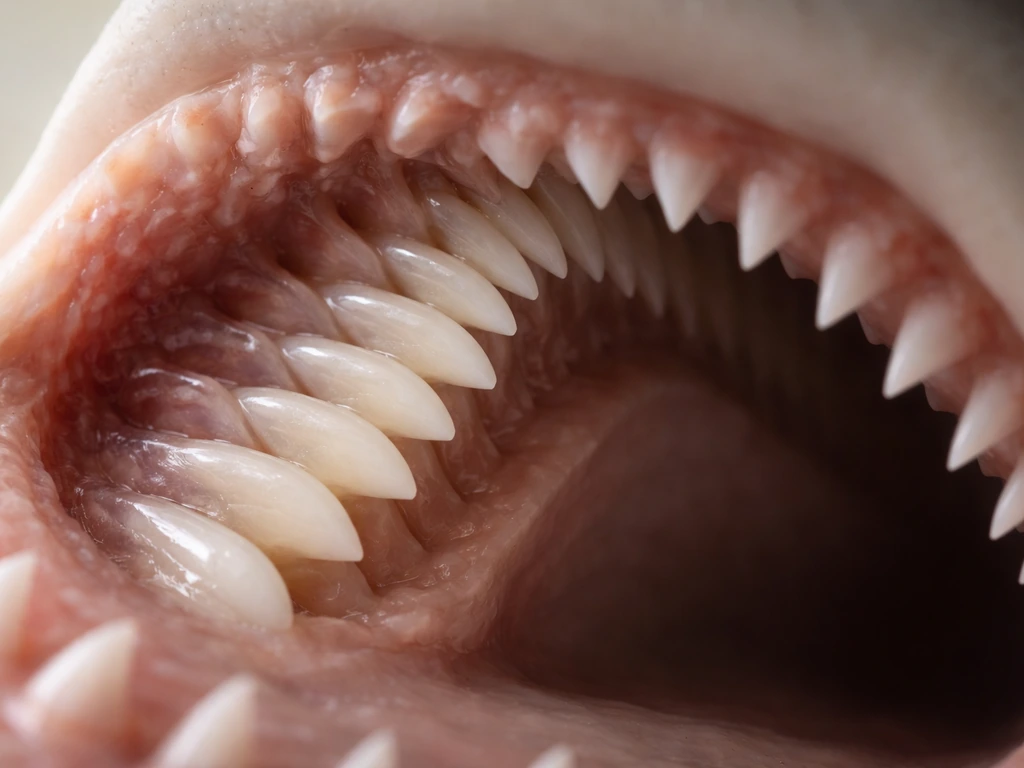
Sharks are among the most studied animals when it comes to tooth replacement science, and for good reason. Their teeth grow from a specialized structure called the dental lamina, which contains stem-cell-like progenitor cells. Research published in PubMed has shown that Sox2-positive progenitor cells in sharks are associated with this dental lamina and a connected structure called the successional lamina, which is specifically where new tooth regeneration initiates. When a tooth is lost or worn down, a new one moves forward from the row behind it, conveyor-belt style.
This system means a shark never really "loses" a tooth permanently. The replacement cycle keeps going throughout the animal's life. For whale sharks specifically, the mouth contains over 300 rows of teeth, but only a handful of rows are functional at any given time. The rest are in various stages of development, moving forward to replace teeth at the front. It's a production line that never fully shuts down, which is biologically spectacular and completely unlike anything in the human mouth.
If you're curious how this stacks up against other animals with unusual tooth biology, it's worth knowing that some mammals have teeth that grow continuously throughout life rather than being replaced (a topic covered separately in discussions of hypsodont teeth and continuously growing teeth in certain species). Hypsodont teeth are the classic example of teeth that can keep growing continuously throughout an animal's life hypsodont teeth and continuously growing teeth. Some mammals have teeth that continuously grow, which is different from replacement systems like those seen in sharks. Shark-style replacement and mammal-style continuous growth are two different evolutionary solutions to the same problem: keeping functional teeth throughout a long life.
Can humans naturally grow teeth back? The honest answer
No. Once your permanent teeth are gone, they don't grow back. This is one of the most common and frustrating misconceptions in dental health, and it's worth being blunt about it. There is no dormant third set of human teeth waiting to emerge. The biology that would allow for tooth replacement, specifically a successional dental lamina with active progenitor cells, is simply not present in adult humans in any meaningful functional way. What you have is what you have. That same kind of question comes up with other animals, like whether do cows grow teeth in their hooves.
That said, there are specific dental tissues that can undergo some form of repair or partial regeneration, and it's worth separating the realistic from the wishful thinking. Here's where science actually stands:
- Dentin: The layer beneath enamel can form what's called tertiary or reparative dentin in response to injury or decay. This happens when original odontoblasts (dentin-forming cells) survive and lay down new dentin, or when odontoblast-like cells differentiate from pulp progenitors. It's a protective repair response, not a full regeneration of lost tooth structure.
- Pulp: The soft tissue at the center of a tooth has some regenerative capacity, especially in younger patients. Regenerative endodontics is an active clinical field that works with pulp tissue, but it applies primarily to immature teeth with open root tips, not to fully formed adult teeth with established root canals.
- Cementum and periodontal ligament: These structures that anchor your tooth to the bone can partially regenerate under the right clinical conditions, but it requires professional intervention such as guided tissue regeneration (GTR) procedures, not spontaneous healing.
- Alveolar bone: Bone supporting the teeth can remodel and partially regenerate, again under clinical management, but significant destruction from periodontitis rarely reverses on its own.
Enamel, gums, and other dental tissues: what can and can't come back
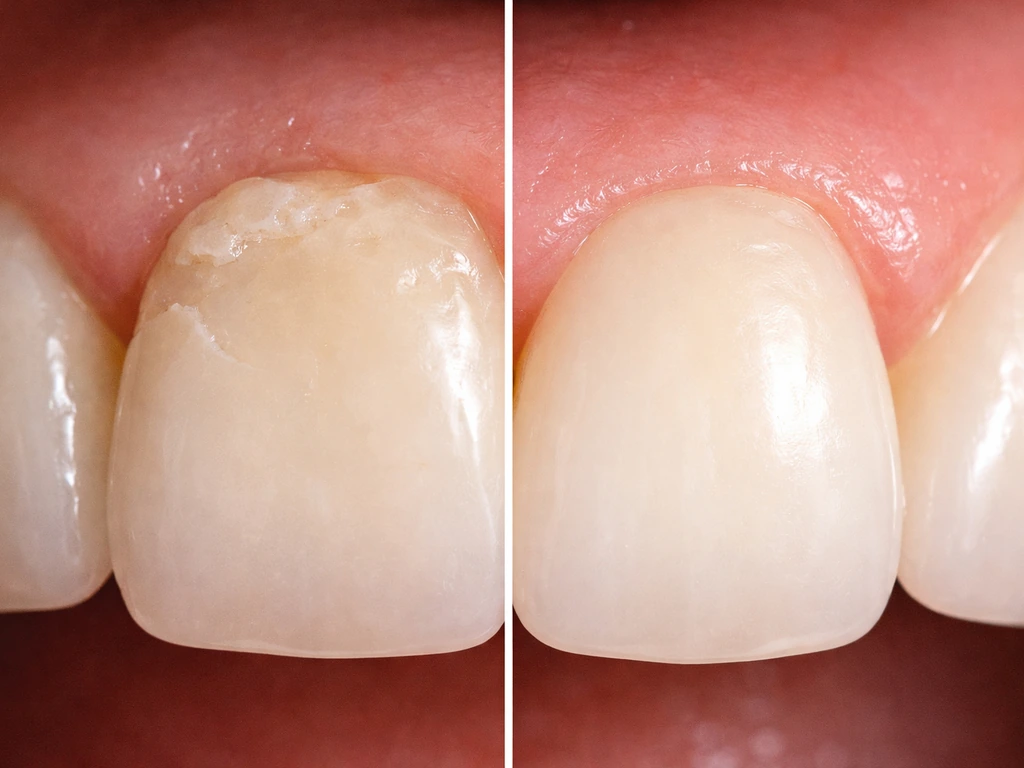
Enamel is the hardest tissue in the human body, and it's also the most permanent in the worst possible way: once it's gone, it's gone. Elephant tusks are elongated incisors, not replacement teeth that grow out from new positions in the mouth. The cells that build enamel, called ameloblasts, are only active during tooth formation. By the time your tooth erupts into the mouth, those cells have already withdrawn and are no longer present.
There is no cellular machinery left to rebuild lost enamel. What you can do is remineralize enamel at a microscopic level using fluoride or calcium-based treatments, which can strengthen weakened enamel and reverse early-stage demineralization. But if you've lost enamel to acid erosion, grinding, or decay, that surface isn't coming back without a dentist's help.
Gums are a different story. Gum tissue can heal after injury or treatment, but gum tissue lost to periodontitis (the destructive form of gum disease) rarely regenerates fully on its own. Progressive periodontitis destroys the gingiva, periodontal ligament, cementum, and alveolar bone. Clinicians can attempt guided tissue regeneration using special membranes that let periodontal ligament cells repopulate the root surface before faster-growing epithelial cells can take over, but this is a procedure performed in a dental office, not something that happens naturally at home.
The practical takeaway: stop waiting for anything to "heal on its own" if you've noticed enamel loss, gum recession, or tooth sensitivity that's getting worse. The window for remineralization and conservative treatment is early. Once the damage is extensive, biological limits mean you're looking at restorations, grafts, or implants, not natural regrowth.
Age and timing: why when matters for teeth
Tooth development follows a pretty specific biological schedule in humans, and understanding that schedule helps clarify what's normal versus what needs attention. Primary teeth start erupting around 6 months of age and are typically all present by about 2 to 2.75 years. Then the mixed dentition phase begins, where baby teeth fall out and permanent teeth come in over a span of several years. Most permanent teeth are in place by early adolescence, with one major exception.
Wisdom teeth, the third molars, don't typically erupt until ages 17 to 25, according to Merck Manual eruption timelines. This is why wisdom tooth concerns are such a common issue for people in their late teens and early twenties. Many people don't have enough room for wisdom teeth to erupt properly, leading to impaction, crowding, or infection. The fact that wisdom teeth erupt so late also means that for a narrow window of time in young adults, an "erupting" tooth can feel like something growing in, which sometimes fuels the misconception that teeth can keep growing back if conditions are right. They can't. Wisdom teeth are simply the last scheduled delivery of your second (and final) set.
Age matters for another reason too. Younger patients have a biological advantage in certain regenerative scenarios. Immature permanent teeth with open root apices respond better to regenerative endodontic procedures because the pulp tissue is still developing and has more progenitor cell activity. Once a tooth is fully mature with a closed root tip, the regenerative possibilities narrow significantly. This is one more reason why catching dental problems early, especially in children and teenagers, leads to better outcomes than waiting.
| Life Stage | Teeth Present | Key Milestone | Regenerative Reality |
|---|---|---|---|
| Infant (6–24 months) | Primary teeth erupting (up to 20) | First teeth appear around 6 months | Enamel already non-regenerative once erupted |
| Child (6–12 years) | Mixed dentition: baby + permanent teeth | Primary teeth shed; permanent teeth emerge | Baby tooth loss is normal; permanent teeth have one chance |
| Teen (12–17 years) | Most permanent teeth in place | Second molars typically erupt by 13 | Some pulp regeneration possible in immature teeth |
| Young adult (17–25 years) | Up to 32 teeth including wisdom teeth | Third molars (wisdom teeth) may erupt | Wisdom teeth are the last natural eruption event |
| Adult (25+) | Full permanent dentition (or fewer if extracted) | No more natural eruptions expected | Lost teeth cannot grow back; clinical intervention needed |
How to verify the 3,000-teeth claim and interpret tooth-count facts

Animal tooth counts get mangled constantly in popular content, partly because the numbers are genuinely impressive and partly because important context gets stripped out for shareability. If you want to verify or interpret a tooth-count claim like the whale shark's 3,000 figure, here's how to approach it practically.
- Ask whether the number is simultaneous or lifetime. A shark might have 300 teeth at once but tens of thousands over a lifetime. These are very different claims. Always check whether the source is talking about teeth present at one time versus total replacements over the animal's lifespan.
- Check whether "teeth" means functional teeth. Whale sharks have tiny, vestigial mouth teeth and dermal denticles on their eyes. Not all structures called "teeth" in animal biology function the way human teeth do. This matters when interpreting what "having 3,000 teeth" means in practice.
- Look for peer-reviewed or institutional sources. Wikipedia's whale shark article, Phys.org coverage of the 2020 denticle study, and PubMed-indexed research on shark dental lamina regeneration are all more reliable starting points than generic listicles. National Geographic and Dimensions.com are reasonable secondary sources for confirmed facts.
- Distinguish between tooth types and their roles. Some animal species (like sharks) have replacement teeth in rows. Others have continuously growing teeth rather than replacement sets. The biology is genuinely different across species, and conflating them leads to confused claims about what's possible.
- Be skeptical of superlatives. Claims like "the most teeth of any animal" often need unpacking. Different species win on different metrics: most teeth at once, most replacements in a lifetime, most tooth types, or most unusual tooth structure. Clarify which metric is being used before drawing comparisons.
- For human dental claims, cross-reference with dental school resources or clinical guidelines. Sites like Merck Manual, the American Dental Association, or peer-reviewed journals are your best check on what enamel, dentin, gums, and pulp can actually do biologically.
The bottom line on the whale shark's teeth is that the "3,000" number is real in the sense that the animal has an extraordinary number of tooth-like structures, but it's also misleading if you picture a mouth full of 3,000 sharp, functional teeth. The real story is about a filter-feeder with vestigial teeth it barely uses, a remarkable eye-covering system of dermal denticles, and a species that represents how wildly tooth biology can diverge across the animal kingdom. Compare that to humans, who get two sets, no replacements, and limited tissue repair, and it becomes clear why understanding the limits of dental regeneration matters so much for everyday decisions about protecting the teeth you have.
FAQ
If the whale shark has “up to 3,000 teeth,” does it ever lose teeth and stop feeding?
Not in the way people imagine. Those “tooth-like” structures in the mouth are not the main feeding mechanism, and the species has a tooth replacement process that keeps renewing what is needed at the functional front of the mouth. So the headline number does not imply a single-use set of teeth that can run out and prevent feeding.
Are the “3,000” numbers in whale shark posts definitely mouth teeth?
Not always. Some figures appear to count dermal denticles on the surface of the eyes, which are tooth-like and can be present in the thousands. When a source does not specify whether it means mouth teeth, eye denticles, or simultaneous versus lifetime counts, the claim is easy to misinterpret.
When comparing sharks to humans, should I think “3,000 teeth” as a lifetime total?
Usually you should not. A fair comparison depends on whether you are looking at teeth present at one time versus teeth produced across the animal’s life. Many shark explanations focus on concurrent tooth rows, while other species are discussed in lifetime replacement totals, which can be much larger.
Why do sharks seem to “never run out” of teeth, while humans cannot regrow theirs?
It comes down to whether the adult tissues still contain an active replacement system. Humans lack an adult successional lamina with stem-cell-like progenitors that can continually generate new replacement teeth in the way sharks do, so tooth loss in adults is largely permanent.
Do any humans have biological repair that could count as “tooth regrowth”?
Some limited repair is possible, but it is not full regrowth of an entire lost tooth. For example, gums can heal after certain injuries, and early enamel demineralization can sometimes be reversed through remineralization. However, lost enamel surfaces from advanced decay and missing teeth typically require dental procedures, not natural replacement.
If enamel is gone, is there any situation where it can come back?
Enamel-forming cells (ameloblasts) are not active after eruption, so true regrowth is not realistic. The practical options are to strengthen remaining enamel and slow progression (often with fluoride and professional care), or to restore missing structure with fillings, crowns, or other restorative treatments depending on how much enamel is lost.
Can gum tissue loss from periodontitis regenerate at home?
Rarely. While gum tissue can sometimes recover after mild irritation, periodontitis can destroy deeper supporting structures. Regeneration, when possible, is usually done with guided tissue approaches in a dental setting, and outcomes depend on severity and timing.
Why does wisdom-tooth timing make people think teeth keep coming in forever?
Because wisdom teeth erupt late, around late teens to the mid-20s, they can feel like a “new set” emerging after you already had your permanent teeth. But they are part of the same final set scheduled to erupt, and they do not imply an ongoing third replacement cycle.
Do young teeth regenerate better than adult teeth?
Often yes, especially in specific endodontic situations. Immature permanent teeth with open root tips can respond better to regenerative endodontic procedures because the pulp tissue still has more active developmental capacity. In fully mature teeth with closed root tips, regenerative options are more limited.
What is the easiest way to verify a viral “animal with 3,000 teeth” claim?
Look for three clarifications: the species, what structure the number refers to (mouth teeth versus dermal denticles), and whether it is counting simultaneous teeth or a lifetime production total. Without those details, the claim is frequently a mash-up of different counting methods.
Next Articles
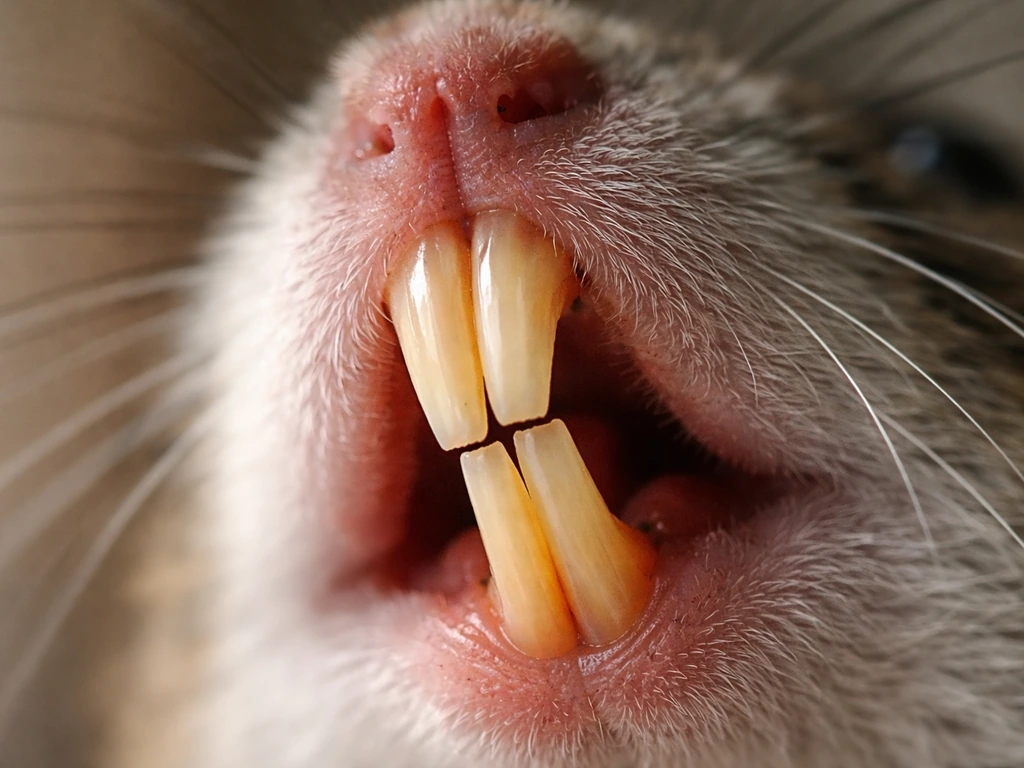
The Teeth of What Animal Continue to Grow
Learn which animals have continuously erupting teeth, why they grow, and how it differs from tooth regrowth myths.
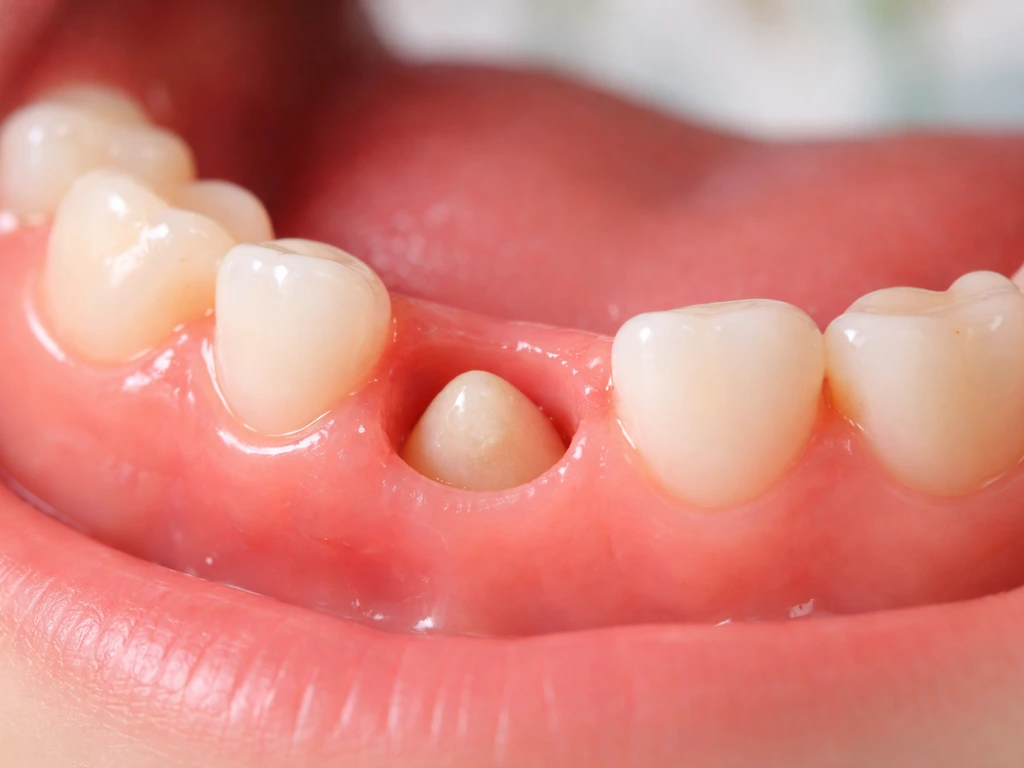
Do Milk Teeth Grow Back? Timelines, What to Do, Red Flags
Learn if milk teeth regrow, typical timelines for permanent teeth, what to do after loss or injury, and red flags.
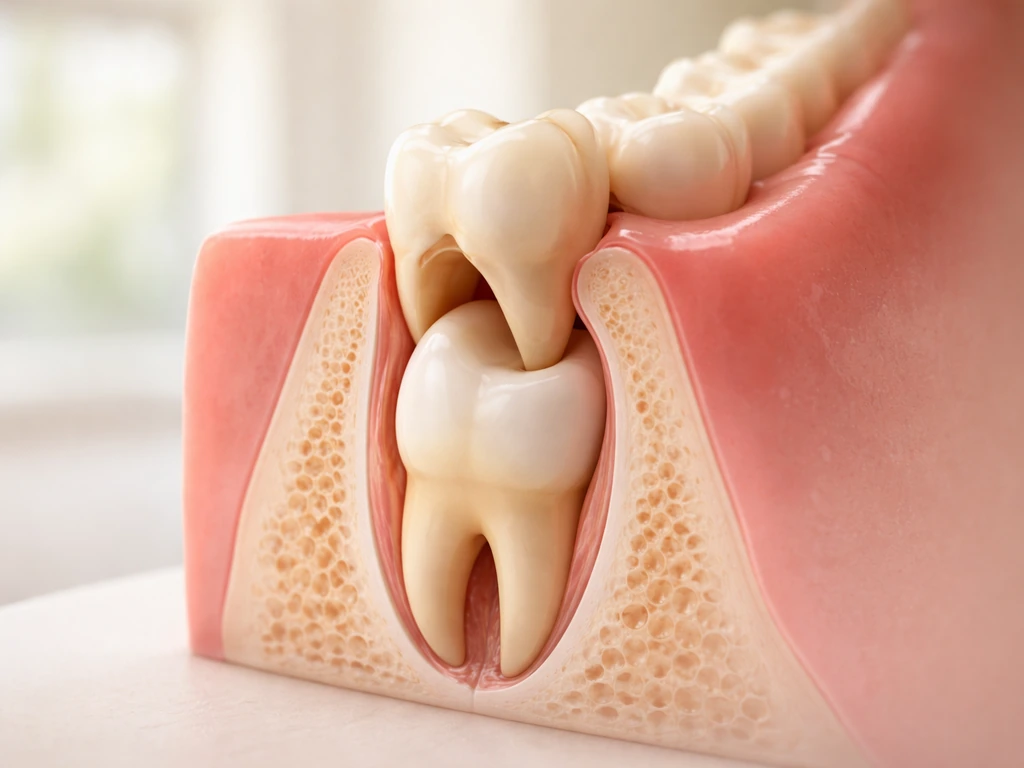
Can Milk Teeth Grow Twice? Replacement vs True Regrowth
Can milk teeth grow twice? Learn why baby teeth usually only get replaced, not regrown, and what to do if one falls out