
In a single month, an early-stage cavity typically advances only a small fraction of a millimeter through enamel. But here is the catch: that slow average hides enormous variation. A cavity caught at the white-spot stage might barely move in 30 days with good care, while an already-established lesion in a deep molar groove can push into dentin noticeably faster, especially if you are snacking on sugar constantly and skipping flossing. The honest answer is that one month is rarely enough time to feel dramatic change, but it can absolutely be enough time for a borderline lesion to cross the line from reversible to irreversible.
How Much Can a Cavity Grow in a Month? Timelines

Marcus Holloway
24 May 2026
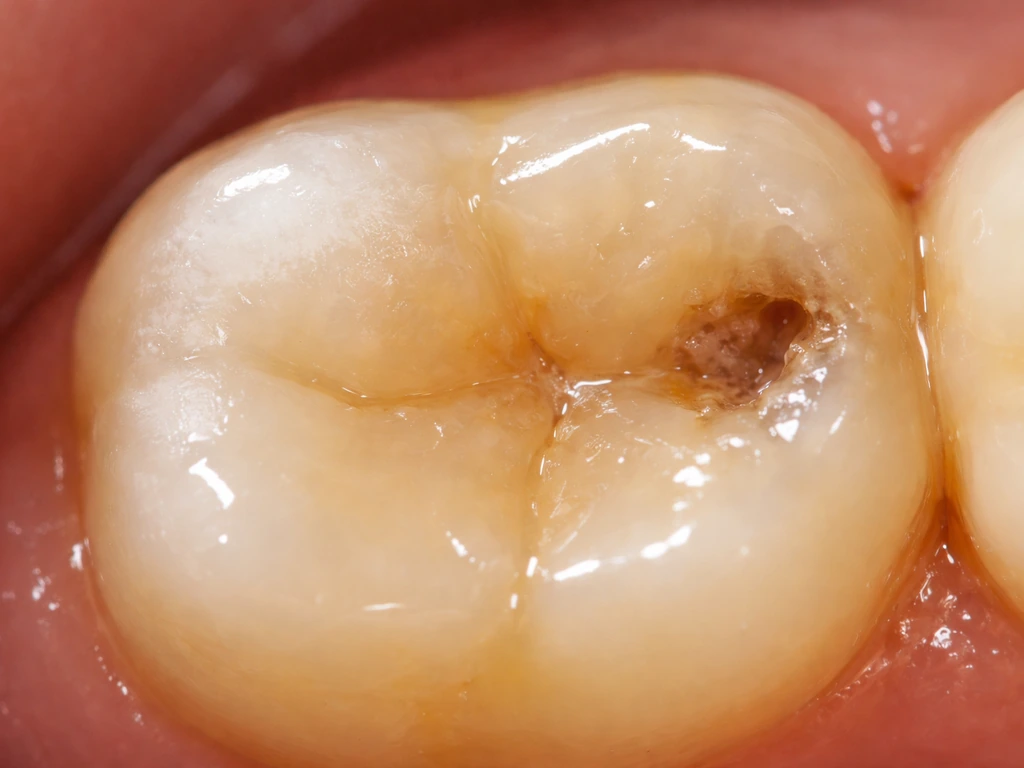
How cavities actually progress: enamel, then dentin, then the nerve
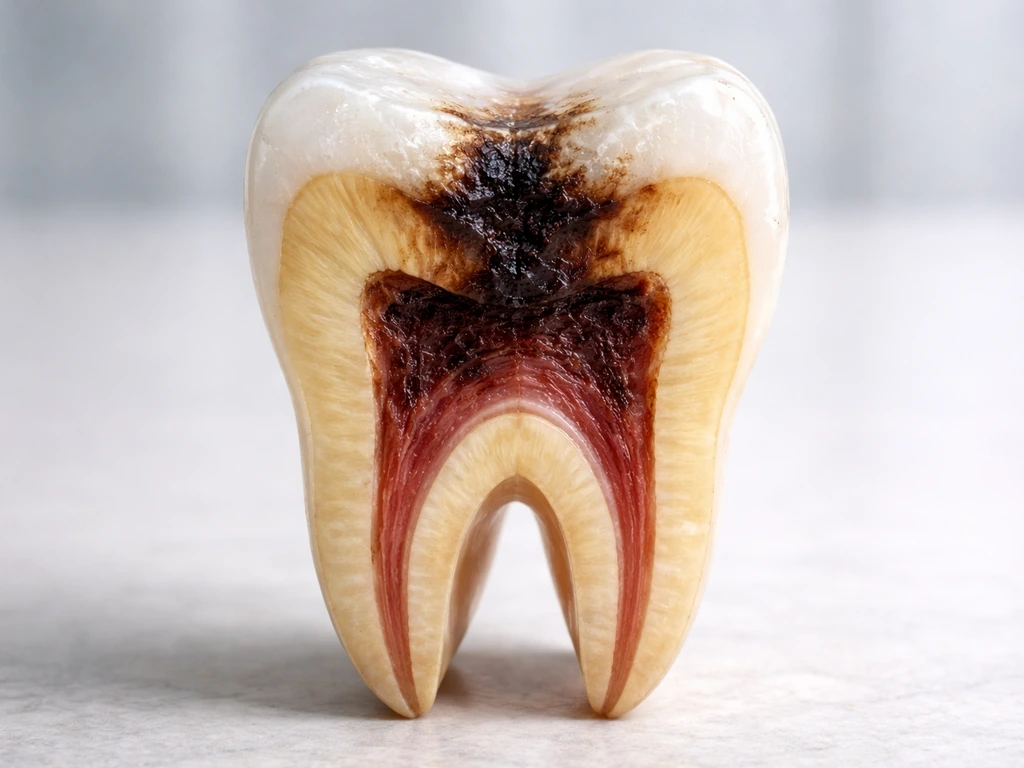
Decay does not just appear one day as a hole. It moves in stages, and the stage it is at completely changes what a single month means for your tooth.
It starts with demineralization. Acid from bacteria dissolves minerals from the outer enamel surface, creating what dentists call a white spot lesion (WSL). At this point the enamel structure is still physically intact, just partially hollowed of mineral. This is the only stage where the tooth can genuinely recover without a drill.
If demineralization continues, the enamel eventually breaks down structurally. That is cavitation, a real cavity, the physical hole. Once this happens, the tissue is gone permanently. Enamel has no cells to rebuild itself. Longitudinal radiograph studies show that traveling through even the outer half of enamel alone takes roughly 21 to 23 months on average for a lesion between teeth, though the range is wide. Some lesions move faster, some barely move at all.
After enamel breaks, decay enters dentin, which is much softer and more porous. Progression speeds up considerably at this point because bacteria travel through the dentinal tubules toward the pulp. Once the pulp (the nerve and blood supply) is reached, you are dealing with pulpitis or abscess territory, which is a dental emergency, not a watch-and-wait situation. In cases where an abscess has formed, people often want to know how fast it can expand and spread through surrounding tissues how fast can a tooth abscess grow.
What one month of decay actually looks like
People often expect to see or feel a cavity growing over a month. Usually you will not. Research tracking early lesions shows that clinical cavitation of a non-cavitated dentin-related lesion was not perceptible in some groups until around 8 to 12 months. What changes in a month is mostly invisible: the bacterial activity either builds or backs off, the mineral balance in the lesion either tips toward more damage or toward recovery. That said, the question of do cavities grow is mainly about whether an active lesion is progressing or staying stable over time.
Here is a rough practical framing by stage:
| Stage | Typical 1-month change | Reversible? |
|---|---|---|
| White spot (incipient enamel) | Minimal physical change; mineral loss may increase or begin recovering depending on oral environment | Yes, with fluoride and diet changes |
| Established enamel cavity (cavitation) | Slow structural expansion; may be hard to detect without X-ray | No, filling required |
| Dentin involvement | Faster progression; bacteria spreading through tubules | No, filling or more involved treatment required |
| Near or at pulp | Can progress to abscess within weeks; pain usually begins | No, root canal or extraction likely needed |
The key insight from population-level data is that caries progression averages about 0.11 new decayed surfaces per person-year across mixed populations. That sounds slow, but it means that if you already have an active lesion, you are not starting from zero risk. An active, already-cavitated lesion is about 1.4 times more likely to progress further than an early non-cavitated one within two years.
What makes a cavity grow faster or slower
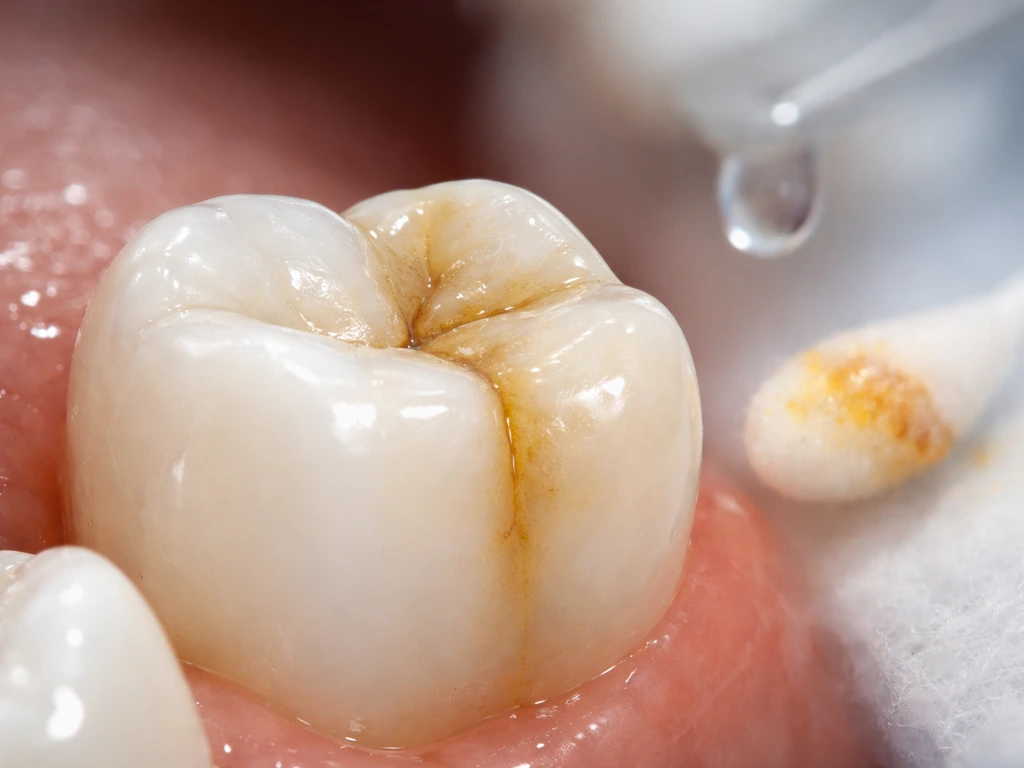
This is where individual risk factors matter enormously. Two people can have the same-sized lesion and end up in completely different places six months later based on their daily habits and biology.
Tooth location and surface type
Pit-and-fissure surfaces, meaning the grooves on the chewing surfaces of your back molars, are the most vulnerable. Bacteria and food debris pack in there and are hard to remove. Smooth surfaces like the cheek-facing side of a tooth have lower susceptibility, and lesions there tend to progress more slowly. Longitudinal natural history data confirm that occlusal (chewing surface) lesions cavitate sooner than smooth surface lesions, and smooth surfaces take the longest to reach cavitation.
Sugar frequency, not just amount
How often you expose your teeth to fermentable carbohydrates matters more than the total quantity. Every sip of juice, every cracker, every piece of candy triggers an acid attack that lasts 20 to 30 minutes. If you snack or sip sugary drinks throughout the day, your teeth are under near-constant acid attack. That dramatically accelerates any active lesion.
Saliva flow
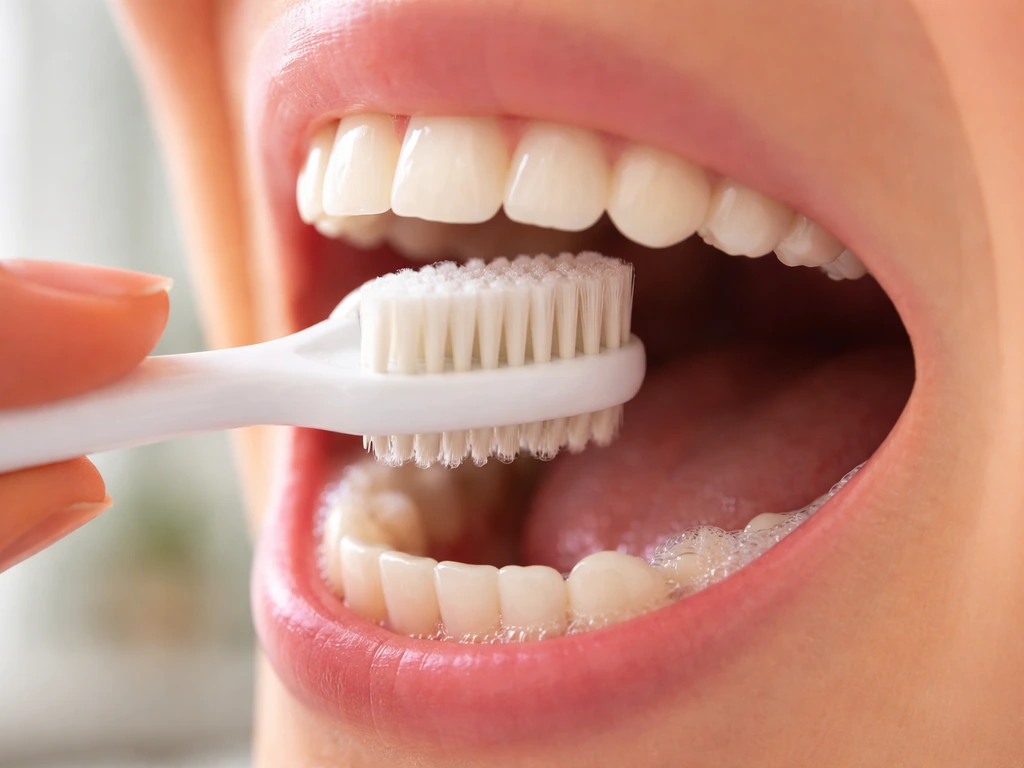
Saliva is your mouth's natural defense system. It buffers acid, delivers calcium and phosphate back to enamel, and physically washes bacteria away. Low salivary flow, called xerostomia or dry mouth, is one of the strongest risk factors for rapid caries progression. Dry mouth can come from medications (antihistamines, antidepressants, blood pressure drugs), medical conditions, radiation therapy to the head and neck, or simply not drinking enough water. If you have dry mouth and an active cavity, that cavity is likely moving faster than average.
Fluoride exposure
Fluoride does not just prevent new cavities. It actively promotes remineralization of early lesions. In an in vitro clinical simulation study of white spot lesions, fluoride-based strategies were evaluated by changes in mineralization degree using ICDAS-based specimen grouping after one month and three months remineralization of early lesions. People using fluoridated toothpaste consistently, drinking fluoridated water, or receiving professional fluoride applications have slower-progressing lesions on average. Not using fluoride removes one of the most effective brakes on decay.
Other risk factors that push progression faster
- Braces: wires and brackets create plaque traps and make cleaning harder, making white spot lesions a very common outcome of orthodontic treatment
- Age: newly erupted teeth in children and teens have less mature enamel and may be more susceptible; older adults face root exposure from gum recession, and root surfaces decay faster than enamel
- Oral hygiene quality: inconsistent brushing and no flossing leaves bacteria and acid in contact with the tooth longer
- Enamel conditions: teeth with thinner or structurally compromised enamel (from acid erosion, hypomineralization, or developmental defects) offer less protection
- Existing restorations: decay can start at the margins of fillings or under poorly sealed restorations, where it is harder to detect early
Can an early cavity actually reverse? What remineralization can and cannot do
This is a question this site focuses on directly, because many people arrive here hoping teeth can regrow themselves. Here is the honest biological answer: they cannot. Adult teeth do not regenerate the way bone does. Enamel-producing cells (ameloblasts) are gone by the time a tooth fully erupts. Once enamel is physically broken down into a hole, it stays a hole.
But there is a real, evidence-backed exception at the very earliest stage. White spot lesions, the partially demineralized-but-still-structurally-intact enamel patches, can remineralize. The mineral is actually replaced from the calcium, phosphate, and fluoride in saliva and from fluoride products. This is not the tooth regrowing; it is the remaining enamel crystal structure being refilled with mineral. Clinical trials show this remineralization happens fastest in the first few months of treatment and continues more slowly after that. After orthodontic treatment, for example, fluoride varnish combined with daily fluoride toothpaste can measurably reduce lesion size over a six-month period.
The moment physical cavitation occurs, remineralization cannot close the gap. You need a filling. This is why the window of early detection is so important. The difference between a white spot and a small cavity can be the difference between a fluoride application and a drill.
It is worth noting that whether a small cavity can somehow reverse is a related question people ask. It is worth noting that whether a small cavity can somehow reverse is a related question people ask, such as can your tooth grow back from a cavity. The short answer is no: once the structure is gone, the tooth cannot grow it back. That biological limitation is the core reason catching decay early, before it becomes a physical hole, matters so much.
Symptoms that suggest your cavity is worsening vs still early
Early-stage decay is almost entirely symptom-free. This is the frustrating part. A white spot lesion looks like a chalky patch on the tooth and causes zero pain. Even small cavitated lesions in enamel usually produce no symptoms. By the time you feel something, decay is typically already in dentin or approaching the pulp.
Here is what to watch for as a rough severity guide:
| Symptom | What it likely means | Urgency |
|---|---|---|
| No symptoms, visible white or brown spot | Early enamel lesion, possibly reversible | Schedule routine appointment soon |
| Sensitivity to cold or sweet that passes quickly | Enamel cavitation or early dentin involvement | See dentist within a few weeks |
| Sensitivity to cold that lingers more than a few seconds | Dentin or pulp involvement | Call dentist promptly, within days |
| Spontaneous throbbing pain, pain to heat, or swelling | Pulpitis or abscess forming | Call dentist today or go to emergency dental care |
| Visible hole, dark staining in groove, or broken tooth surface | Established cavity needing restoration | Schedule soon, do not delay |
Pain is a late sign. Do not wait for pain to decide whether a cavity is real or serious. By the time you have a consistent toothache, you may be looking at a root canal rather than a simple filling. If you have any doubt, an X-ray will tell you far more than symptoms alone.
What to do right now: your practical next steps
If you think you might have an early cavity
Do not panic, but do not wait either. Book a dental appointment and specifically ask for bitewing X-rays. Bitewings are the most efficient method for detecting cavities between teeth, where many early lesions hide. A dentist can also use visual assessment under good lighting and, in some offices, laser fluorescence or transillumination tools that catch lesions before they are visible to the naked eye.
At the appointment, ask the dentist to assess whether the lesion is active or inactive, and whether it is cavitated or non-cavitated. This aligns with an evidence-based review emphasizing that caries activity and lesion activity (active vs inactive) should be assessed alongside lesion depth or severity, since diagnosis is dynamic rather than one-time detection only caries activity and lesion activity (active vs inactive) should be assessed alongside lesion depth/severity. Those two distinctions drive the treatment decision. An active non-cavitated lesion is treated very differently from a cavitated one.
What treatment looks like at each stage
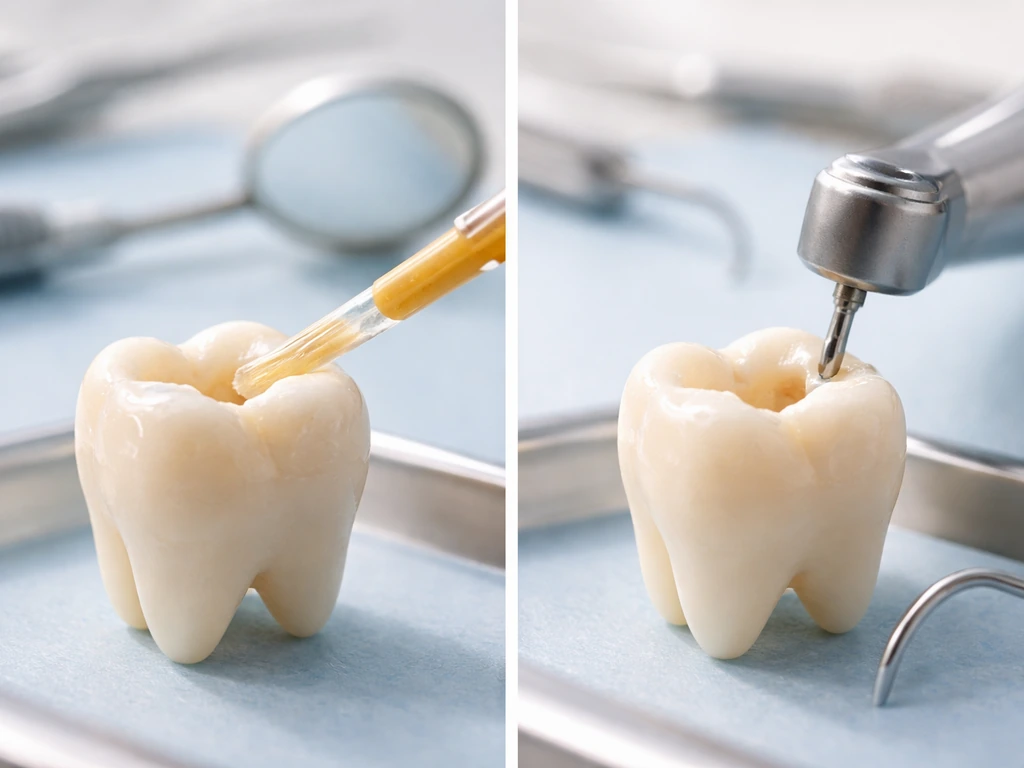
- White spot / incipient enamel lesion: No drilling. Treatment focuses on remineralization: fluoride varnish applied in-office, prescription high-fluoride toothpaste for home use, dietary counseling to reduce sugar frequency, and improved brushing and flossing. Sealants may be applied over deep fissures to block bacterial access. Follow-up is scheduled to monitor whether the lesion is stabilizing or progressing.
- Small cavitated enamel lesion: A filling is needed. This is a routine procedure with minimal preparation. Caught here, treatment is simple and the tooth remains strong.
- Dentin involvement: Filling is still the primary treatment, but the procedure is more extensive. Sensitivity afterward is common. If decay is deep, the dentist may place a medicated liner to protect the pulp.
- Pulp involvement or abscess: Root canal treatment or, in some cases, extraction. If there is swelling or signs of spreading infection, get care the same day. Antibiotics alone are not the right fix for dental abscesses; definitive treatment means addressing the source of infection in the tooth itself.
Between now and your appointment
- Switch to a fluoride toothpaste and brush twice a day, spending at least two minutes each time
- Floss once daily, especially around any area you suspect has decay
- Cut down on how often you consume sugar and refined carbohydrates, not just how much
- Stay hydrated to support saliva flow, and consider sugar-free xylitol gum after meals if you have dry mouth
- Avoid probing the area with your tongue or a toothpick, as you can disturb early lesions
- If you have pain, swelling, or a bad taste in your mouth, call a dentist today rather than waiting for a scheduled appointment
The bottom line is this: one month is not a long time in the life of a slow enamel lesion, but it can matter at the margins. If you already have dental work, it also helps to understand whether decay can cavities grow on fillings instead of staying limited to fresh enamel or dentin. An early white spot sitting on the edge of irreversibility can tip either way in that time depending on what you do.
For a small cavity, the timeline to grow can vary a lot based on where it is in the tooth and how often you expose it to sugar and acid how long does it take a small cavity to grow. Fluoride, less sugar, and a dentist visit can keep it reversible. Ignoring it and continuing the same habits that created it can push it past the point where any amount of home care or remineralization tricks can help.
Your teeth cannot grow enamel back once it is gone, so the only real strategy is protecting what is still there.
FAQ
If a cavity looks the same after 30 days, does that mean it is not growing?
Not necessarily. Early decay can remain symptom-free and may not show obvious size change in a month. The lesion can still be becoming more active, or it can be shifting toward repair, which is why dentists assess activity (active vs inactive) and whether it is cavitated, not just appearance.
Can a cavity grow faster than the “average” in just a few weeks?
Yes, especially for lesions on chewing surfaces (pit and fissure areas) or when acid exposure is frequent (snacking, sipping sweet drinks) and saliva protection is weak (dry mouth). In those higher-risk situations, progression over a month can be enough to move from an early, reversible stage to physical cavitation.
How can I tell whether I have a white spot lesion versus a small cavity?
You usually cannot reliably tell by sight alone, because both can be subtle. A white spot is typically chalky and non-cavitated, while a small cavity involves loss of structure. The most dependable way is an exam with bitewing X-rays and a dentist’s assessment of cavitation (and lesion activity).
Does brushing harder make a cavity grow slower?
Brushing technique matters, but pressure does not “undo” decay once enamel is structurally broken. Gentle, thorough plaque removal helps reduce ongoing acid attack, and using fluoride toothpaste supports remineralization for early lesions. Over-brushing with excessive force can also wear enamel, which can worsen the situation.
What role do fluoride mouthwashes and gels play if I already use fluoride toothpaste?
For early lesions, additional fluoride can help, but it is most useful when it increases consistent fluoride availability, for example via prescribed gels, varnish, or timed rinses. The key decision is whether your lesion is still non-cavitated, because mouth rinses cannot rebuild enamel that is already gone.
Is dry mouth the main reason my cavity might be changing quickly?
Dry mouth is a major risk factor, but it is not the only one. Frequent sugar or starch exposure and plaque retention (especially around grooves between teeth) can also drive faster progression. If you have dry mouth, addressing hydration and medication side effects, in addition to fluoride, can make the biggest difference.
If my cavity is “between teeth,” can I detect growth at home?
Between-tooth lesions are hard to see, and you typically cannot feel early changes until cavitation or deeper involvement occurs. Home signs like floss catching more often can raise suspicion, but bitewing X-rays are the practical way to confirm whether it is progressing within a given timeframe.
Can a cavity appear and become painful within a month?
Pain can happen on a shorter timeline if the decay advances enough to irritate deeper tissues, but many cavities remain painless even when active. Consistent pain, sensitivity to hot or cold that lingers, or spontaneous throbbing should be treated as a prompt evaluation, not something to monitor for weeks.
What is the fastest practical step I can take after I suspect a cavity?
Schedule a dental exam and specifically request bitewing X-rays if the concern is between teeth. Also switch to a high-fluoride routine (fluoride toothpaste, and ask whether you need professional fluoride) and reduce how often you expose teeth to fermentable carbohydrates until you are assessed.
If my lesion was “inactive” before, can it become active again?
Yes. A lesion can remain non-cavitated but fluctuate between more active and less active depending on diet, oral hygiene, saliva quality, and fluoride exposure. That is why dentists often track lesion activity and not only the initial finding.
Do sugar-free snacks prevent cavity growth, or is any carbohydrate enough?
Sugar-free does not automatically eliminate acid risk. Some foods and starches can still be fermented by oral bacteria, and what matters most is the frequency of fermentable carbohydrate exposure, not just whether it contains table sugar.
Next Articles
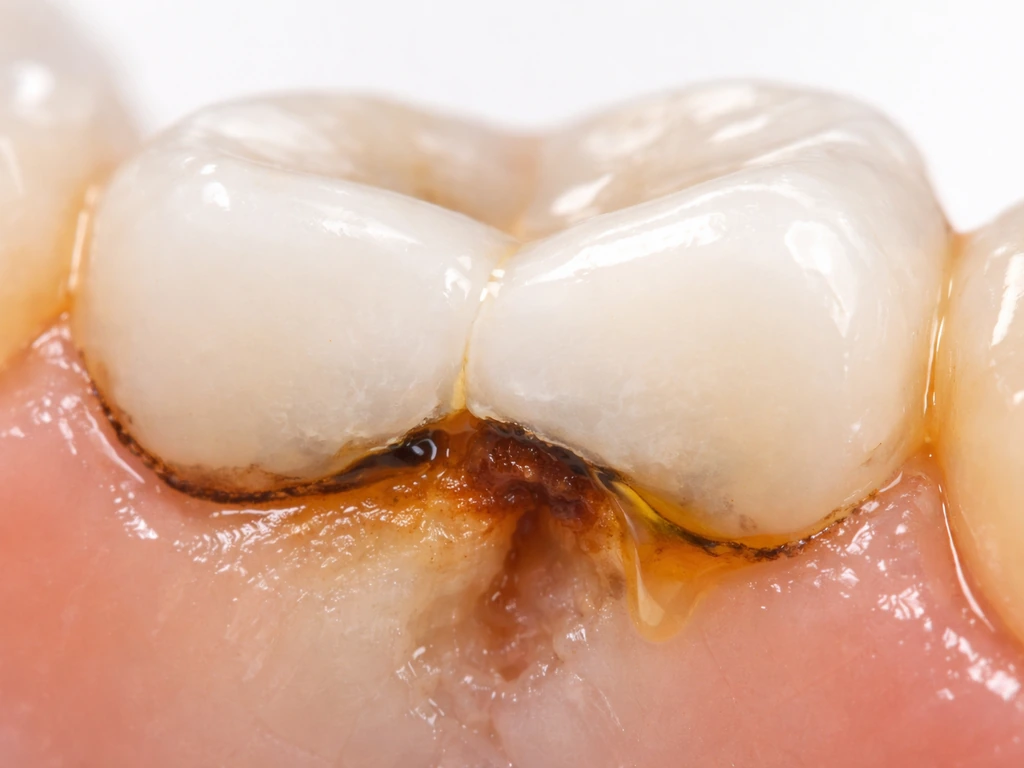
Can Cavities Grow on Fillings? Signs, Causes, and Next Steps
Yes, cavities can form under or around fillings due to gaps and microleakage. Learn signs, tests, and next steps.
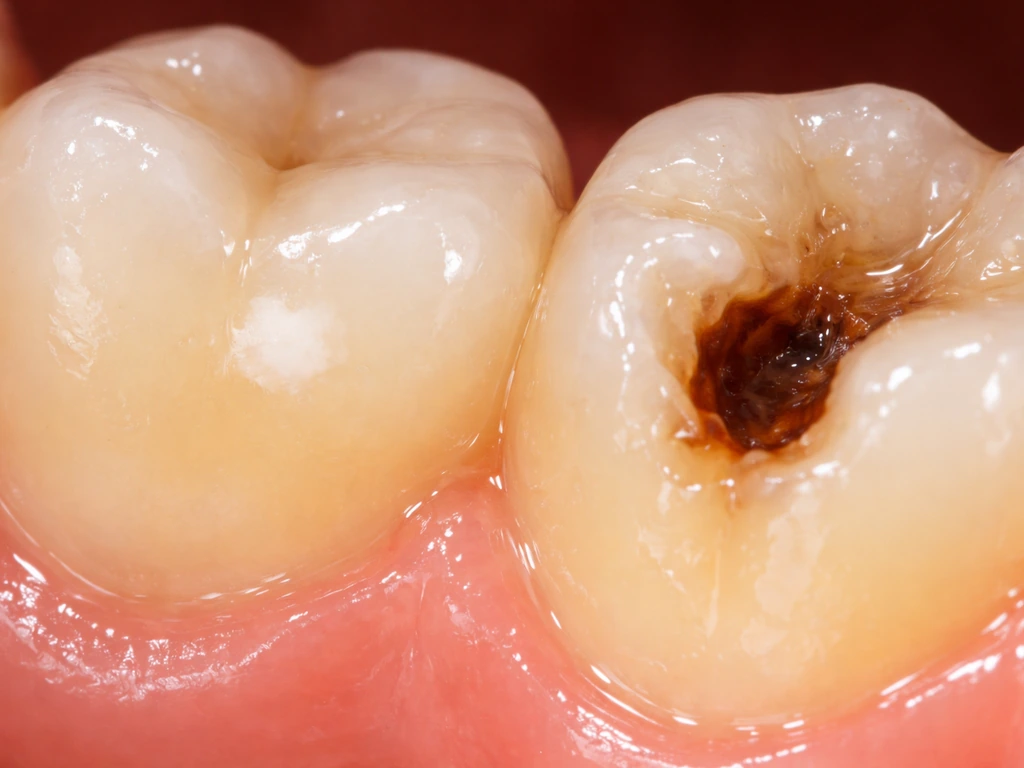
Do Cavities Grow Over Time? Where Decay Spreads and What to Do
Learn if cavities grow, where decay spreads, how it reaches dentin and pulp, and what stops progression now.
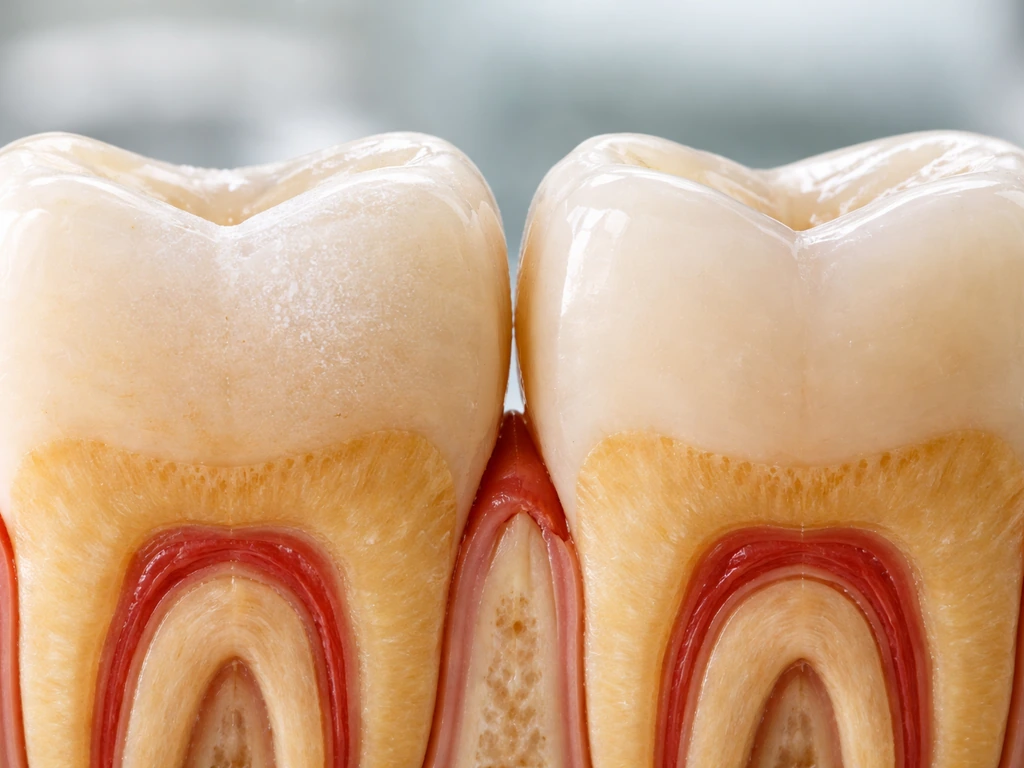
Can Your Tooth Grow Back From a Cavity? What’s Possible
Can teeth regrow from cavities? Learn what can remineralize early, what cannot, warning signs, and next steps.