
Growing your dental membership plan means increasing the number of patients enrolled in your in-office subscription program and keeping them active month after month. It has nothing to do with regrowing teeth or reversing enamel loss. That distinction matters more than it sounds, because this site spends a lot of time on the biological realities of dental regeneration, and the word 'grow' can mean two very different things depending on context. Here, we're talking about expanding a subscription-based patient care program, not anything biological. With that cleared up, here's exactly how to do it.
How to Grow Your Dental Membership Plan Step by Step

Marcus Holloway
10 Jun 2026

First, let's be clear about what a dental membership plan actually is
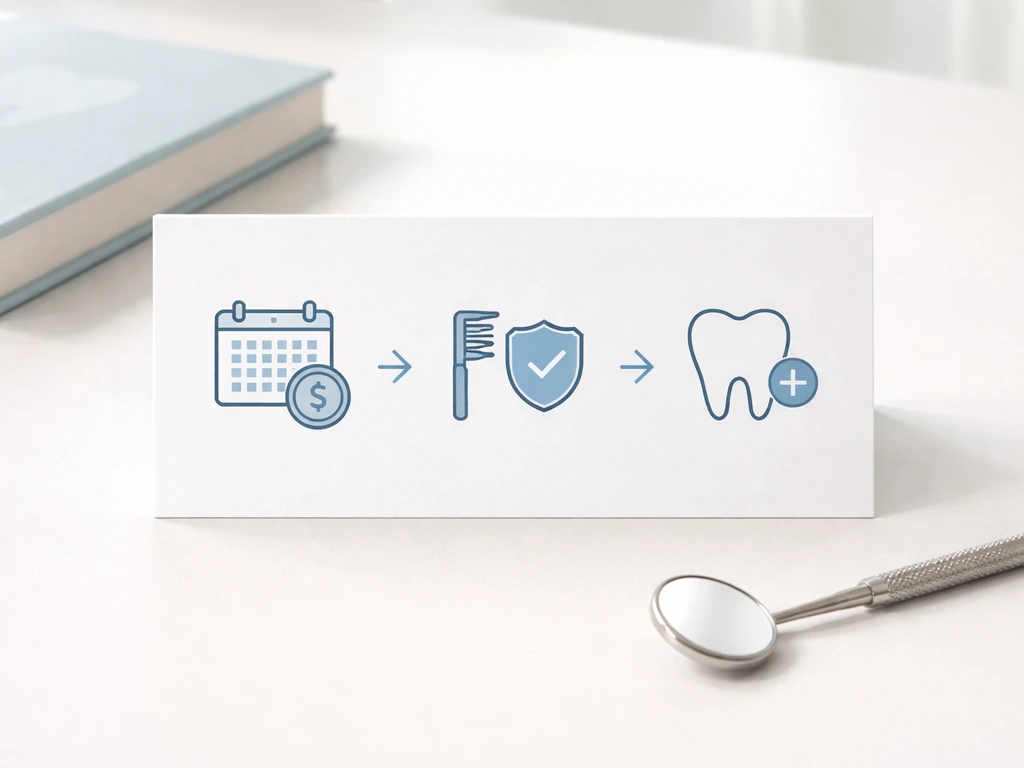
A dental membership plan is a direct agreement between your practice and your patients. Patients pay a flat annual or monthly fee, and in return they get a defined set of preventive services (typically exams, cleanings, and X-rays) plus a percentage discount on additional treatments. It is not dental insurance. No third-party payer is involved.
You design the plan, set the price, manage the billing, and control the inclusions. That structural difference is important: because you aren't submitting claims to a third party, you can't describe the plan as 'insurance' in any marketing or patient-facing materials, and you can't submit claims for services covered under the plan. The ADA has published guidance on in-office direct patient care agreements specifically to help practices understand where these structural and legal lines sit.
Platforms like DentalPlans.com describe their discount-based membership models as explicitly different from insurance, with members simply presenting a card at participating offices to access discounts. In-house membership plans you build yourself work similarly in spirit, but you own the whole system. You set the terms, handle cancellations, and approve refunds. If you're using a platform like Kleer or DentalHQ or BoomCloud to manage the mechanics, the office still owns the patient relationship. The platform just automates the billing, renewals, and reporting.
One more thing worth saying plainly: a membership plan cannot promise outcomes like 'restored enamel' or 'regrown gum tissue' as benefits of enrollment. Human enamel does not regenerate on its own, and adult gum tissue has very limited natural regeneration capacity. If your marketing implies that regular cleanings under your membership plan will reverse damage that biology cannot undo, you've crossed into misleading territory. The FTC requires that health-related advertising claims be truthful, not misleading, and backed by competent and reliable scientific evidence. Setting honest expectations is both legally required and genuinely good for retention, because members who understand what preventive care can and can't do are far less likely to feel let down.
How to actually grow enrollment: acquisition, retention, and referrals
Getting new members through the door

The highest-leverage group for membership recruitment is your existing uninsured patient base. Good to grow dental works the same way: focus on enrollment systems, clear expectations, and follow-through so patients stay active year-round grow enrollment. Pull a report of active patients without insurance on file. These patients are already coming to you, they trust you, and they're paying out of pocket every visit.
A membership plan is a direct financial benefit for them, so the pitch almost writes itself. Train your front desk and hygienists to bring it up at checkout and during hygiene appointments. To learn the full process of growing membership, focus on enrollment, keeping members active, and turning happy patients into referrals Train your front desk and hygienists to bring it up at checkout.
A scripted, low-pressure mention like 'We have a membership plan that covers your two cleanings and exam for a flat annual fee, plus discounts on anything else you need' is enough to start the conversation. At good to grow dental center, you can use those same checkout mentions to turn uninsured patients into active membership members.
For new patient acquisition, local SEO and a dedicated landing page for your membership plan are the most practical first moves. A well-optimized landing page targeting 'affordable dental care in [your city]' or 'no insurance dental plan [your city]' directly addresses how uninsured patients search. Real-world case studies in the dental marketing space have shown that optimized local landing pages can produce significant lifts in appointment volume and organic traffic within several months. You don't need a massive ad budget to start: a clear, accurate page explaining your plan inclusions, pricing, and how to sign up, combined with a Google Business Profile that's kept up to date, covers a lot of ground.
Keeping members active
Acquisition is only half the equation. Membership growth stalls fast when retention is weak. The single most common retention failure is a member who enrolls, never schedules their included preventive visits, forgets they're paying, and cancels at renewal. The fix is proactive scheduling: when a patient enrolls, book both of their included cleanings before they leave the office. If your plan is annual, get appointments scheduled in the first week. One example plan structure explicitly notes that members are responsible for scheduling within the 12-month membership period to maximize their benefits. Make that easy for them by doing the scheduling at signup.
A simple follow-up cadence goes a long way: a welcome email the day of enrollment outlining what's included and their upcoming appointments, a midyear check-in if they haven't used their second included visit, and a renewal reminder 30 to 45 days before their membership lapses. Most membership management platforms can automate these touchpoints so nothing falls through. Retention is also helped enormously by clear expectations upfront, which we'll cover in the compliance section.
Referrals as a growth channel

Happy members who feel like they're saving money are your best referral source. A simple referral incentive, like a credit toward a future procedure or a small gift card, can formalize word-of-mouth that's already happening. Keep the program simple: a unique referral code or a referral card patients can hand to friends is all you need operationally. Practices that serve families can also offer a household discount tier, which naturally pulls in spouses and dependents who might not have signed up on their own.
Pricing, packaging, and getting the value equation right
The most common mistake in membership plan design is pricing too low and losing money, or pricing too high and failing to convert. The target is a fee that covers your included services at a slight discount compared to paying a la carte, while leaving room for the practice to benefit from the retained relationship and the additional treatment revenue that comes from patients who show up regularly.
As a real-world benchmark, periodontal membership plans have been priced around $650 per year or $55 per month (with a small setup fee), including periodontal maintenance cleanings and bundled exam and X-ray components. General adult preventive plans have appeared at around $199 per year, covering two exams, X-rays, and cleanings with additional discounts on other services. A flat percentage discount on all other services, often 15 to 25 percent off your standard fee, is a clean and easy-to-communicate benefit.
Offering two or three tiers lets you serve different patient needs without overcomplicating your marketing. A basic tier covers preventive care. A mid-tier might add a third cleaning or a whitening treatment. A periodontal tier covers the additional maintenance appointments that patients with gum disease need. Don't go beyond three tiers unless you have a clinical reason to, because complexity slows down the enrollment conversation at the front desk.
| Tier | Who it's for | Typical inclusions | Approximate price range |
|---|---|---|---|
| Basic Preventive | Healthy adults, uninsured patients | 2 exams, 2 cleanings, necessary X-rays, 15-20% off other services | $150 to $250/year |
| Enhanced Preventive | Patients who want more coverage | 2 exams, 3 cleanings, X-rays, 20-25% off, one emergency exam | $250 to $400/year |
| Periodontal Maintenance | Patients with diagnosed gum disease | 4 periodontal maintenance visits, exam, X-rays, 25% off other services | $550 to $700/year |
| Pediatric Plan | Children, families | 2 exams, 2 cleanings, fluoride, X-rays, sealant discount | $150 to $200/year per child |
Monthly payment options increase enrollment because the upfront cost feels smaller, even though the annual total is often slightly higher than the lump-sum rate. Offering both annual and monthly options, with a small discount for paying annually, is a standard structure that works well. Make sure your billing terms are clearly documented, including what happens if a monthly payment fails and how far in advance a patient must cancel to avoid the next charge.
Real membership plan terms from practices spell out specifics like 'cancel by a set date to stop the next payment' and 'services received in the first five days of a new period are billed at standard fees if the member cancels. Zak Dental’s terms state that if services are received within the first five days, the dentist bills services rendered at then-current non-discounted UCR, with refund language depending on cancellation timing billing services rendered at then-current non-discounted UCR.
' That level of clarity protects both sides.
Setting up the operational side so it actually runs smoothly

Manual tracking of memberships in a spreadsheet or binder breaks down fast once you have more than a few dozen members. Platforms like DentalHQ, BoomCloud, and Kleer exist specifically to replace that manual process with automated recurring billing, enrollment tools, renewal tracking, and reporting dashboards that integrate with your practice management software. If you're just starting out and have fewer than 50 members, a spreadsheet can work temporarily, but plan to migrate to software before it becomes a problem.
The enrollment workflow should be as fast as possible at the front desk. Ideally, the patient signs up on a tablet or in a short online form, their payment method is collected and saved at that point, and the system starts the billing cycle automatically. The team member should be able to explain the plan in under two minutes, handle objections, and move directly to enrollment without printing any paperwork. Practice that conversation internally before you launch.
Onboarding matters more than most practices realize. A new member who walks out without a scheduled appointment, without a clear understanding of what's included, and without knowing how to use their discount is likely to forget they signed up and cancel at renewal. The welcome email sent on the day of enrollment should include: a summary of included services, their scheduled appointment dates, how to access their member discount at checkout, and a direct contact for questions. Keep it brief and practical.
For cancellations and refunds, the office owns the process. Even if you're using a platform like Kleer, patients who want to cancel need to come back to the office, not the platform. Document your cancellation policy clearly in your terms, train your front desk on how to handle those conversations, and decide in advance whether you'll offer prorated refunds. The clearer your policy is upfront, the fewer difficult conversations you'll have later.
Marketing and outreach tactics that actually move the needle
Internal marketing first
Internal marketing means reaching patients you already have. Table tents in the waiting room, a framed one-pager at the front desk, a mention in your post-appointment email sequence, and a line on every invoice reminding uninsured patients that a membership plan option exists. These touchpoints cost almost nothing and consistently outperform paid advertising for membership conversion because the patient already has a relationship with your practice.
Digital and local outreach
A dedicated membership landing page on your website, separate from your main services page, lets you target search terms like 'dental plan no insurance [city]' or 'affordable dentist membership [city].' Pair that with a Google Business Profile update that mentions your membership plan in the description and services section. Patient reviews that mention the membership plan (organically, when patients bring it up themselves) also improve local search relevance. Email campaigns to your inactive patient list, specifically framing the membership plan as a reason to come back, can re-engage lapsed patients who left because they lost insurance coverage.
Community and employer partnerships
Small and mid-sized local employers who don't offer dental benefits to their employees are a significant untapped source of members. Reach out to local businesses, freelancer communities, and self-employed professional groups (contractors, gig workers, small business associations) with a simple one-page overview of your plan. Some practices create a slightly discounted group rate for employees of a partner business as an incentive.
This gives you a warm referral channel and the employer gets to offer their employees a dental benefit at no cost to the business. Community partnerships with schools, pediatric healthcare providers, and neighborhood associations can work similarly, especially if you offer a pediatric tier. If you offer a pediatric tier, you can partner even more directly with schools and pediatric healthcare providers to attract parents who are actively looking for good to grow pediatric dental options.
If you're also growing a pediatric-focused practice, this kind of community presence supports both your membership goals and your broader reputation. If you're searching for where smiles grow pediatric dentistry Delmar, focus on community partnerships and a clear, family-friendly membership pitch pediatric-focused practice.
Compliance and transparency: say exactly what the plan does and doesn't cover
Transparency is not just an ethical choice, it's a legal requirement and a retention strategy. The FTC requires that advertising be truthful, not misleading, and backed by appropriate evidence when health claims are involved. The ADA's advertising standards state that claims of fact must be fully supported and meaningful in terms of actual performance or benefit. For a dental membership plan, that means every piece of marketing needs to accurately reflect what's included, what the discounts actually are, and what the plan is not.
The most important disclosure is that this is not insurance. Membership plans are a direct payment arrangement between the patient and the practice, not a third-party benefit. State regulations vary, and the ADA has published state-by-state guidance on in-office plan structures, so check your state's specific requirements. In most cases, you cannot submit insurance claims for services already covered under the membership plan, and you cannot describe the plan as 'insurance' or imply it functions like insurance.
Beyond the insurance distinction, be explicit about what the plan doesn't cover. If orthodontics, implants, and cosmetic procedures aren't included in the discount, say so. If there's a waiting period for certain services (common in some plan designs), say so. If the emergency exam benefit is limited to one per year, say so. Patients who discover unexpected exclusions after enrolling cancel and leave frustrated. Patients who understood the limits before enrolling accept them and stay.
There's also a specific point worth making for this site's audience: if any of your marketing mentions benefits related to gum health, enamel protection, or oral tissue health as outcomes of regular preventive care under the plan, those claims need to be accurate and limited to what preventive care actually does. Regular cleanings can help prevent further periodontal progression and reduce the buildup that accelerates decay. They cannot regrow lost gum tissue or restore enamel that's already been lost. Adult enamel doesn't regenerate, and gum tissue that has receded significantly doesn't grow back on its own. Framing preventive care accurately, as protective rather than restorative, keeps your marketing honest and manages the expectations patients bring into appointments.
Measuring what's working and improving month to month
You can't improve what you're not measuring. For a dental membership plan, the core metrics are simple but they need to be tracked consistently.
- Total active members: tracked monthly, not just at launch
- New enrollments per month: measures acquisition effectiveness
- Cancellation rate per month: flags retention problems early
- Member appointment completion rate: what percentage of active members have used at least one included service in the current period
- Revenue per active member: total membership revenue divided by active members, tracked against your cost to serve
- Conversion rate at point of enrollment conversation: how many patients who hear the pitch sign up
- Renewal rate at 12 months: the clearest signal of overall member satisfaction
The metric that surprises most practices is appointment completion rate. A member who enrolled but hasn't scheduled is a cancellation risk. Membership software with reporting dashboards makes it easy to identify these members and trigger an outreach sequence. A simple text message or email reminding them they have an unused cleaning included in their plan, with a direct booking link, recovers a meaningful percentage of at-risk members.
Retention below certain thresholds on the 'active patients with a future appointment' measure is a well-documented indicator of pre-scheduling gaps in practice operations. Practice Numbers help guidance frames retention using an "Active patients with a future appointment ÷ Total active patients" style metric and notes that low retention on that measure can indicate pre-appointing issues. For membership specifically, that number should be very high because getting members scheduled is part of the enrollment workflow. If it's low, the fix is usually in the onboarding process, not the marketing.
Set a monthly review rhythm. Look at the metrics above, identify the one metric that's most off track, and make one operational change to address it. Adding too many initiatives at once makes it impossible to know what's working. A disciplined, incremental approach, fix onboarding this month, improve the referral program next month, test a new employer partnership the month after, compounds quickly over the course of a year.
Common pitfalls that stall membership growth
Most membership plans that plateau or shrink share the same handful of problems. Unclear value proposition at the point of enrollment: the front desk can't explain the plan concisely, so patients don't sign up. Weak onboarding: new members leave without a scheduled appointment and drift away. Unmanaged expectations: patients expect more than the plan covers and cancel when they're surprised by a bill. No retention touchpoints: the practice forgets about members between visits and loses them at renewal. And no measurement: without data, there's no way to know which of these problems is the biggest one to fix first.
The practices that grow their membership plans consistently are usually not doing anything exotic. They have a clear, fairly priced plan with honest inclusions, a front desk team that can pitch it in two minutes, automated billing and follow-up, and a monthly habit of checking the numbers. That's the whole system. Start with the basics, measure everything, and improve from there.
FAQ
How do I tell if a dental membership plan is actually an upgrade to my current cash-pay process?
Run a simple “included care ROI” check before launching, estimate how much the plan costs you in labor and materials for the typical enrolled visit cycle, then compare it to your average out-of-pocket spend for uninsured patients over the next 12 months. If your current process already brings patients back for those preventive visits, focus on conversion and retention mechanics, not just pricing.
Should I allow members to use their included cleanings on any schedule, or do I need fixed appointment rules?
You should set rules that prevent timing confusion and reduce missed opportunities, for example, “book both included preventive visits within the first 30 days” or “second included visit must be completed before month 12.” The clearer the booking window, the less likely members are to forget, delay, and cancel at renewal.
What happens if a member cancels or no-shows one of their included visits?
Decide the policy up front and state it clearly in your terms and welcome materials. Common approaches are, no refunds for unused included services, you may rebook once as a courtesy, and missed appointments do not extend the membership period. Consistent policy reduces disputes and improves retention predictability.
Can I offer the membership plan discount on the day of enrollment for services already scheduled?
Yes, but define it precisely. Many practices apply the membership discount only to services performed after enrollment, and some also allow any services scheduled within the first few days to be at standard fees if the patient cancels before the next billing period. Decide your rule before launch and document it so the front desk can explain it quickly.
How many tiers are too many, and when should I add a periodontal tier?
Avoid more than three tiers unless you have a distinct clinical need and the team can explain the differences in under two minutes. Add a periodontal tier when you can reliably bundle maintenance visits (and you have capacity to deliver them) because periodontal plans depend on consistent follow-up, not one-time care.
What is the best way to handle orthodontics or implants if they are not included?
Tell members exactly how those services work, for example, “not included, members receive an X percent discount on eligible services” or “orthodontics requires separate estimates.” If you do offer any discount, list the types that qualify and what conditions might exclude them, so patients do not assume comprehensive coverage.
Can I market the membership plan as “insurance” if I do not use third-party claims?
No, you should not use insurance language or imply an insurance-like benefit structure. Even if you are not submitting claims, patients may interpret it as coverage for unexpected costs. Use direct terms like “membership,” “subscription,” or “in-office plan,” and describe what members pay and what services they receive.
What should be in the welcome email to prevent cancellations due to confusion?
Include four items: a recap of included services, exact appointment dates (or a booking link with a time window), how to present or access the member discount at checkout, and a single contact method for questions. Also add a one-line reminder that preventive care is not a promise of regrowing enamel or gum tissue.
How can I recover members who enrolled but never schedule their included visits?
Create a short outreach sequence tied to enrollment date, for example, a same-day reminder to book, a mid-week follow-up if no appointment is scheduled, and a final “last chance for included preventive visit” message tied to your membership calendar. Use a booking link so the member can schedule without calling, and track which message converts.
What should I measure weekly or monthly to know why membership growth is stalling?
Track appointment completion rate for enrolled members and the percentage of active members who have a future appointment booked. Then review cancellation reasons if your platform captures them, common categories are “missed scheduling,” “did not understand coverage,” and “pricing concerns.” Choose one metric to improve at a time to avoid mixing causes.
How do I price a plan so it is not too low or too high?
Start with the cost of the included preventive cycle (exam, X-rays, cleanings, and associated staff time), then add a small margin while staying meaningfully discounted versus your typical uninsured fees. If you have tiered plans, price the mid-tier so the added value is obvious (for example, an extra cleaning or clearly defined treatment discount), and ensure the front desk can explain the difference without charts.
What should my cancellation and refund policy cover if I use an automated platform?
Even with automation, you still control patient-facing policy. Specify how cancellations work operationally (often requiring an office process), whether refunds are prorated, how failed payments are handled, and the exact cutoff date to prevent the next charge. Make it easy for staff to reference a single policy script.
Can employer partnerships be done without negotiating complex billing?
Yes, keep it simple at first by offering a group rate or a company-provided voucher structure where employees still enroll individually and you handle renewals with standard plan terms. This avoids complicated billing workflows and lets you test demand with fewer moving parts before scaling.
How do I handle members who ask for emergency care that is not clearly defined in the plan?
Define emergency coverage limits in plain language, for example, “member gets a discounted emergency exam once per year” or “discounted exam applies to certain urgent scenarios.” For anything outside that boundary, explain the next step (standard exam, separate consent, or discounted treatment estimate) so emergencies do not become instant dissatisfaction triggers.
What is a practical timeline for launching and optimizing after the first 30 to 60 days?
Use a “launch and correct” cadence: first, confirm your front desk can enroll quickly with the same script, then verify that new members leave with both preventive visits booked or with a clear booking window. By week 4 to 6, review onboarding misses and booking rates, then adjust onboarding or follow-up messaging before changing pricing or tiers.
Next Articles

How to Grow a Dental Practice: 30 60 90 Day Plan
Step-by-step 30 60 90 day plan to grow patient volume and revenue with KPIs, marketing, conversion, retention, ops.
Good to Grow Pediatric Dental: Can Teeth Regrow in Kids?
Can kids regrow teeth, enamel, or gums? Realistic limits and what to do after cavities or trauma.
Good to Grow Dental Center: What Can Regrow Teeth Safely
Safely regrow teeth? Learn what regrowth is possible, what is myth, and how to evaluate claims and next steps.