
Most baby teeth take anywhere from a few weeks to a couple of months to fully push through the gums once they start erupting, while permanent teeth can take several months to fully emerge and then another 2 to 3 years to finish forming their roots. The full process of "teeth growing" spans from birth all the way through your early-to-mid twenties when wisdom teeth finally finish coming in (or don't). But the word "grow" covers a lot of ground, so it helps to know exactly what's happening at each stage.
How Many Months Teeth Grow: Eruption Timelines Explained

Marcus Holloway
31 May 2026
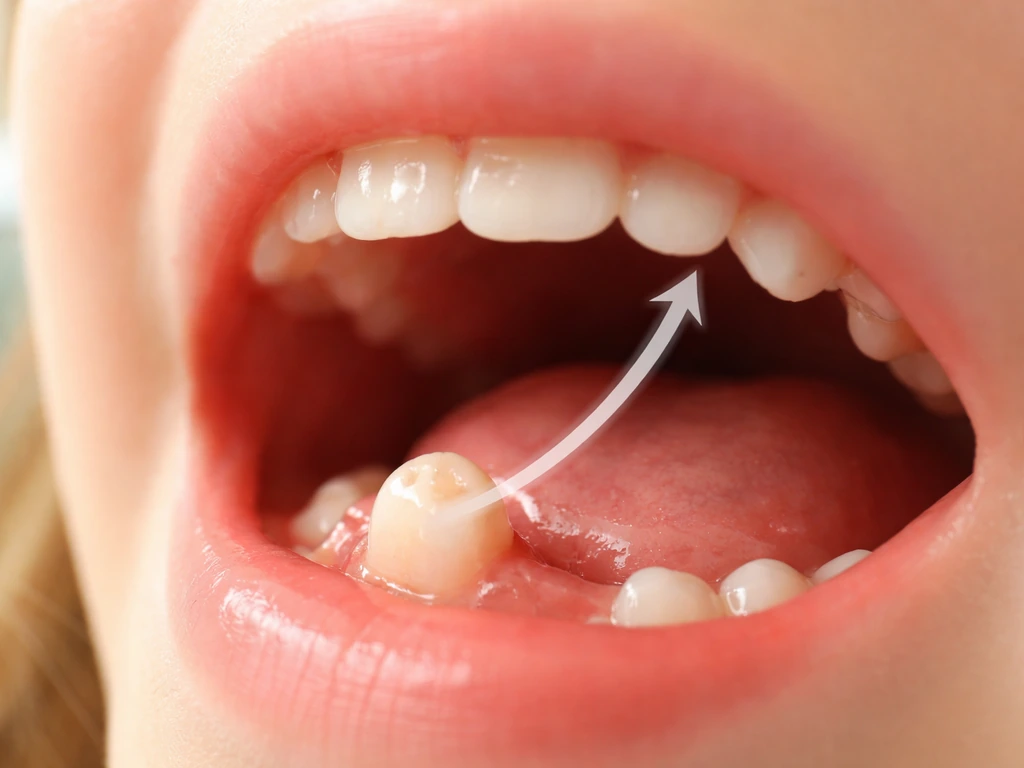
What "teeth grow" actually means (eruption vs. regrowth)
When most people say a tooth is "growing in," they mean eruption: the tooth moving from its developmental position inside the jawbone up through the gum tissue into the mouth. Technically, the moment you first see a tiny sliver of tooth poking through the gum is called emergence, and full eruption happens once the tooth reaches its functional position in the bite. These are two different milestones. The tooth itself was forming below the surface long before you could see it.
Here's where a major misconception lives: teeth do not regrow like hair or skin. Once a baby tooth or permanent tooth is lost, a new one doesn't sprout in its place (with the sole exception of the normal transition from baby teeth to adult teeth, which is programmed from birth). Adult enamel, which is the hard outer layer of a tooth, is acellular once fully formed, meaning there are no living cells left to rebuild it. Cavities don't heal themselves. Lost adult teeth don't grow back. That's a biological fact, not a dental scare tactic, and it's worth keeping front of mind as we walk through the actual timelines.
Eruption timeline by month, from baby teeth to permanent teeth
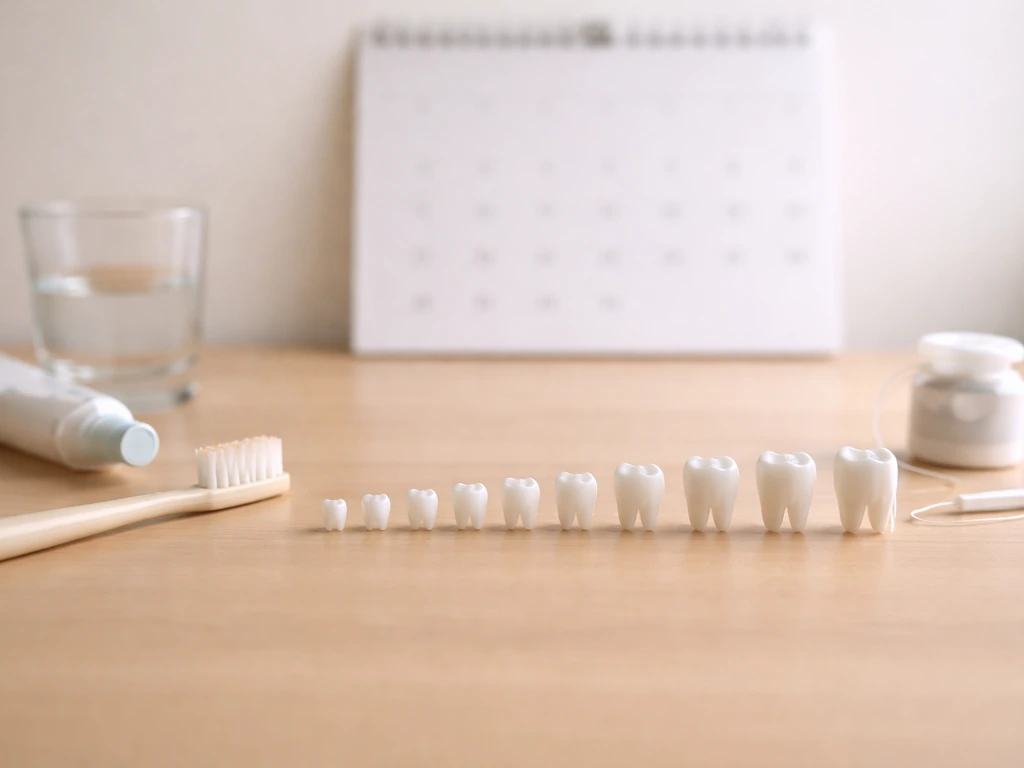
The eruption sequence is pretty well mapped out at this point, though individual variation is real and normal. Here's a practical breakdown of when each tooth type typically appears, starting from the first baby tooth all the way through the permanent set.
Baby teeth (primary dentition)
Most babies get their first tooth somewhere between 6 and 10 months, usually a lower central incisor. The full set of 20 baby teeth typically finishes erupting by around age 3. The American Academy of Pediatric Dentistry notes that a variation of up to about 6 months before or after typical eruption dates is completely normal, so don't panic if your baby is a bit early or late.
| Tooth Type | Typical Eruption Age (Lower) | Typical Eruption Age (Upper) |
|---|---|---|
| Central incisors | 6 months | 10 months |
| Lateral incisors | 9 months | 13 months |
| First molars | 10 months | 16 months |
| Canines (eye teeth) | 16 months | 20 months |
| Second molars | 23 months | 33 months |
Permanent teeth
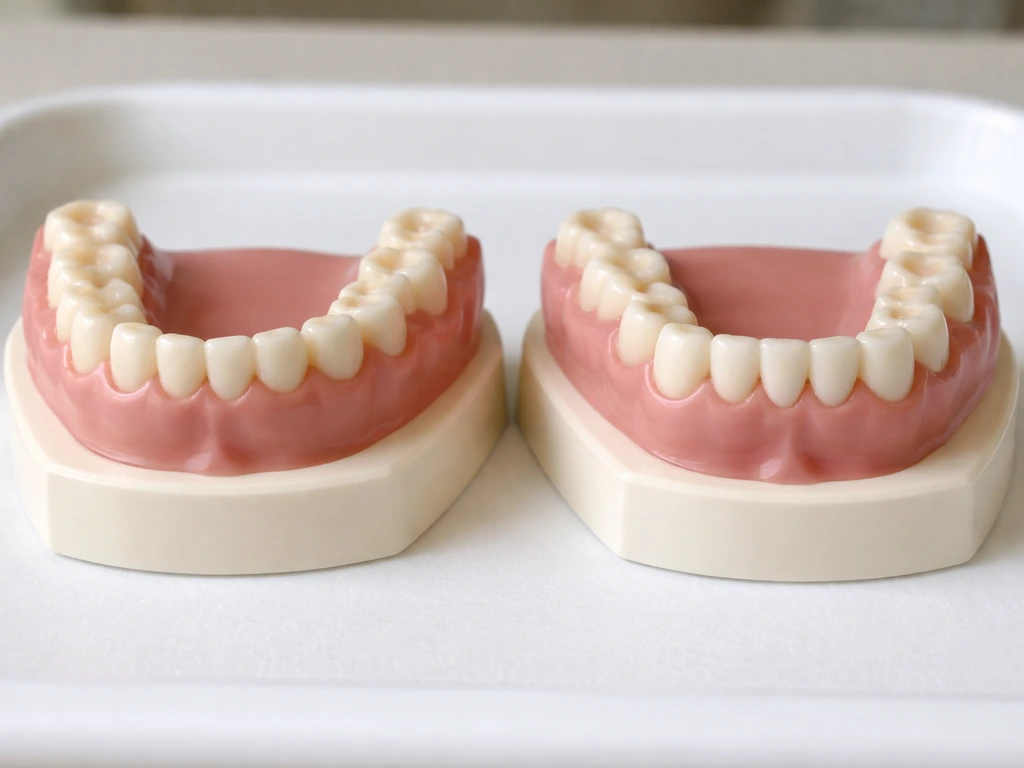
The permanent teeth start erupting around age 6, beginning with the first molars and lower central incisors. From there, the process unfolds over the next 6 to 7 years, with the second molars typically being the last to arrive before wisdom teeth enter the picture. Here's a general guide based on standard eruption charts including references from the Merck Manual.
| Tooth Type | Typical Eruption Age Range |
|---|---|
| First molars | 5 to 7 years |
| Central incisors | 6 to 8 years |
| Lateral incisors | 7 to 9 years |
| Canines | 9 to 12 years |
| First premolars | 10 to 12 years |
| Second premolars | 10 to 13 years |
| Second molars | 11 to 13 years |
| Third molars (wisdom teeth) | 17 to 25 years |
Converting those to months helps put the gaps in perspective. The window between the first permanent tooth appearing (around age 6, or roughly 72 months old) and the last second molar completing eruption (around age 13, or about 156 months) spans roughly 7 years, or 84 months, of active eruption activity in the mouth. That's a long developmental runway, and it's why regular dental checkups during childhood matter so much.
How long teeth keep developing after they appear
Seeing a tooth emerge through the gum doesn't mean it's done. Root formation continues well after the crown is visible and functional. For more context on how long eruption and root development can take from the moment a tooth starts coming in, see the once tooth cuts how long to grow timeline. For permanent teeth, roots typically take 2 to 3 additional years to fully close at the tip (called apex closure). For example, first permanent molars erupt around ages 5 to 7, but their roots don't fully close until around ages 9 to 10. During this open-apex phase, the tooth is actually more vulnerable and, interestingly, more receptive to certain dental treatments.
Root development and eruption aren't perfectly synchronized either. Research shows that eruption can continue even when root growth is interrupted, which tells us that the forces driving a tooth upward through the jaw are regulated by the tooth follicle and surrounding ligament environment, not just by the root pushing it out. The visible "growing" you see is the endpoint of a process that started years earlier underground.
Wisdom teeth: the timeline that varies the most
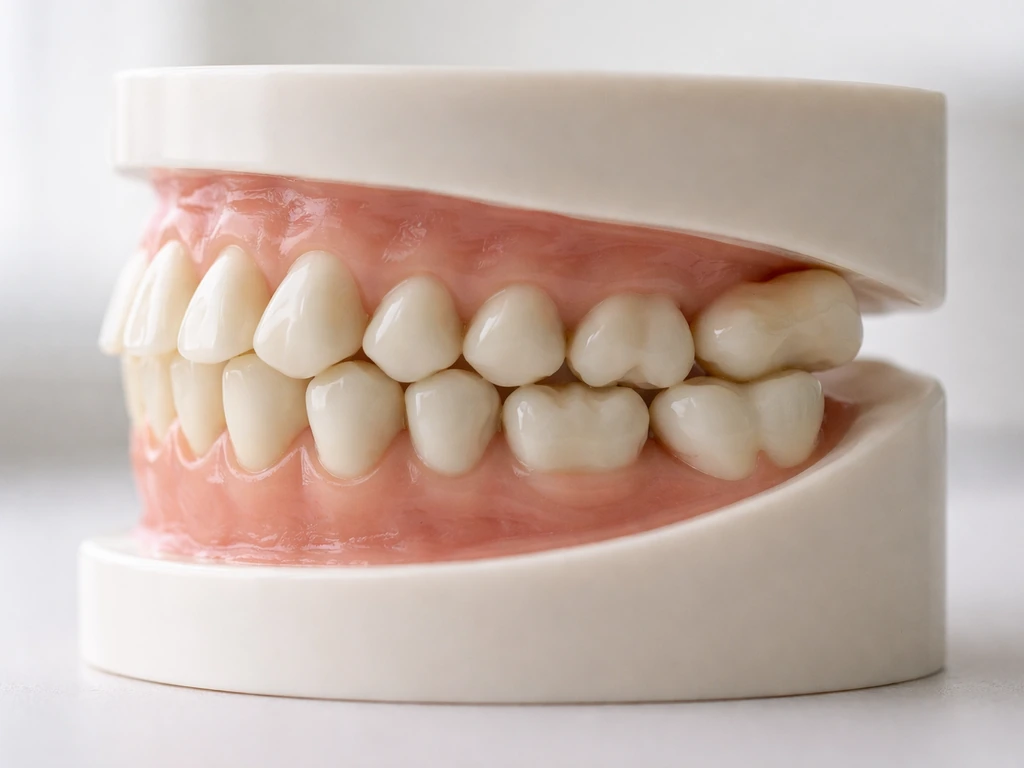
Wisdom teeth are the wild card of dental development. The Merck Manual lists their eruption range as 17 to 25 years, while Mayo Clinic extends that window up to age 26. Some people's wisdom teeth never erupt at all. Others get theirs at 17 with no drama. The variation is genuinely wide, and the reason mostly comes down to space.
The most significant factor in whether wisdom teeth erupt normally or become impacted is whether there's enough room in the jaw for them. The American Association of Oral and Maxillofacial Surgeons identifies inadequate hard-tissue space as the primary driver of impaction. When a wisdom tooth gets stuck in the jawbone or gum tissue and can't break through, that's an impacted tooth. The American Association of Orthodontists describes an impacted tooth as one that becomes stuck in gum tissue or jawbone and fails to break through the gum line impacted tooth is one that becomes stuck in gum tissue or jawbone. The American Association of Orthodontists notes that impaction management depends on the tooth's position and its impact on neighboring teeth.
In practical terms: if you're between 17 and 25 and haven't seen your wisdom teeth yet, that's normal. If you're in your mid-20s and experiencing jaw pain, pressure at the back of your mouth, or repeated infections in that area, get a panoramic X-ray. Don't wait it out hoping they'll resolve themselves, because impacted wisdom teeth can damage adjacent teeth over time.
Do teeth and enamel actually regrow after damage or loss?
This is where the biology gets blunt. Once adult enamel is fully formed, it cannot regenerate. Mature enamel is acellular and essentially protein-free, which means the body has no mechanism to rebuild it after it's been eroded, chipped, or decayed away. Research has confirmed that true regeneration of lost enamel is not observed in the human body under normal circumstances. What can happen is remineralization, where minerals from saliva and fluoride partially restore the mineral content of softened (but not yet physically lost) enamel. That's a repair, not a regrowth, and it only works on early-stage damage.
As for the teeth themselves: adults have exactly one set of permanent teeth. If a permanent tooth is knocked out or extracted, the body does not produce a replacement. There are no stem cells waiting to generate a new tooth in the empty socket. This is one of the clearest biological limits in human dental anatomy, and it's why preventive care matters so much more than most people realize. Certain animal species can regrow teeth repeatedly (sharks, for example), and there is ongoing scientific research into dental regeneration therapies, but as of today, none of that translates to a clinical treatment available to humans.
When delayed or unusual eruption is a red flag
Normal variation is real, but there are specific patterns that signal something worth investigating. A useful clinical rule of thumb, referenced in pediatric dentistry guidance, is this: if a tooth on one side of the mouth has erupted but its mirror tooth on the other side is more than 6 months behind, that asymmetry warrants a dental evaluation. Symmetric delay is usually just normal variation. Asymmetric delay is the pattern that tends to signal a physical problem.
Several things can physically block or delay eruption. Supernumerary teeth (extra teeth forming in the jaw) can crowd out the permanent tooth trying to erupt, causing it to come in at a wrong angle or not come in at all. Primary teeth that are lost too early from decay or injury can allow neighboring teeth to drift and close off the space the permanent tooth needs.
Persistent baby teeth past their expected timeline can indicate the permanent successor is missing (a condition called congenital absence) or is impacted. The American Academy of Pediatric Dentistry recommends monitoring and diagnosing developing dentition concerns such as congenitally missing or supernumerary teeth, ectopic eruption, and ankylosis or primary failure of eruption [Persistent baby teeth past their expected timeline can indicate the permanent successor is missing (a condition called congenital absence) or is impacted. ](https://www. aapd.
org/research/oral-health-policies--recommendations/management-of-the-developing-dentition-and-occlusion-in-pediatric-dentistry/). All of these are diagnosable with a panoramic X-ray, which is exactly why the American Association of Orthodontists recommends that children have an orthodontic evaluation by age 7.
Specific signs to watch for
- A baby tooth still present significantly past its expected loss age (for example, a front baby tooth still in place at age 8 or 9)
- No sign of a permanent tooth erupting more than 6 months after the baby tooth on the same side fell out
- One side of the mouth noticeably ahead or behind the other in eruption (asymmetry beyond 6 months)
- A gap or wide space between front teeth that isn't closing as other teeth come in (possible supernumerary tooth blocking eruption)
- Jaw pain, swelling, or repeated infections in the back of the mouth during the wisdom-tooth years
- A permanent tooth that appears to be coming in at an odd angle or behind the normal arch position
What to do next
For parents: keep up with regular pediatric dental checkups starting around your child's first birthday. Dentists can track eruption sequence and spot early problems long before they become complicated. If you're concerned about a specific delay, ask for a panoramic X-ray, which shows all developing teeth below the surface at once. If a primary molar is lost early, ask your dentist about space maintenance, since keeping that space open protects the path for the permanent tooth to follow.
For adults worried about wisdom teeth: don't assume silence means all is well. An impacted wisdom tooth can sit quietly in your jaw for years and still cause damage to neighboring teeth or become infected. If you're in your late teens or twenties and haven't had a wisdom tooth evaluation, request one.
If you are asking when adult teeth grow in, a check-up can confirm which teeth are still expected to erupt for your age haven't had a wisdom tooth evaluation. For anyone dealing with a lost or damaged permanent tooth, the honest message is that the tooth itself won't regrow, but there are excellent restorative options including implants, bridges, and partial dentures that your dentist can walk you through based on your specific situation.
FAQ
If I can see a permanent tooth, how many months does “growing” usually continue after it appears?
Even after the crown is visible and it’s biting, root maturation often continues for 2 to 3 more years (apex closure). This means the tooth may be more biologically vulnerable for a while, especially in the early open-apex stage.
Why do some teeth seem to erupt quickly, while others take much longer within the same child?
Tooth eruption is driven by the tooth follicle and surrounding ligament environment, so individual teeth can have different timing even when the overall eruption pattern looks normal. Also, local space and jaw size can speed up or slow down specific teeth more than others.
What’s a safe way to estimate the eruption timeline in months if my child is “a bit early” or “a bit late”?
Use the typical age in months as a reference point, then allow a buffer of about 6 months earlier or later for many primary teeth. For a precise check, compare the eruption order and whether both sides are tracking similarly, and ask for a panoramic X-ray if timing is notably off.
How much asymmetry is normal when one tooth comes in earlier than the matching tooth?
A helpful rule is symmetry within about 6 months. If one side’s tooth is erupted but the mirror tooth is more than 6 months behind, that pattern is worth discussing with a dentist because it can reflect crowding, a delayed eruption, or an obstructing factor.
If wisdom teeth can erupt from 17 to 25 years, how long do they usually take once they start showing?
Wisdom teeth eruption is variable, some emerge in stages and others may partially erupt and stall. If you notice recurring gum inflammation, bad taste, or pressure at the back, a panoramic X-ray can clarify whether the tooth is truly erupting or is impacted with a partially covered surface.
What symptoms suggest an impacted wisdom tooth, even if it’s not fully erupting?
Look for gum swelling over the back molar area, repeated infections or “pericoronitis,” jaw pressure, or pain that keeps coming back. Delayed evaluation matters because an impacted tooth can also affect the neighboring second molar over time.
Can cavities or chipped enamel get “repaired” after a tooth has already emerged?
Not in the same way teeth grow or regrow. After enamel is fully formed, it cannot regenerate, but early damage can sometimes be remineralized through fluoride and saliva-driven mineral replacement, which does not restore lost enamel volume the way regrowth would.
If a permanent tooth is knocked out, is there any chance it will grow back later?
For typical human anatomy, a knocked-out or extracted permanent tooth does not get replaced by a new one. The next step is usually prompt dental/urgent care guidance based on the situation (including whether a reimplantation window applies), rather than waiting for “natural regrowth.”
What should I do if a baby tooth is lost early from decay or injury?
Ask your dentist about space maintenance. Losing a primary tooth early can let neighboring teeth drift, closing the path the permanent tooth needs, which can increase the chance of delayed eruption or improper angling.
Could missing teeth explain why permanent teeth never seem to show up at the expected time?
Yes. Persistent baby teeth or major delays can be consistent with congenital absence or an impacted successor. A panoramic X-ray can confirm whether the permanent tooth is missing, blocked, or coming in at an abnormal angle.
When should an orthodontic evaluation happen if I’m worried about eruption timing?
If the concern is eruption delay or crowding patterns, an evaluation by about age 7 is a common recommendation because it can identify space issues early. This timing helps dentists monitor eruption and intervene before impaction or misalignment becomes entrenched.
Next Articles
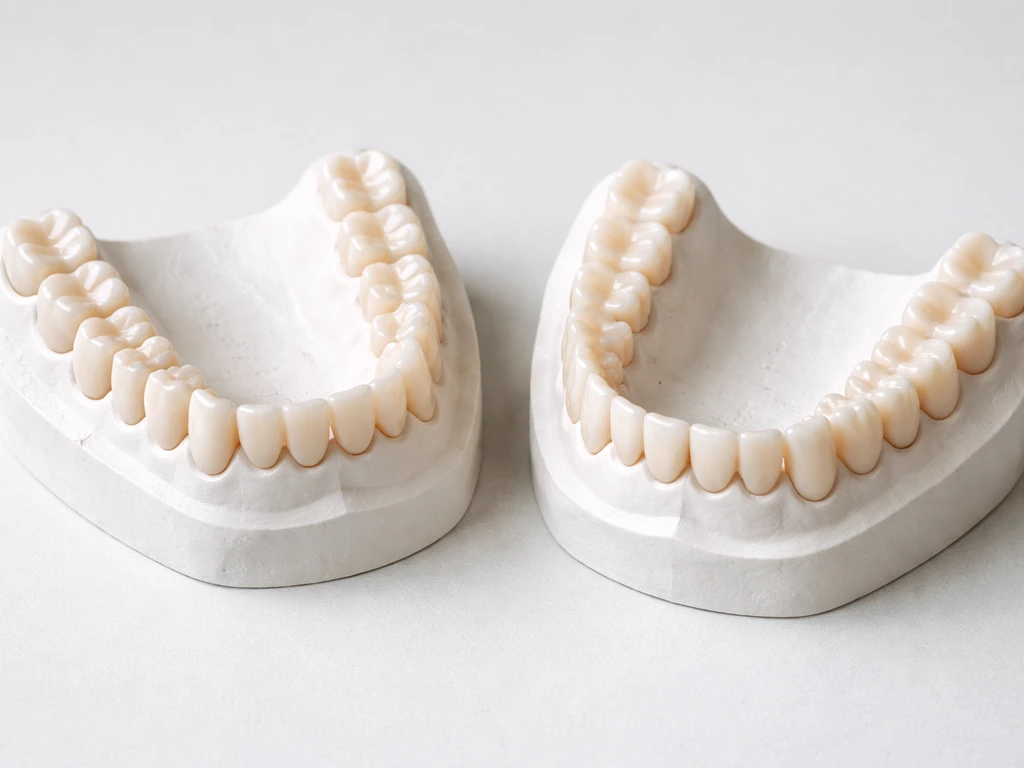
How Many Teeth Do Most Adults Grow? Normal Count and Timing
Most adults have 28 to 32 teeth; learn eruption timing, wisdom tooth impact, and whether teeth can truly regrow.
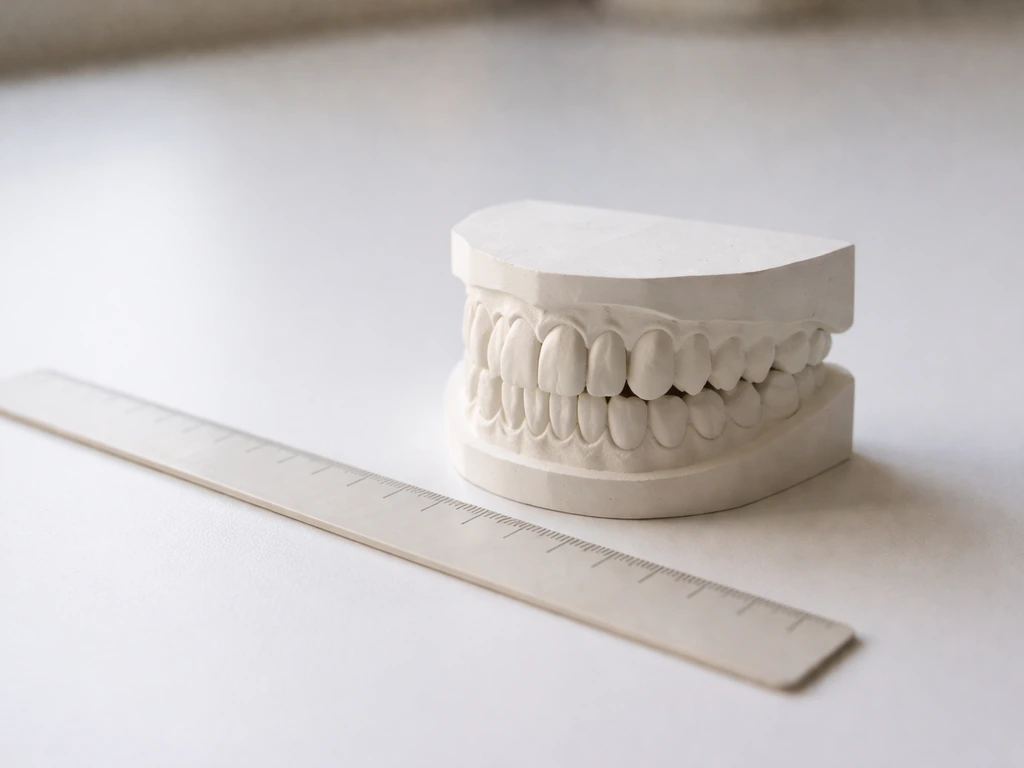
When Do Adult Teeth Grow? Ages for Erupting Teeth
Adult teeth eruption timeline: ages for each tooth, last teeth/wisdom, and what to do if they don’t come in
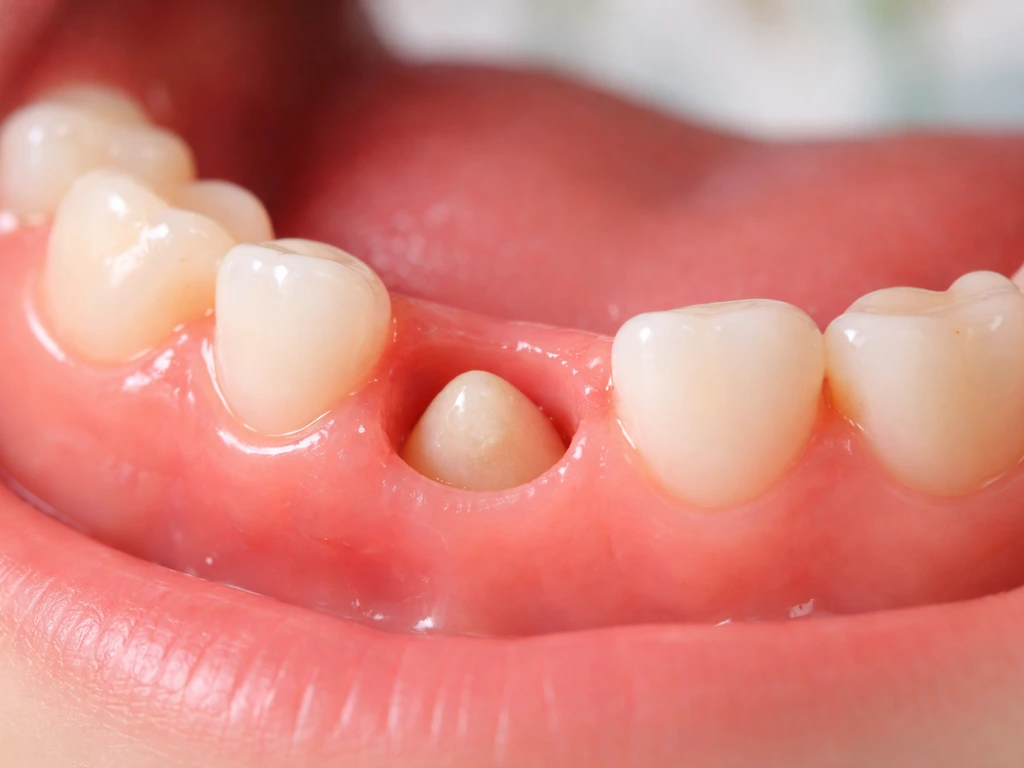
Do Milk Teeth Grow Back? Timelines, What to Do, Red Flags
Learn if milk teeth regrow, typical timelines for permanent teeth, what to do after loss or injury, and red flags.