Most adults grow 32 permanent teeth in total. That number includes every tooth type: incisors, canines, premolars, and molars, with the four wisdom teeth rounding out the full set. But 28 is just as normal if your wisdom teeth never came in or were removed, so saying "most adults have 28 to 32 teeth" is more accurate than picking a single number. Where you land in that range depends on your wisdom teeth situation, not on anything going wrong.
How Many Teeth Do Most Adults Grow? Normal Count and Timing

Marcus Holloway
15 May 2026
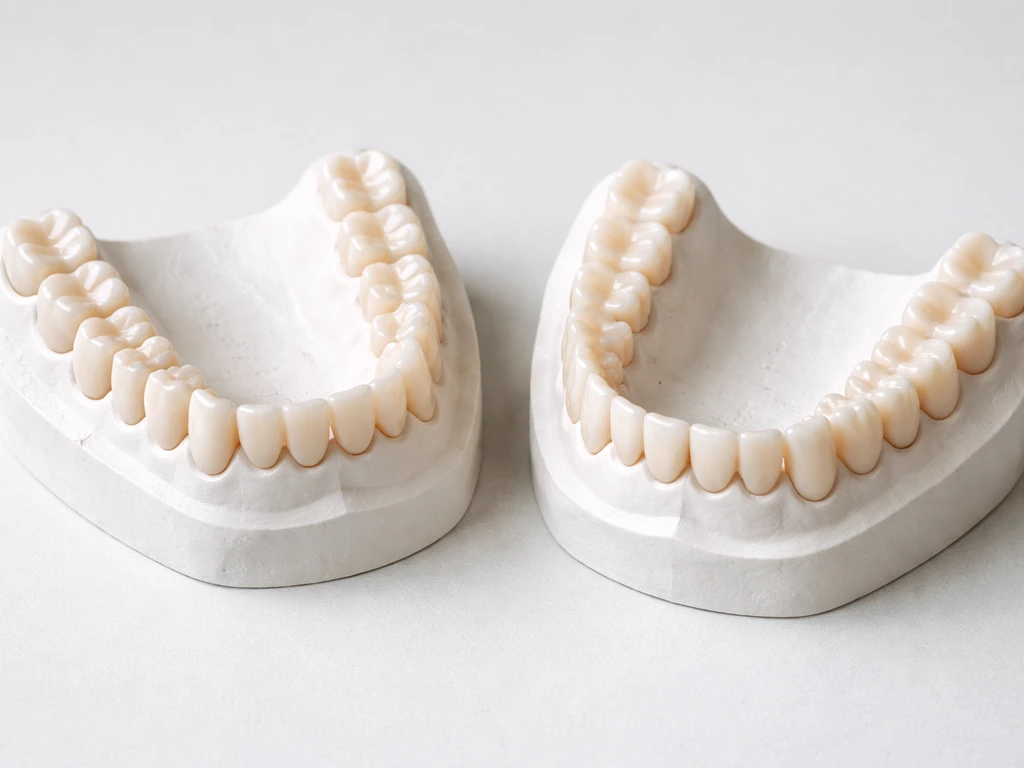
The full adult tooth count: what 32 actually includes
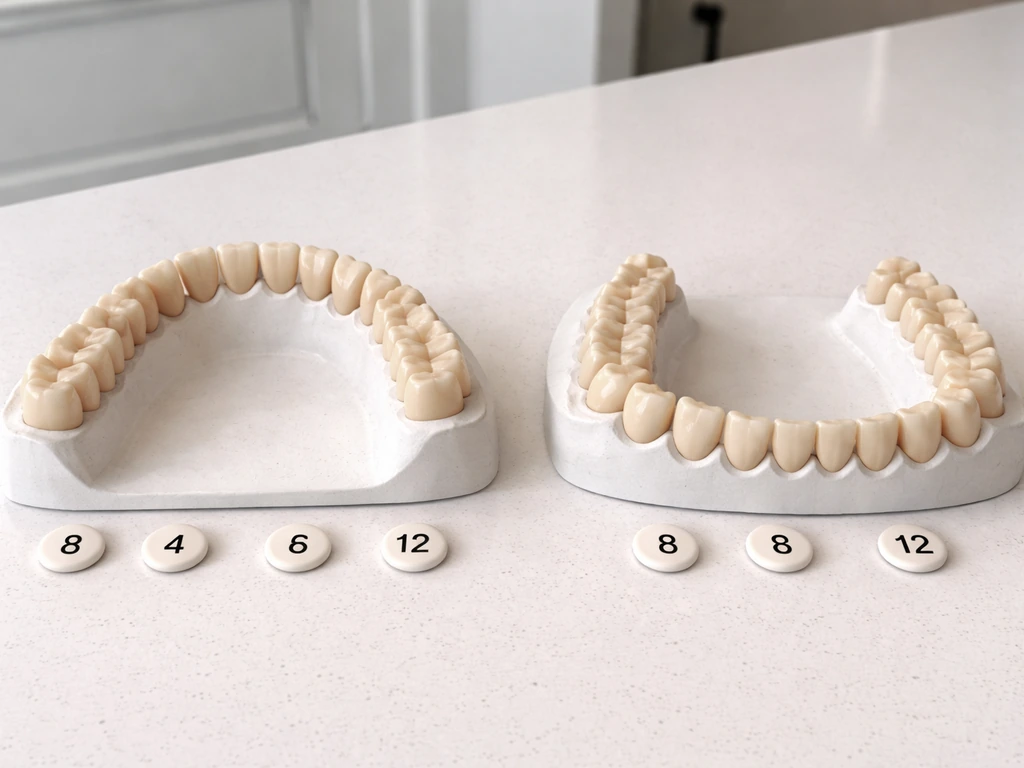
A complete set of adult teeth breaks down into four types across both arches (upper jaw and lower jaw). Here's exactly what makes up the standard 32:
| Tooth Type | Number | Function |
|---|---|---|
| Incisors | 8 | Biting and cutting food (4 upper, 4 lower) |
| Canines | 4 | Tearing food (1 on each side, upper and lower) |
| Premolars | 8 | Crushing and grinding (2 on each side, upper and lower) |
| Molars (including wisdom teeth) | 12 | Grinding; wisdom teeth are the last 4 of these |
Dentists use the Universal Numbering System to keep track, labeling each permanent tooth 1 through 32. Tooth #1 is the upper right wisdom tooth, and the numbering sweeps across the top, down the left side, and back across the bottom, ending at #32 (lower right wisdom tooth). If a dentist says you're "missing #1" that just means your upper right wisdom tooth never came in.
Why adults end up with anywhere from 28 to 32 teeth
The 28-to-32 range isn't a sign of dental problems; it's just biology being variable. Three main things explain why your number might differ from someone else's.
Wisdom teeth that never erupted (or were removed)
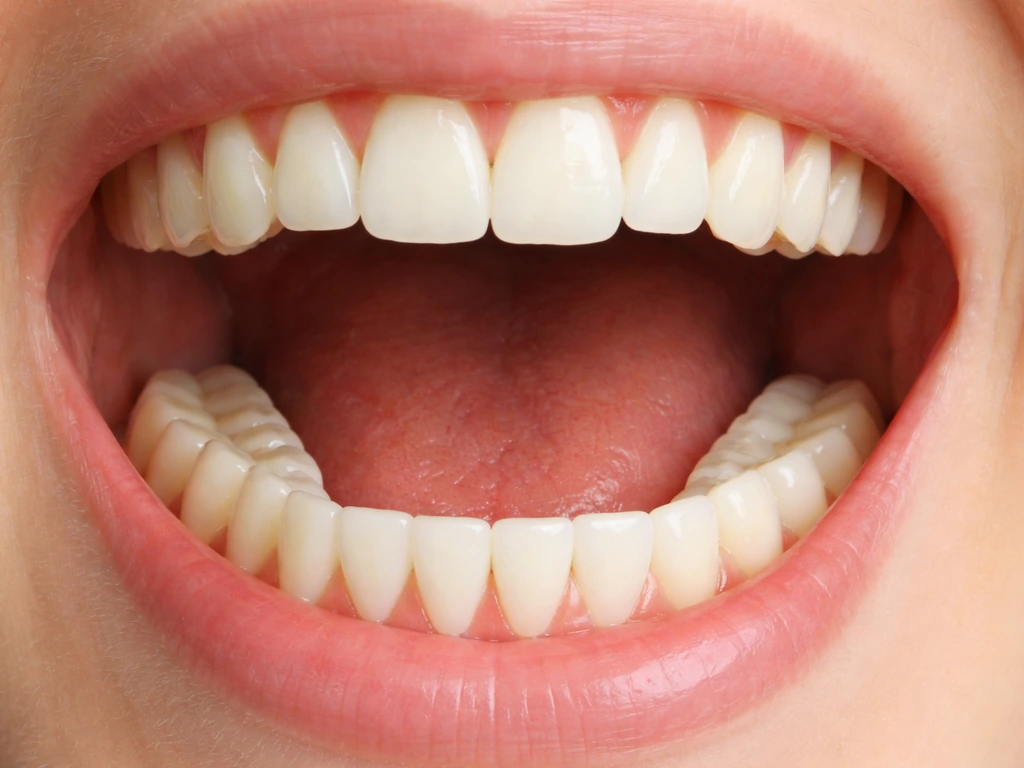
Not everyone has wisdom teeth, and not everyone who has them will see them break through the gums. If all four wisdom teeth were removed or never developed, you'd have 28. If only some came in, you might have 29, 30, or 31. None of these counts signal a problem on their own.
Congenitally missing teeth
Some people are simply born without certain teeth developing at all. This is called hypodontia, and it's more common than most people expect. Wisdom teeth are the most frequently absent, but second premolars and upper lateral incisors are also commonly missing from birth. If no tooth ever formed in the jaw, there's nothing to erupt and nothing to count.
Retained baby teeth and delayed eruption
Occasionally an adult tooth doesn't push out its baby predecessor, leaving a primary tooth in place well into adulthood. On the flip side, permanent teeth can be delayed or fail to erupt for several reasons including overcrowding, a tooth growing at the wrong angle (ectopic eruption), or a physical barrier blocking its path. These situations mean the adult tooth count looks lower than expected, even though the tooth may technically exist inside the jaw.
Wisdom teeth: when they come in and what happens if they don't
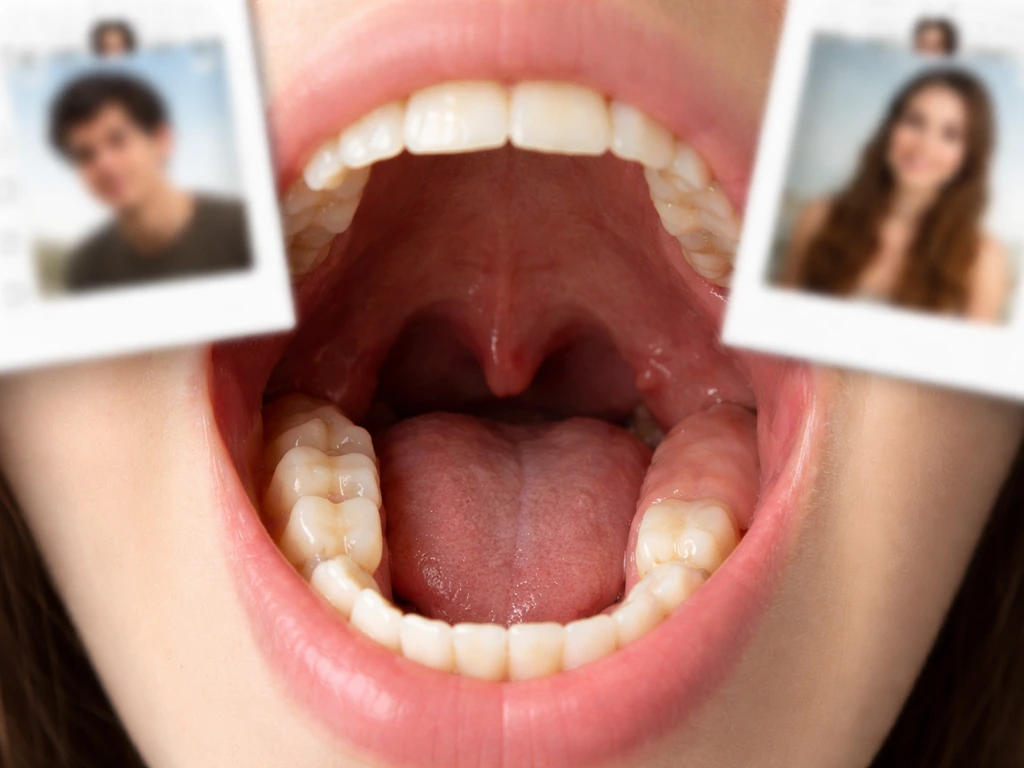
Wisdom teeth are the last permanent teeth to develop, and they operate on a much later schedule than the rest of your adult teeth. Most of your permanent teeth are in place by ages 12 to 14. Wisdom teeth are the exception.
The typical eruption window for wisdom teeth is blank" rel="noopener noreferrer">ages 17 to 25, though the range extends to about 26 in some cases. The timing of when teeth grow in can vary by tooth type, which is why eruption ages differ wisdom teeth. That's a wide window on purpose: individual variation in jaw size, tooth angle, and development pace all affect timing. If yours haven't come in by your mid-twenties, they may still be present in the jaw but impacted (unable to fully erupt), or they may never have developed at all.
Impaction is extremely common. Research shows that in roughly 80 out of 100 young adults, at least one wisdom tooth stays inside the jaw and never fully breaks through. When a wisdom tooth can't clear the gum because there isn't enough space or because the neighboring second molar is blocking it, it becomes impacted. There are different degrees: a soft tissue impaction means the tooth has come out of the jawbone but is still trapped under gum tissue. A bony impaction means it's fully enclosed in the jaw.
Impacted wisdom teeth aren't always painful or immediately dangerous, but they carry real risks over time: infection in the surrounding gum tissue, decay spreading to the adjacent second molar, and cyst formation around the unerupted crown. That's why dentists track them with X-rays even when they cause no symptoms.
Can adult teeth grow back? What actually regenerates and what doesn't
This is one of the most common misconceptions in dentistry, so let's be direct: once a permanent tooth is lost, it does not grow back. Humans are diphyodonts, meaning we get exactly two sets of teeth in a lifetime: baby teeth and permanent teeth. That means adult teeth have already developed by adulthood, and they are not simply replaced or “grown in” afterward Humans are diphyodonts. There is no third set waiting in reserve.
But what about the individual structures inside a tooth? The picture is more nuanced there. Enamel, the hard outer layer of your tooth, cannot regenerate at all. Your body has no cells capable of producing new enamel once a tooth has fully erupted. Dentin, the layer beneath enamel, has slightly more capacity: under certain conditions, the pulp can lay down a small amount of reparative dentin in response to damage. But this is a limited, slow process and nothing close to regrowing a damaged tooth.
Tooth pulp itself does not regenerate in its natural state. Researchers are actively investigating pulp regeneration therapies and even experimental approaches to whole-tooth regrowth, but none of these are available in standard clinical practice today. When a tooth is lost or extracted, the real-world options are prosthetic replacements: dental implants, bridges, or dentures. Biological regrowth simply isn't on the table yet for adult patients.
This matters for how you think about your adult tooth count. If a permanent tooth has been extracted or knocked out, that position won't refill on its own. The count is what it is unless you replace it artificially. And if a tooth hasn't erupted yet, that's a different situation entirely: it may still be developing or may be impacted, which is worth investigating rather than waiting on.
How to count your own teeth and figure out what you're looking at

Counting your teeth is straightforward, but easy to misread without a system. Here's a reliable way to do it yourself:
- Use a mirror and good lighting. A bathroom mirror works fine, but a small dental mirror helps you see the back teeth clearly.
- Start at one side of your upper arch (the molars in the back) and count each tooth moving across the front to the other side, then come back along the lower arch the same way.
- Count only teeth you can actually see or feel with your tongue. A tooth that hasn't broken through the gum doesn't count as erupted.
- If you count 28, you likely have a full set minus wisdom teeth (or wisdom teeth that haven't erupted or were removed). If you count fewer than 28, there's a missing tooth that deserves attention.
- If you're unsure whether a gap is from an extraction, a missing tooth, or a tooth still under the gum, that's a question for a dentist with X-rays, not a mirror.
One thing to watch for: if you still have a baby tooth and are an adult, it will usually look smaller, slightly different in color, and have a different shape than the surrounding permanent teeth. A retained primary tooth where the permanent tooth is absent or impacted beneath it is worth flagging at your next dental visit.
It's also worth knowing the normal eruption timeline for permanent teeth more broadly. Most come in during childhood: the first permanent molars and lower front teeth arrive around age 6 to 7, followed by upper front teeth around ages 7 to 9, with the process largely complete by ages 12 to 14 for all teeth except wisdom teeth. If you're curious about that full eruption sequence and how timing works at each stage, that's a topic closely related to how wisdom teeth fit into the overall development picture.
When you should actually call a dentist
Most tooth-count questions don't require an urgent appointment, but some situations genuinely do. Here's when to go rather than just wait and see:
- You're in your late teens or early twenties and have pain, swelling, or pressure in the back of your mouth where wisdom teeth would be. This could be an impacted tooth causing infection or damaging the adjacent molar.
- You're over 25 and have never had wisdom teeth erupt or X-rays to confirm whether they exist. Impacted wisdom teeth can cause problems silently, including cyst formation around the crown.
- You count fewer than 28 teeth and can't account for why. Missing permanent teeth don't always hurt, but an unexplained gap needs an X-ray to determine if the tooth is impacted, absent, or something else.
- A baby tooth is still present and you're over 14. If the adult tooth beneath it failed to develop or is blocked, that retained primary tooth will eventually fail and needs a plan.
- You notice a tooth that seems to be erupting at an odd angle or crowding the teeth next to it. Ectopic eruption (a tooth coming in at the wrong position) can damage neighboring teeth if not caught early.
- You have jaw pain, numbness, or recurring gum infections near the back teeth. All of these can be signs of an impacted wisdom tooth causing trouble even if it never broke through the surface.
Regular dental X-rays, especially the panoramic type that shows all teeth in one image, give your dentist a complete picture of what's present, what's developing, and what might be causing problems you can't see or feel yet. If you're tracking your tooth count and something seems off, that's the most reliable way to get a real answer.
FAQ
If I have fewer than 28 teeth, does that mean something is wrong with me?
Not always. Some people have delayed eruption or impacted teeth that are present but not visible in the mouth, and others naturally develop fewer teeth. A dental panoramic X-ray can confirm whether the missing-looking tooth is actually impacted, never formed (like hypodontia), or if a tooth was lost earlier and not replaced.
How can I tell whether my wisdom teeth are still in my jaw versus truly absent?
Look for more than just whether you can see them. Wisdom teeth can be fully or partially impacted and still not show at the gumline, so the only dependable way is imaging. A dentist can also check how close a wisdom tooth is to nearby roots, which matters for planning.
If my tooth count is 29, 30, or 31, is there a typical way that happens?
Most often, the difference comes from wisdom teeth, where one or more teeth never develop or do not fully erupt. The count can also vary if you have a retained primary tooth, or if one permanent tooth is delayed due to crowding or eruption angle. Imaging is the best way to know which scenario applies to you.
What should I do if I think I have a retained baby tooth as an adult?
Don’t try to self-identify by size alone. Schedule a dental check, because the key issue is whether the permanent successor is absent, impacted under the retained tooth, or simply delayed. The dentist may use X-rays to decide between monitoring, extraction timing, or orthodontic guidance.
At what age should I stop “waiting” for certain permanent teeth to come in?
For most permanent teeth, the process is largely done by the early teens, but individual teeth can still erupt later. If you are in your late teens and a tooth looks unusually missing, or if eruption seems stalled, it is reasonable to ask for X-rays rather than waiting indefinitely, especially if nearby teeth are already present.
Do dentists always use the 1-to-32 numbering system, or can it vary by country or office?
Many dental offices use the Universal system, but some may use another charting method. If you hear a tooth number and you are unsure what it refers to, ask the dentist to point it out on your chart or confirm the specific tooth (for example, upper right wisdom tooth) so you do not misinterpret the location.
Can X-rays tell me whether a tooth is impacted, and does it change treatment?
Yes. Panoramic or targeted bitewing and periapical imaging can show the tooth position, depth, angulation, and proximity to adjacent roots. That information affects decisions like monitoring versus removal, and it also helps estimate risk for decay to the neighboring tooth or future infection.
If a permanent tooth is missing because it was extracted, does that lower my “normal adult count”?
It can. Your biologic count might have been 28 to 32, but the visible count becomes lower after extraction or trauma. The key distinction is whether the tooth is absent by development, impacted under the gums, or simply removed, and X-rays or your dental history help clarify.
Is tooth count alone enough to determine dental health?
No. People with the same tooth count can have very different risks based on alignment, spacing, bite forces, and hygiene. Even if your count falls in the 28 to 32 range, your dentist may still recommend monitoring for impaction-related issues, gum disease, or cavities based on exam and imaging.
If I have wisdom teeth but they never fully erupt, should I always remove them?
Not automatically. Some impacted wisdom teeth cause no symptoms, but they can still pose longer-term risks like gum infection, decay in the adjacent molar, or cyst development. The decision is individualized, based on symptoms, the degree of impaction, your oral health, and how close the tooth is to important structures.
Next Articles
When Do Adult Teeth Grow? Ages for Erupting Teeth
Adult teeth eruption timeline: ages for each tooth, last teeth/wisdom, and what to do if they don’t come in
Do Milk Teeth Grow Back? Timelines, What to Do, Red Flags
Learn if milk teeth regrow, typical timelines for permanent teeth, what to do after loss or injury, and red flags.
Can Milk Teeth Grow Twice? Replacement vs True Regrowth
Can milk teeth grow twice? Learn why baby teeth usually only get replaced, not regrown, and what to do if one falls out