
No, teeth cannot grow back three times. Humans get exactly two sets of teeth in a lifetime: baby teeth (primary/deciduous teeth) and permanent teeth (adult teeth). That's it. Once your permanent teeth are in, no biological mechanism exists to grow a third set. If something in your mouth feels like it's "growing back," it's almost certainly a wisdom tooth erupting for the first time, enamel remineralizing slightly, or in rare cases, a retained root or fragment from a previous tooth. None of those things count as a third round of tooth growth.
Can Teeth Grow Back 3 Times? What’s Real and Next Steps

Marcus Holloway
20 May 2026
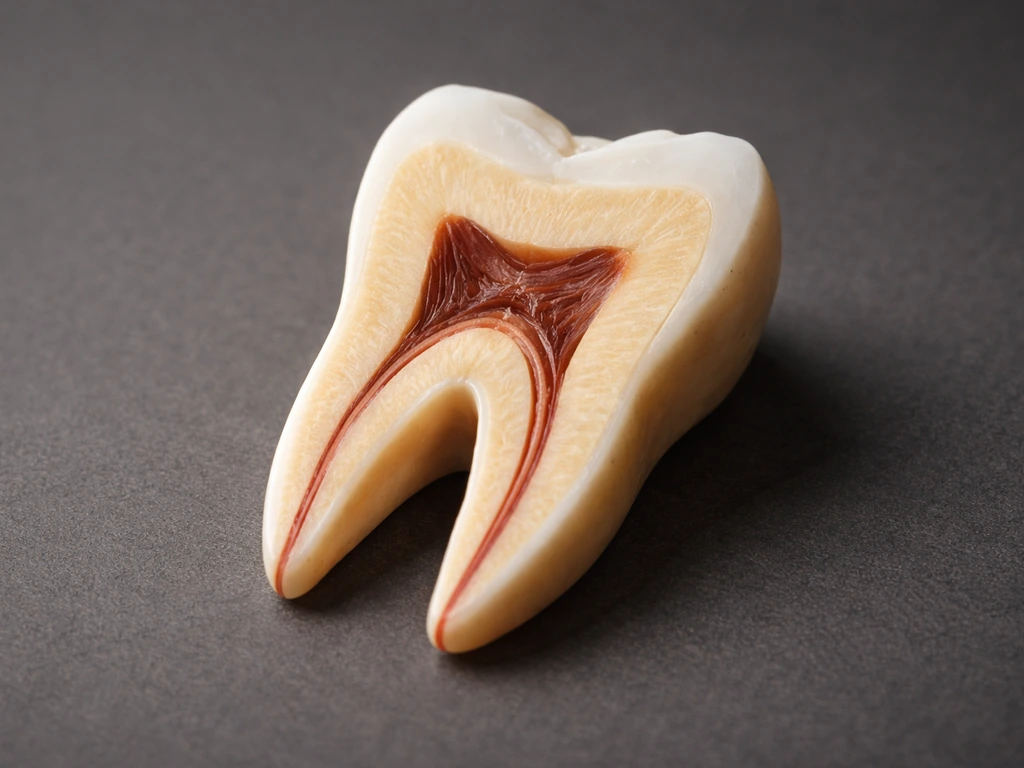
What people usually mean when they ask about "growing back 3 times"
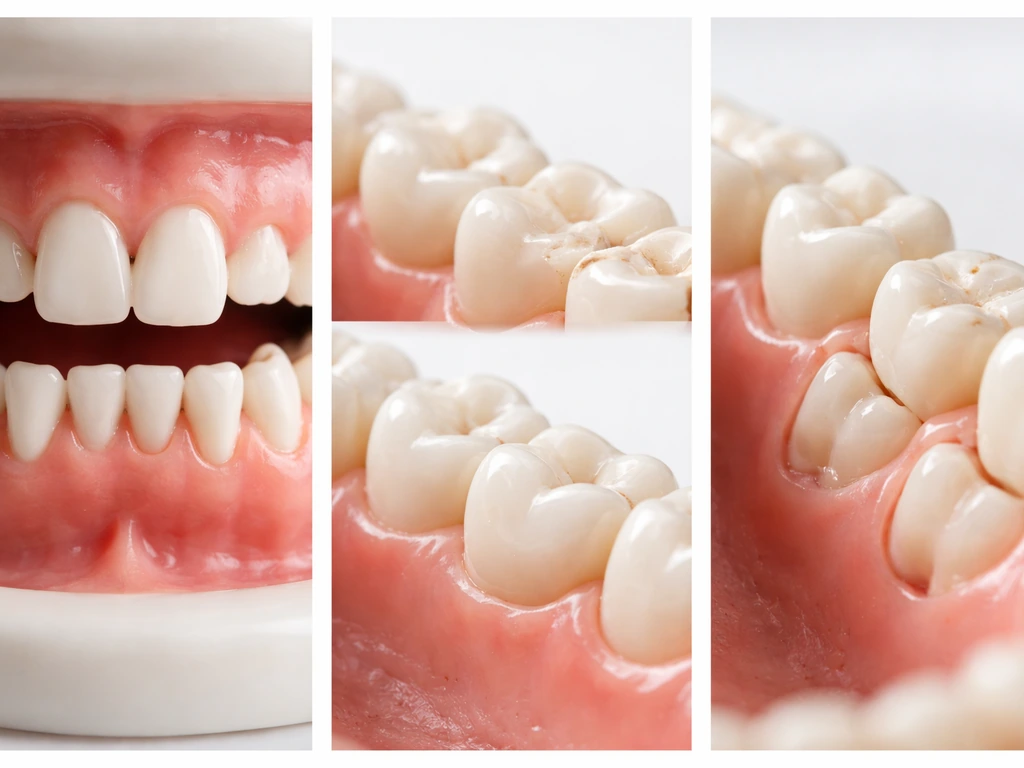
This question shows up in a few different forms, and the answer depends on what you're actually picturing. Most people are asking one of three things, and they're worth separating out because the biology behind each is completely different. Some people mean, “which teeth grow twice,” when they describe having teeth appear again later in life.
- Baby teeth to adult teeth (the only real "replacement" that happens): This is the one genuine changeover. You lose 20 baby teeth, and 32 permanent teeth come in. But this only happens once, not repeatedly.
- Enamel "growing back" after damage or decay: This is remineralization, not regrowth. It's a mineral top-up on the outer surface, not the creation of new enamel. It's limited and only works in very specific conditions.
- A tooth appearing after it seemed like nothing was there: This is almost always a wisdom tooth (third molar) finally erupting, sometimes in your late teens or mid-20s, not a tooth regrowing.
None of these scenarios represent a third set of teeth or a third cycle of tooth growth. The confusion is understandable, especially when you see a new tooth emerge at 22 years old and think, "wait, where did that come from?" But wisdom teeth are part of your original permanent set; they just erupt late.
What can actually regenerate in the human mouth (and what can't)
Here's the honest breakdown of what your body can and can't do on its own.
Enamel remineralization: real, but very limited
Enamel is the hard outer shell of your tooth, and here's the catch: the cells that create enamel (called ameloblasts) die off once your tooth erupts. They don't survive into adulthood. Once a tooth is in your mouth, your body literally has no cells left to make new enamel.
What can happen instead is remineralization, where minerals like calcium and phosphate from your saliva, along with fluoride from toothpaste or water, get deposited back into weakened spots on the enamel surface. Fluoride specifically enhances this mineral uptake during the early stages of tooth decay, which is why fluoride toothpaste genuinely works to prevent and even partially reverse the earliest cavities. But this is surface-level mineral exchange, not the creation of new enamel tissue.
A large cavity, a crack, or a broken cusp cannot remineralize itself back to normal.
Dentin: limited self-repair, not regrowth
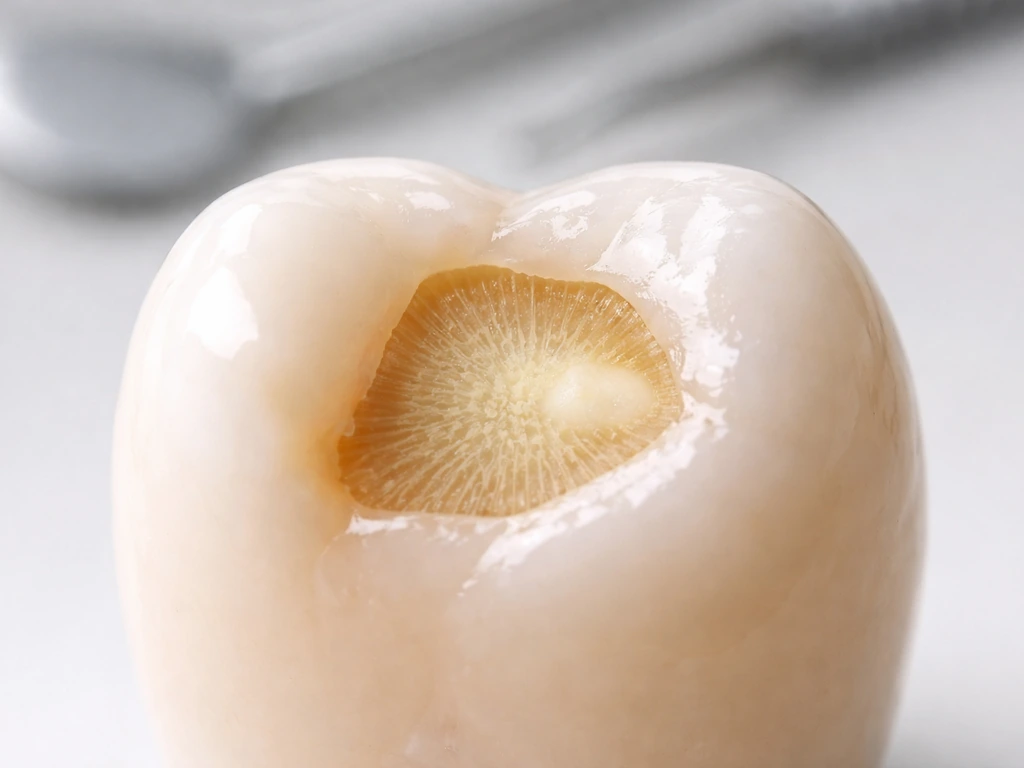
Dentin is the layer under enamel, and it has slightly more regenerative ability than enamel because the dental pulp (the living tissue inside the tooth) contains stem cells. In response to decay or injury, the pulp can lay down a small amount of "reparative dentin" as a defensive response. But this is a protective reaction, not meaningful regrowth. The pulp stem cell pool is limited, and once the pulp is damaged, infected, or removed, that capacity is gone.
Cementum and the periodontal ligament
Cementum is the thin layer covering the root of your tooth, connecting it to the jawbone via the periodontal ligament. Research shows cementum has essentially no remodeling capacity and very limited ability to regrow in cases of disease-driven resorption. It's not going to regenerate after gum disease or root damage in any clinically meaningful way.
Whole tooth regeneration: still science fiction for now
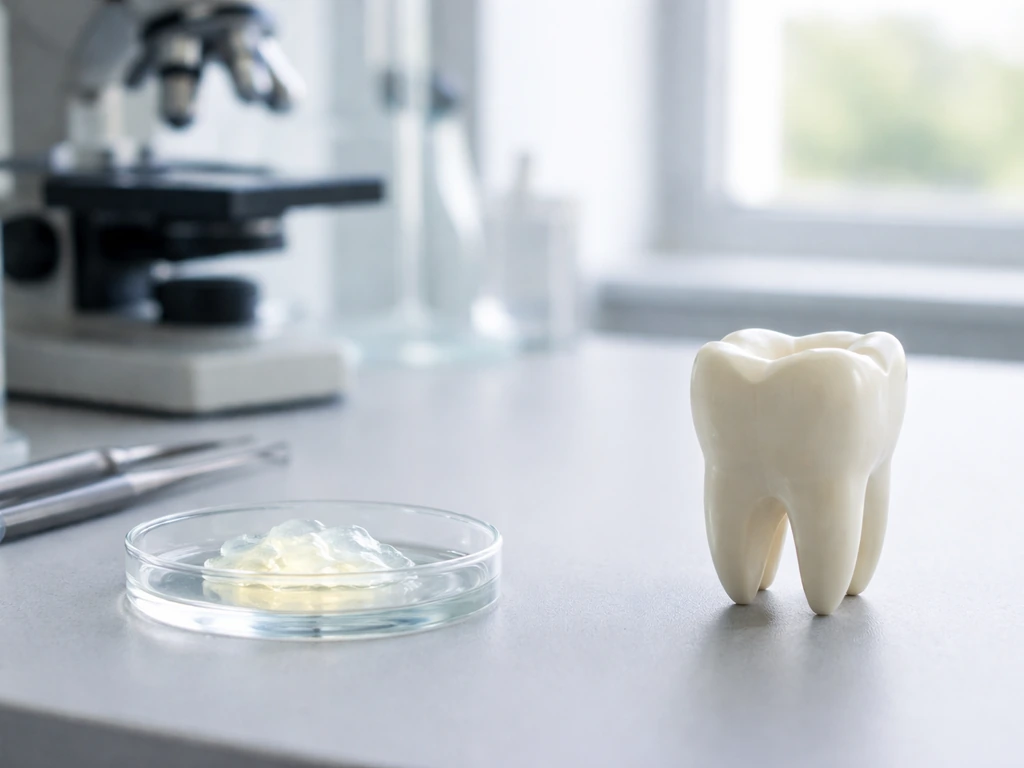
Regenerating a complete tooth from scratch in a living human mouth is described in the scientific literature as the "ultimate goal" of regenerative dentistry, meaning it is not a current clinical reality. Researchers are studying tooth bud transplantation and stem cell approaches, but nothing is available as a routine treatment today. If someone tells you their tooth "grew back" after it was fully lost, they're either mistaken about what happened, or a wisdom tooth erupted that wasn't visible before.
Why adult teeth can only come in once (the biology, simply explained)
Your body runs through tooth development during a tightly programmed window of time. Tooth buds form in the jaw before birth. Baby teeth erupt between about 4 months and 3 years old. Milk teeth typically take years to come in and then fall out, so if you're asking about timing, it's best to look at your child's stage of development how long does milk teeth take to grow.
Then, starting around age 6, each baby tooth gets pushed out by the permanent tooth that was developing beneath it in the jaw. This process finishes by the early teens for most teeth, with wisdom teeth as the stragglers, emerging anywhere from 17 to 26 years old. Once that process is complete, there are no more tooth buds waiting in the wings. The biological instructions for making teeth have been executed.
There is no third wave of tooth buds encoded anywhere in your jaw. This isn't a limitation that dentistry is working around; it's simply how human development works. Other animals, like sharks, continuously replace teeth throughout their lives because they evolved polyphyodonty (repeated tooth replacement). Humans evolved diphyodonty, meaning two sets only, which is typical of most mammals.
Humans usually get just two sets of teeth, but wisdom teeth are the late-emerging teeth people sometimes describe as appearing “twice. ” which teeth grow twice. This is why teeth only grow twice in humans instead of continuously replacing themselves like in polyphyodont animals.
The wisdom tooth confusion: why it feels like a tooth is "growing back"
Wisdom teeth (third molars) are the most common reason someone thinks they're experiencing a new tooth eruption as an adult. They typically emerge between ages 17 and 25, sometimes even later, and because they come in at the very back of the jaw, people often don't realize they were developing silently in the bone for years before breaking through the gum.
If a wisdom tooth has been partially visible for a while and then becomes more prominent, it can genuinely feel like a tooth is "growing. " But it's not regrowth. It was always there; it just wasn't fully through the gum yet. In general, baby teeth do not regrow once they are lost, and most people get only one replacement set.
Partially erupted wisdom teeth come with real risks. When a tooth only partially breaks through the gum, a flap of gum tissue can trap food and bacteria, leading to pericoronitis, an infection and inflammation around the erupting tooth. Wisdom teeth usually emerge between ages 17 and 26, and when they partially erupt they can trap food and bacteria and contribute to pericoronitis (painful inflammation). Symptoms include pain and tenderness at the back of the jaw, swollen gums, bad taste, and sometimes difficulty opening the mouth fully. This is not something to wait out. A dentist needs to evaluate whether the tooth has room to come in fully, or whether it's impacted (stuck) and needs to come out.
How to figure out what's actually going on in your mouth
Before calling the dentist, you can do a quick self-check to figure out what category your situation falls into. This helps you describe the issue clearly and decide how urgent your appointment needs to be.
- Look at where the sensation or growth is happening. Is it at the very back of your jaw? That's almost certainly a wisdom tooth. Is it where you had a tooth pulled? That would be unusual and worth investigating. Is it on a tooth that's still present? That might be a gum issue, decay, or a fracture.
- Think about your age. If you're between 17 and 26 and you haven't had your wisdom teeth checked, a new tooth at the back is almost definitely a third molar finally erupting. If you're over 30 and have never had a wisdom tooth issue, and you're feeling something new, see a dentist soon.
- Check for pain, swelling, or fever. These push the situation into urgent territory. A new sensation without any pain or swelling is lower urgency but still worth getting evaluated.
- Consider your dental history. Have you had a tooth extracted recently? Rarely, a small root fragment can remain in the socket and cause ongoing symptoms. This is not the tooth regrowing; it's retained tissue that may need attention.
- Ask yourself: is a tooth actually missing, or is it just damaged or sensitive? Missing teeth don't grow back. Sensitivity or pain in a tooth that's still in your mouth has completely different treatment options.
When you call or visit a dentist, come prepared with specific questions. Ask whether any unerupted teeth are still visible on X-ray. Ask whether what you're seeing is eruption, decay, a gum issue, or something else. Ask what happens if you leave it untreated. Getting an X-ray is usually the fastest way to settle any confusion about whether a tooth is present, impacted, or missing entirely.
What dentists can actually do when teeth won't grow back
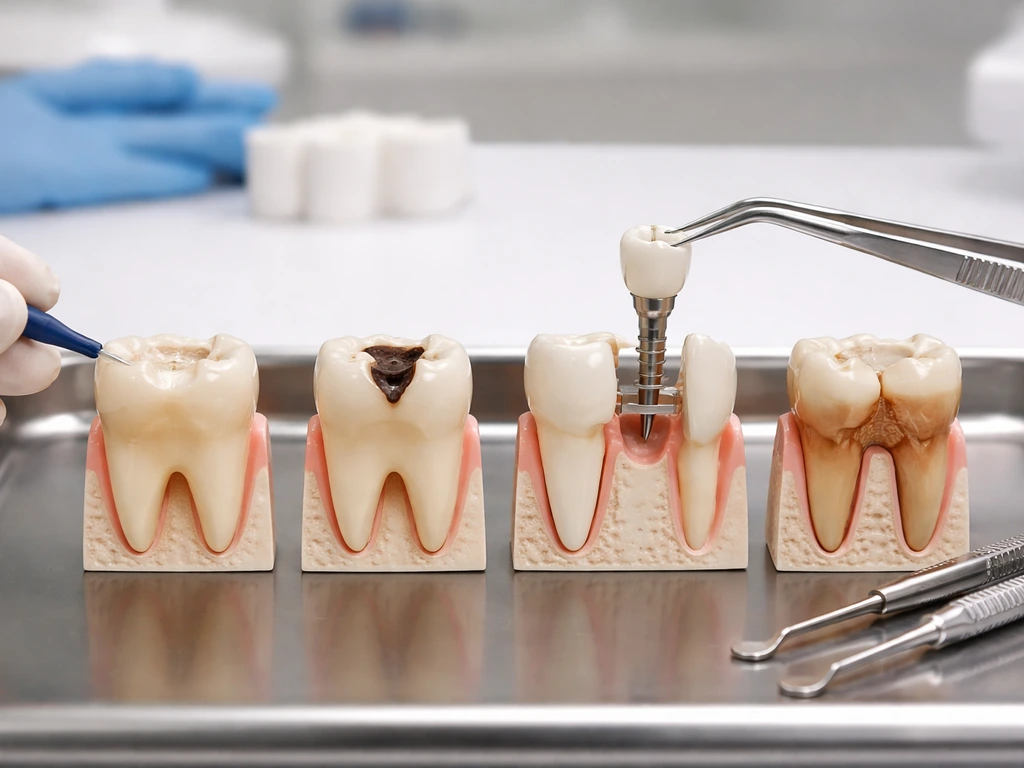
Modern dentistry has excellent options for replacing or repairing what biology won't regenerate. The right choice depends on whether you're dealing with enamel damage, decay, a damaged but living tooth, or a completely missing tooth.
| Problem | What it is | What a dentist can do | Replaces the tooth? |
|---|---|---|---|
| Small cavity or early enamel damage | Decay or mineral loss on the outer tooth surface | Filling (composite or amalgam), fluoride treatment for very early decay | No, repairs the existing tooth |
| Larger cavity reaching the dentin | Decay that's gone through enamel into the inner tooth layer | Filling or crown depending on how much tooth structure remains | No, restores the existing tooth |
| Decay reaching the pulp or infected tooth | Bacteria have reached the nerve and blood supply of the tooth | Root canal treatment followed by a crown | No, saves the existing tooth |
| Cracked or broken tooth | Physical damage to the tooth structure | Crown, bonding, or extraction depending on severity | No, unless extraction leads to replacement |
| Missing tooth (extracted or lost) | Tooth is completely gone from the jaw | Dental implant, fixed bridge, or partial denture | Yes, functionally and aesthetically |
| Impacted wisdom tooth | Tooth stuck in the jaw or partially erupted | Monitoring, antibiotics for infection, or surgical extraction | Removal, not replacement typically needed |
Dental implants are widely considered the gold standard for replacing a missing tooth. A titanium post is placed into the jawbone, fuses with the bone over a few months, and then supports a crown that looks and functions like a natural tooth. Bridges are a faster alternative, where a false tooth is anchored to the two teeth on either side of the gap. Both are permanent solutions. Partial dentures are removable and less expensive but also less stable. None of these is "tooth regrowth," but functionally, a well-placed implant comes closer than anything else currently available to replacing what was lost.
When to see a dentist urgently (and what to tell them)
Not all dental issues are emergencies, but some absolutely are. These situations need same-day or next-day attention, not a wait-and-see approach.
- Severe, constant tooth pain or pressure that doesn't let up, especially if it wakes you up at night
- Swelling in the gum, jaw, or face, particularly if it's spreading or feels warm
- Fever alongside tooth pain or swelling (this suggests infection has gone systemic)
- Difficulty swallowing, difficulty opening your mouth, or any trouble breathing (these are dental emergency red flags that may require an ER visit, not just a dentist)
- A bad or persistent taste or smell in your mouth after an extraction, which can indicate dry socket or infection
- Gum bleeding that won't stop around a partially erupted tooth
If you have facial swelling plus fever plus difficulty swallowing, do not wait for a dental appointment. Go to an emergency room. Dental infections can spread to the throat and neck in rare cases, and that becomes a medical emergency quickly. For everything else, call your dentist and be specific: tell them whether you have swelling, fever, how long the pain has been happening, and whether it's getting worse. That information helps them triage you accurately.
At your appointment, the most useful questions to ask are: Do I have any unerupted teeth still in my jaw? Is this decay, a fracture, or a gum issue? What happens if I leave this untreated for a few months? What are all my options, including the least expensive? Getting clear, specific answers to those questions puts you in control of your own treatment decisions, which is exactly where you should be.
FAQ
If I lost a permanent tooth as a kid, can it grow back later?
In most cases, no. Permanent teeth do not have a biological “second replacement” beyond what already occurred (primary, then permanent). What may appear to “grow back” later is a neighboring tooth moving into the space, a wisdom tooth eruption, or swelling from an unrelated issue. If a tooth was truly extracted or knocked out, ask for an X-ray to confirm whether any root remnants or developing unerupted teeth are present.
Can enamel or a cavity ever become “fully new” again?
You can sometimes reverse the earliest stage of decay, but not rebuild missing enamel tissue. Fluoride can help minerals redeposit on early, subsurface enamel damage, yet a large cavity, a cracked cusp, or enamel that is already broken will not remineralize back to normal structure. If you are told “it regrew,” ask whether the damage was an early spot lesion versus a cavitated cavity.
Why does a tooth feel like it is getting taller or “coming in” when I’m an adult?
Adult “tooth growth” sensations are often due to eruption of a wisdom tooth, changes in gum level, or tooth movement from shifting bite pressures. Receding gums can make it look like a tooth is longer, and orthodontic movement can also expose more tooth surface. A good first step is to compare with older photos or radiographs and confirm with a dentist whether the visible change is eruption, gum recession, or drift.
How can I tell if the new back-of-mouth tooth is a wisdom tooth or something else?
Location and timing are clues, but imaging is definitive. Wisdom teeth are third molars at the very back, often emerging between the late teens and mid-20s. However, ectopic teeth, retained roots, or cyst-related findings can mimic eruption. Ask your dentist whether the tooth is developing, partially erupted, impacted, or whether the X-ray shows something else.
What should I do if a tooth is partially erupted and I have pain around it?
Don’t ignore it, because a partially erupted wisdom tooth can trap food and bacteria under a gum flap, leading to pericoronitis. In the short term, keep the area clean with gentle rinsing and follow your dentist’s advice on pain control, but arrange an evaluation promptly. Ask whether the tooth has enough space to come fully in or whether removal is the safer option.
Is there any treatment that can truly regenerate a whole missing tooth today?
Not routinely. Regenerating an entire tooth from scratch is still an emerging research goal, not a standard clinical option. If someone claims true tooth regrowth after a tooth was fully lost, ask what exactly was regenerated versus what was replaced, such as whether an implant, bridge, or partial denture was used.
After a root canal or tooth extraction, can the tooth structure “repair itself” later?
A root canal removes the pulp, so meaningful internal regeneration is limited. What can happen over time is improvement in symptoms, stabilization of the remaining tooth, and, in some cases, placement of a crown to protect weakened enamel and dentin. If the tooth is fractured or decayed extensively, ask about the prognosis for the remaining structure and whether a crown, build-up, or extraction is the likely outcome.
When should I seek urgent care for dental symptoms related to a new eruption?
Treat it as urgent if you have fever, rapidly spreading facial swelling, trouble swallowing, or difficulty breathing, because dental infections can spread beyond the mouth. For less dramatic symptoms, call your dentist within a day or two if pain is persistent, the area is getting more swollen, or you suspect pericoronitis. Having the timeline, whether symptoms are worsening, and your temperature helps the clinic triage you.
What information should I collect before my appointment if I think I have a “new tooth”?
Write down when you first noticed it, the exact location (top or bottom, left or right, near the back or front), whether you see gum swelling or a flap, and any triggers like chewing pain or bad taste. Bring details about prior extractions or trauma to nearby teeth. Then ask for an X-ray review to confirm whether you have an unerupted tooth, decay, or retained fragments.
Next Articles
How Many Times Do Your Teeth Grow Back? Facts
Teeth rarely regrow after permanent set: most people get one replacement only. Learn limits, myths, and what to do next.
Is It Possible to Grow Another Adult Tooth Again?
Learn if adult teeth can regrow, what tissues can’t, and the real options to replace a lost tooth.
Why Do Humans Only Grow 2 Sets of Teeth and Can They Regrow
Explains why humans have only two tooth sets and what can regrow today, plus options for missing or damaged teeth.