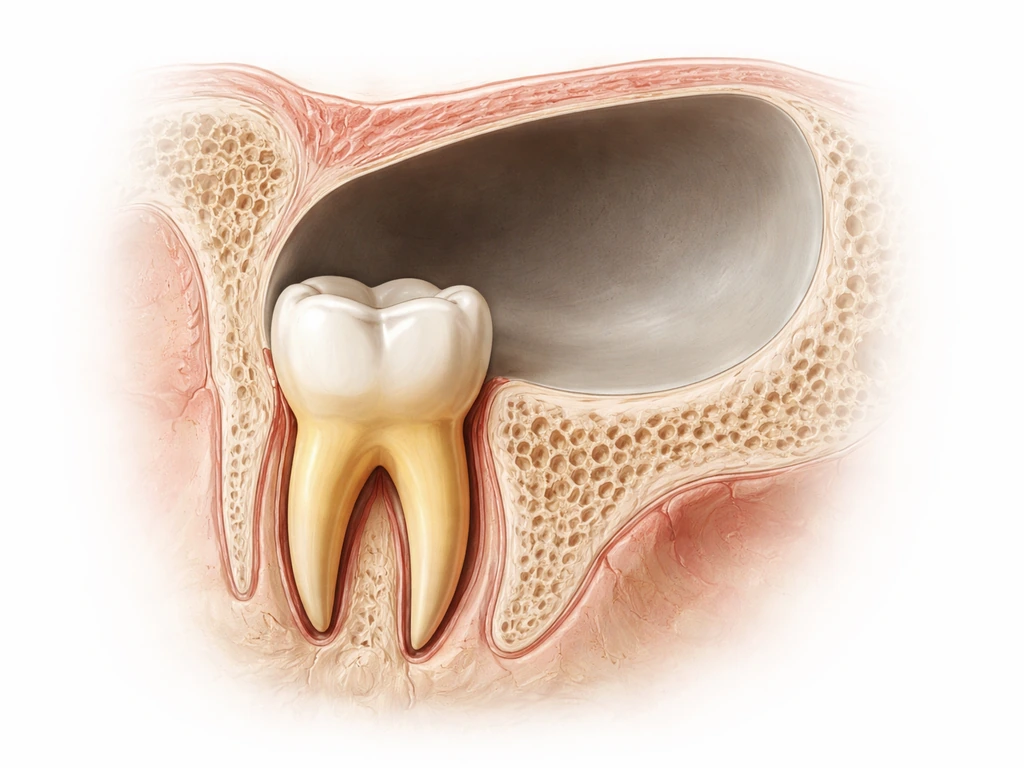
A tooth root does not grow into the maxillary sinus the way a plant root grows into soil. Roots do not sprout new tissue and push through bone on their own. What actually happens is more subtle and more common than most people realize: the upper molar roots can sit so close to the sinus floor that infection, inflammation, or a difficult extraction creates a connection between your mouth and the sinus cavity. That connection, called an oroantral communication, is what causes the strange symptoms people describe. It is not root regrowth. It is anatomy plus a complication.
Can a Tooth Root Grow Into the Sinus? What to Know

How your upper tooth roots and the maxillary sinus are neighbors
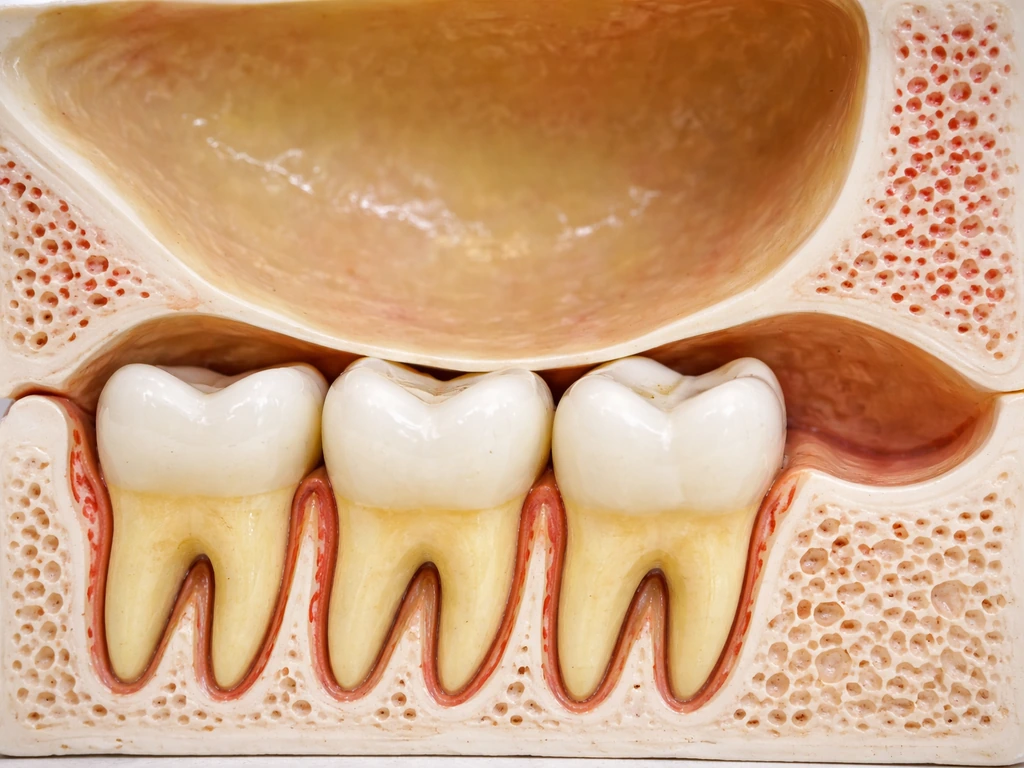
The maxillary sinus sits inside your cheekbone, one on each side, directly above the upper back teeth. The floor of that sinus is often extremely close to the roots of your upper molars and sometimes your upper premolars. CBCT imaging studies have found that in roughly half of upper molar roots, the root tip either touches the sinus floor or projects into it with no bony barrier separating them. In one measurement study, the mesiobuccal root of the upper second molar averaged only about 1.97 mm from the sinus floor. That is less than two millimeters. For some people the gap is effectively zero.
This proximity is not a defect or a disease. It is just normal anatomy that varies from person to person. Age plays a role too. Research using CBCT on thousands of roots shows a significant negative correlation between age and apex-to-sinus distance, meaning older adults tend to have roots that sit closer to the sinus floor. Wisdom tooth roots, which finish developing in young adulthood, can also end up very close to the sinus depending on how the second and third molars are positioned. The key point is that the closeness is built-in, and most people never have a single problem because of it.
So can a root actually "grow into" the sinus?
Not in the biological sense of new root tissue generating and extending through the sinus membrane. Root development follows a strict developmental window during childhood and adolescence. Once a root is fully formed, it does not keep growing. There is no mechanism in adult dental biology that would cause a mature root to spontaneously push through bone, through the sinus membrane, and into the air-filled cavity above it.
What people call a root "in the sinus" on imaging is usually one of three things. First, a root that was always anatomically close enough to indent or rest against the sinus floor, which is common and often harmless. Second, a root whose surrounding bone has been eroded by a periapical infection, cyst, or granuloma, so that the sinus membrane is now exposed to the infection pathway. Third, a root fragment that was accidentally displaced into the sinus during an extraction, which is an iatrogenic complication, not biology. The distinction matters enormously because each scenario has a completely different treatment path.
Here is something that surprises people: even when CBCT imaging shows a root appearing to protrude into the sinus, histological studies found actual sinus membrane perforation in only 14 to 28 percent of those cases. Proximity on a scan does not automatically mean the membrane is breached. Context and symptoms are everything.
Symptoms that suggest your sinus and tooth are connected

The classic symptom cluster for an oroantral communication or odontogenic sinusitis is almost always one-sided. That asymmetry is a major clue. If your regular sinus trouble is typically bilateral, and suddenly you have pressure, discharge, or congestion only on one side, especially near an upper back tooth, that warrants attention.
- Unilateral purulent nasal discharge, often with a foul smell, sometimes described as a bad taste at the back of the throat
- Pressure or pain in one cheek that feels different from typical sinus headaches
- Air passing through an extraction socket or gap when you breathe through your nose
- Liquid leaking into your nose when you drink
- A voice change or nasal resonance quality that appeared after dental work
- Persistent postnasal drip only on one side
- Swelling or discharge along the upper gum line near a back molar
- Sinus congestion that does not respond to standard nasal medications
The air-passage symptom is one of the most telling. If you can feel or hear air moving through an extraction socket when you exhale through your nose, that is a direct sign of an oroantral communication. You should not try to force this or test it repeatedly. Just note it and call your dentist or oral surgeon.
How dentists diagnose a sinus-tooth connection
The clinical exam
A dentist or oral surgeon will first look at the socket or area of concern directly. The Valsalva maneuver is a standard clinical test: you are asked to try to exhale gently through your nose while your nostrils are pinched closed. If an oroantral communication is present, air or bubbling at the socket confirms it. Worth knowing: clinicians use this test carefully because forcing air through an infected connection can push bacteria further into the sinus, so it should be done by a professional, not as a DIY test at home.
X-rays and CBCT imaging
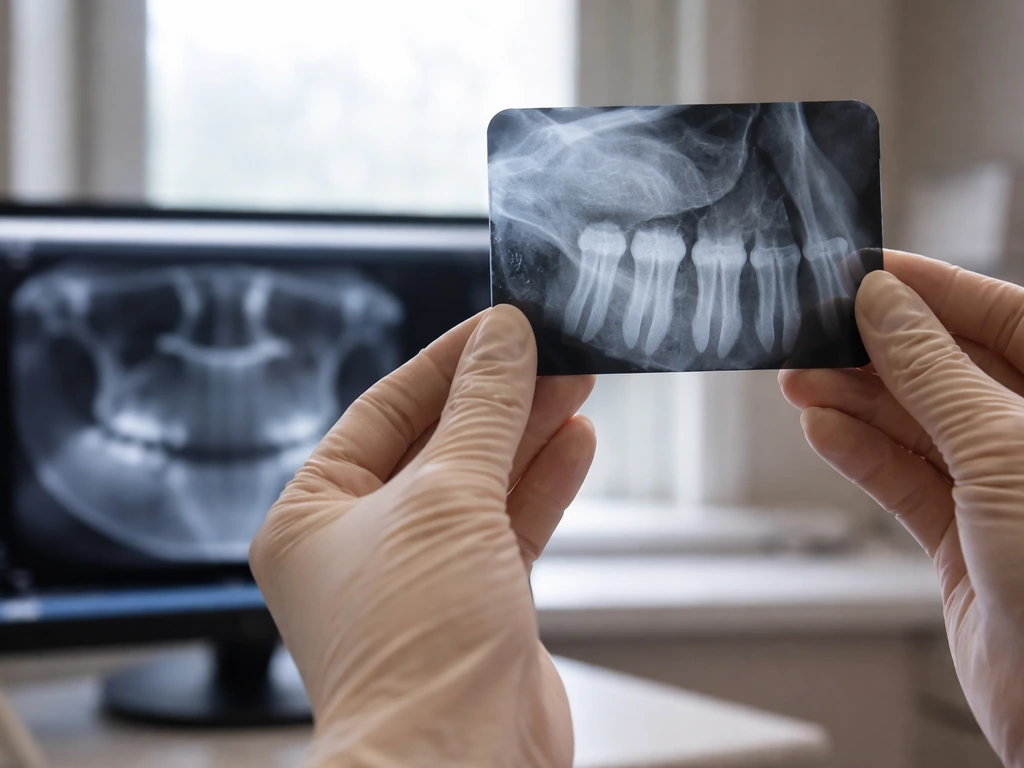
Periapical and panoramic radiographs are usually the first imaging step. They can show root proximity to the sinus floor, loss of the cortical bone line, sinus opacification, and bony defect size. A panoramic radiograph can effectively rule out a relationship if there is a clear gap visible between the root tip and sinus floor. However, when overlap or proximity is ambiguous on 2D imaging, cone beam CT (CBCT) gives a three-dimensional picture that 2D films simply cannot match. CBCT is the gold standard for seeing exactly how a root relates to the sinus, identifying sinus floor disruption, spotting displaced root fragments, detecting mucosal thickening or polyps, and planning any surgical repair. For patients whose sinus symptoms do not resolve after dental treatment, CT scanning through the sinus is also often ordered to evaluate the extent of mucosal disease before an ENT consultation.
When to treat this as urgent
Not every root-sinus proximity situation is an emergency. But certain red flags mean you should call an oral surgeon within a day or two rather than waiting for a routine appointment.
- Air or liquid passing between your mouth and nose after an extraction, persisting beyond 24 to 48 hours
- Foul-smelling or tasting discharge from an extraction socket or the nose that worsens rather than improves
- Fever combined with one-sided facial swelling and increasing pain after a dental procedure
- Unilateral sinus symptoms that started right after an extraction and are not improving after a week
- A visible opening in the socket floor after tooth removal that your dentist has not already addressed
- Any known root fragment that was not recovered after extraction, especially if sinus symptoms develop in the following weeks
The timing window matters here. Research shows that an oroantral communication can epithelialize into a chronic fistulous tract in as little as 7 to 8 days. A chronic oroantral fistula is significantly harder to close than a fresh communication, so early treatment is not optional. Similarly, odontogenic sinusitis that is left untreated can progress to chronic maxillary sinus disease that eventually requires combined dental and ENT surgery to resolve.
Treatment options, from watchful waiting to surgery
Management depends on what is actually happening, the size of any communication, how long it has been present, and whether infection is involved.
| Situation | Typical Management | Who Manages It |
|---|---|---|
| Root close to sinus, no symptoms | Monitoring, imaging follow-up, careful extraction planning if needed | General dentist or oral surgeon |
| Small OAC (<2 mm) after extraction, no infection | Clot protection, sinus precautions (no blowing nose, no straws), may heal spontaneously | General dentist or oral surgeon |
| Larger OAC (>2-3 mm) or any fistula | Surgical flap closure (buccal advancement, palatal rotation, or buccal fat pad flap) | Oral surgeon |
| Chronic oroantral fistula | Flap closure combined with endoscopic sinus surgery in most cases | Oral surgeon plus ENT |
| Odontogenic sinusitis (no OAC) | Address dental cause (extraction, root canal, retreatment) plus endoscopic sinus surgery if needed | Oral surgeon plus ENT |
| Root fragment displaced into sinus | Surgical retrieval, often endoscopically | Oral surgeon or ENT |
Sinus precautions after extraction near the sinus are important even when no communication has been confirmed. You will typically be told to avoid blowing your nose forcefully, avoid drinking through a straw, sneeze with your mouth open, and skip activities that increase sinus pressure for at least a week. These precautions protect the clot and reduce the chance of disrupting a fresh connection before it heals.
For established odontogenic sinusitis, the evidence strongly favors treating both the dental cause and the sinus together. Studies report 90 to 100 percent success rates when endoscopic sinus surgery and oroantral fistula closure are performed together. Endoscopic sinus surgery (ESS) has largely replaced the older Caldwell-Luc approach because it has fewer long-term complications. Antibiotics alone are not curative here. They may reduce acute symptoms temporarily, but without removing the dental source and restoring sinus drainage, the infection returns.
Clearing up the myths about root regrowth and sinus involvement
This is where a lot of confusion lives online. The question usually comes from a real worry: someone read that their root was "in the sinus" on their scan, or a dentist mentioned the sinus during an extraction, and they started wondering if a root somehow grew there or could keep growing. Here is what the biology actually says.
Adult tooth roots do not regenerate or extend on their own. Adult tooth roots generally do not grow together or merge; if two structures seem connected on imaging, it is usually due to proximity or a disease- or treatment-related communication can two teeth grow together. Root development is a one-time event tied to early life. There are experimental regenerative endodontic procedures being studied that can stimulate some root-like tissue in certain young patients with incompletely formed roots, but even those rarely produce perfectly normal root anatomy, and the case literature describes them as managed clinical procedures, not spontaneous growth. There is no credible scenario in which a fully-formed molar root quietly grows through the sinus floor and into the air cavity above it because of aging, diet, or anything short of extreme pathology.
What can happen over time is that infection, cyst formation, or root resorption erodes the thin bony barrier between a root tip and the sinus. This is not the root growing. It is the bone and membrane being destroyed by disease. The root stays put. The protection around it disappears. That distinction changes how you think about prevention and treatment: you are trying to catch and treat infection early, not trying to stop the root from moving.
Similarly, when people ask questions like whether teeth can grow in unusual places in the body (topics that come up across dental biology discussions) the answer always comes back to the same biological limit: tooth tissue does not self-generate and travel. In this case, proximity to the sinus is about anatomy and about what disease does to that anatomy. The root was always there. The question is whether the barrier holding everything safely apart has been compromised.
If you are dealing with unexplained one-sided sinus symptoms, a recent difficult extraction of an upper molar, persistent bad taste after dental work, or a dentist who mentioned your roots are close to the sinus, the right next step is a consultation with an oral and maxillofacial surgeon. Bring any X-rays or imaging you already have. A good exam and the right scan will answer definitively what is happening, and most of these situations have straightforward, well-established treatment once the diagnosis is clear.
FAQ
If my CBCT says a root is “into” or “in” the sinus, does that automatically mean I have an oroantral communication?
Not automatically. A scan can show close contact or apparent extension without actual membrane breach. Your diagnosis depends on symptoms (often one-sided), exam of the socket or extraction site, and whether air/bubbling is seen with professional testing (Valsalva).
Can a root fragment be left behind in the sinus after an extraction, and how would I know?
Yes, a displaced fragment is an iatrogenic possibility. Clues include persistent one-sided symptoms after the extraction (ongoing bad taste, discharge, pressure) that do not improve as expected, and imaging that shows a small foreign body or a bony defect with sinus changes
Is it safe to do the nose-blowing test at home to check for an oroantral communication?
No. Forcing air through a possible infected connection can worsen spread of bacteria into the sinus. If testing is needed, it should be done by a dentist or oral surgeon in a controlled way using their exam and judgment.
How long after an upper molar extraction should I worry if sinus symptoms start?
Be especially cautious if symptoms develop within the first week, since a fresh oroantral communication can epithelialize into a more chronic tract in as little as 7 to 8 days. Prompt evaluation is important even if symptoms seem mild at first.
Why do my symptoms seem only on one side, even if I have a sinus infection history?
Odontogenic sinus problems usually affect the side associated with the upper tooth or extraction. Sudden one-sided pressure, congestion, or discharge near an upper back tooth is a strong clue that the source may be dental rather than typical viral or allergic sinusitis.
What happens if antibiotics are prescribed but the dental cause is not treated?
Antibiotics may temporarily reduce acute symptoms, but without removing the dental source and restoring drainage or closing any communication, the problem often returns or persists. Definitive management usually requires addressing the tooth-related pathway, not antibiotics alone.
Do sinus precautions always matter if my dentist says there is no communication?
Yes, usually for at least the first week after an extraction near the sinus. The goal is to protect the blood clot and reduce the risk of disrupting a fresh connection that has not been confirmed yet, since even small disruptions can complicate healing.
If I already had root canal treatment or a dental infection, can that still cause oroantral issues later?
It can, especially when there is ongoing periapical infection, a cyst, or bone erosion close to the sinus floor. The risk is related to how disease affects the bony barrier, so persistent or worsening one-sided sinus symptoms after dental treatment warrant reassessment.
What imaging should I ask for if 2D X-rays are unclear?
If your dentist is concerned about root-sinus relationship, displaced fragments, or sinus floor disruption but 2D films are ambiguous, ask whether CBCT is appropriate. CBCT is typically better for defining the three-dimensional relationship and planning repair if needed.
When should I seek an ENT referral versus staying with dental/oral surgery?
Start with dental or oral and maxillofacial evaluation when symptoms are linked to an upper tooth, extraction, or bad taste after dental work. If sinus disease persists after dental treatment, clinicians often coordinate with ENT and may order CT to assess the extent of mucosal disease before endoscopic management.
Citations
In a CBCT study of upper molar–sinus relationships, mesiobuccal (MB) roots of maxillary molars showed a “root–sinus” relationship (defined by their classification of root protrusion/touching patterns) in 52.7% of MB roots.
Morphologic Analysis of Maxillary Sinus Floor and its Correlation to Molar Roots using Cone Beam Computed Tomography - https://pubmed.ncbi.nlm.nih.gov/30746530/
In a retrospective CBCT sample, 105 upper first molars were included that had contact with the maxillary sinus; reported average root contact areas included the mesiobuccal root (≈20.5 mm², about 17% of root area, in that study’s measurements).
Three-dimensional quantification of the relationship between the upper first molar and maxillary sinus - https://pmc.ncbi.nlm.nih.gov/articles/PMC9209787/
CBCT/CT-based distance work cited in the paper describes the maxillary second molar mesiobuccal apex as among the closest root tips to the sinus floor (mean about 1.97 mm in the referenced measurement set).
An Assessment of the Relationship between the Maxillary Sinus Floor and the Maxillary Posterior Teeth Root Tips Using Dental Cone-beam Computerized Tomography - https://pmc.ncbi.nlm.nih.gov/articles/PMC2948741/
A CBCT anatomical study (2182 roots across 219 patients) specifically evaluated distances from root apex to sinus floor and buccal cortex as a basis for estimating fenestration/probability of oroantral communication.
Anatomical relationship of maxillary posterior teeth with the sinus floor and buccal cortex - https://pubmed.ncbi.nlm.nih.gov/28547776/
A review of CBCT classification literature within the paper reports that studies often find the mesiobuccal root of the maxillary second molar to be closest to the sinus floor, relevant when considering sinus-floor proximity and risk.
Evaluation of the relationship between the maxillary sinus floor and the root apices of the maxillary posterior teeth using cone-beam computed tomographic scanning - https://pmc.ncbi.nlm.nih.gov/articles/PMC6519191/
The review describes that the sinus floor has thick cortical bone and is not typically permissive to direct “penetration” by infection, but thin/separating bone can be eroded in settings such as periapical infection/cysts/granulomas or apicoectomy, exposing the sinus and enabling sinus involvement.
Odontogenic maxillary sinusitis: A comprehensive review - https://pmc.ncbi.nlm.nih.gov/articles/PMC7770314/
The review notes that extrusion of endodontic materials/tools through apical foramina protruding toward the sinus can result in oroantral communication-related problems (e.g., via apical foramen proximity and displacement into the sinus floor region).
Odontogenic maxillary sinusitis: A comprehensive review - https://pmc.ncbi.nlm.nih.gov/articles/PMC7770314/
The state-of-the-art review lists potential dental pathologies driving odontogenic sinusitis, including apical periodontitis (from pulpal necrosis), oroantral communication/oroantral fistula, and foreign bodies introduced into the maxillary sinus.
Odontogenic sinusitis: A state-of-the-art review - https://pmc.ncbi.nlm.nih.gov/articles/PMC9126162/
The pictorial review defines oroantral communication (OAC) as an unnatural space/connection between the oral cavity and maxillary sinus following extraction, infection, or complications, and notes extraction-related proximity as a contributing anatomic factor (especially with thin sinus floors).
Oroantral communication, its causes, complications, treatments and radiographic features: A pictorial review - https://pmc.ncbi.nlm.nih.gov/articles/PMC8479434/
In a comparison study, CBCT indicators of “root protrusion into the sinus” included (on CBCT) root projection into the sinus and interruption of the sinus floor; the paper also emphasizes that mucosal perforation findings in histology may be less frequent than radiographic “protrusion.”
Comparison of panoramic radiography and CBCT to identify maxillary posterior roots invading the maxillary sinus - https://pmc.ncbi.nlm.nih.gov/articles/PMC5124772/
The paper reports that histological studies found actual mucosal perforations in only 14–28% of samples even when roots were radiographically protruding/enveloping the sinus on imaging—supporting the idea that imaging “root proximity/protrusion” does not always mean direct membrane breach.
Comparison of panoramic radiography and CBCT to identify maxillary posterior roots invading the maxillary sinus - https://pmc.ncbi.nlm.nih.gov/articles/PMC5124772/
The review discusses direct extension/infection pathway considerations (e.g., microbiology concordance between periapical abscess and sinusitis aspirate in study contexts), supporting that sinus involvement is often driven by infection spread or communication, rather than true root “regrowth.”
Odontogenic maxillary sinusitis: A comprehensive review - https://pmc.ncbi.nlm.nih.gov/articles/PMC7770314/
The CBCT study’s root–sinus classifications distinguish root protrusion/touching patterns (and categories implying barrier or none), which is relevant to differentiating “root proximity/contact” from actual sinus membrane perforation/communication.
Morphologic Analysis of Maxillary Sinus Floor and its Correlation to Molar Roots using Cone Beam Computed Tomography - https://pubmed.ncbi.nlm.nih.gov/30746530/
A case report describes apical/root fragment displacement into the maxillary sinus after extraction (root retrieval surgery weeks later), which is an example of iatrogenic migration/displacement rather than biologic root regrowth.
From Displacement to Recovery: A Case Report on Surgical Root Retrieval in the Maxillary Sinus - https://pubmed.ncbi.nlm.nih.gov/41959620/
A 2026 case-report paper documents atypical/rare root development changes after regenerative endodontic procedures (timeline: months to years), supporting that root development/regenerative outcomes exist but are not described as spontaneous extension through sinus membrane to re-establish sinus communication.
Rare adverse root development after regenerative endodontic procedures: two case reports and contributing factors analysis - https://www.frontiersin.org/journals/oral-health/articles/10.3389/froh.2026.1844033/pdf
The paper lists representative sinonasal symptoms for odontogenic maxillary sinusitis (OMS), including unilateral cheek pain with nasal obstruction, purulent rhinorrhea, foul odor/foul taste, headaches, anterior maxillary tenderness, and postnasal drip.
Odontogenic maxillary sinusitis symptoms/differentiation review sources: Definition and management of odontogenic maxillary sinusitis - https://pmc.ncbi.nlm.nih.gov/articles/PMC6439010/
The state-of-the-art review indicates that suspicion is driven by clinical/radiographic/endoscopic features such as unilateral maxillary sinus opacification on CT, overt maxillary dental pathology on CT, unilateral middle meatal purulence on nasal endoscopy, and foul smell plus odontogenic bacteria in sinus cultures.
Odontogenic sinusitis: A state-of-the-art review - https://pmc.ncbi.nlm.nih.gov/articles/PMC9126162/
In a clinical series, the most common presenting symptom of odontogenic sinusitis was unilateral purulent rhinorrhea; other reported symptoms included cheek pain, offensive odor, unilateral nasal congestion, postnasal dripping, and upper gingiva swelling/discharge.
Clinical Features and Treatments of Odontogenic Sinusitis - https://pmc.ncbi.nlm.nih.gov/articles/PMC2995970/
The article states common symptoms include unilateral purulent rhinorrhea and foul smell/taste, and also describes other associated symptoms such as post-nasal drip and cheek pain, often with concomitant dental pain.
Pathophysiology and clinical presentation of odontogenic maxillary sinusitis - https://www.sciencedirect.com/science/article/pii/S2772559622000098
The review describes classic OAC-related clinical manifestations such as voice change due to air leakage from the nose and altered resonance, and that small purulent discharge may drip through an oroantral fistula/communication.
Odontogenic maxillary sinusitis: A comprehensive review - https://pmc.ncbi.nlm.nih.gov/articles/PMC7770314/
For oroantral communication/fistula, the paper states that small defects <2 mm may heal spontaneously (after clot formation) in the absence of infection—useful for tying symptom persistence to likely communication size/chronicity.
Management of Oro-antral Communication and Fistula: Various Surgical Options - https://pmc.ncbi.nlm.nih.gov/articles/PMC5339603/
The systemic review describes diagnostic maneuvers: the suction technique may produce a characteristic hollow/dull amplified sound when air flows through the communication; and the Valsalva maneuver can produce bubbling/hematoma/seroma/purulent material at the level of the continuous solution between oral cavity and sinus.
Management of Oro-Antral Communication: A Systemic Review of Diagnostic and Therapeutic Strategies - https://pmc.ncbi.nlm.nih.gov/articles/PMC11765130/
The decision-making article discusses the Valsalva test as a clinical tool for suspected oroantral communication by having the patient attempt to exhale through a blocked nasal airway; it also notes this maneuver carries risk due to potential spread of microorganisms.
Decision-making in closure of oroantral communication and fistula - https://pmc.ncbi.nlm.nih.gov/articles/PMC6441669/
The pictorial review notes that panoramic radiography is a standard preoperative imaging modality, while emphasizing that integrating 2D and 3D imaging is important for correct diagnosis and comprehensive treatment planning.
Oroantral communication, its causes, complications, treatments and radiographic features: A pictorial review - https://pmc.ncbi.nlm.nih.gov/articles/PMC8479434/
The comparison paper reports that CBCT-request may not be necessary when panoramic radiograph shows a distinct space between root tip and sinus floor, implying panoramic can show “absence of relationship” whereas CBCT is better for 3D confirmation when overlap/proximity is unclear.
Comparison of panoramic radiography and CBCT to identify maxillary posterior roots invading the maxillary sinus - https://pmc.ncbi.nlm.nih.gov/articles/PMC5124772/
The PubMed abstract states that for periapical images, findings included overlap between root apex and the cortical border of the maxillary sinus floor and root apex protrusion into the sinus cavity, supporting how periapicals can contribute to suspected OAC risk/diagnosis.
Is CBCT Helpful in Estimating the Risk for Oroantral Communication During Maxillary Posterior Tooth Extraction? - https://pubmed.ncbi.nlm.nih.gov/40882955/
A CBCT-focused review describes that CBCT is used to visualize maxillary sinus anatomy/pathology, including scenarios involving introduced foreign bodies and membrane changes, supporting its role when 2D imaging is insufficient.
The Use of CBCT in Evaluating the Health and Pathology of the Maxillary Sinus - https://pmc.ncbi.nlm.nih.gov/articles/PMC9689855/
The CBCT scanning paper provides a rationale for imaging selection by noting that the maxillary sinus/root-apex relationship is clinically relevant for diagnosis and treatment planning in the posterior maxilla.
Evaluation of the relationship between the maxillary sinus floor and the root apices of the maxillary posterior teeth using cone-beam computed tomographic scanning - https://pmc.ncbi.nlm.nih.gov/articles/PMC6519191/
The review notes that OMS should be considered in patients with unilateral nasal symptoms not responding to medical treatment, particularly with recent maxillary dental procedure history—helpful for urgency/timeline thinking.
Odontogenic maxillary sinusitis: A comprehensive review - https://pmc.ncbi.nlm.nih.gov/articles/PMC7770314/
The review emphasizes OAC can develop into an oroantral fistula (OAF) or chronic sinus disease if left untreated, supporting that persistent communication/infection warrants timely evaluation.
Oroantral communication, its causes, complications, treatments and radiographic features: A pictorial review - https://pmc.ncbi.nlm.nih.gov/articles/PMC8479434/
The buccal advancement flap closure paper states a practical size-based management concept: in children/adolescents risk is less if defect <2 mm, while larger communications require prompt surgeon attention to avoid complications and discomfort.
Closure of Oro-Antral Communication Using Buccal Advancement Flap - https://pmc.ncbi.nlm.nih.gov/articles/PMC6620811/
The surgical options review cites an epithelialization timeline: Szabo found an oro-antral perforation epithelializes and becomes a chronic fistulous tract in about 7–8 days (average), implying a time window where closure should not be delayed.
Management of Oro-antral Communication and Fistula: Various Surgical Options - https://pmc.ncbi.nlm.nih.gov/articles/PMC5339603/
The review states surgical treatment of OMS is essentially based on dental surgery combined with endoscopic sinus surgery to remove infection, restore sinus drainage physiology, and prevent recurrence; it also contrasts endoscopy with classical Caldwell-Luc having a higher complication rate.
Odontogenic maxillary sinusitis: A comprehensive review - https://pmc.ncbi.nlm.nih.gov/articles/PMC7770314/
For ODS due to OAC, multiple studies in this review report 90–100% success when both endoscopic sinus surgery (ESS) and OAF closure are performed concurrently or close together.
Odontogenic sinusitis: A state-of-the-art review - https://pmc.ncbi.nlm.nih.gov/articles/PMC9126162/
The review notes Caldwell-Luc is generally associated with more complications (and is described as an oroantral procedure with higher intra/post-operative and long-term complications such as OAF persistence and facial paresthesia).
Odontogenic maxillary sinusitis: A comprehensive review - https://pmc.ncbi.nlm.nih.gov/articles/PMC7770314/
The systematic review reports that endoscopic sinus surgery (ESS) is the most common treatment plan for cleaning the antrum/infected mucosa, often combined with management of the odontogenic cause (e.g., OAF treated with endoscopy and fistula closure).
Etiologies and Treatments of Odontogenic Maxillary Sinusitis: A Systematic Review - https://pmc.ncbi.nlm.nih.gov/articles/PMC4706849/
This local flap review reports that spontaneous closure may occur if an oroantral fistula is smaller than about 3 mm in diameter, and if suturing alone fails, flap procedures (buccal advancement, palatal rotational, buccal fat pad, etc.) may be considered.
Closure of oroantral fistula: a review of local flap techniques - https://pmc.ncbi.nlm.nih.gov/articles/PMC7049762/
The decision-making article discusses radiologic diagnosis of OAC/OAF, including that periapical/panoramic radiographs can provide an idea about bony defect size, informing closure strategy.
Decision-making in closure of oroantral communication and fistula - https://pmc.ncbi.nlm.nih.gov/articles/PMC6441669/
The pictorial review notes there is no proven method to predict the possibility of OAC formation; it also emphasizes the importance of integrating imaging modalities for diagnosis and treatment planning.
Oroantral communication, its causes, complications, treatments and radiographic features: A pictorial review - https://pmc.ncbi.nlm.nih.gov/articles/PMC8479434/
The paper emphasizes that the immediate root-tip position relative to the maxillary sinus is predictive for oroantral communication—useful for explaining patient-specific risk based on imaging proximity rather than assuming root regeneration.
Comparison of panoramic radiography and CBCT to identify maxillary posterior roots invading the maxillary sinus - https://pmc.ncbi.nlm.nih.gov/articles/PMC5124772/
The study’s conclusion describes that the maxillary sinus-root relationship includes cases where molar roots protrude/touch sinus floor; reported as roughly half of molar roots showing protrusion or touching without a bony barrier (about ~1/2 in the paper’s conclusion).
Morphologic Analysis of Maxillary Sinus Floor and its Correlation to Molar Roots using Cone Beam Computed Tomography - https://pubmed.ncbi.nlm.nih.gov/30746530/
The paper states that sinus/root-apex proximity impacts clinical decision-making (diagnosis and treatment planning), highlighting the relevance of age-related anatomy changes to risk assessment.
Evaluation of the relationship between the maxillary sinus floor and the root apices of the maxillary posterior teeth using cone-beam computed tomographic scanning - https://pmc.ncbi.nlm.nih.gov/articles/PMC6519191/
This CBCT proximity paper (per the provided abstract snippet) reports a significant negative correlation between apex–sinus distance and age, implying older patients may have different root–sinus distances that can affect proximity risk.
A cone-beam computed tomographic assessment of... proximity of the maxillary canine and posterior teeth to the maxillary sinus floor: Lessons from 4778 roots - https://www.ovid.com/journals/ajod/pdf/10.1016/j.ajodo.2019.06.018~a-cone-beam-computed-tomographic-assessment-of-the-proximity
The CBCT Invisalign study operationalizes sinus proximity and root resorption risk: it classifies “Type I” when roots have no contact with the inferior wall, and it measures sinus proximity at baseline and after treatment, illustrating how proximity and age/position can interact clinically.
Does maxillary sinus proximity affect molar root resorption during distalization using Invisalign? a CBCT study - https://pmc.ncbi.nlm.nih.gov/articles/PMC10664583/
A case report notes that maxillary sinus involvement is the most frequent due to anatomic continuity between the maxilla and sinuses after extraction, and it includes serial follow-up showing no recurrence—supporting that migrations/displacements are recognized complications rather than biologic “root regrowth into sinus.”
Unusual migration of a tooth root into the ethmoid sinus after dental extraction: a case report and literature review - https://pmc.ncbi.nlm.nih.gov/articles/PMC12448285/

No, teeth can’t grow on feet. Learn causes of tooth-like bumps, red flags, and next steps for diagnosis.
Learn if milk teeth regrow, typical timelines for permanent teeth, what to do after loss or injury, and red flags.
Can milk teeth grow twice? Learn why baby teeth usually only get replaced, not regrown, and what to do if one falls out