You cannot grow sharp teeth by biology alone. Once adult enamel is formed and your permanent teeth have erupted, the cells that built those pointed cusp tips and crisp incisal edges are gone for good. What you can do is stop the wear that's rounding your teeth down, protect what enamel you still have, and work with a dentist to safely restore a sharper appearance using bonding, recontouring, or other restorative options. That's the real answer, and the rest of this article explains exactly how to get there.
How to Grow Sharper Teeth: What’s Possible and Next Steps

Marcus Holloway
31 May 2026
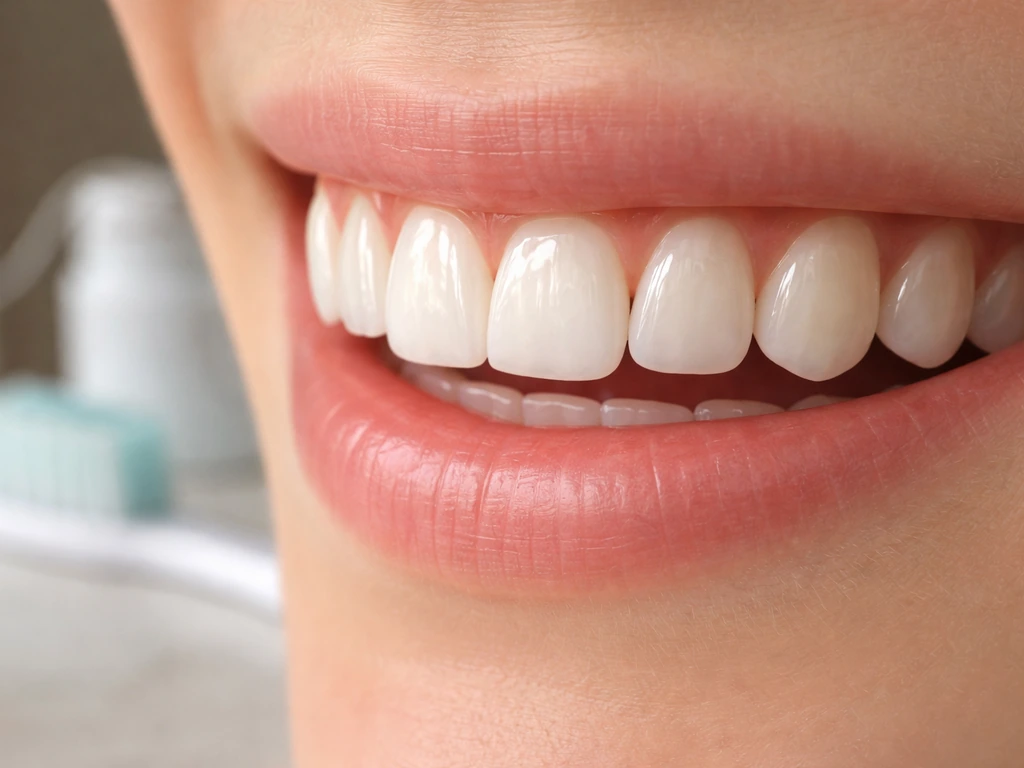
What "sharp teeth" actually means (and what's realistic)
When most people search for how to grow sharp teeth, they're usually bothered by one of two things: their canines or incisors look more rounded and flat than they used to, or they want more defined, pointed-looking teeth for aesthetic reasons. Both are valid concerns, but they have very different solutions.
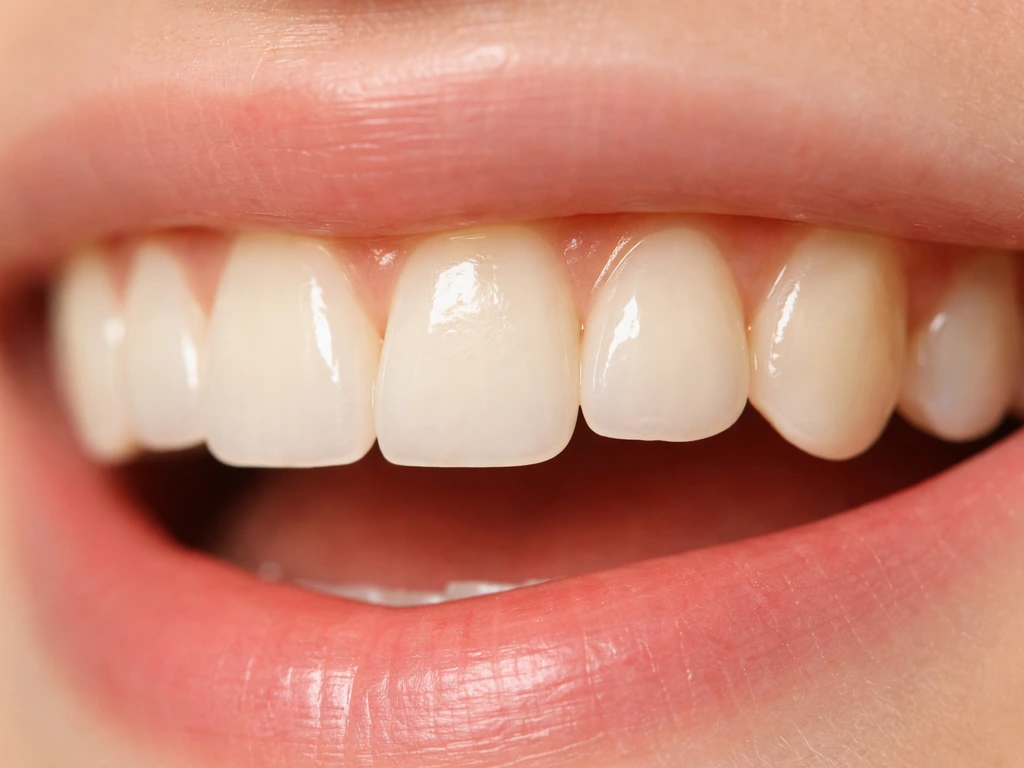
Dentists use the term "sharp" to describe the natural incisal edge contour of incisors and the pointed cusp tips of canines before age- or force-related wear removes those features. When teeth first erupt, incisors even have small rounded bumps called mamelons along their biting edge, which disappear over time as normal friction wears them away. Canines, which are your most naturally pointed teeth, are also the first to show visible wear facets when grinding or erosion starts. So "sharp teeth" is really just a way of describing well-preserved tooth anatomy, and the goal is to either protect what you have or restore what's been lost.
What's not realistic: you cannot take any supplement, food, or home remedy and cause your teeth to physically grow a sharper point. Teeth aren't like fingernails. The shape is set during development, and once worn away, that structure doesn't come back on its own. Anyone claiming otherwise is selling you something that doesn't work.
How teeth actually develop: enamel, dentin, pulp, and roots
Understanding why teeth can't "grow" sharper requires a quick look at how they're built in the first place. A tooth is made of several distinct layers, each with a specific role.
- Enamel: The outermost layer, and the hardest substance in your body. It's produced by specialized cells called ameloblasts during tooth development. Once the tooth erupts into your mouth, those ameloblast cells are lost. Enamel on top of cusp tips can be up to about 2.5 mm thick, but it thins considerably toward the gumline. Once it's gone, it's gone.
- Dentin: The layer beneath enamel, slightly softer and yellowish in color. The pulp can produce a limited amount of reparative dentin in response to injury, but this is a defense response, not regrowth of lost enamel.
- Pulp: The living core of the tooth, containing nerves, blood vessels, and odontoblast cells. It responds to damage but cannot rebuild the outer enamel surface.
- Roots: Anchored in the jawbone by the periodontal ligament. Root length and jaw shape are determined during development and don't change meaningfully after eruption in healthy adults.
The key biological fact here: enamel is acellular after eruption. There are no living cells in it to repair or rebuild it. Remineralization, which you'll hear a lot about in fluoride discussions, is mineral deposition into tiny crystal voids in early enamel lesions. It can strengthen and harden slightly damaged enamel, but it does not replace missing enamel bulk or restore a worn cusp tip back to its original pointed shape. It's repair at a microscopic level, not regrowth.
Why your teeth look flat or rounded (the real culprits)
If your teeth have lost their sharpness, something specific caused it. Here are the most common reasons, because identifying the cause is the first step toward fixing the problem.
Bruxism (grinding and clenching)
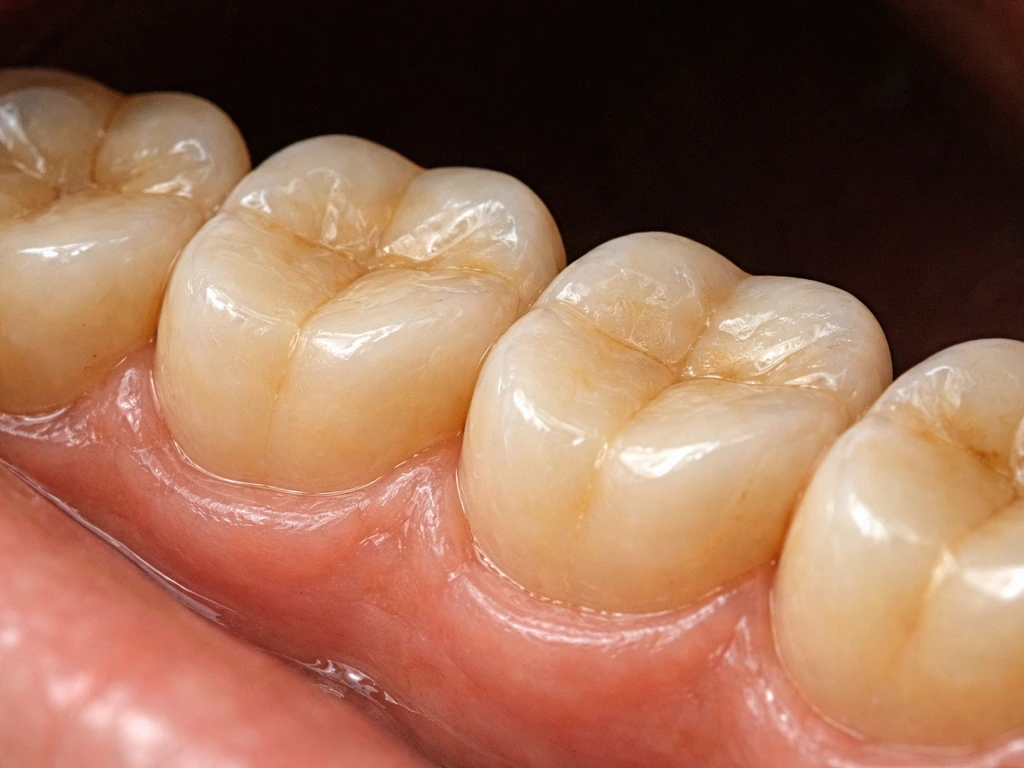
Bruxism is probably the single biggest cause of rounded, flat teeth in adults. Tooth grinding causes what dentists call pathological attrition, and the telltale sign is polished, flattened wear facets on the biting surfaces. Canine cusp tips are often the first visible casualty because they're naturally pointed and come into contact during lateral jaw movements. If you wake up with jaw soreness, have a partner who reports grinding sounds at night, or notice your teeth look increasingly flat, bruxism is the likely culprit.
Acid erosion
Dental erosion is defined as progressive, irreversible loss of tooth mineral caused by acids, either from your diet (sodas, sports drinks, citrus, vinegar-based foods) or from within your body (acid reflux, frequent vomiting). The ADA describes erosive changes as producing a silky, glossy enamel surface, loss of natural texture, and cupped or flattened occlusal surfaces. Acid doesn't just weaken enamel, it literally dissolves it layer by layer. Once that pointed edge has eroded, no amount of remineralization reverses the bulk loss.
Cavities and structural compromise
Caries (tooth decay) can undermine a cusp from below. When the structural support weakens, a cusp can fracture or crumble, leaving a flat or irregular surface where a sharp edge used to be. Early cavities don't always cause obvious shape changes, but advanced decay absolutely can alter tooth contour in ways that look like rounding or flattening.
Gum recession and periodontal disease
Gum recession exposes more of the root surface and changes how your teeth look overall. Periodontal disease can cause underlying bone loss and apical migration of the gumline, which affects tooth appearance and creates new sensitivity risks. While recession doesn't directly flatten a cusp tip, it alters the proportion and visible shape of teeth and can make them look blunter or different than they used to.
Misalignment and bite problems
When teeth don't meet properly, certain teeth take abnormal force and wear unevenly. A single tooth that's hitting too hard can flatten noticeably faster than its neighbors. Malocclusion can create wear patterns that look random but are actually very predictable once a dentist evaluates your bite.
What can actually regenerate vs. what can't
This is the core of what this site is about, so let's be direct. Here's what the science actually says about what can and can't come back.
| Dental Structure | Can It Regenerate? | What's Actually Possible |
|---|---|---|
| Enamel (surface layer) | No | Remineralization can harden early lesions but cannot replace lost bulk or reshape worn edges |
| Dentin | Partially | Pulp can produce limited reparative dentin after injury, but this does not restore outer shape |
| Pulp | Very limited | Cannot fully regenerate in mature teeth; some regenerative endodontic approaches exist for immature teeth |
| Gum tissue | Partially | Mild recession can sometimes be addressed surgically; significant recession typically requires grafting |
| Jawbone | Partially | Bone grafting can support implants and rebuild ridge height, but natural spontaneous regrowth is limited |
| Tooth cusps/incisal edges | No | Once worn or fractured, original enamel shape must be restored by a dentist, not regrown |
Emerging research is investigating ways to stimulate enamel-like mineral formation, but as of today these are experimental and not available as clinical treatments. For now, restoration is the practical path when structure is already lost. Related questions about bone and tooth structure regeneration come up often on this site, including topics like how to grow broken teeth naturally and whether jaw bone can come back after loss, and the biological limits are similar across all of them: the body's natural repair capacity tops out well short of rebuilding lost hard tissue bulk. That same limitation explains why attempts to grow broken teeth naturally usually fall short, and why prevention and professional restoration are more reliable how to grow broken teeth naturally.
How to safely restore a sharper, more defined tooth appearance
If you want your teeth to look sharper or more pointed again, restorative dentistry is where the real solutions live. Here are the main options, roughly in order from least to most invasive.
Professional recontouring and polishing
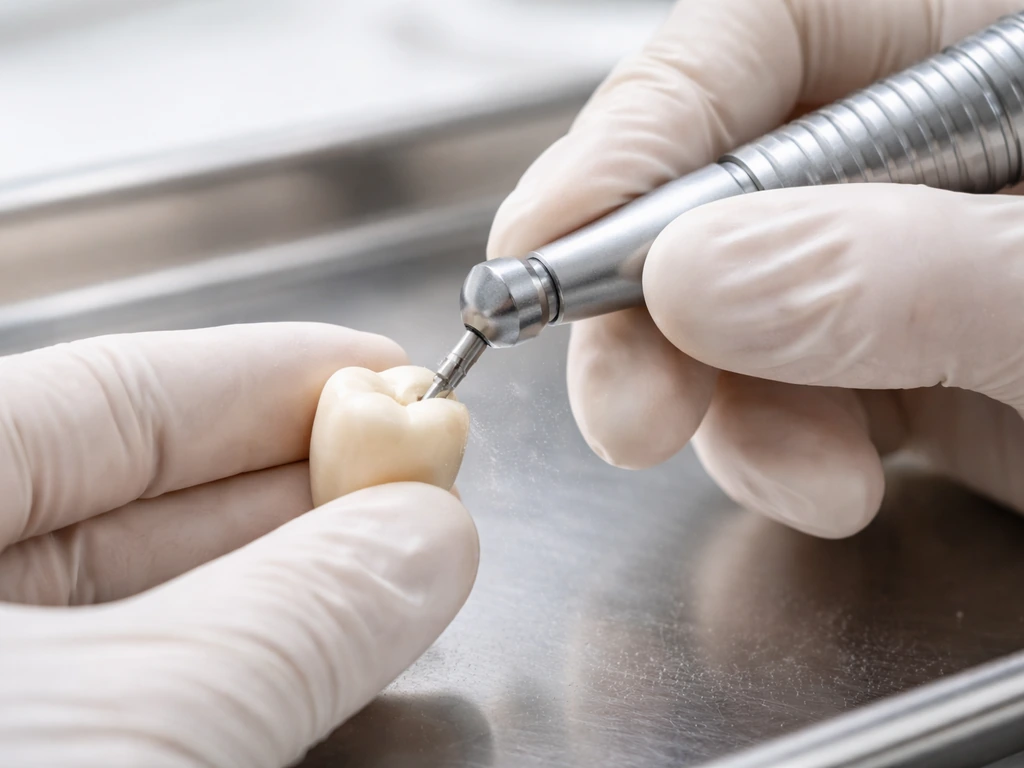
For minor shape irregularities or slight rounding, a dentist can use enamel-safe reshaping (also called recontouring or odontoplasty) to refine tooth contours. This works best when there's enough enamel remaining and the goal is a subtle aesthetic improvement. It's worth knowing that even conservative microabrasion treatments can reduce enamel thickness by measurable amounts, which is why this should always be done by a professional with a specific plan, not as a routine procedure.
Composite bonding
When enamel structure has actually been lost and there's a visible change in tooth shape, composite bonding is often the go-to solution. A tooth-colored resin material is bonded directly to the tooth surface, allowing a dentist to sculpt a new incisal edge or cusp tip that looks natural. It's relatively conservative, reversible in some cases, and can produce excellent aesthetic results for worn incisors and canines. It's the most direct way to "add back" what was worn away.
Porcelain veneers
Veneers are thin porcelain shells bonded to the front surface of teeth. Minimally invasive or no-prep veneers are a good option for cases involving minor incisal edge corrections and localized contour modifications where enamel preservation is a priority. For more significant wear across multiple teeth, traditional veneers may require more preparation. They look highly natural and are very durable, but they're a bigger investment than bonding.
Dental crowns
When a tooth has extensive wear, structural compromise from decay, or a significant fracture, a crown may be the right call. A crown covers the entire visible tooth and can fully restore its original shape, including a defined cusp or incisal edge. It's more invasive than bonding or veneers but provides the most protection for a heavily damaged tooth.
Orthodontics for bite-related wear
If misalignment is driving the wear pattern, straightening the teeth is part of the long-term solution. If misalignment is contributing to your wear, correcting your bite with orthodontics can help support straighter, longer-lasting results orthodontics to straighten teeth. Correcting the bite so that forces are distributed more evenly prevents future wear from undoing any restoration work. Orthodontics alone won't restore worn structure, but it's often a necessary companion to restorative work, especially in younger patients. The goal of getting straight teeth ties closely to getting a bite that doesn't grind specific teeth down.
Prevention and habits that protect your enamel going forward
The best strategy for keeping teeth sharp is making sure they stop wearing down. Here's what actually helps.
Use fluoride correctly
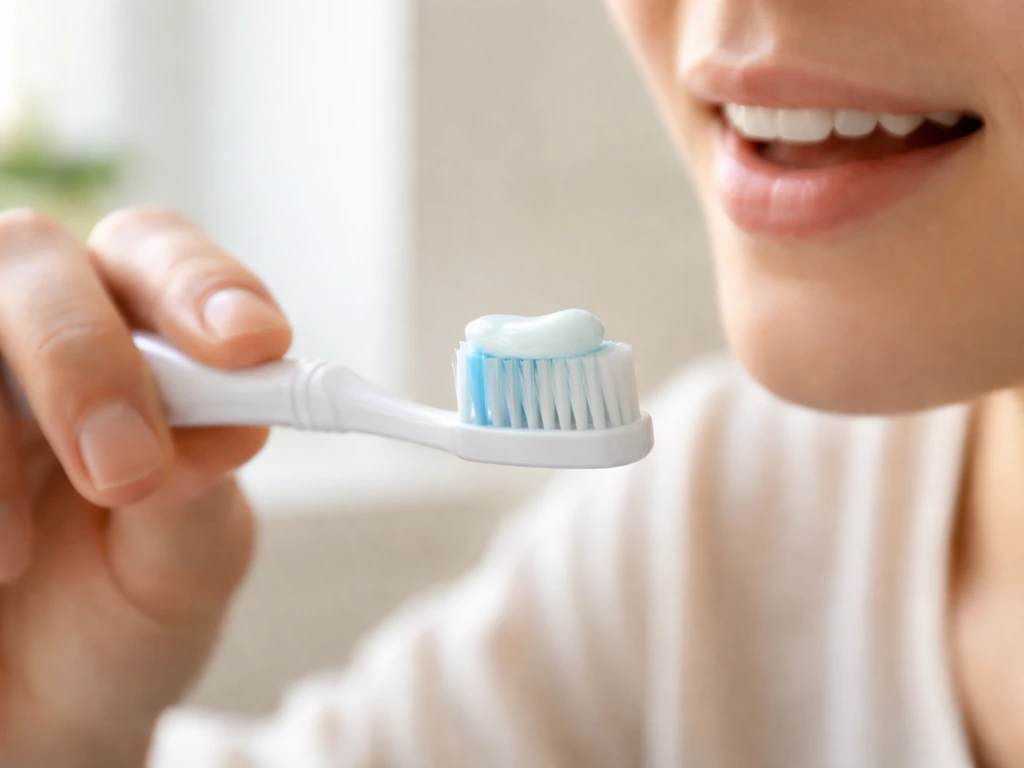
Fluoride strengthens enamel by supporting remineralization of early lesions and making enamel more resistant to acid attack. Fluoride toothpaste is the foundation, but how you use it matters. After brushing, spit out excess toothpaste but don't immediately rinse with water, because rinsing washes away the fluoride film left on your teeth. Fluoride varnish applied by a dentist has solid evidence behind it for additional protection, especially for children and high-risk adults. For kids, use age-appropriate amounts and make sure they're not swallowing toothpaste.
Control acid in your diet
Reducing how often acidic foods and drinks contact your teeth matters more than cutting them out entirely. Drink acidic beverages through a straw, rinse with water after consuming them, and wait at least 30 minutes before brushing (brushing immediately after an acid exposure can remove softened enamel). If you have acid reflux, managing it medically is as important for your teeth as any dental intervention.
Support saliva production
Saliva is your body's natural enamel protector. It buffers acids, washes away food debris, and delivers minerals to tooth surfaces. Staying well hydrated, chewing sugar-free gum (which stimulates saliva flow and has evidence supporting its anti-cavity effects), and avoiding dry-mouth-causing medications when possible all help. If you have chronic dry mouth, talk to your dentist about prescription-strength remineralizing products.
Address grinding with a night guard
If bruxism is the cause of your wear, a custom-fitted night guard is the standard protective measure. It's worth being honest about what the evidence says: systematic reviews show there isn't definitive proof that splints stop bruxism or prevent all tooth wear, but a night guard does physically separate upper and lower teeth during sleep and limits the direct enamel-on-enamel contact that causes attrition. It's still the most practical tool available for protecting teeth from grinding damage while other approaches (stress management, physical therapy, botulinum toxin injections for severe cases) are explored.
Brush gently and correctly
Aggressive brushing with a hard-bristle toothbrush contributes to both enamel wear and gum recession. Use a soft-bristle brush, gentle pressure, and a two-minute technique that covers all surfaces. Electric toothbrushes with pressure sensors can help if you tend to brush too hard.
When to see a dentist: signs you shouldn't wait on
Some tooth changes are cosmetic and can be discussed at your next routine exam. Others signal something that needs prompt attention. Get in to see a dentist soon if you notice any of the following.
- Sudden or severe tooth sensitivity, especially to temperature or sweets, which can indicate enamel loss reaching the dentin layer
- Visible chips, cracks, or fractures, particularly if a sharp edge has broken off and is cutting your tongue or cheek
- Rapid or noticeable changes in tooth shape over a short period, which suggests active erosion or grinding that needs to be identified and stopped
- Pain when biting or chewing, which can indicate structural compromise, a cracked tooth, or a bite problem
- Swelling, pus, or persistent pain anywhere in the mouth, which are dental emergency signs that need same-day or next-day care
- Teeth that look shorter than they used to, or a change in how your bite feels when your teeth come together
When you go to the dentist about worn or rounded teeth, expect a clinical examination of your bite, tooth surfaces, and gum tissue. Your dentist will likely take X-rays to check for decay and bone levels, assess your wear pattern to identify the cause (erosion vs. attrition vs. abrasion), and may recommend study models or photos to track changes over time. Questions worth asking include: How much enamel have I lost? What's causing the wear? What would you recommend to restore the shape, and in what order? Do I need a night guard, and if so, should it be custom-made or over-the-counter?
The bottom line is that sharper teeth are an achievable goal, just not through biology. So when you hear “grow teeth meaning,” it’s usually referring to that same idea of wanting a more defined, less worn tooth shape sharper teeth. Protecting your enamel from further wear and then restoring what's been lost through conservative restorative dentistry is the evidence-based path. The sooner you identify what's causing the rounding and address it, the less structure you'll lose and the simpler the restoration will be.
FAQ
How can I tell if my “sharp” look is mainly worn enamel versus a cavity or fracture?
Look for associated signs: cavities often come with sensitivity, stickiness on one spot, or a rough or shadowed surface, while attrition tends to produce polished, shiny flat areas on biting surfaces. If you see a localized notch, sharpness that suddenly changed, or a chip, that raises the possibility of fracture and needs an exam, X-rays, or both to confirm the cause and plan the right restoration.
Are over-the-counter whitening products likely to make my teeth look sharper or more pointed?
Whitening can improve brightness, which may make teeth appear a bit more defined, but it does not rebuild missing enamel or restore worn cusp tips. If you are relying on whitening to fix rounding, you may spend money without addressing the structural issue that causes the “flat” look.
Can remineralizing toothpaste or “enamel repair” products bring back a worn-down cusp?
Usually not. Re-mineralizing helps early lesions and strengthens early enamel changes at a microscopic level, but it cannot replace bulk enamel that has already been lost. If your cusp tip is visibly flattened, restoration or reshaping is typically needed to recreate the edge geometry.
If I get bonding or veneers, will my teeth stay sharp, or will grinding ruin them?
They can last well, but ongoing wear risk is real if bruxism or acid erosion is not controlled. Many dentists will treat the cause first (for example, a custom night guard for grinding, reflux management for erosion), then restore. Otherwise, bonding can wear, margins can become rough, and the “sharp” contour can be lost again.
Is enamel-safe reshaping (recontouring) always a good option for rounding?
It can be, but it has limits. It works best when you have adequate enamel thickness and the corrections are subtle. If wear is deeper, or if your tooth has decay or enamel loss from erosion, reshaping alone may weaken the tooth further or expose rough areas that become more sensitive.
How do dentists decide between bonding, veneers, and crowns for worn edges?
Decision typically depends on how much structure is missing, how many teeth are involved, and whether the tooth has structural compromise (fracture risk, decay, or weakened support). Bonding is usually for small-to-moderate contour replacement, veneers for more extensive surface correction when enamel can be preserved in the plan, and crowns when the tooth needs full-coverage protection.
What’s the safest way to protect my teeth right now if I’m waiting for a dental appointment?
Focus on reducing active wear: use a soft brush with gentle pressure, avoid brushing immediately after acidic exposures (wait about 30 minutes), rinse with water after drinks that are acidic, and temporarily avoid very hard foods if you suspect clenching. If grinding at night is likely, ask your dentist promptly about a protective guard, since over-the-counter options may not fit your bite properly.
Could my rounded teeth be caused by something other than wear, like tooth size or normal variation?
Yes. Some people naturally have less prominent mamelons or slightly more rounded cusp anatomy, and that is different from progressive flattening. A dentist can compare wear patterns across teeth, look for facets and symmetry, and use photos or models to determine whether changes are new or just normal anatomy.
How often should I monitor changes to see if my teeth are still getting less sharp?
A practical approach is to take consistent photos or have your dentist track with study models at follow-up exams, especially if you have confirmed bruxism or erosion. If sensitivity or shape change is progressing, you should not wait a full year, since early intervention often makes restoration simpler.
Should I choose a custom night guard or an over-the-counter one for grinding?
If grinding is significantly affecting your teeth or you have uneven wear, a custom guard is often preferred because it is fabricated for your bite and jaw position, which can reduce fit-related issues. Over-the-counter guards may be too thin or shift during sleep. If you can’t get custom soon, ask a dentist about the best temporary option and how to judge whether it is wearing evenly.
Can misalignment cause my front teeth to look blunter even if only canines touch first?
Yes. Even when canines are naturally pointed, bite relationships during lateral and protrusive movements can distribute forces in a way that causes uneven attrition. A clinician can map contact points, and if the wear is driven by malocclusion, orthodontics or bite adjustment may be needed to prevent restoration from being short-lived.
Next Articles
How to Grow Straight Teeth: What Works and What Doesn’t
Debunks regrowing straight teeth, explains why misalignment happens, and shows step-by-step options like braces and reta
Grow Teeth Meaning: Can Teeth Really Regrow Again?
Explains grow teeth meaning, whether teeth can regrow, what can regenerate by age, and next steps to ask a dentist.
Do Milk Teeth Grow Back? Timelines, What to Do, Red Flags
Learn if milk teeth regrow, typical timelines for permanent teeth, what to do after loss or injury, and red flags.