
You can't make your molars grow in faster in any meaningful biological sense, and nothing you eat, drink, or swallow will speed up root development or push a tooth through your gum on demand. Eruption timing is controlled by your genetics, jaw growth, and a tightly sequenced process that's been running since before you were born. That said, there are real things you can do to support normal eruption, catch problems early, and avoid habits that genuinely delay or complicate the process. The answer depends heavily on your age and which molars you're asking about.
How to Make Your Molars Grow Faster: What’s Real

Marcus Holloway
1 Jun 2026
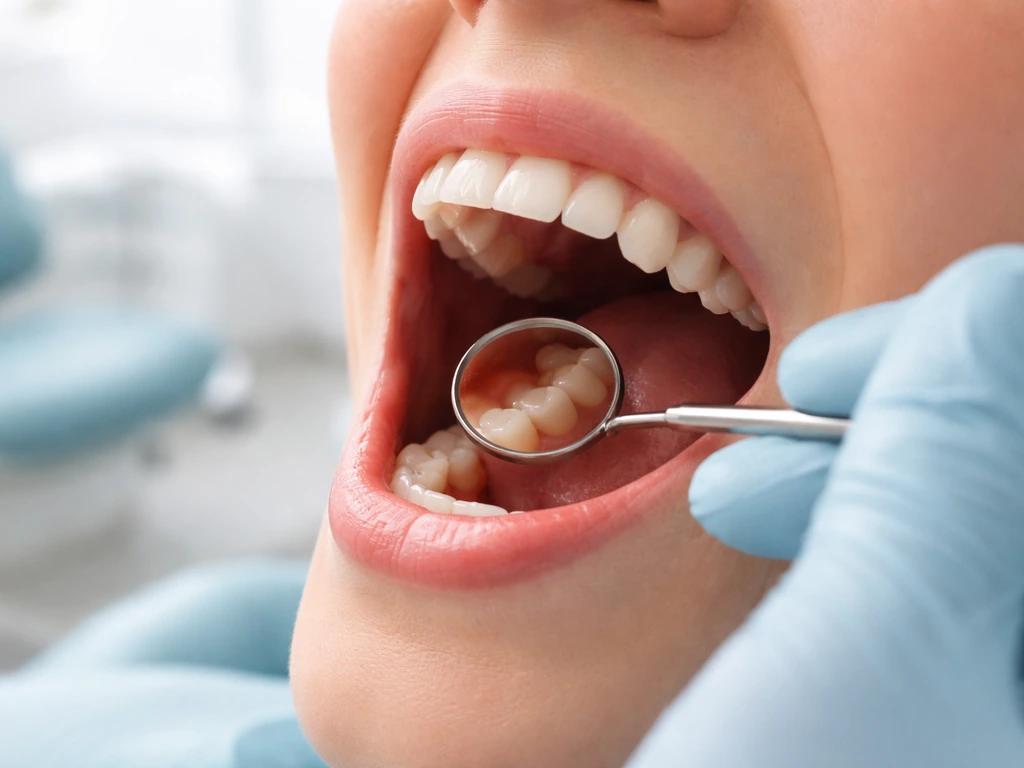
Why molar eruption can't really be 'sped up'
The reason nothing reliably accelerates molar eruption is that tooth development is a biological program, not a process waiting for the right nutrient or supplement to kick it into gear. Roots have to form to a certain length before a tooth erupts through the gum. The surrounding bone has to remodel to create an eruption pathway. The ligament connecting the tooth to the bone has to develop. These are sequential, genetically timed events. No supplement or rinse influences that timeline in a clinically meaningful way.
Enamel is an even starker example of why you can't 'grow' a tooth faster or more completely. Enamel is made by cells called ameloblasts during tooth development. Once a tooth erupts, those cells are gone. Human enamel formation (amelogenesis) happens before eruption, and once the tooth erupts, [ameloblasts](https://www.
ncbi. nlm. nih. gov/sites/books/n/statpearls/article-34406/) are no longer present, so the ability to form enamel is lost after eruption.
That's it. The enamel you have at eruption is all you'll ever get naturally. Small amounts of mineral loss from the surface can be reversed through remineralization with fluoride and saliva, but that's repair at the crystal level, not regrowth. There is no way to form new enamel after a tooth has erupted, which means there's also no shortcut to producing a 'more complete' molar by waiting or supplementing.
Similarly, dentin and root structure are laid down during development and can't be regenerated by outside action once the process is done. Dental authorities don't frame blank" rel="noopener noreferrer">delayed molar eruption as something patients can correct by nudging their own biology. For canine teeth, the same reality applies: you cannot force mature growth, but you can support normal development and get delays evaluated delayed molar eruption. When there's a real delay, the causes are structural: impacted teeth, missing space in the jaw, ankylosis (where the tooth fuses to the bone), or the tooth simply developing outside its normal path.
What 'growing in' actually means: tooth development basics
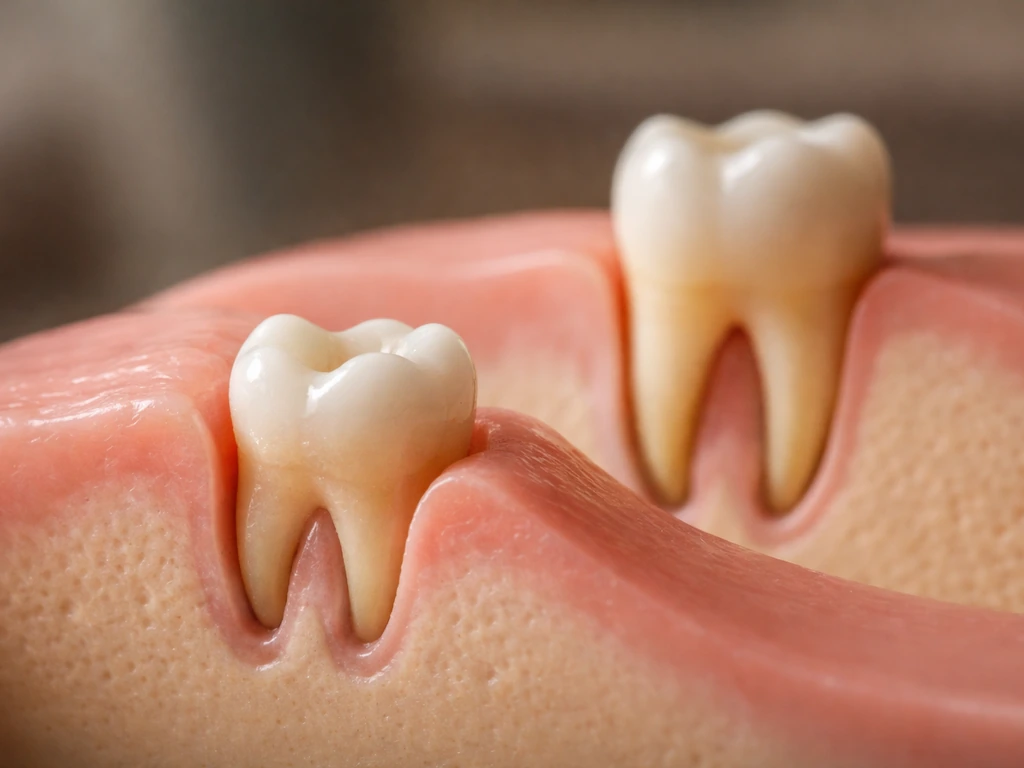
People use 'grow in' to mean several different things, and they aren't all the same biologically. Most commonly it means eruption, the process of a tooth moving through the gum and into position in the mouth. But eruption is just one stage in a long timeline that starts years before you see anything in the mouth.
Teeth go through crown formation first (the visible part), then root formation, then eruption through the bone and gum tissue. For molars specifically, the roots are often still completing their development for one to three years after the crown has already appeared in the mouth. So even after a molar 'comes in,' it's still technically growing. Here's a rough timeline for the molars most people are asking about:
| Molar Type | Crown Fully Formed | Eruption Age | Root Completion |
|---|---|---|---|
| First primary molars (baby) | Birth to 6 months | 13–19 months | ~2.5–3 years |
| Second primary molars (baby) | 6–12 months | 25–33 months | ~3 years |
| First permanent molars (6-year molars) | ~Birth | 5–7 years | ~9–10 years |
| Second permanent molars (12-year molars) | ~2.5–3 years | 11–13 years | ~14–15 years |
| Third molars / wisdom teeth | 7–10 years | 17–25 years (or never) | ~18–25 years |
Understanding which stage your molar is in matters a lot. A 7-year-old whose first permanent molar seems slow is in a very different situation than a 19-year-old wondering why their wisdom tooth hasn't shown up yet. Both questions get asked, and both deserve different answers.
What you can actually influence
You can't override biology, but you can absolutely create or destroy the conditions that support normal eruption. Several habits and deficiencies genuinely interfere with the process, and addressing them is the closest thing to 'helping' a molar come in.
Nutrition that supports tooth and bone development

This matters most for children and teens, whose teeth are still in active development. Calcium, phosphorus, and vitamin D are the core nutrients for both tooth mineralization and the jawbone remodeling that allows eruption. Vitamin D deficiency in children has been linked to delayed tooth eruption and enamel defects. Good sources include dairy, fortified plant milks, fatty fish, eggs, and safe sun exposure. Vitamin C supports healthy gum tissue, which the erupting tooth has to push through. Severe deficiencies of any of these can slow or disrupt development, so eating a reasonably balanced diet genuinely helps, even if it won't make teeth 'hurry up' past their genetic timeline.
Habits that can actually delay or damage eruption
- Prolonged thumb sucking or pacifier use past age 3 to 4 can alter jaw shape and create space problems that affect eruption paths
- Early loss of baby molars from decay or trauma removes the space-holding function that guides permanent teeth into position; space maintainers from a dentist can prevent this problem
- Gum inflammation and untreated infections around erupting molars can slow and complicate the process
- Grinding (bruxism) in children can wear down primary teeth faster, affecting the arch shape available for permanent teeth
Regular dental care does more than you'd think
Seeing a dentist every six months from around age one gives you something genuinely valuable: a professional tracking the eruption sequence in real time. Dentists and pediatric dentists watch for early signs of ectopic eruption (a tooth coming in at the wrong angle), space loss, and crowding, all of which are far easier to address before they become problems. If a molar is delayed, an X-ray can immediately tell whether it's developing normally below the gum or whether there's an obstruction. That information is worth more than any supplement.
Normal vs. concerning: when slower eruption is okay and when it isn't
There's a pretty wide normal range for molar eruption, but there are also clear thresholds where a delay deserves professional attention. The framework below gives you a practical starting point.
| Situation | Likely Normal | Get Checked |
|---|---|---|
| First permanent molar not visible yet | Age 5–6, no symptoms | Age 7+ with no sign of eruption |
| Second permanent molar not visible yet | Age 10–11 | Age 14+ with no eruption |
| Baby molars still present | Up to the expected age for that tooth | If primary molar stays well past normal loss age with no permanent successor visible |
| Wisdom teeth not showing | Anywhere from age 17 into mid-20s | Age 25+ with jaw discomfort, swelling, or no eruption |
| One side erupting faster than the other | Minor asymmetry is common | Significant asymmetry (6+ months difference) warrants an X-ray |
Pain, swelling, bad breath localized to a molar area, or visible gum flap inflammation (called pericoronitis) around a partially erupted molar are all reasons to get seen sooner rather than later. These aren't just discomfort issues; untreated pericoronitis around a partially erupted wisdom tooth or second molar can develop into a serious infection.
The common scenarios behind this question
Parents asking about kids and teens
This is the most common version of the question. A parent notices that one molar seems late, or that their kid's classmates have teeth their child doesn't yet. In most cases this is normal variation, but it's also the age group where early intervention (if needed) does the most good. A pediatric dentist visit with a panoramic X-ray can show the entire developing dentition at once and immediately answer whether the tooth exists, where it is, and whether it's on track. The American Academy of Pediatric Dentistry recommends this kind of monitoring as part of regular care, especially when eruption seems off.
Teens and adults asking about wisdom teeth
Wisdom teeth (third molars) are genuinely a different beast from the other molars. In many cases, wisdom tooth crowding or an abnormal eruption angle is what prevents them from coming in straight wisdom teeth (third molars). They're the last teeth to develop and the most likely to be impacted or congenitally absent entirely. Many people never fully erupt their wisdom teeth, and that's not a problem if there's no pain or infection.
If you're in your late teens or early twenties and feel pressure in the back of your jaw, a dental X-ray is the right first move. If your wisdom teeth eruption seems delayed or keeps causing pressure, getting an X-ray can help explain what's going on and what options are realistic. It will show whether the tooth is coming in at an angle, crowding existing molars, or stuck against bone.
That's the information you actually need, not a supplement regimen.
Adults asking about missing or non-erupted permanent molars
Adults who realize a permanent molar never came in, or who had one removed and are wondering about regrowth, are dealing with a different question. Permanent molars don't regenerate once lost. If a molar was never there (congenital absence, or hypodontia), the options are prosthetic: implants, bridges, or sometimes orthodontic space closure. If a molar is present in the jaw but hasn't erupted (an impacted tooth in an adult), surgical exposure and orthodontic traction or extraction are the usual approaches. This is firmly in the territory of a dentist, oral surgeon, or orthodontist, not home remedies.
Evidence-based options when molar eruption is actually delayed
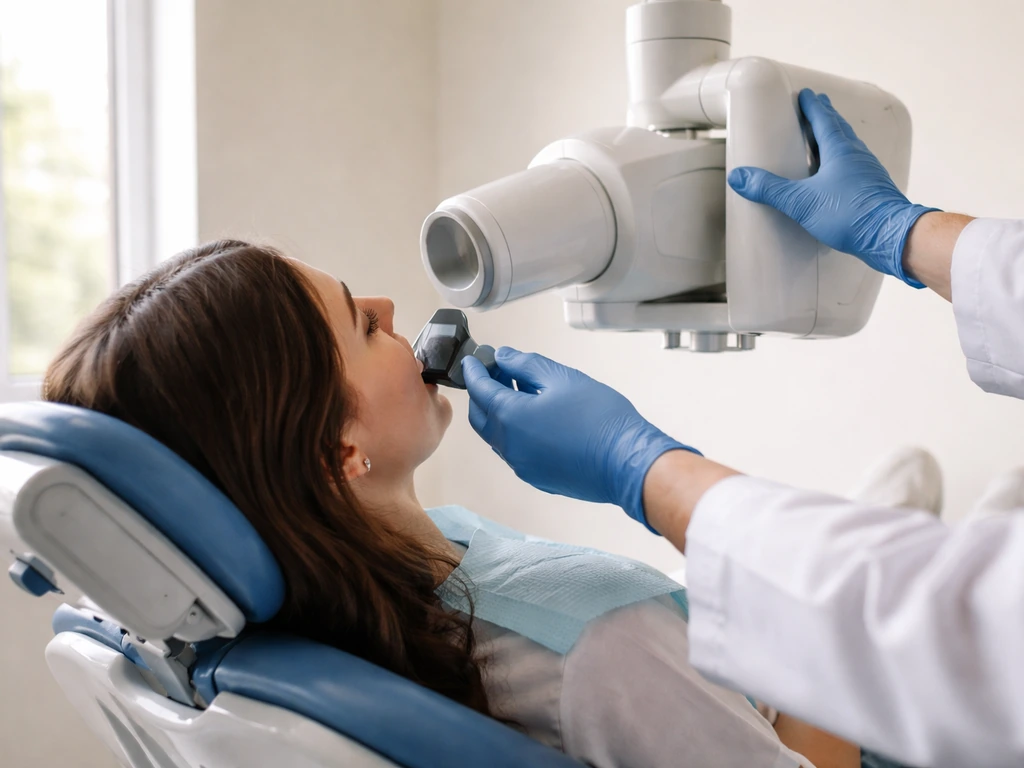
If a dental evaluation confirms a genuine delay or obstruction, here's what the evidence actually supports:
- Panoramic or periapical X-rays to locate the tooth, assess root development, and identify obstructions like a supernumerary (extra) tooth or cyst that may be blocking eruption
- Watchful waiting with monitoring intervals of three to six months when the tooth is developing normally but slowly, and there are no space or path issues
- Space maintenance if a primary molar was lost early, to preserve the eruption corridor for the permanent tooth
- Orthodontic evaluation to assess whether crowding or a narrow arch is limiting eruption space, and whether expansion or alignment treatment would help
- Surgical exposure of an impacted molar when imaging confirms the tooth is blocked by bone or soft tissue, followed by orthodontic traction to guide it into position
- Surgical removal (extraction) of an impacted wisdom tooth when it's causing infection, pain, damage to adjacent teeth, or has no viable path to functional eruption
- Restorative and implant consultation for adults when a permanent molar is genuinely absent or was lost and will not regrow
The specific path depends entirely on the tooth involved, the patient's age, and what imaging shows. A general dentist is the right starting point for all of these scenarios. They'll refer to an oral surgeon, periodontist, or orthodontist when needed.
Myths to avoid and red flags to watch for
There is an entire corner of the internet dedicated to 'natural tooth regrowth' remedies: oil pulling, specific supplements, herbal protocols, remineralization diets, and newer claims about stem cell activators. Let's be direct about what the biology says. Once a molar's enamel, dentin, and roots are formed, they cannot be 'regrown' by anything you eat or apply. The cells that build enamel (ameloblasts) are not present in the mouth after a tooth erupts. There is no known intervention available today that can regenerate a complete tooth structure in a living adult, full stop.
Some remineralization products (fluoride toothpaste, hydroxyapatite pastes) do real, modest work at the surface level by reinforcing existing enamel mineral against early decay. That's legitimate and worth doing. But 'remineralization' is not 'regrowth,' and it won't make a molar erupt or push a stuck tooth through the bone.
The bigger concern with some of these approaches is active harm. Abrasive 'detox' pastes or acidic rinses marketed as tooth-stimulating can strip surface enamel that can't be replaced. High-dose supplements (especially fat-soluble vitamins like D and A) can be toxic and don't translate into faster tooth development. If you're seeing products that claim to 'force teeth to grow' or 'regrow enamel completely,' treat that as a red flag, not a solution.
This is one area where the question of molar eruption connects to a broader theme worth knowing: human teeth are not capable of the kind of regeneration some online content implies. If you're wondering how to make teeth grow longer naturally, it's helpful to remember that true lengthening depends on normal eruption and root development rather than regrowth.
Other teeth-related questions, like whether general teeth can grow faster, what's possible for wisdom tooth eruption paths, or whether lost enamel can truly grow back, all run into the same biological ceiling. Other teeth-related questions, like whether general teeth can grow faster, what's possible for wisdom tooth eruption paths, or whether lost enamel can truly grow back, are the same kind of question as how to make a tooth grow in faster.
The honest answer is always going to start with what eruption biology can and can't do, and end with a dental visit when there's a real concern.
What to do right now

If you're concerned about a molar that seems slow or hasn't appeared when expected, the single most useful step you can take today is to schedule a dental appointment and ask specifically for an eruption evaluation. If you want, I can also explain what factors affect how fast teeth erupt and when slower eruption is still normal. If you're a parent, ask whether a panoramic X-ray is appropriate for your child's age and situation.
If you're an adult with a delayed or partially erupted wisdom tooth, ask for imaging and a clear explanation of your options. Bring the timeline: how old you or your child are, which molar you're asking about, and whether there are symptoms like pain, pressure, or swelling.
In the meantime, keep up solid basics: brush twice a day with fluoride toothpaste, eat enough calcium and vitamin D, and don't let gum inflammation go untreated around a partially erupted molar. These steps won't accelerate the biological clock, but they will make sure nothing is working against it.
FAQ
If I increase calcium or vitamin D, will my molars come in faster?
No, milk, calcium, supplements, or any “tooth vitamins” cannot make a molar’s eruption happen earlier if the tooth and jaw are already on the normal genetic schedule. Diet only helps if there is a real deficiency, and in children that is typically reflected by other signs like low vitamin D levels or enamel defects, not just “slow coming in.”
What kind of dental X-ray should I ask for if my molar eruption seems delayed?
A panoramic X-ray (panorex) is usually best for mapping multiple developing teeth in children and for checking for presence and position of wisdom teeth. For specific concerns, dentists may order additional views (like bitewings or targeted imaging). The key is asking what imaging will answer your exact question: is the tooth present, angled, blocked, or developing normally under the gum.
What symptoms mean I should stop waiting and get seen for a delayed molar?
Swelling and bad breath around a partially erupted molar (pericoronitis signs) can worsen even if the tooth is not “fully in.” Seek prompt dental care, especially if you also have fever, increasing pain, trouble swallowing, or swelling spreading beyond the gum flap.
My molar is partially through the gum, does that automatically mean it is done growing?
“Eruption” and “appearance” are not the same thing. A molar can look like it is “in,” while the root is still finishing development for a year or more. Ask the dentist whether the tooth is erupting but still maturing, or whether it is stalled or impacted, because those are different situations.
If my child’s molar is late, will orthodontics help or is this something else?
Yes, but it depends on age and cause. Crowding, a lack of space, eruption angulation, and ankylosis are common reasons. If the delay is due to space or path issues, orthodontic evaluation can prevent the problem from becoming permanent, while a tooth that is ankylosed may need different management than braces alone.
If a permanent molar never came in, can it still be corrected at home or later?
If a permanent molar never erupted, it is often a structural or developmental issue like congenital absence (hypodontia) or an impacted tooth. There is no home remedy that can bring back a missing tooth. Treatment planning usually becomes prosthetic or orthodontic space management, or (for impacted teeth) surgical exposure plus orthodontic traction.
Is delayed molar eruption managed differently in adults than in teens?
Adults can still be evaluated for impacted teeth, but the approach is different than in children. Adults often need imaging and a decision between monitoring versus surgical exposure and orthodontic traction versus extraction, based on angulation, symptoms, and effects on adjacent teeth.
Are natural or online “regrow enamel” products safe or effective for delayed eruption concerns?
Do not rely on abrasive pastes, “detox” claims, acidic rinses, or high-dose supplements to force tooth changes. These can increase enamel wear or create safety risks, and they will not regenerate enamel or root structure. If you want surface protection, stick to evidence-based fluoride toothpaste and follow the dentist’s guidance.
What should I ask the dentist to ensure I get an actionable plan, not just “wait and see”?
You should ask for a clear plan that answers three things: whether the tooth exists, where it is positioned (including angulation and any blockage), and what the next monitoring or treatment timeline is. If they recommend watchful waiting, ask what change would trigger action (for example, a certain size increase on X-ray or new symptoms).
Next Articles
How to Make Your Canine Teeth Look Longer Safely
Learn what’s possible to make canine teeth look longer: realistic limits, gum exposure, eruption and orthodontics, not r
Can Teeth Grow Longer? What’s Possible and What Isn’t
See when teeth can look longer, what causes it, what can’t regrow, and next steps for sensitivity and gum recession.
How to Make Teeth Grow Longer Naturally: What Works
Natural tooth lengthening vs gum recession explained, plus safe steps and when dentist care is needed