
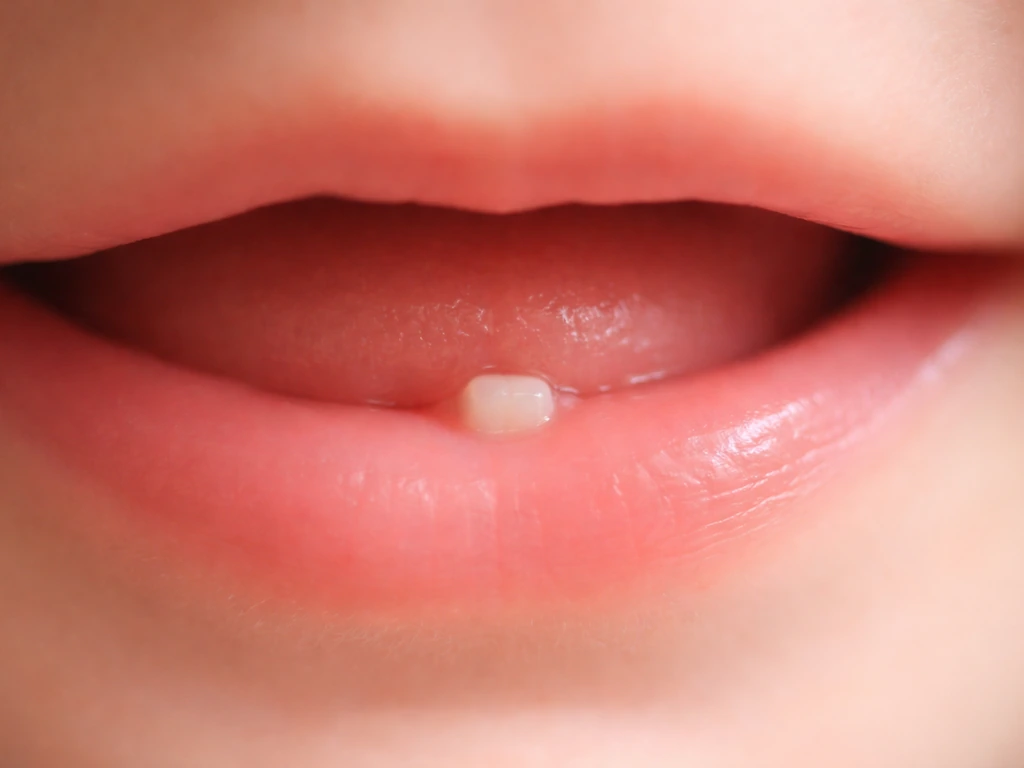
The first teeth to grow in humans are almost always the lower central incisors, the two tiny front teeth on the bottom jaw. They typically appear somewhere between 5 and 10 months of age. When it comes to permanent teeth, the first molars (the big back teeth) and the lower central incisors race each other to the finish line around age 6 to 7. For the front tooth, that timing depends on which set of teeth you mean, but the lower and upper central incisors are the key milestones to watch. If you are tracking your child's dental development or trying to decode a crossword clue about it, that is your direct answer.
Teeth That Erupt First in Normal Timing: What to Expect

Marcus Holloway
9 Jun 2026

How dental development actually works
Humans get two completely separate sets of teeth in a lifetime, and that is it. There is no third set waiting in the wings, which matters a lot when people ask whether teeth can grow back (more on that shortly). The first set, called primary teeth (also baby teeth or deciduous teeth), starts forming before birth and begins erupting around 6 months. The second set, permanent teeth, starts replacing the primary teeth around age 6 and the process continues well into the late teens or early twenties if you count wisdom teeth. Each set follows a fairly predictable sequence, though there is real variation between individual kids.
Tooth eruption is not random. Each tooth has a bud that develops in the jaw, and the tooth slowly works its way through the bone and gum tissue as it matures. The timing is influenced by genetics, nutrition, hormones, and local physical factors like whether a baby tooth is blocking the path. When the sequence goes off-script, that is usually when parents start to worry, and often rightfully so.
Which teeth come in first at each stage
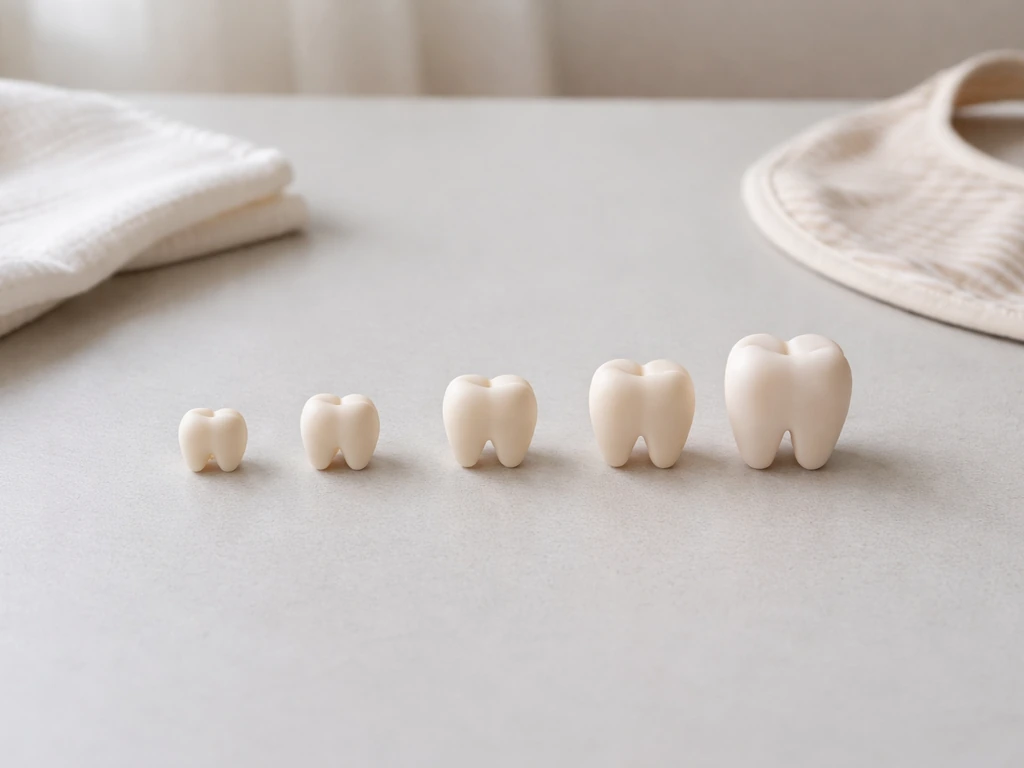
Primary (baby) teeth: starting around 6 months
The lower central incisors are typically the first primary teeth to erupt, showing up between 5 and 9 months according to Merck Manual data, or 6 to 10 months per StatPearls. These are the bottom front teeth. The upper central incisors follow shortly after, usually between 8 and 12 months. From there, the eruption sequence moves outward and backward through the mouth. Most children have all 20 primary teeth by around age 2.5 to 3.
| Primary Tooth | Typical Eruption Age |
|---|---|
| Lower central incisors (bottom front) | 5–10 months |
| Upper central incisors (top front) | 8–12 months |
| Upper lateral incisors | 9–13 months |
| Lower lateral incisors | 10–16 months |
| First molars (upper and lower) | 13–19 months |
| Canines (upper and lower) | 16–23 months |
| Second molars (upper and lower) | 20–30 months |
Permanent teeth: starting around age 6

The first permanent teeth to erupt are a near tie between the first permanent molars and the lower central incisors, both arriving around age 6 to 7. This is why age 6 is such a big dental milestone. The upper central incisors follow between ages 7 and 9. The sequence then continues with lateral incisors, canines, premolars, and second molars, wrapping up (excluding wisdom teeth) by around age 12 to 13.
| Permanent Tooth | Typical Eruption Age |
|---|---|
| First molars (upper and lower) | 6–7 years |
| Lower central incisors | 6–7 years |
| Upper central incisors | 7–9 years |
| Lower lateral incisors | 7–8 years |
| Upper lateral incisors | 8–9 years |
| Lower canines | 9–10 years |
| Upper canines | 11–12 years |
| First and second premolars | 10–12 years |
| Second molars | 11–13 years |
| Third molars (wisdom teeth) | 17–25 years |
Normal vs. early vs. late eruption: what the range actually looks like
Here is a truth that trips up a lot of parents: the word "normal" covers a wide range in dentistry. A baby cutting a first tooth at 4 months is not unusual, and neither is a baby who hits 12 months without a single tooth yet. What matters is the pattern and whether all teeth are eventually accounted for. That said, there are points where delayed eruption deserves a closer look.
- Early eruption: A first baby tooth before 3 months is considered premature and is worth mentioning to a pediatrician, though it is rare.
- Late eruption (primary): No teeth at all by 12 to 13 months is generally a trigger for a dental evaluation.
- Late eruption (permanent): If permanent teeth have not started appearing by age 8, a dentist may want to take X-rays to check what is happening under the surface.
- Missing teeth: Some people are born without certain tooth buds (called hypodontia) and a panoramic X-ray around age 7 is one of the best ways to spot this early.
- Ectopic eruption: A tooth growing in the wrong position or direction, like a canine erupting high in the gum above other teeth, needs orthodontic assessment.
The American Academy of Pediatric Dentistry (AAPD) recommends a dental evaluation around the time the first tooth erupts, which is typically around 6 months of age, and then radiographs as clinically indicated around the eruption of the lower incisors and first permanent molars. These early check-ins are exactly what allows dentists to catch eruption problems before they become expensive and complicated.
What can and cannot actually regrow: enamel, gums, and teeth
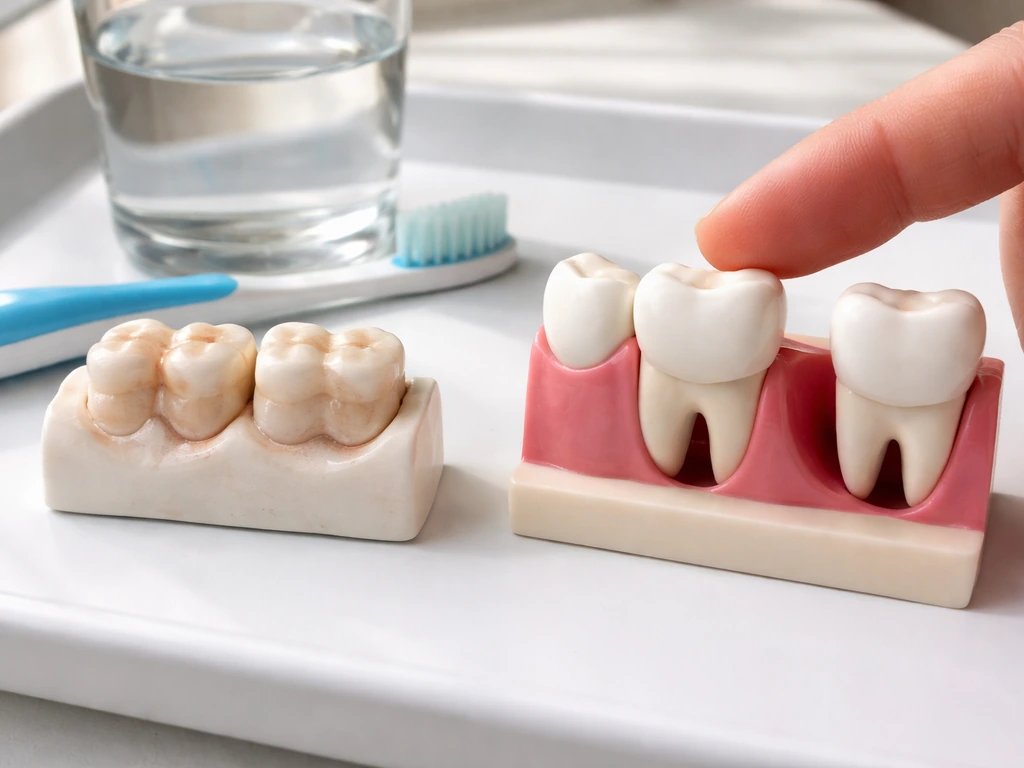
This is where a lot of internet misinformation lives, so let's be direct. Once a permanent tooth is gone, it does not grow back. Humans are diphyodont, meaning we get two sets and no more. There is no biological mechanism for a third tooth to erupt from the jaw if a permanent tooth is lost to decay, trauma, or extraction. The same applies to enamel as a structure: if a tooth is badly decayed or fractured and enamel is lost, that specific tooth cannot rebuild its outer shell the way bone can repair itself.
However, there is an important nuance: very early, non-cavitated enamel lesions (the white-spot lesions you sometimes see on teeth) can be remineralized and arrested with topical fluoride and good oral hygiene. StatPearls is clear that fluoride has the highest evidence for preventing, reversing, and arresting early carious lesions before they become actual cavities. So early-stage enamel damage is not always a death sentence for a tooth, but a tooth with an established cavity or physical fracture cannot regenerate the lost structure on its own.
Gum tissue is a slightly different story. Healthy gingival tissue can recover from inflammation (gingivitis) when good oral hygiene is restored. But significant gum recession from advanced periodontal disease does not reverse itself naturally. Surgical grafting is the only real option for rebuilding lost gum tissue. The bottom line: remineralization and gum health improvement are real, but neither counts as full regeneration of lost dental structure.
When to worry: signs that eruption is not going as planned
Most eruption variation is completely normal, but there are specific red flags that call for a dentist visit sooner rather than later. Delayed or abnormal eruption can have local causes (physical obstructions in the jaw) or systemic causes (hormonal or metabolic conditions), and telling the difference requires professional evaluation.
- A permanent tooth is erupting behind or in front of a baby tooth that has not fallen out yet, rather than pushing it out from below.
- A child is 7 or 8 and has not started losing any baby teeth or gaining any permanent teeth.
- A tooth appears to be growing sideways, at an angle, or very high in the gum tissue.
- A baby tooth fell out early due to decay or trauma and a permanent tooth is not appearing in its place after several months.
- Swelling, pain, or visible pus around a site where a tooth should be erupting.
- A tooth bud was visible on an earlier X-ray but a follow-up X-ray shows it has not moved.
The causes of delayed or ectopic eruption include fibrous gum tissue that creates a physical barrier, supernumerary (extra) teeth blocking the path, insufficient jaw space, ankylosed (fused) primary teeth that refuse to fall out, endocrine abnormalities, and bone conditions. A panoramic X-ray is usually the first diagnostic step a dentist takes when they suspect something structural is going on. The AAPD's guidelines note that panoramic, occlusal, and periapical radiographs can all provide relevant information depending on what the clinician is evaluating.
If you are a parent and something feels off about your child's teeth, the right move today is to call a pediatric dentist. Watchful waiting is sometimes appropriate, but it should be a dentist making that call after looking at X-rays, not a decision made at home based on hope.
Wisdom teeth: the last teeth to arrive (and often the most troublesome)
Wisdom teeth, or third molars, are the final teeth to develop and erupt, typically between ages 17 and 25 according to the American Association of Oral and Maxillofacial Surgeons (AAOMS). Wisdom teeth are the ones that typically grow last, usually erupting in the late teens through the early twenties. Some people's wisdom teeth come in fully and cause no problems at all. Many others do not have enough room in the jaw, causing the teeth to become impacted, meaning they get stuck fully or partially beneath the gum. Impacted wisdom teeth can damage neighboring second molars, cause infections, and lead to cyst formation.
MedlinePlus notes that impacted wisdom teeth are most commonly addressed between ages 17 and 21, but treatment is not always necessary if they are asymptomatic and not causing damage. The AAPD includes third molar monitoring in its developing dentition guidelines, which means regular X-ray evaluation is the standard of care for teens and young adults even before wisdom teeth fully erupt. If you are in your late teens or early twenties and have never had a conversation with a dentist about your wisdom teeth, that is worth bringing up at your next appointment.
Your practical next steps
If you are a parent tracking your baby's first tooth, the lower front teeth (bottom central incisors) are what you are waiting for, and anywhere from 5 to 10 months is well within normal. If you want a practical timeline for eruption, most kids are done with their primary teeth by about age 2 and start bringing in permanent teeth around age 6 how long does it take teeth to grow. If your child is approaching 13 months with no teeth, schedule a pediatric dental visit. If your child is around age 6 and you are not seeing any loose baby teeth or new permanent teeth, mention it at their next checkup. For teens, make sure wisdom tooth development is being monitored with periodic X-rays. In most cases, the last teeth to grow in are the wisdom teeth, also called third molars wisdom tooth development.
Keep in mind that if a permanent tooth is lost or severely damaged, it does not grow back. That makes preventive care and early intervention more important than any remedy you might read about online. Early enamel remineralization with fluoride is real and worth pursuing at the first sign of trouble, but it only works before a true cavity forms. The biology is what it is: two sets, then done. Working with that reality rather than against it is the best dental strategy at any age.
FAQ
When people say “teeth that are typically the first to grow in,” which teeth are they referring to?
They are the lower central incisors. If you are asking about primary teeth, those bottom-front teeth usually erupt first, typically between about 5 and 9 months. If you are asking about permanent teeth, the first permanent molars and the lower central incisors usually arrive around age 6 to 7.
What if my baby gets a first tooth early, like at 4 months, is that always a red flag?
A single early tooth does not automatically mean a problem. The more useful pattern is whether other teeth follow later and whether the full set eventually comes in. For example, a first tooth at 4 months can still be within normal variation, but your dentist may still want to review growth and eruption if multiple milestones seem off.
At what point does “no teeth yet” become concerning enough to see a dentist?
Yes, delayed eruption can be normal, but the decision point is timing plus pattern. If your child reaches around 13 months with no teeth, the practical next step is to schedule a pediatric dental visit rather than waiting. Your dentist can check for local barriers, extra teeth, and whether there is enough eruption space.
My child’s gums look like they are swelling for a tooth, but I cannot see it yet. Is that normal?
You may notice that a tooth looks like it is present but has not erupted fully yet. Also, some kids cut teeth in a staggered way, where the gum swelling comes first and the tooth crown appears later. A dentist can confirm what is actually erupting by examining the gums and, when needed, using imaging.
How can I track eruption without getting stressed by normal day-to-day variation?
Home tooth charts can mislead you if you track by “months” without accounting for eruption gaps. A more reliable approach is to mark the milestones (first primary tooth, then upper central incisors, and later the permanent molars around age 6 to 7) and watch for missing teeth patterns. If something seems to be skipping, ask the pediatric dentist to compare your child’s timeline to eruption norms and check for obstructions.
Is it ever okay to wait and see, or should I book an appointment right away if eruption seems delayed?
Rely on professional guidance for what to do next. Watchful waiting can be appropriate for mild variation, but it should follow an exam, not a decision you make solely at home. If eruption seems delayed or a tooth appears stuck in the gum, request evaluation and, if indicated, a panoramic or other dental X-ray.
If my child has a white-spot lesion on a new tooth, can the enamel grow back?
White-spot “early enamel” damage is different from an established cavity or a chipped/fractured tooth. Early non-cavitated lesions can often be arrested or improved with consistent fluoride and good hygiene, but once a cavity forms or the tooth structure is broken in a way that removes substantial enamel, the tooth cannot regenerate that lost outer shell on its own.
Can gum recession reverse with better brushing and flossing?
Yes. Inflammation-related gum changes can improve when plaque control improves, but significant recession from advanced periodontal disease typically does not reverse naturally. If you are seeing deeper gum shrinkage, a dentist may discuss options like surgical grafting depending on severity and underlying cause.
If a permanent tooth is lost, will a new one grow in?
If a permanent tooth is lost or extracted, it will not be replaced by another permanent tooth. What can happen instead is that nearby teeth may shift over time and the bite may change, so dentists often discuss replacement options or monitoring based on timing and age.
What structural issues could cause delayed eruption, and how do dentists check for them?
Sometimes, an extra tooth (supernumerary tooth) or a tooth that is stuck (ankylosed primary tooth) can block eruption. These are hard to confirm by looking alone. Imaging like a panoramic X-ray is commonly the first step when dentists suspect a structural reason for abnormal or delayed eruption.
If my teen has not started getting wisdom teeth yet, what should we do?
For teens and young adults, the practical next step is to ask about periodic monitoring if wisdom teeth have not fully erupted yet. Many cases are managed with observation and X-rays first, but if teeth are impacted or causing issues, the dentist may refer for evaluation and possible treatment.
Next Articles
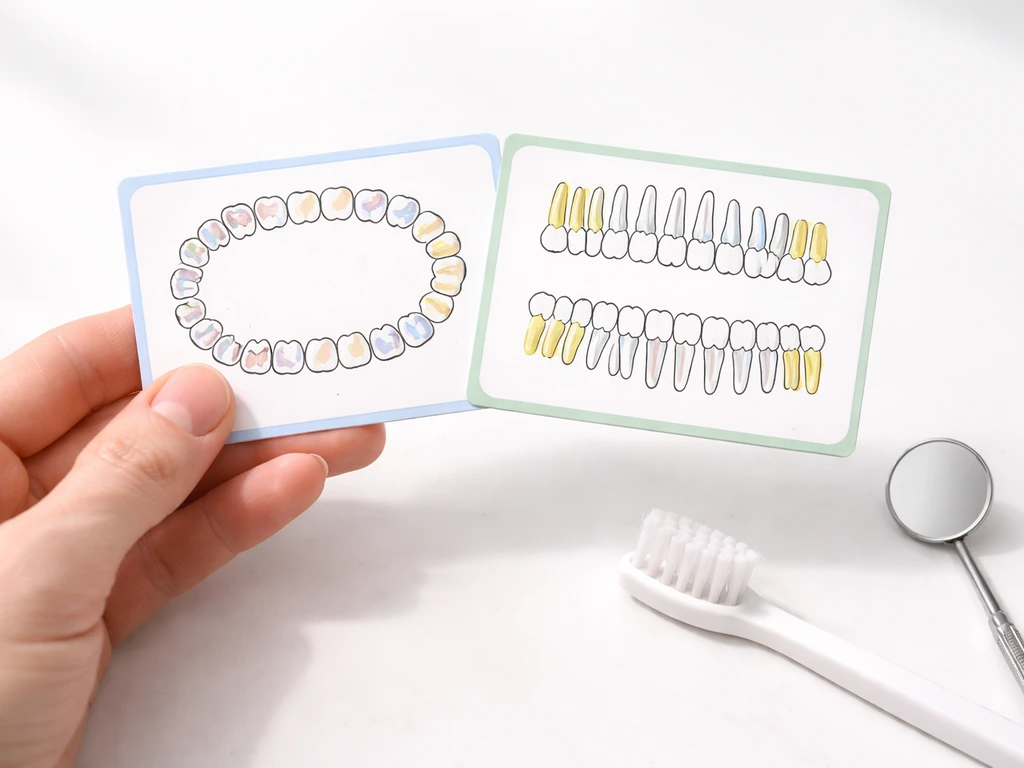
Which Teeth Grow Last? Eruption Timing for Baby and Adult Teeth
See which teeth erupt last, typical ages for baby and permanent sets, wisdom tooth timing, and when to get checked.
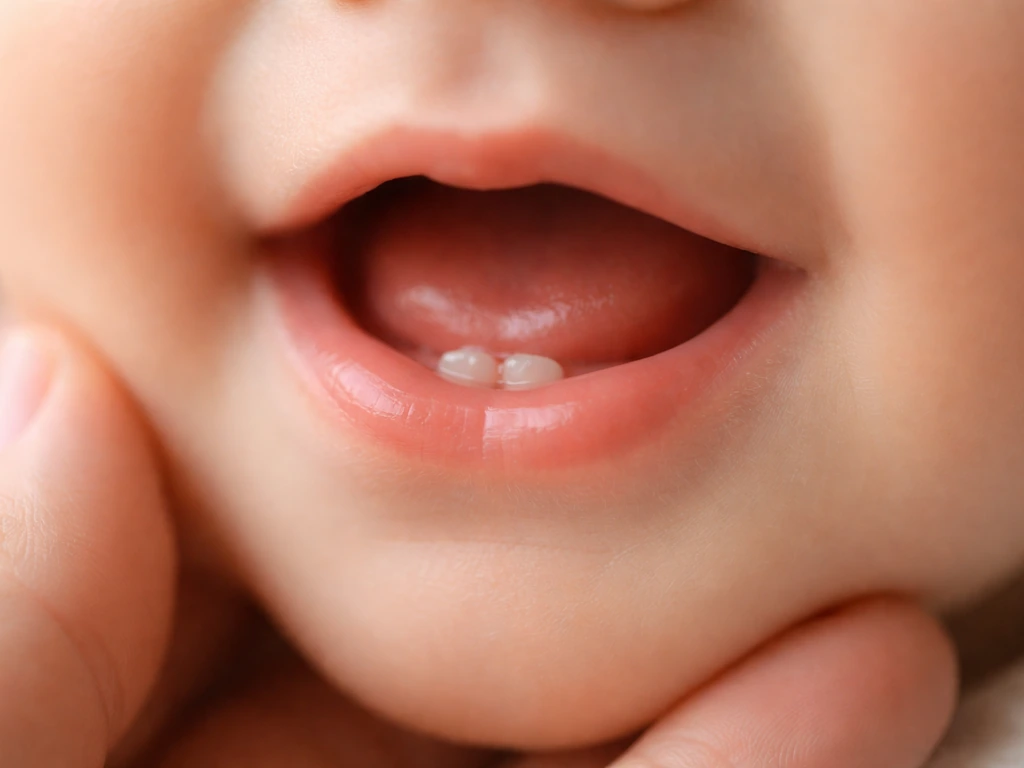
Which Teeth Grow in First? Baby Tooth Eruption Order
Baby tooth eruption order: which teeth come first, timing range, normal teething signs, and when to see a dentist.
How Fast Do Teeth Grow Timelines for Eruption and Development
Timelines for tooth eruption and true dental growth, plus what affects speed, normal vs abnormal, and no enamel regrowth